
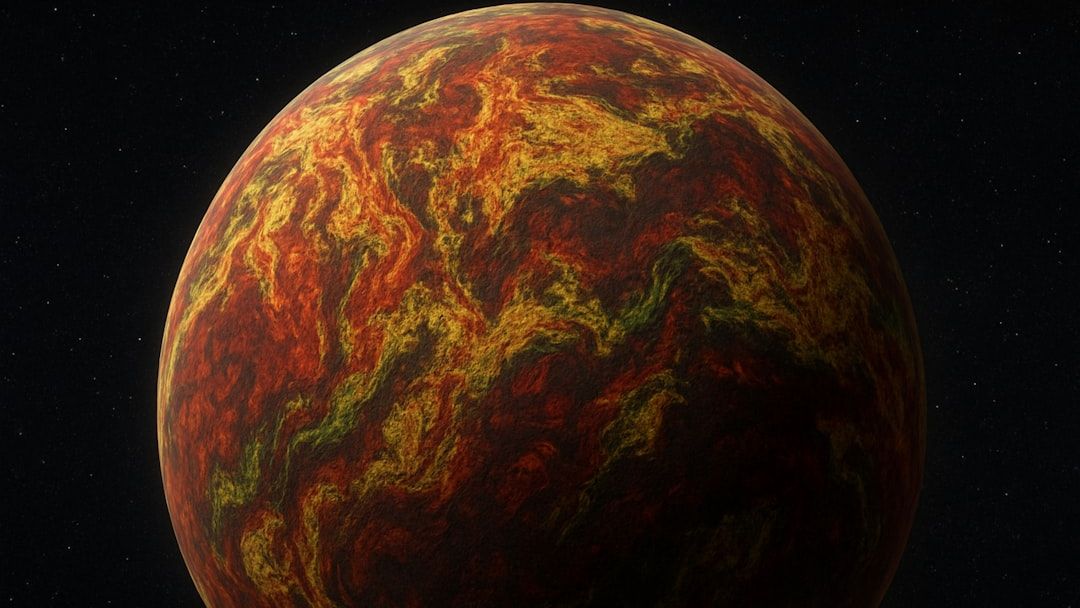
For centuries, humans looked up at the night sky and saw mostly darkness. The blackness between the stars seemed to stretch on forever, cold and desolate. We imagined space as a void, a vacuum waiting to be filled. Honestly, that’s what most of us were taught in school.
Turns out, we were profoundly wrong.
The spaces between stars, between galaxies, between entire clusters of cosmic structures are anything but empty. Recent discoveries from powerful telescopes and spacecraft have revealed a universe teeming with invisible matter, wandering planets, cosmic threads of gas, and particles older than Earth itself. Let’s be real, the emptiness we thought existed is actually a bustling cosmic metropolis. What we’re learning now is reshaping everything we thought we knew about the structure and nature of reality itself.
The Invisible Skeleton: Dark Matter Fills the Cosmic Web
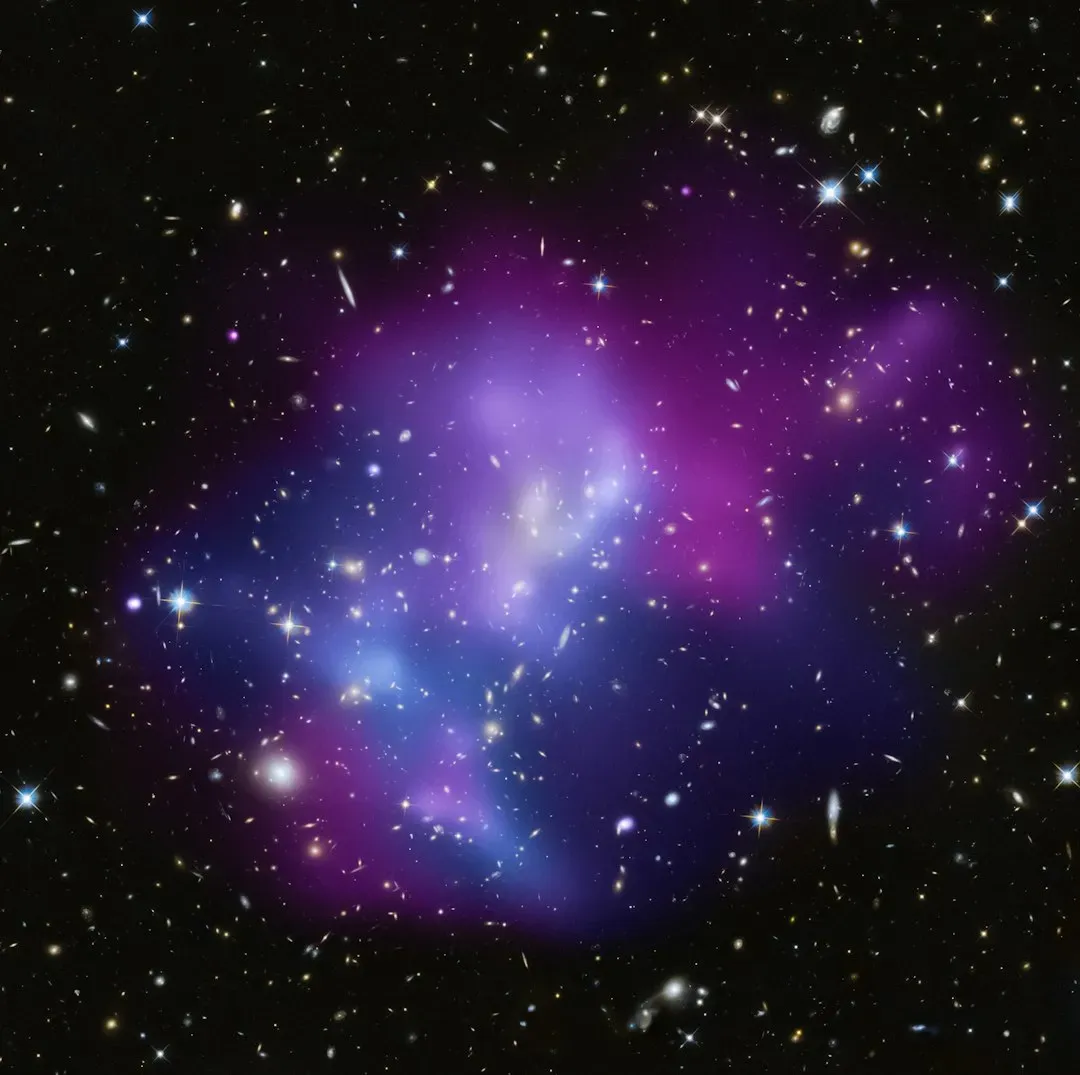
Scientists estimate that ordinary matter makes up only about 5% of the universe, while dark matter makes up about 27%. That means more than a quarter of everything that exists is completely invisible to us. Dark matter doesn’t absorb, reflect, or emit light. It’s like a ghost that only reveals itself through gravity.
The cosmic web is composed of dark matter, gas, and galaxies, with dark matter making up about five-sixths of the mass and dominating the gravitational pull. Think of dark matter as the scaffolding upon which the entire universe is built. Galaxies don’t just float randomly through space. They’re organized along massive filaments of dark matter that stretch for millions of light years, creating a web-like structure throughout the cosmos.
What’s truly mind-blowing is how recent this understanding is. Nearly a century after astronomers first proposed dark matter to explain strange galaxy motions, scientists may finally be catching a glimpse of it through a halo of high-energy gamma rays detected by NASA’s Fermi Gamma-ray Space Telescope. The signal matches what theories predict should happen when dark matter particles collide and annihilate each other. If confirmed, this would be the first time humanity has actually “seen” dark matter, even if indirectly.
Hot Gas Highways Between Galaxies
Between the vast cosmic web filaments lies something equally surprising. Gas in the filaments of the cosmic web connects galaxy clusters and superclusters, and it is typically colder, ranging from thousands to tens of thousands of degrees, known as the warm-hot intergalactic medium (WHIM). Yes, you read that correctly. Gas measuring tens of thousands of degrees is considered “warm.”
The interstellar medium is the matter and radiation that exists in the space between star systems in a galaxy, including gas in ionic, atomic, and molecular form, as well as dust and cosmic rays. This material fills what we once thought was empty space, creating a dynamic environment where new stars are born and old stars die.
I find it fascinating that this gas plays such a crucial role in galaxy evolution. The WHIM is believed to be a significant reservoir of baryonic matter in the universe and may play an important role in the growth of galaxies by providing a source of fuel for new star formation. Galaxies are constantly pulling in this gas to create new stars, then ejecting enriched material back into space through supernovae and stellar winds. It’s a cosmic recycling system on an unimaginable scale.
Rogue Planets: Cosmic Wanderers Without a Home
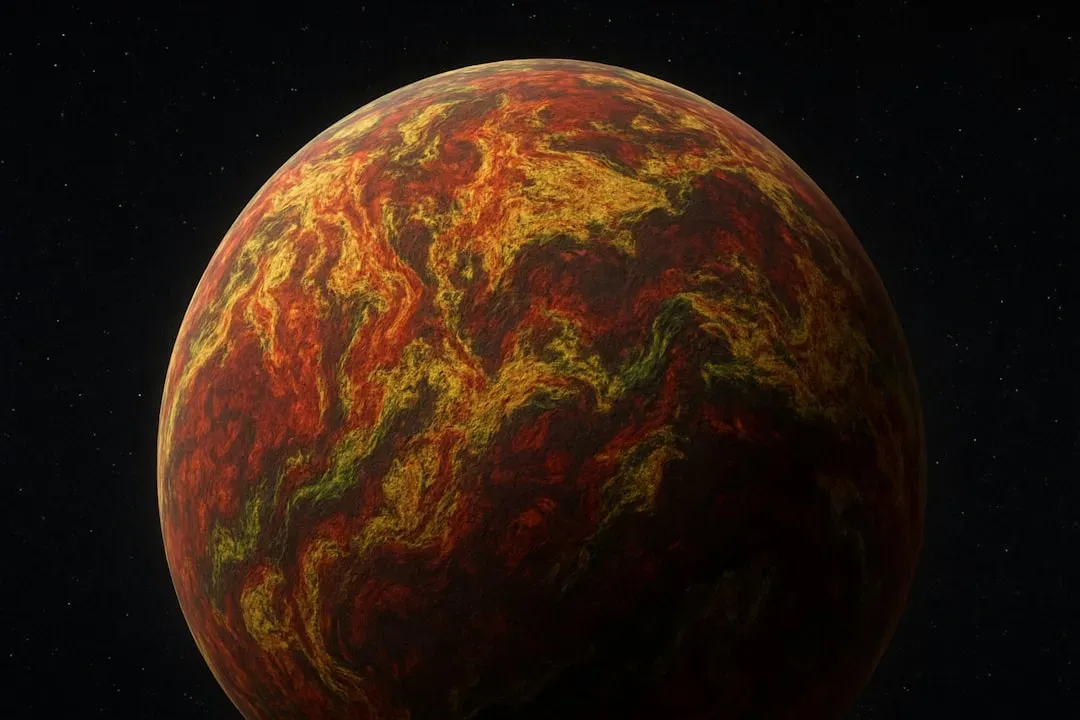
Here’s something that sounds straight out of science fiction. Rogue planets are interstellar objects of planetary mass not gravitationally bound to any star, and the Milky Way alone may have billions to trillions of them. These are worlds drifting through the darkness, untethered from any sun, experiencing eternal night.
How do planets end up like this? Some get kicked out of their planetary systems through gravitational interactions. Others may have formed alone in space, never having a star to call home. Astronomers discovered at least 70 new free-floating planets in a nearby region of the Milky Way known as the Upper Scorpius OB stellar association. The number keeps growing as detection methods improve.
What really catches my attention is a recent discovery. One rogue planet named Cha 1107-7626 is eating up gas and dust from its surroundings at a rate of six billion tonnes per second. It’s acting more like a baby star than a planet, blurring the lines between planetary and stellar formation. Free-floating planetary-mass objects appear able to generate their own systems of moons, with observations revealing disks with crystalline silicate, just like those surrounding baby stars before their planets start to form. Imagine entire miniature solar systems forming around starless planets.
Cosmic Dust: The Universe’s Building Blocks
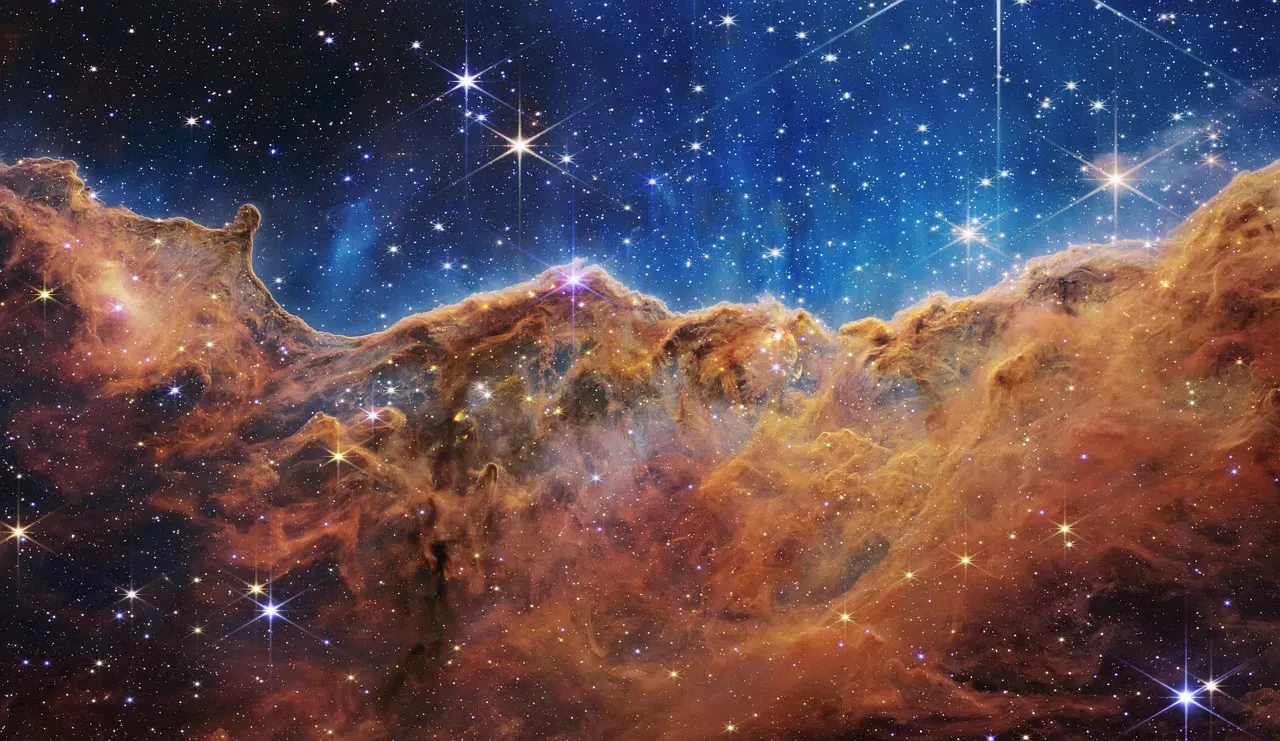
Space is filled with something far more tangible than we realized. Cosmic dust occurs in outer space or has fallen onto Earth, with thousands of tons estimated to reach Earth’s surface every year. Every day, our planet is showered by microscopic particles that have traveled across vast stretches of space.
Cosmic dust contains complex organic compounds that could be created naturally by stars, with a smaller fraction consisting of larger refractory minerals that condensed as matter left by stars. These particles are older than the Sun, older than Earth. They’re remnants from the formation of the solar system itself and contain clues about how everything came to be.
The composition is remarkable. The contents of space dust mostly comprise basic elements in the universe: carbon, oxygen, hydrogen, and nitrogen. In other words, the fundamental ingredients of life are constantly raining down on us from space. NASA’s James Webb Space Telescope observed intricate layers of interstellar dust and gas, revealing fine details resembling knots and whorls of wood grain, allowing astronomers to map the true 3D structure for the first time.
It gets more interesting. When infrared astronomy began, dust particles were observed to be significant and vital components of astrophysical processes, revealing information about phenomena like solar system formation, driving mass loss when stars near the end of their life, and playing a part in planet formation. What once annoyed astronomers by blocking their view turned out to be essential to understanding cosmic evolution.
The Dance of Dark Energy: Pulling the Universe Apart
If dark matter is the skeleton holding everything together, dark energy is the force tearing it all apart. All the atoms and light in the universe together make up less than five percent of the total contents of the cosmos, with the rest composed of dark matter and dark energy, which is the name given to the mysterious influence driving the accelerated expansion of the universe.
Around five billion years ago, something changed. The universe’s expansion started speeding up instead of slowing down. Scientists don’t know why. They simply named the phenomenon dark energy and started trying to understand it. The universe is made up of three components: normal or visible matter (5%), dark matter (27%), and dark energy (68%). That means roughly two-thirds of everything that exists is this mysterious force pushing space itself apart.
Most of the universe is made of unseen components that reveal themselves only through subtle effects on galaxies and cosmic structure, with about 95 percent of the cosmos consisting of dark matter and dark energy. Scientists study this by observing how light from distant galaxies bends as it passes through gravitational fields. It’s detective work on a cosmic scale, piecing together the nature of reality from faint distortions in ancient light.
Recent observations have sparked intense debate. Astronomers using gravitational lensing measured how fast the universe is expanding, with the measurement supporting recent observations showing the universe expands faster than predictions based on the early universe suggest, strengthening evidence that the “Hubble tension” represents genuine new physics. This discrepancy could mean we need to fundamentally rethink our understanding of how the universe works.
Conclusion
The universe we inhabit is far stranger and more crowded than anyone imagined. Between the stars lies a cosmic web of dark matter, threaded with hot gas and sprinkled with dust older than our world. Rogue planets wander through the darkness, some growing their own moons. Invisible forces shape the large-scale structure of reality while simultaneously pulling everything apart.
We’re living in a golden age of discovery. Telescopes like James Webb and missions studying cosmic dust are revealing details that seemed forever beyond our reach. Each observation raises new questions, each answer opens new mysteries. The “empty” space between celestial objects is actually a bustling environment where the fundamental processes of cosmic evolution play out.
What strikes me most is how recent all this knowledge is. Just decades ago, we thought space was mostly nothing. Now we know it’s filled with matter and energy we can’t even see, shaping everything we can. Makes you wonder what else is out there, waiting to be discovered in the spaces we haven’t looked closely enough yet.
What amazes you most about these cosmic revelations? Does it change how you think about the night sky?

- 6 Exotic Bird Species You Can Spot in U.S. National Parks - July 19, 2026
- 11 Iconic American Birds Facing New Challenges and How You Can Help - July 19, 2026
- 10 Friendliest Animals in the World - July 19, 2026