

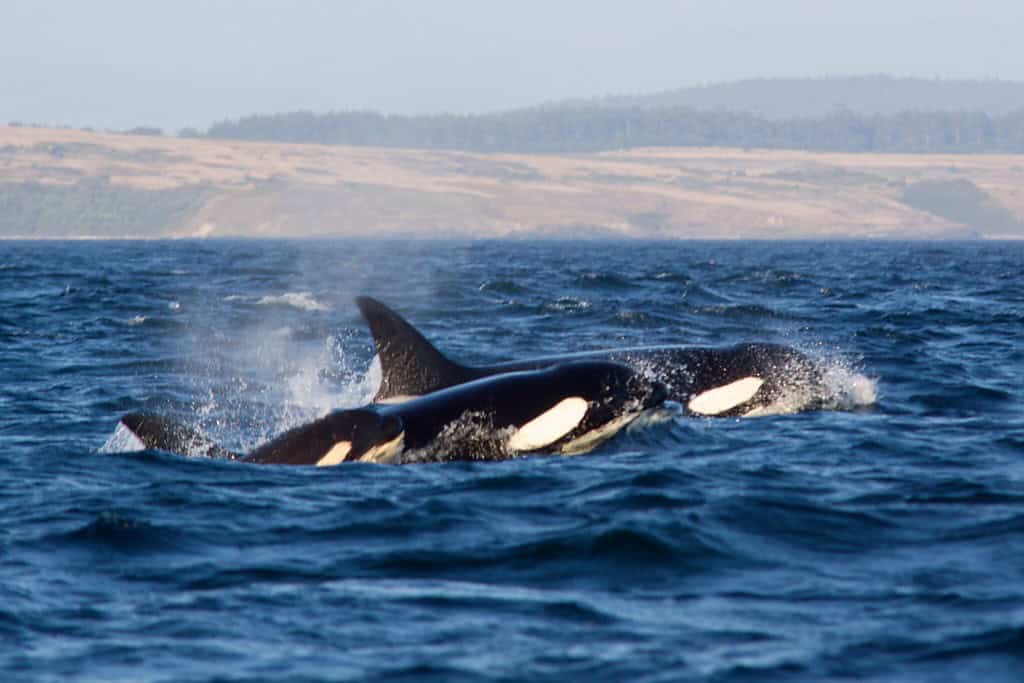
In a remarkable new observation, scientists have documented killer whales (orcas) and dolphins seemingly coordinating during salmon hunts off the coast of British Columbia, challenging long-held assumptions about interspecies interactions among marine mammals. Using a combination of aerial drone footage, biologging tags, and underwater recordings, researchers captured repeated encounters where northern resident killer whales followed and foraged alongside Pacific white-sided dolphins—a behavior that could be the first documented evidence of cooperative foraging between these species.
While the findings were published in Scientific Reports and have drawn wide interest, not all experts agree on the interpretation, with some suggesting alternative explanations for the behavior. Regardless, the footage opens a new chapter in understanding complex marine predator dynamics and highlights how flexible, adaptive behaviors may emerge in shared ecosystems.
Rare Encounters in the North Pacific
Traditional views of orca–dolphin interactions have tended toward predation or avoidance, with some orca ecotypes known to hunt dolphins as prey. However, the interactions observed near Vancouver Island paint a different picture: dolphins and killer whales were seen in proximity during salmon foraging, sometimes diving and surfacing in coordinated ways that suggest mutual engagement rather than conflict.
Researchers recorded 258 encounters during the study period, with orcas often changing course to follow dolphin activity—indicating these were more than random chance meetings. These repeated patterns raise intriguing questions about how and why these two intelligent species might tolerate or even benefit from each other’s presence in a shared hunt.
Hunting Tactics: Shared Strategies or Opportunistic Advantage?
A key hypothesis is that dolphins, with their skillful echolocation and agile movement, may act as effective scouts for schooling Chinook salmon. Orcas, capable of handling large salmon, appear to track these signals by following dolphin movements during dives, potentially amplifying their own hunting success.
Observations also captured occasions where orcas caught, dismembered, and shared salmon with their own pods, with dolphins present and feeding on leftover pieces—suggesting that the interactions may offer nutritional payoffs for both parties.
Scientific Interpretations: Cooperation or Kleptoparasitism?
While lead researchers describe the behavior as possible co-operative foraging, some scientists urge caution, noting that mutual benefit has not yet been definitively quantified. Skeptics argue the dolphins may be engaging in kleptoparasitism—harvesting scraps from orca kills—rather than true collaboration.
Others propose that the orcas might even be avoiding or tolerating dolphins in certain contexts rather than intentionally working with them, stressing the need for further study to tease apart these behavioral nuances.
A Behavioral Puzzle in Marine Ecology
Cetaceans like orcas and dolphins are noted for their high intelligence and social complexity, with past studies documenting extensive intra-species cooperation among pods and schools. But inter-species cooperative hunting remains extremely rare, especially among large predators with overlapping ranges and historically competitive dynamics.
Documenting these encounters adds a valuable data point to broader questions about how marine animals adapt to shared food resources—and raises the prospect that such interactions may be more common but previously overlooked due to the difficulty of observing deep-sea behavior.
Implications for Conservation and Future Research
Understanding the drivers behind orca–dolphin interactions isn’t just an academic curiosity; it could have real implications for ecosystem management, especially as salmon populations face pressures from climate change, overfishing, and habitat loss.
If these behaviors reflect adaptive responses to changing prey availability, scientists may need to rethink how marine predator networks respond to environmental stress—and how conservation strategies can protect not just individual species but dynamic interspecies relationships.
Whether this phenomenon ultimately proves to be true cooperative hunting or an opportunistic feeding strategy, the observations off British Columbia are a reminder of the complexity and adaptability of marine life. In a world where ecosystems are rapidly changing, dolphins and killer whales displaying flexible hunting associations could indicate emergent behaviors shaped by environmental pressures and shared survival imperatives. The science isn’t settled—but these remarkable footage and data show that our assumptions about predator dynamics beneath the waves are due for revision. What remains clear is that continued research will be essential to understand not just what these interactions are, but what they tell us about intelligence, resilience, and survival in the ocean’s depths.

- Urban Coyotes Show Remarkable Adaptability, Learning to Thrive in City Environments - July 22, 2026
- Beavers Are Nature’s Engineers, Creating Vital Habitats for Other Wildlife Species - July 21, 2026
- The Recovery of the California Condor Offers Hope for Other Critically Endangered Birds - July 21, 2026