

Have you ever heard someone say their dog was acting weird right before an earthquake hit? It sounds like something out of a movie, yet these stories have been told for centuries across different cultures. From ancient Greek historians documenting rats fleeing cities to modern pet owners reporting restless behavior in their cats, the idea that animals possess some kind of sixth sense has captured our imagination for generations.
The truth is, this phenomenon sits somewhere between folklore and science. While we don’t have all the answers yet, researchers are finally taking these observations seriously. There’s something genuinely fascinating happening when animals start behaving strangely before the ground shakes or a tsunami rolls in. Let’s explore what we actually know about these mysterious animal predictors and whether they might one day help us prepare for disasters.
The Ancient Observations That Started It All

The earliest documented reference to unusual animal behavior before an earthquake dates back to Greece in 373 BC, when rats, weasels, snakes, and centipedes reportedly left their homes and headed for safety several days before a destructive earthquake. Think about that for a moment. People over two millennia ago noticed the same patterns we’re still trying to understand today.
Roman historians noted that before the eruption of Vesuvius in 79 CE, birds abandoned Campania, while dogs in Pompeii became extremely restless, with these observations recorded by Pliny the Younger. These weren’t just random tales passed down through generations. They were serious enough that educated people of the time thought them worth recording.
Ancient Chinese records from 780 BCE mention unusual animal behavior preceding earthquakes, leading to the development of one of the world’s first seismic monitoring systems that partially relied on animal observations. The Chinese took it so seriously that they actually incorporated animal watching into their early warning methods. In Japan, fish were considered living seismographs, with farmers noticing that carp or giant catfish behaved oddly before earthquakes, giving rise to the myth of namazu, a giant catfish living deep under Japan causing earthquakes by thrashing its tail.
It’s remarkable how different cultures, separated by vast distances and time periods, all came to similar conclusions. Either they were all experiencing the same mass delusion, or animals really were picking up on something humans couldn’t detect.
Dogs and Cats: Our Closest Observers

A recent study of an earthquake in a region of Siberia noted that a small, but significant number of dogs showed anxious behaviors, including barking for no reason, howling, whining, and running around, minutes to hours before the earthquake occurred. If you’ve ever lived through an earthquake, you might remember your own pet acting strange beforehand. I think what makes dogs and cats such interesting subjects is that we live with them, so we actually notice when they’re behaving differently.
Scientists continuously observed farm animals, including cows, sheep, and dogs on a farm in Italy during expected earthquake activity, finding the animals repeatedly showed unusually high activity levels prior to an earthquake, with those closer to the epicenter reacting sooner, from 20 hours to one hour before. The pattern here is pretty striking. It wasn’t just one or two incidents. The animals consistently showed these behaviors, and the timing correlated with their distance from the epicenter.
After the 2011 Japanese earthquake, unexpected behaviors were reported by nearly one in five dog owners and one in six cat owners, with most unusual dog behaviors observed in the seconds and minutes before the quake, while nearly half of cats with unusual behavior showed it immediately prior. Here’s the thing though: after an earthquake, we might be more likely to attribute odd behavior to that earthquake rather than dismissing it as our pet having an off day.
One researcher suggests that dogs use their remarkable sense of hearing to pick up high-pitch sounds of rocks scraping beneath the earth, an event that precedes earthquakes. Dogs with the smallest head sizes tended to show a far greater increase in activity and anxiety levels before the quake compared to dogs with the largest head sizes. Smaller dogs, it seems, might be better earthquake detectors than their bigger cousins.
The Haicheng Miracle: When Animal Warnings Saved Lives

Let’s talk about one of the most compelling cases in modern history. In 1975, Chinese officials ordered the evacuation of Haicheng, a city with one million people, just days before a 7.3-magnitude quake, with only a small portion of the population hurt or killed when fatalities and injuries could have exceeded 150,000. This wasn’t just about saving a few people. We’re talking about potentially preventing over a hundred thousand deaths.
Despite freezing temperatures, scores of snakes slithered out of their hibernation dens in the weeks before the magnitude 7.3 earthquake struck the Chinese city of Haicheng on February 4, 1975, and the reptiles’ behavior, along with other incidents, helped persuade authorities to evacuate the city hours before the massive quake. Imagine seeing snakes emerging in the dead of winter when they should be hibernating. That’s not subtle. That’s nature screaming that something’s wrong.
Honestly, this event gave people real hope that earthquake prediction might be possible. It was later discovered that a rare series of small tremors, called foreshocks, occurred before the large quake hit the city. So maybe it wasn’t purely the animal behavior after all.
Usually no large earthquake follows this type of seismic activity, and unfortunately, many earthquakes are preceded by no precursory events whatsoever, with the next large Chinese event being unheralded and many thousands of Chinese dying. This is the frustrating part. Animal behavior doesn’t seem to work as a consistent early warning system.
The 2004 Tsunami: Nature’s Selective Warning
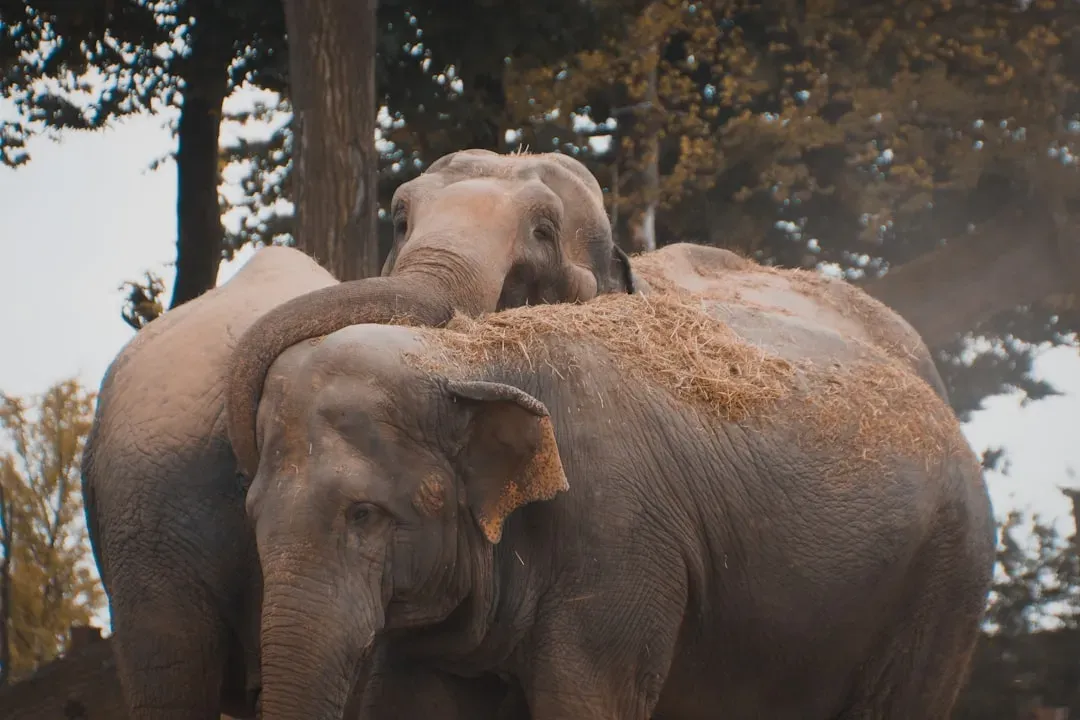
In 2004, a tsunami hit southeast Asia and killed more than 200,000 people, but almost no wild animals died, with dogs, elephants, antelopes, bats and even flamingos fleeing the scene before the wave hit. Think about that contrast. Over two hundred thousand humans perished, yet wild animals somehow managed to escape. What did they know that we didn’t?
Locals saw elephants and flamingos fleeing to higher grounds ahead of the 2004 tsunami triggered by the 9.1 magnitude earthquake in the Indian Ocean. People in Indonesia reported that elephants fled the coast for the interior of the country before the tsunami hit. An Indonesian children’s song sung for centuries advises that when animals go crazy, run away from the sea and go to the highlands.
Wildlife park rangers in Sri Lanka reported the peculiar absence of animals from harm’s way despite the deaths of over 30,000 humans in the country. The animals didn’t just survive by chance. They actively moved away from danger zones before the tsunami arrived.
According to eyewitness accounts, elephants were seen running for higher ground, flamingos left low-lying nest areas, and dogs refused to go outdoors. Let’s be real here: when usually cooperative elephants suddenly decide they need to be somewhere else, that’s worth paying attention to.
The Science Behind the Sixth Sense

So what exactly are these animals detecting? Very few humans notice the smaller P wave that travels the fastest from the earthquake source and arrives before the larger S wave, but many animals with more keen senses are able to feel the P wave seconds before the S wave arrives. That explains the behavior that occurs just seconds before we feel the shaking, though.
Some scientists think animals could be sensing foreshocks, acoustic waves generated by the movement of underground rocks, ionization of air at pressurized rock surfaces, changes in electrical fields, or the release of unpleasant-smelling chemicals. There are multiple possibilities, which makes studying this phenomenon incredibly complex.
Movement data show that animals were unusually restless in the hours before earthquakes, with those closer to the epicentre of the impending quake starting to behave unusually earlier. This pattern is exactly what you’d expect if some kind of signal was emanating from the earthquake’s origin point and spreading outward.
In the days before an earthquake, shifting tectonic plates squeeze rocks along a fault line, causing the rocks to release minerals that expel ions into the air according to a 2010 study, with animals then reacting to this novel sensation. It’s hard to say for sure, but this ionization theory is one of the leading explanations. Animals detect infrasound vibrations, gas changes, electromagnetic shifts, and pressure drops through evolved sensory abilities that humans lack or have in weaker form.
Can We Actually Use This Knowledge?
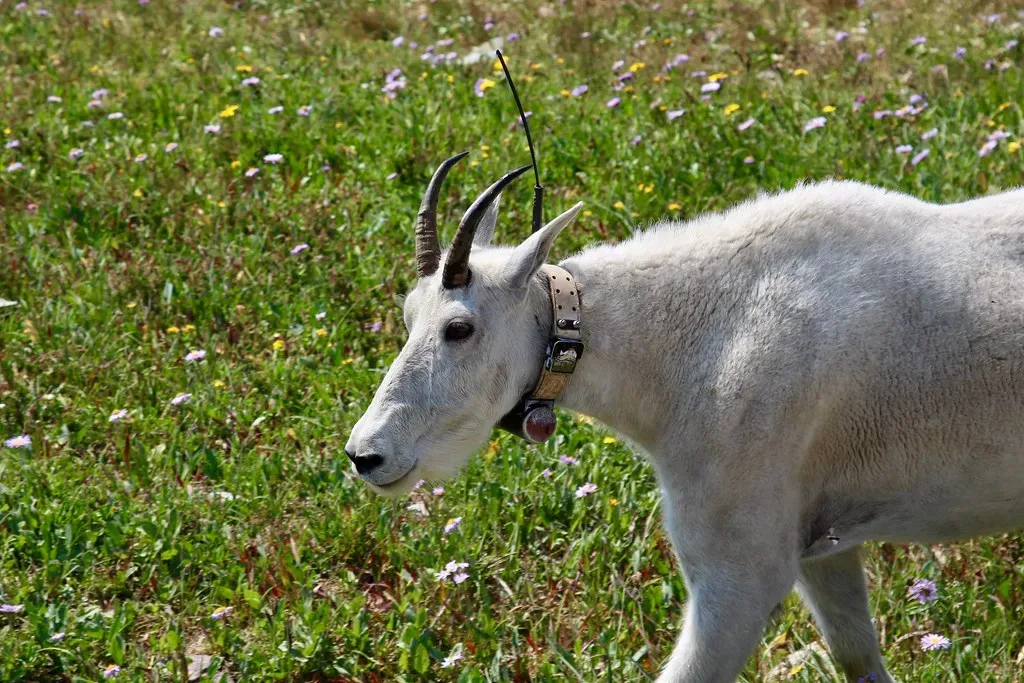
Real-time data shows what an animal earthquake early warning system could look like: a chip on the collar sends movement data to a central computer every three minutes, triggering a warning signal if it registers significantly increased activity for at least 45 minutes, with researchers having once received such a warning three hours before a small quake shook the region directly below the animals’ stables. The technology is actually there. We can monitor animals continuously now in ways that weren’t possible before.
Still, there are major challenges. Some wonder whether there were instances in which the creatures showed unusual activity and there was no earthquake, because to use animals as prognosticators, it would be imperative to establish that they exhibited unusual behavior only in reaction to upcoming seismic events. Otherwise we’d be dealing with constant false alarms.
For centuries people have claimed that strange behavior by their cats, dogs and even cows can predict an imminent earthquake, but the first rigorous analysis of the phenomenon concludes that there is no strong evidence behind the claim. That’s the scientific consensus right now. The anecdotal evidence is compelling, yet rigorous proof remains elusive.
Investigation of seven earthquakes in California, South America and Central America found that only one was preceded by observations of unusual animal behavior that exceeded background levels, with about 10% of households on any given day saying a dog, cat, or horse acted unusual in the previous week. Animals are unpredictable creatures. They act weird sometimes for reasons that have nothing to do with earthquakes.
Conclusion: Between Folklore and Future Warning Systems

Here’s what we know for certain: animals do behave strangely before some earthquakes and natural disasters. Anecdotal evidence abounds of animals, fish, birds, reptiles, and insects exhibiting strange behavior anywhere from weeks to seconds before an earthquake, however, consistent and reliable behavior prior to seismic events, and a mechanism explaining how it could work, still eludes us. The pattern exists, yet we can’t fully explain it or rely on it.
Before the behavior of animals can be used to predict earthquakes, researchers need to observe a larger number of animals over longer periods of time in different earthquake zones around the world, hoping to use the global animal observation system Icarus on the International Space Station. The research continues, and technology is making it more feasible than ever to collect the kind of data we need.
Maybe one day we’ll crack this mystery completely. Maybe dogs, cats, elephants, and snakes will become part of an integrated early warning system that saves lives. Or maybe we’ll discover that the connection is more complex and unpredictable than we hoped. Either way, the next time your pet starts acting strangely for no apparent reason, it might be worth paying attention. What do you think? Could animals one day help us predict the unpredictable?
