
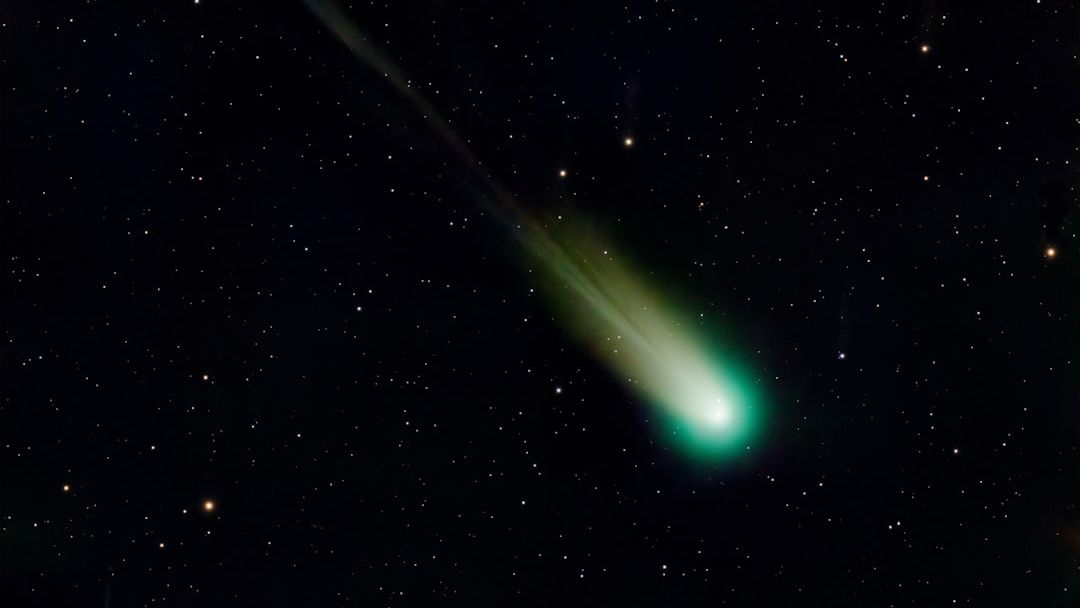
Picture a celestial wanderer hurtling toward the inner solar system, journeying from the darkest reaches of space. Right now, this icy visitor is making its way closer to Earth, carrying with it the promise of a spectacle that could light up the night sky in ways we haven’t witnessed for years. For skywatchers around the world, the anticipation is building.
Discovered in September 2025, it will make its closest approach to the Sun and Earth in late April 2026, flying between the orbits of Venus and Mercury. What makes this cosmic traveler so special? Well, there’s a genuine possibility that this comet could become one of the year’s most talked-about celestial events.
The Discovery That Has Astronomers Buzzing
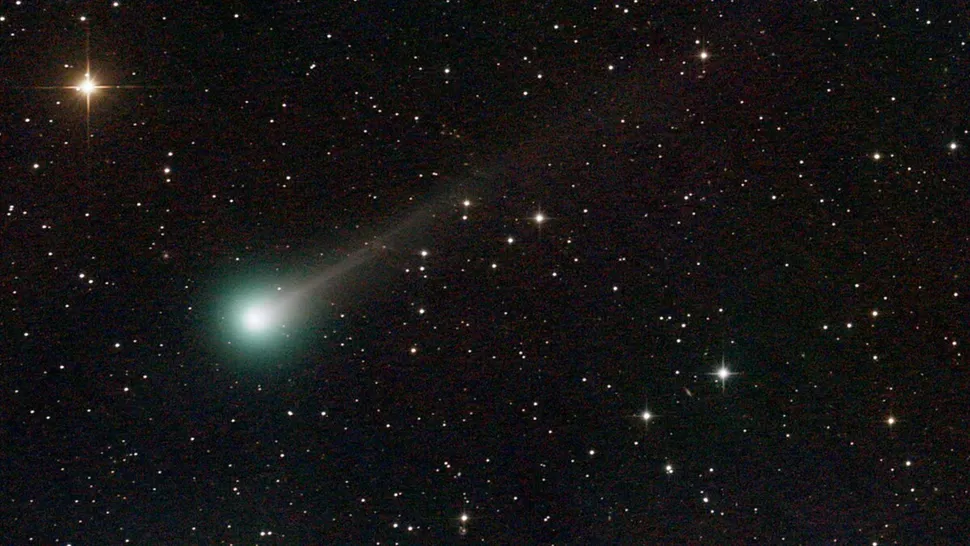
Comet C/2025 R3 (PanSTARRS) was discovered on Sept. 8, 2025, by Pan-STARRS, a pair of 1.8-meter (5.9 feet) reflector telescopes atop Haleakalā volcano in Hawaii. When researchers first spotted it, the comet appeared as nothing more than a faint speck of light, barely registering on their instruments. At the time, it appeared only as a faint 19th-magnitude speck – far too dim for the unaided eye or even amateur telescopes and visible only with sensitive CCD detectors.
Follow-up observations using the 3.6-meter (11.8 feet) Canada-France-Hawaii Telescope at Mauna Kea, Hawaii, on Sept. 17 helped astronomers calculate the comet’s path. From those calculations, something extraordinary emerged. This wasn’t just another routine discovery destined to remain invisible to casual observers.
When the Comet Comes Calling
Recently discovered Comet C/2025 R3 (PanSTARRS) will make its closest approach to the sun and Earth in late April and could potentially be visible to the naked eye. The timing couldn’t be better for skywatchers hoping to catch a glimpse. The best chance to see C/2025 R3 will likely be just before perihelion, around April 17, when a new moon will darken the night sky, making it easier to spot objects on the cusp of naked-eye visibility.
There’s something almost poetic about the way cosmic timing works out sometimes. On that date, this icy visitor to the inner solar system will come within 47.4 million miles (76.3 million kilometers) of the sun. On April 27, Comet C/2025 R3 (PanSTARRS) will be at its closest point to Earth – within 44 million miles (70.8 million km) – and so will probably be at its brightest.
The Great Brightness Mystery
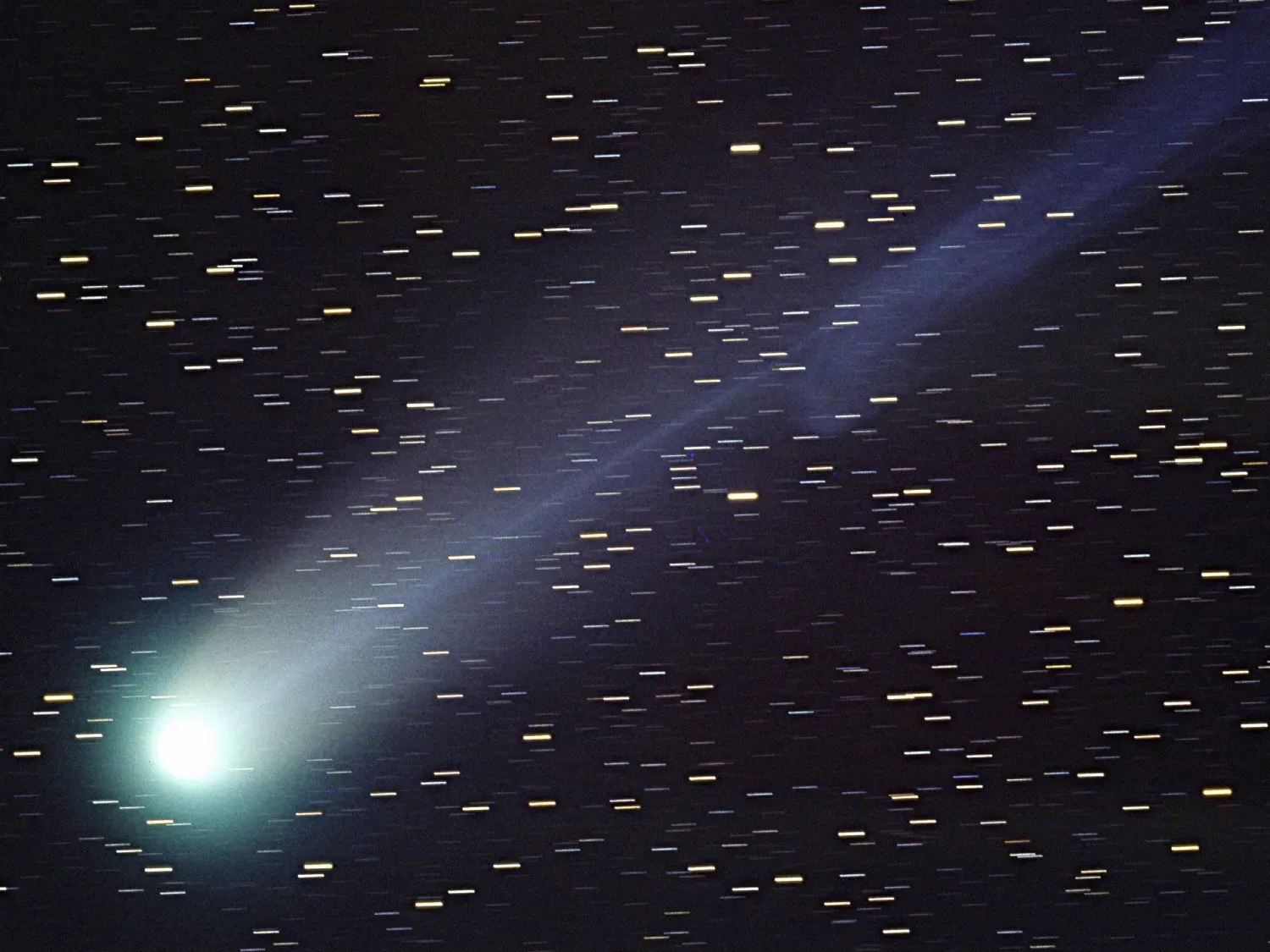
Here’s where things get really interesting. Nobody knows exactly how bright this comet will become, which is driving astronomers slightly mad with anticipation. The brightness of comets is notoriously unpredictable. Although Comet C/2025 R3 (PanSTARRS) could prove to be the brightest comet of 2026, it’s not known how bright it will get.
The predictions vary wildly. Some researchers have predicted that it will reach an apparent magnitude of 8, meaning it would be visible only via a decent stargazing binoculars. That would make it a lovely target for amateur astronomers with equipment, certainly worth seeking out. Yet others estimate that it could reach magnitude 2.5, which would make it clearly visible to the naked eye. That’s comparable to the brightest stars in the famous W-shaped constellation Cassiopeia, which is easily visible with unaided eyes in a dark sky.
The Forward Scattering Advantage
So what could tip the scales toward naked-eye visibility? The answer lies in an optical phenomenon that sounds more complicated than it actually is. Comet R3’s prospects of becoming a bright, easy-to-see nighttime object may be enhanced by a phenomenon called forward scattering. Because this comet will move between Earth and the sun, its tail will reflect and scatter a lot of sunlight in the direction of Earth – and into the eyes of observers – in late April 2026.
Think of it like sunlight hitting dust particles in a shaft of light streaming through a window. When the angle is just right, those particles suddenly become dramatically more visible. The same principle applies here, but on a cosmic scale. This positioning could be the game-changer that transforms C/2025 R3 from a modest binocular object into something truly spectacular.
A Visitor From the Distant Past
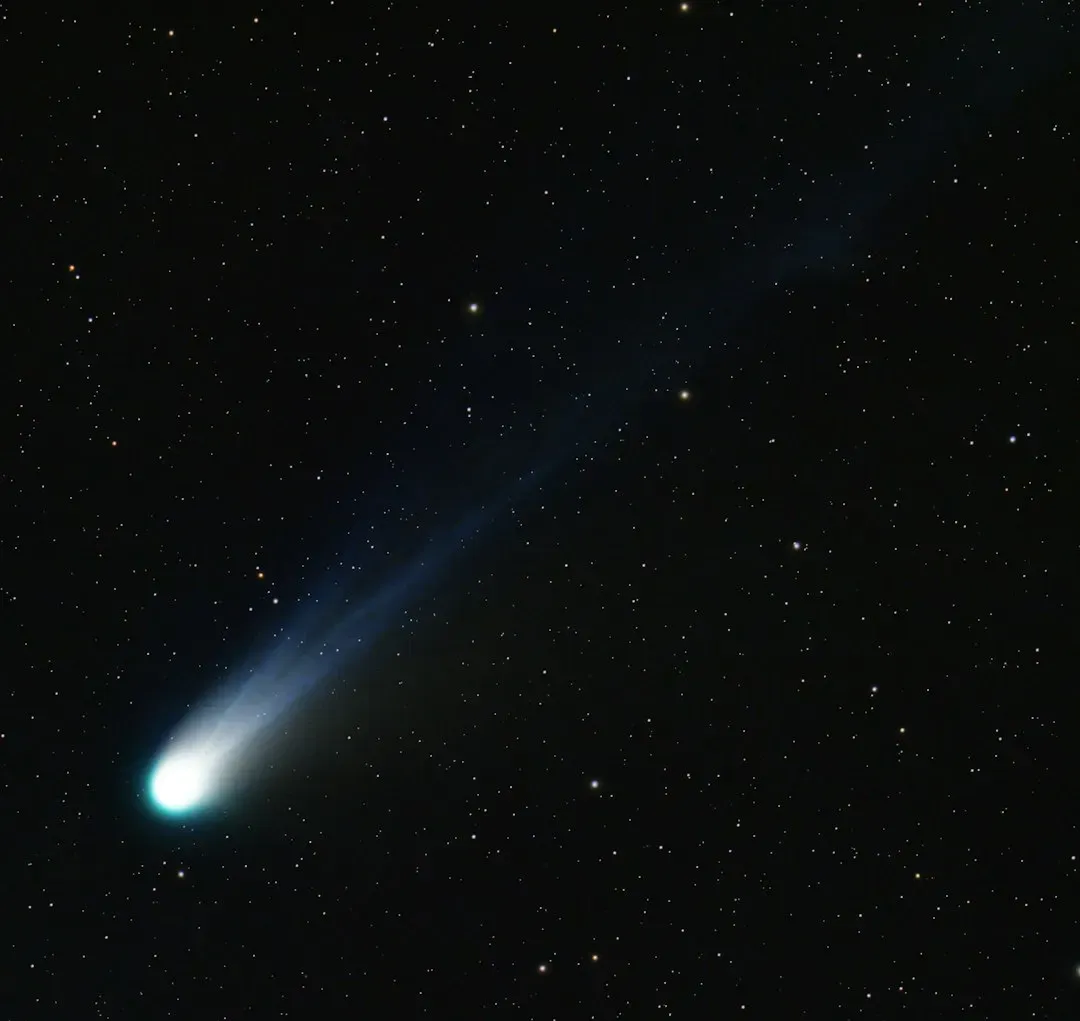
Long-period comets like C/2025 R3 are pristine leftovers from the early Solar System, likely formed in the cold, distant Oort Cloud. Studying their gases and dust provides insights into planetary formation. There’s something humbling about the thought that we’re watching frozen remnants from the birth of our solar system billions of years ago.
It is tilted by about 125° relative to the plane of the planets, which means it approaches the Sun on a retrograde orbit (moving in the opposite direction to the planets). Such steeply inclined paths are typical for comets that come from the Oort Cloud, a vast reservoir of icy bodies surrounding the Solar System. Even more remarkable? If confirmed, this would make the comet’s orbit hyperbolic, meaning it will swing past the Sun once and then head back out into interstellar space. In that case, April 2026 could be the only time in history when humans get to see C/2025 R3.
What This Could Mean for 2026
It may end up being the brightest comet of the year. Recent years have treated comet enthusiasts well, with several impressive shows lighting up the sky. Then came Comet C/2023 A3 (Tsuchinshan-ATLAS) in October 2024 and the bright C/2024 G3 (ATLAS), the “New Year comet,” which put on a great show for viewers in the Southern Hemisphere in January 2025. It was followed in mid-October by Comet C/2025 A6 (Lemmon), which reached the cusp of naked-eye visibility and, to a lesser extent, Comet C/2025 R2 (SWAN).
Viewers in the Southern Hemisphere may also get a good look at the comet in early May. The timing and positioning suggest this could be a global event, weather permitting. Comet C/2025 R3 (PanSTARRS) will be at its best in the predawn sky in late April, as seen from the Northern Hemisphere, and after sunset in early May for viewers in the Southern Hemisphere.
The coming months will tell whether C/2025 R3 lives up to its potential as the Great Comet of 2026. Comets have a habit of surprising us, sometimes exceeding expectations and other times fizzling out quietly. What we do know is that this icy wanderer is on its way, and late April will reveal whether it becomes a celestial sensation or simply a pleasant binocular target.
Either way, there’s something magical about knowing that right now, somewhere out in the darkness of space, this ancient visitor is approaching. It’s been traveling for who knows how long, and we might be the only humans who will ever see it before it disappears back into the cosmic void. Will you be looking up when it arrives? What do you think – will it shine bright enough to capture headlines, or will it remain a secret for those who know where to look?

- 13 Largest Horses in the World - July 29, 2026
- The Truth About Orca Intelligence Might Surprise You - July 29, 2026
- Do Animals Understand Fairness? New Research Says Yes - July 29, 2026