

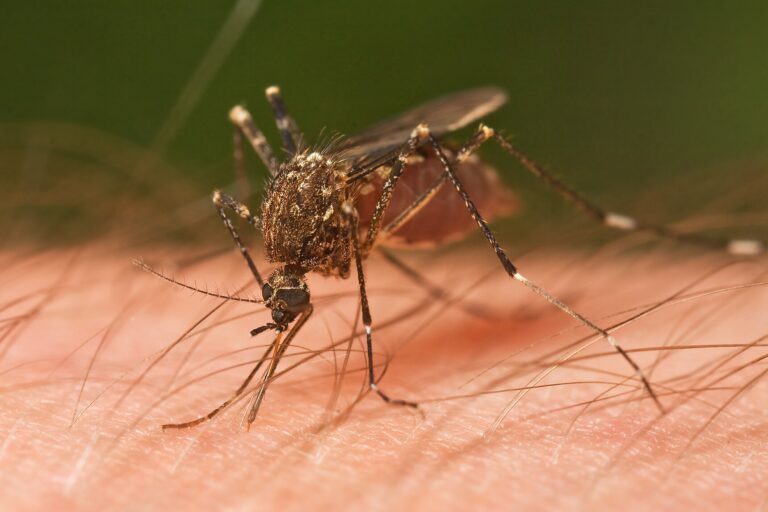

A Biodiversity Hotspot Under Siege (Image Credits: Imgs.mongabay.com)
Brazil’s Atlantic Forest – Once a sprawling biodiversity haven along the country’s eastern coast, the region now grapples with the consequences of extensive habitat loss as mosquitoes increasingly target humans for blood meals.
A Biodiversity Hotspot Under Siege
The Atlantic Forest has long been recognized as one of the world’s richest ecosystems, supporting hundreds of species of birds, amphibians, reptiles, mammals, and fish. Human activities such as agriculture, urbanization, and logging have reduced its coverage to less than a third of its original extent. This fragmentation not only threatens wildlife but also alters the behavior of insects that depend on the forest’s diverse inhabitants.
Researchers have observed how these changes ripple through the food web. As vertebrate populations dwindle, opportunistic feeders like mosquitoes face fewer options for sustenance. The shift becomes evident in the remnants of the forest, where human encroachment blurs the lines between natural and built environments. This dynamic has prompted scientists to investigate the feeding patterns of local mosquito species, revealing a troubling adaptation.
Mosquitoes’ Evolving Feeding Habits
In a recent study, scientists captured and analyzed mosquitoes from the Atlantic Forest to determine their blood sources through DNA testing. The results indicated a strong preference for human blood among several species, even in areas with abundant wildlife alternatives. This preference persists despite the forest’s historical role as a refuge for a wide array of vertebrates.
Senior author Dr. Jeronimo Alencar, a biologist at the Oswaldo Cruz Institute in Rio de Janeiro, noted, “Here we show that the mosquito species we captured in remnants of the Atlantic Forest have a clear preference for feeding on humans.” Such findings underscore how deforestation compels these insects to seek out nearby human populations. The study, published in Frontiers in Ecology and Evolution, sampled blood meals from various sites, highlighting the uniformity of this trend across fragmented habitats.
Rising Risks of Disease Spread
The mosquitoes’ pivot to human hosts amplifies the potential for transmitting viruses that pose serious health threats. Species capable of carrying dengue, Zika, and other arboviruses now encounter more opportunities to bridge the gap between forest edges and human settlements. In a region already burdened by vector-borne diseases, this behavioral change could exacerbate outbreaks.
Public health officials have long warned about the interplay between environmental degradation and infectious diseases. As mosquito populations adapt, communities near forest remnants become more vulnerable. Factors like reduced biodiversity limit natural checks on insect numbers, creating ideal conditions for proliferation. The study’s insights call for integrated strategies that address both conservation and disease prevention.
Conservation Challenges and Solutions
Efforts to preserve the Atlantic Forest must now consider these ecological shifts to mitigate health risks. Reforestation initiatives and wildlife corridors could restore host diversity, potentially diluting mosquitoes’ reliance on humans. Policymakers in Brazil have ramped up monitoring in affected areas, but sustained funding remains crucial.
Local communities play a vital role in these endeavors. Education on protective measures, such as using repellents and eliminating breeding sites, complements broader habitat restoration. The study emphasizes that protecting the forest’s integrity benefits both ecosystems and human well-being.
- Habitat restoration projects to rebuild vertebrate populations.
- Enhanced surveillance of mosquito feeding patterns in urban-forest interfaces.
- Community-driven vector control programs to reduce disease incidence.
- Policy reforms to curb further deforestation in biodiversity hotspots.
- International collaboration for funding conservation in tropical regions.
Key Takeaways
- Deforestation in the Atlantic Forest has led mosquitoes to prefer human blood over wildlife.
- This shift heightens the risk of diseases like dengue and Zika spreading to human populations.
- Restoring habitats could reverse these trends and safeguard both nature and public health.
As the Atlantic Forest continues to shrink, the link between environmental loss and human health grows ever clearer, urging immediate action to preserve this vital ecosystem. What steps do you believe are most urgent for protecting both wildlife and communities? Share your thoughts in the comments.

As a little kid, I fell in love with nature, wildlife, and animals. Living in the USA, South Africa, Italy, China and Germany gave me the opportunity to discover the world's Wildlife. My favorite animals are Mountain Gorillas, Siberian Tigers, and Great White Sharks.
I'm a certified PADI Open Water Diver, went to Everest Base Camp and Trekked Gorillas in Uganda. I hold a Master of Science in Economics and Finance.
Please send any feedback to feedback@animalsaroundtheglobe.com
- 15 PowerfulAnimals Where Females Rule the Male - July 21, 2026
- 14 Mammals That Use Tools - July 21, 2026
- Discover the Animal that can regenerate itself: Baby Axolotl - July 21, 2026