
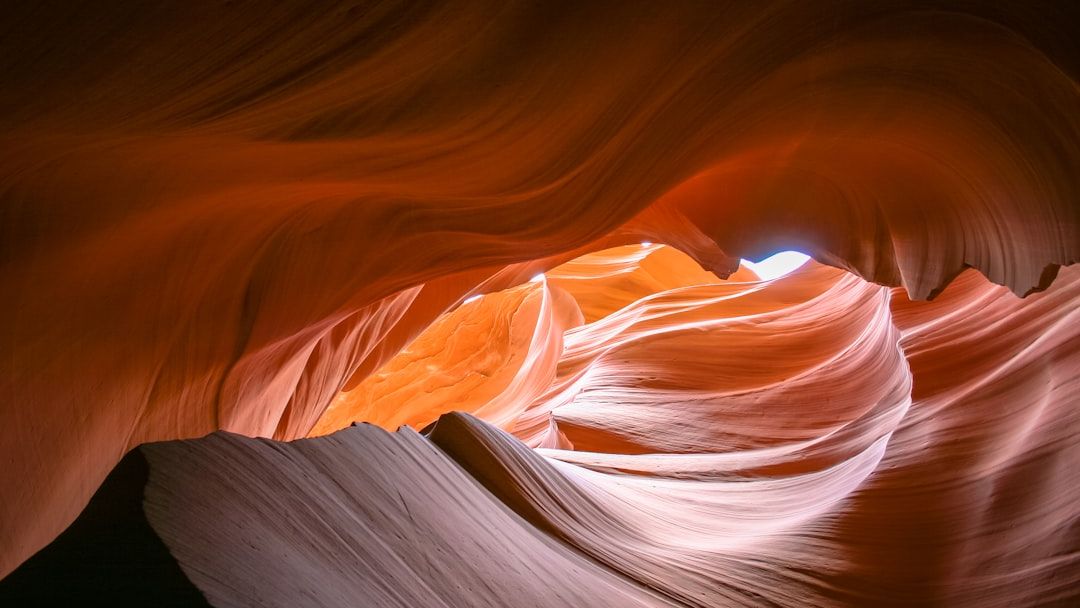
When you think of American deserts, what comes to mind? Maybe endless sand dunes, scorching heat, or vast emptiness. Most people imagine desolation. They couldn’t be more wrong. The deserts scattered across the United States harbor some of the most stunning, unexpected landscapes on the planet. From towering cacti forests to glistening white dunes, these arid lands burst with color, life, and mystery.
Here’s the thing. These deserts aren’t just beautiful in a postcard way. They’re alive with hidden wonders that most travelers never even know exist. Ancient geological formations, rare wildlife adapted to extreme conditions, and skies so dark you can practically touch the stars. Each desert holds its own secrets, waiting for those curious enough to explore beyond the obvious. So let’s dive in and discover what makes these seven deserts truly extraordinary.
The Sonoran Desert: Where Giants Touch the Sky
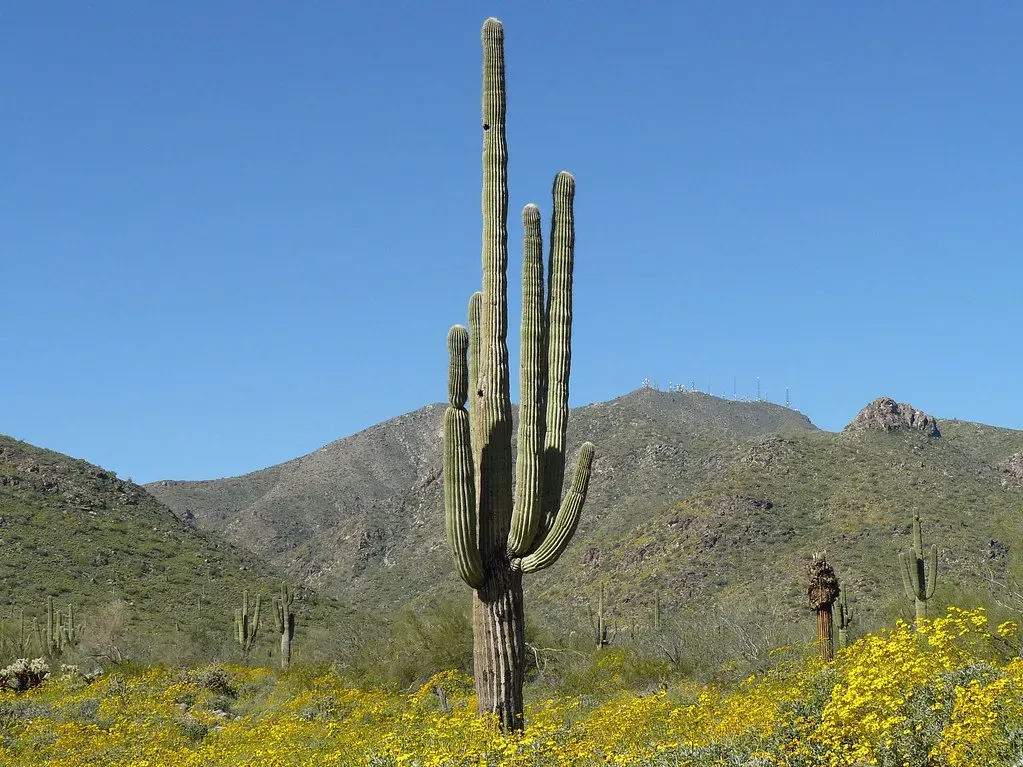
The Sonoran Desert is lush in comparison to most other deserts, with legume trees and columnar cacti distinguishing it from other North American deserts. Picture this: towering saguaro cacti, some reaching heights of over forty feet, standing like sentinels across rust-colored hills. It’s honestly breathtaking.
Covering the vast Saguaro National Park in the Sonoran Desert, this biosphere reserve is home to desert tortoises and some of the most biodiverse lifeforms on the planet. The diversity here is staggering. More than sixty mammal species, hundreds of bird species, and thousands of native plant varieties call this desert home. Walking through this landscape feels like stepping into another world entirely.
The desert covers approximately 100,000 square miles and includes most of the southern half of Arizona, southeastern California, most of the Baja California peninsula, the islands of the Gulf of California, and much of the state of Sonora, Mexico. What makes this desert truly special is its bimodal rainfall pattern. Unlike other deserts, it gets moisture in both spring and summer, allowing for spectacular wildflower blooms that transform the landscape into a vibrant carpet of color.
The hidden wonder? The Hidden Palms trail delivers hikers to a beautiful tropical palm oasis in the middle of the desert. Imagine stumbling upon a lush, green paradise after miles of desert terrain. It’s one of those moments that makes you question if you’re still on Earth.
The Chihuahuan Desert: The Most Diverse Desert You’ve Never Heard Of
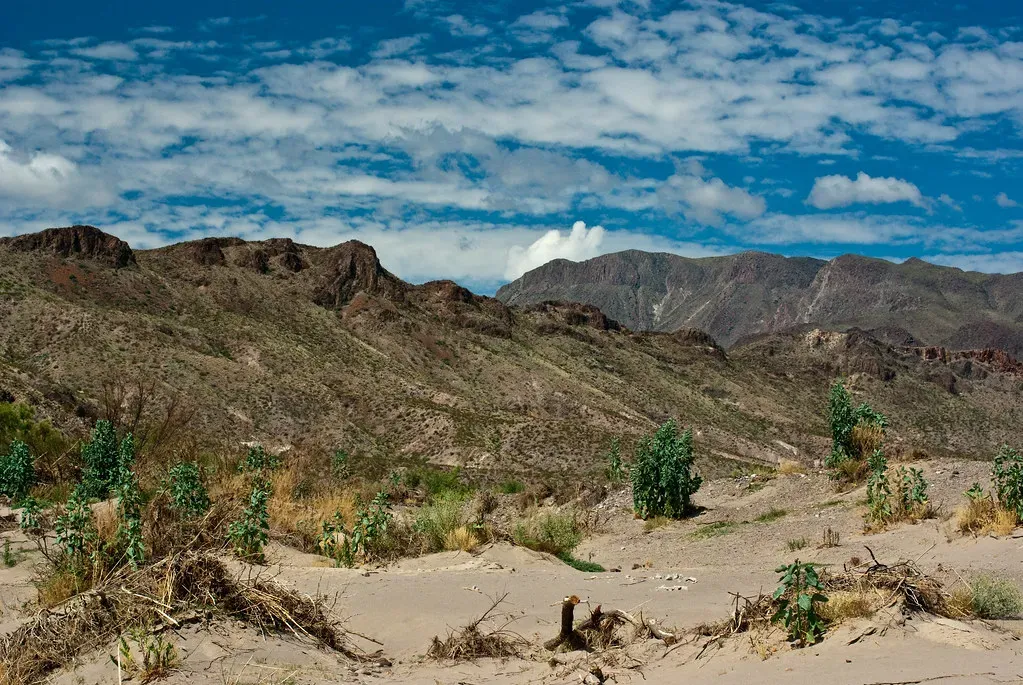
Let’s be real, most people have never even heard of the Chihuahuan Desert. Yet according to the World Wide Fund for Nature, the Chihuahuan Desert may be the most biologically diverse desert in the world as measured by species richness or endemism. That’s right. The most diverse. Not the Sahara, not the Arabian Desert, but this often-overlooked expanse in North America.
With an area of about 501,896 square kilometers, it is the largest hot desert in North America. Stretching across West Texas, New Mexico, and deep into Mexico, this desert hides its treasures in plain sight. The Chihuahuan Desert boasts as many as 3,500 plant species, including nearly a quarter of the world’s cactus species, with approximately 1,000 plant species growing only in this ecoregion.
The landscape here is dominated by yuccas and agaves rather than the large cacti found elsewhere. Distinctive habitat types include yucca woodlands, playas, gypsum dunes, and a diverse array of freshwater habitats. The basin and range topography creates isolated pockets of unique ecosystems, like biological islands in a sea of desert.
Covering 275 square miles of desert, White Sands National Park is home to the world’s largest gypsum dunefields. Walking across these pristine white dunes feels surreal, almost like you’re wandering through winter snow under a blazing sun.
The Mojave Desert: Land of Extremes
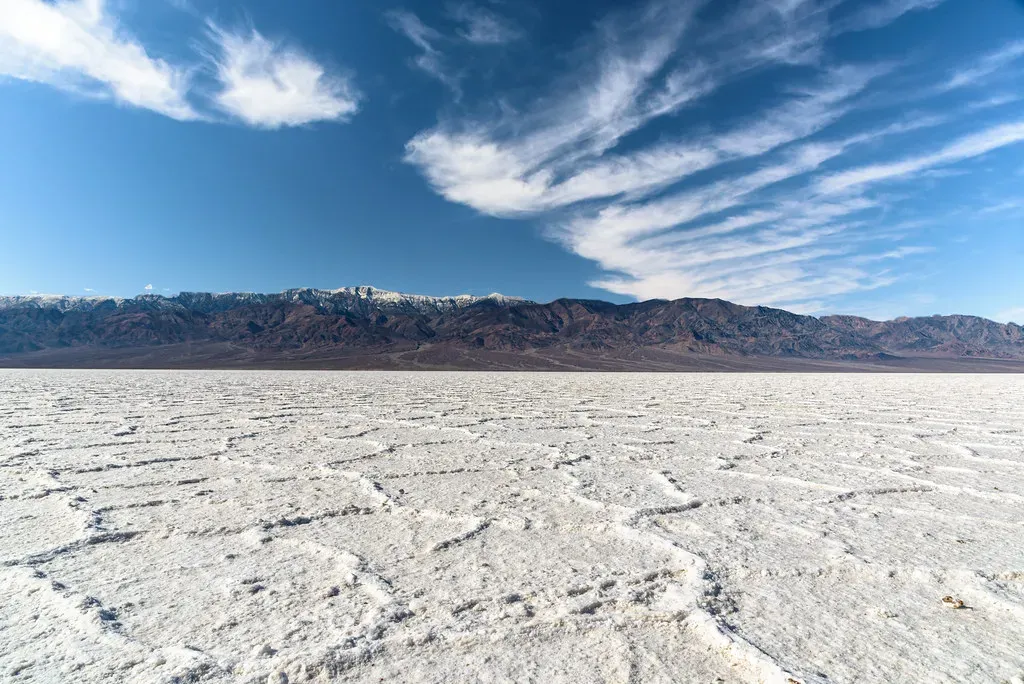
The Mojave Desert is the site of Death Valley, which is the lowest elevation in North America. Badwater Basin sits at a shocking 282 feet below sea level. Standing there, you’re literally at the bottom of the continent, surrounded by salt flats that shimmer like ice under the intense desert sun.
Of the North American deserts, the Mojave is the smallest and driest. Yet what it lacks in size, it makes up for in character. The defining characteristics include large creosote flats and the Joshua Tree, with the Mojave almost completely defined by the distribution of the Joshua Tree. These bizarre, twisted trees look like something out of a fantasy novel.
Death Valley holds another record worth mentioning. Temperatures here can soar beyond anything you’d think survivable. Travelers often hit temperatures of 114 degrees or higher when traveling through Furnace Creek to Badwater Basin. Still, thousands visit every year, drawn by the stark beauty and otherworldly landscapes.
The Kelso Dunes can reach up to 700 feet high and, against the flat desert floor, are breathtaking. Climb to the top at sunrise and you’ll understand why people fall in love with this harsh, unforgiving landscape. The silence is absolute, the views endless.
The Great Basin Desert: Cold Nights, Ancient Trees
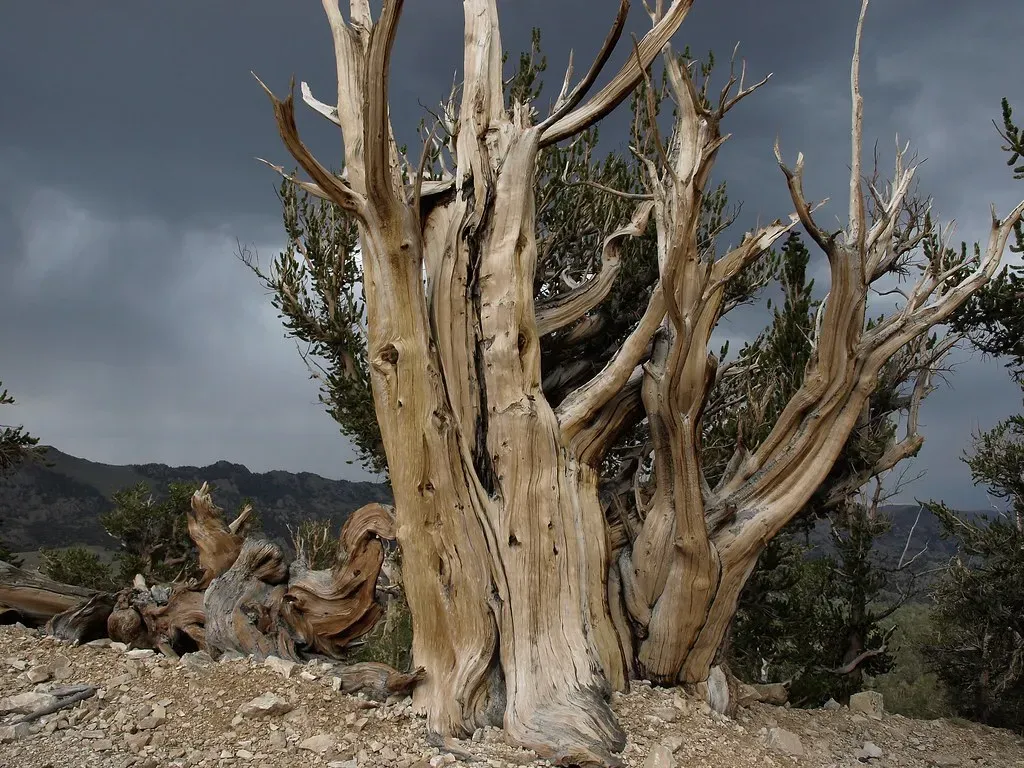
The Great Basin Desert, the largest U.S. desert, covers an arid expanse of about 190,000 square miles and is a cool or cold desert due to its more northern latitude and higher elevations. This isn’t the scorching desert most people imagine. Winter here brings snow, and frost can occur any time of year.
The desert is a temperate desert with hot, dry summers and snowy winters, spanning large portions of Nevada and Utah, and extending into eastern California. The landscape feels different from other deserts. Lower vegetation, dominated by sagebrush, stretches for miles in nearly pure stands. It’s hauntingly beautiful in its simplicity.
The hidden treasure here? A bristlecone pine found in this area was determined to be the world’s oldest living thing, at 4,950 years old. Let that sink in. These gnarled, weathered trees were already ancient when the pyramids were built. Standing among them feels like touching eternity itself.
Basin and range topography characterizes the desert, with wide valleys bordered by parallel mountain ranges, and more than 33 peaks with summits higher than 9,800 feet. The dramatic elevation changes create microclimates and pockets of unexpected biodiversity scattered throughout this vast, cold desert.
The Colorado Plateau: Technicolor Wonderland
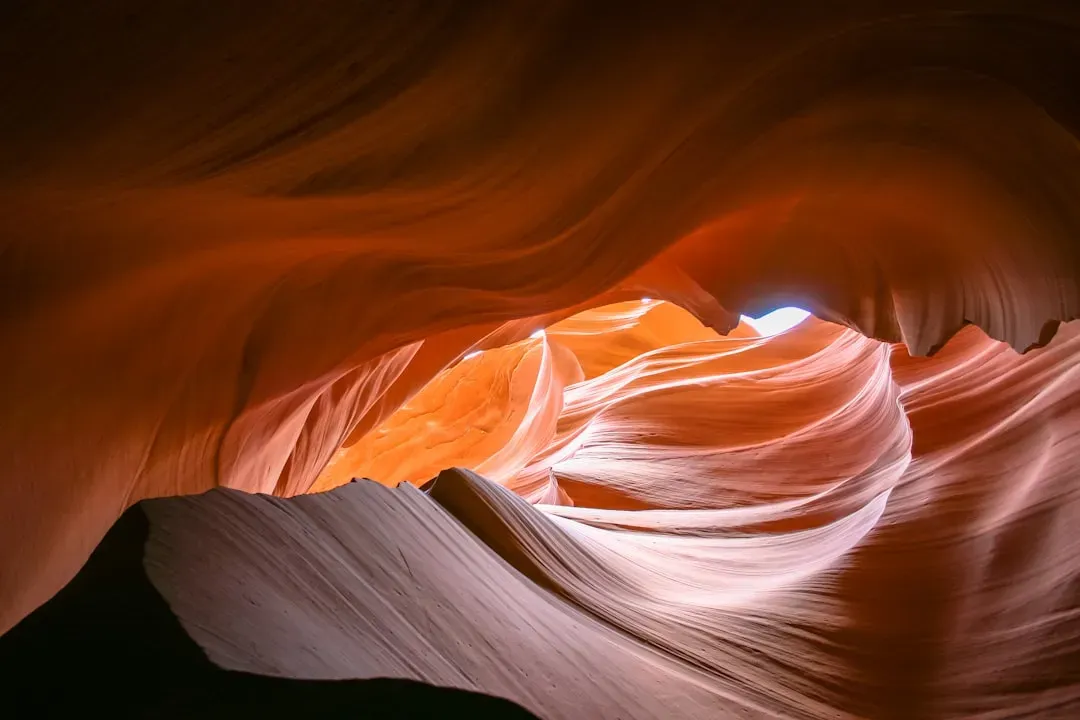
The Colorado Plateau is a physiographic and desert region roughly centered on the Four Corners, covering an area of 336,700 square kilometers within western Colorado, northwestern New Mexico, southern and eastern Utah, northern Arizona, and a tiny fraction in the extreme southeast of Nevada. This massive region holds treasures beyond measure.
The Colorado Plateau is largely made up of high desert, with scattered areas of forests. Its alternate nickname, Red Rock Country, refers to the brightly colored rock left bare and exposed by dryness and erosion. The colors here defy description. Reds, oranges, purples, whites, all layered in massive cliffs and canyons carved over millions of years.
One of the most geologically intriguing features is its remarkable stability, with relatively little rock deformation over the last 600 million years. While surrounding regions were violently twisted and broken, this massive block remained intact. That stability is what allowed erosion to carve such spectacular landscapes.
The Colorado Plateau is home to the largest cluster of national parks (10) and national monuments (17) found anywhere in the world. From the Grand Canyon to Zion, from Bryce to Arches, each park showcases unique geological wonders. The sheer concentration of natural beauty is unmatched anywhere on Earth.
The Painted Desert: Nature’s Abstract Masterpiece
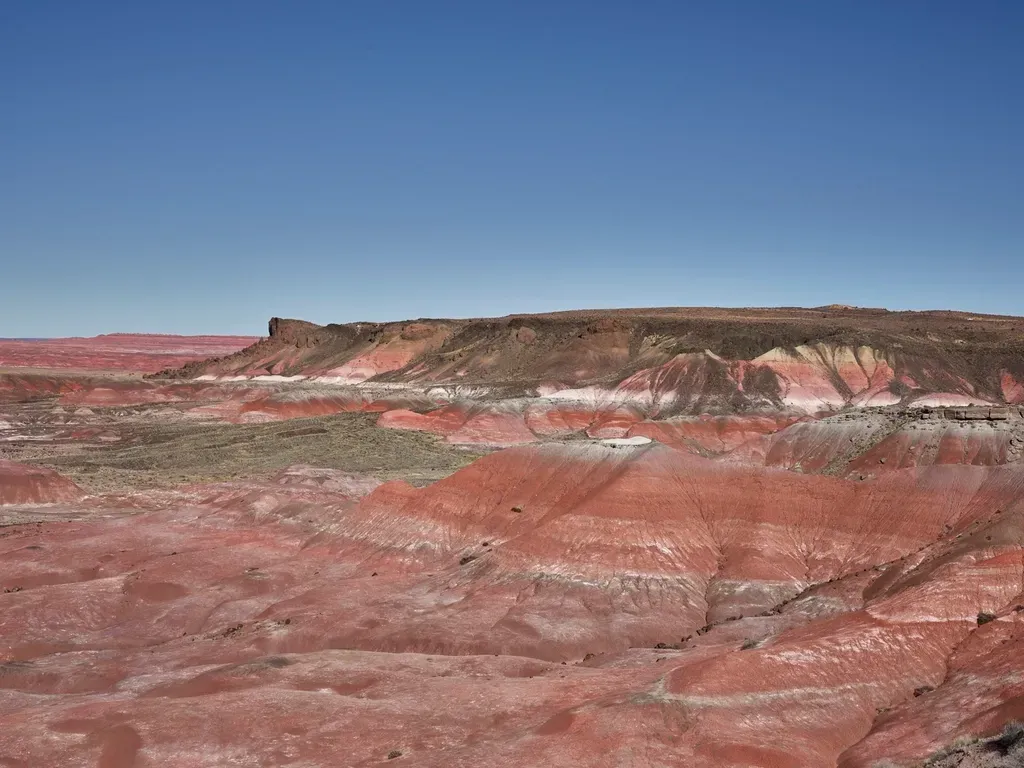
The Painted Desert section of the Colorado Plateau deserves its own recognition. Visitors to the Painted Desert and Petrified Forest National Park describe beautiful sights that look almost unreal. The landscape here shifts through bands of color as the sun moves across the sky, creating an ever-changing canvas of purple, red, orange, and white badlands.
Ancient streams, ponds and lakes produced formations such as the Chinle, Moenave, and Kayenta in the Mesozoic era, while a vast desert formed the Navajo and Temple Cap formations. Every layer tells a story. Ancient rivers, vanished seas, prehistoric dunes, all compressed and tilted, then exposed by erosion.
Walking through this landscape feels like exploring another planet. The formations called hoodoos stand like alien sentinels. A hoodoo forms when weathering erodes softer material from underneath harder capstone, leading to mushroom formations. They’re scattered across the landscape in surreal arrangements, defying gravity and logic.
Petrified wood litters the ground, turned to stone over millions of years. These ancient trees, once towering in primordial forests, now lie scattered like fallen giants, their wood replaced molecule by molecule with minerals, preserving every detail in brilliant agate and jasper.
The Intermountain Deserts: Where Basins Meet Ranges
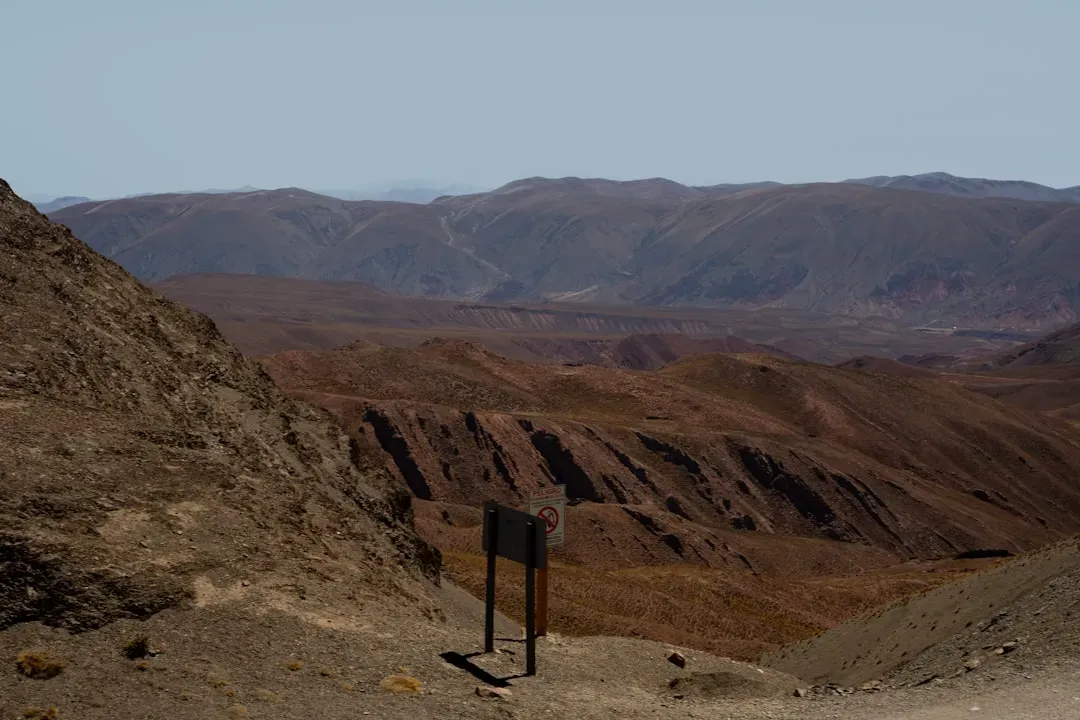
The Basin and Range region creates a distinctive desert landscape unlike anything else. Wide valleys bordered by parallel mountain ranges generally oriented north-south characterize this topography. Drive through Nevada and you’ll experience this pattern endlessly. Climb a mountain range, descend into a flat basin, repeat.
Sand dunes may occur where windblown sand accumulates against barriers, supporting specialized plant communities and diverse small mammal populations, while the Carson and Truckee Rivers provide water for irrigated farming. These isolated wetlands become desert oases, critical for migrating birds and desert wildlife.
Steep peaks rise abruptly from the desert floor in the Ruby Mountains, sheltering glacier-carved valleys, mountain lakes, and lush wildflower meadows, long called an oasis in the high Nevada desert. These sky islands harbor completely different ecosystems than the deserts below, creating biological refuges in the midst of aridity.
The stark beauty of alternating mountains and basins creates endless photographic opportunities. Sunrises paint the distant ranges in shades of purple and gold, while playas shimmer with mirages during the heat of day. It’s a landscape of extremes, harsh yet captivating.
Conclusion: Treasures Worth Discovering
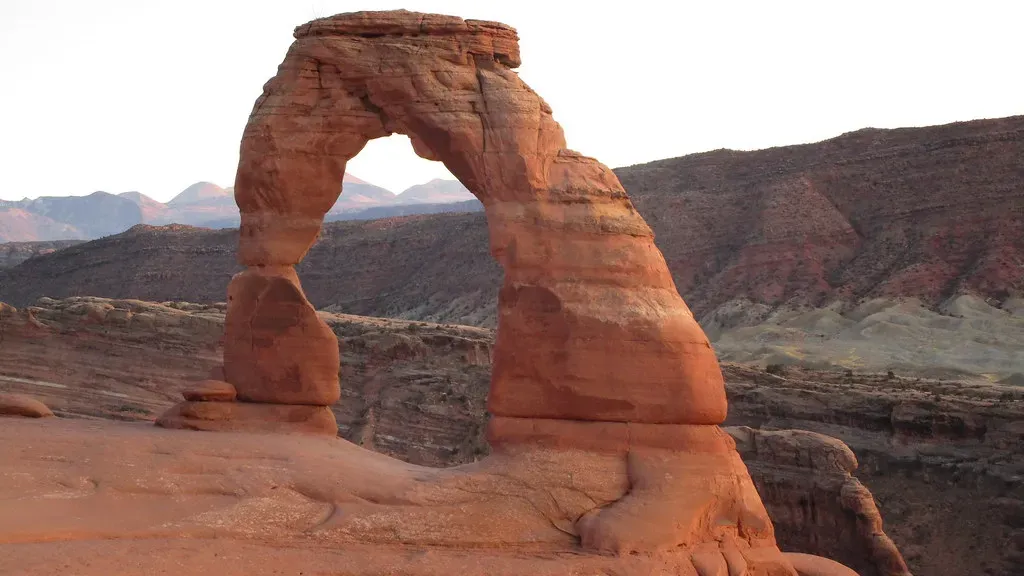
These seven desert regions prove that America’s arid lands are anything but empty wastelands. From the biodiverse Sonoran to the ancient bristlecone forests of the Great Basin, from the technicolor canyons of the Colorado Plateau to the white dunes of the Chihuahuan, each desert offers wonders that reward those willing to explore.
The hidden treasures are everywhere once you know where to look. Tropical oases hidden in scorching terrain. Ancient trees that predate civilization. Rock formations that seem carved by alien hands. Skies so dark and clear that the Milky Way casts shadows.
Honestly, it’s hard to say which desert holds the greatest wonder. Each has its own character, its own secrets, its own magic. The best way to understand is to experience them yourself. Stand in Badwater Basin at dawn. Touch a 5,000-year-old tree. Watch the sunset paint the Painted Desert. Walk among the saguaro giants.
What do you think about these desert wonders? Have you visited any of them, or are they on your bucket list? Tell us in the comments.

- 7 Unique Facts About Arizona - August 2, 2026
- 13 Remarkable Dog Breeds With Surprising Intelligence Beyond Their Playful Demeanor - August 2, 2026
- 8 US States With the Most White-Tailed Deer - August 2, 2026