

Picture this. A delicate butterfly, weighing less than a gram, embarking on a journey spanning thousands of miles across an entire continent. It sounds impossible, honestly. Yet every single fall, millions of monarch butterflies do exactly that, navigating from Canada and the northern United States all the way to specific mountain forests in Mexico or coastal groves in California. They’ve never been to these places before. Their ancestors made the trip, but they themselves are flying on pure instinct, guided by mechanisms we’re only just beginning to understand. It’s one of the most remarkable migrations in the entire animal kingdom, and it’s happening right in our own backyard. Let’s dive into what makes this journey so extraordinary.
The Epic Migration Route That Defies Belief

Monarch butterflies migrate from southern Canada and the northern United States, traveling thousands of kilometers to overwintering sites in central Mexico. Here’s the thing though – this isn’t just a casual flight south for the winter. Eastern monarch butterflies fly between 2,000 to 3,000 miles to reach South-Central Mexico, while their western counterparts head to California’s coast. Think about that distance for a moment. These butterflies, with wingspans barely reaching four inches, are covering distances that would tire out most of us even in a car.
The North American monarchs begin their southern migration in September and October, arriving at their roosting sites in November. Recent tracking revealed one monarch traveled close to 1,700 miles in about six weeks, which puts into perspective just how relentless this journey truly is. The butterflies don’t power through in one go either. Monarchs can fly over 100 miles in a single day given the right conditions, and it can take migratory monarchs up to two months to complete their journey.
What’s absolutely fascinating is the precision involved. They remain in roosts atop volcanic mountains on oyamel fir trees during the winter months, clustering together in specific groves they’ve never seen before. Monarch butterflies winter in the Transvolcanic Mountains of central Mexico, clustering in a dozen or so sites spread out over 50 kilometers. It’s not like they’re just finding any warm spot. They’re zeroing in on exact locations their great-great-grandparents left months earlier.
Navigation Tools That Would Impress Any Scientist

So how do they do it? For years, scientists assumed monarchs relied primarily on the sun’s position to navigate. That’s true, but it’s only part of the story. Migrants possess an inclination magnetic compass to help direct their flight equatorward in the fall, using ultraviolet-A/blue light between 380 and 420 nm. Let me break that down – these butterflies can essentially sense Earth’s magnetic field, but only when specific wavelengths of light are present.
Monarchs use a light-dependent, inclination magnetic compass to help them orient southward during migration. When researchers put monarch butterflies in a flight simulator and manipulated the magnetic field and light levels, they found that the butterflies used changes in the magnetic field to orient themselves. When scientists reversed the magnetic field in experiments, the butterflies literally turned around and flew in the opposite direction. That’s not coincidence.
The antennae are important for the inclination compass because they appear to contain light-sensitive magnetosensors, and the compass may serve as an important orientation mechanism when directional daylight cues are unavailable. I know it sounds crazy, but their antennae basically function as tiny magnetic sensors. Magnetic field cues are intricately recalibrated by environmental temperature, particularly coldness, which fine-tunes the butterflies’ orientation system. So temperature isn’t just about metabolism – it’s actually adjusting their internal compass as they travel.
Monarchs use a sophisticated magnetic inclination compass system for navigation similar to that used by much larger-brained migratory vertebrates such as birds and sea turtles. Think about that for a second. A butterfly with a brain smaller than a pinhead is using navigation techniques comparable to birds and turtles.
The Methuselah Generation Lives By Different Rules

Most monarch butterflies don’t make this incredible journey. Adult monarchs live just three to four weeks unless they are of the monarch Methuselah generation that is born once a year, which lives for approximately nine months. This special generation is fundamentally different from their parents and siblings. It’s hard to say for sure exactly what triggers this transformation, but environmental cues like day length and temperature seem to play crucial roles.
These insects require nectar to build up their lipid reserves to allow them to make their migratory journey, and once they arrive in the Oyamel Forests they cluster on tree trunks for the winter. They’re essentially living in a state of semi-dormancy, conserving every bit of energy for the return trip and subsequent reproduction. On sunny days the butterflies flutter around the forests, returning to their enormous tree clusters as the air cools down at night.
As warm temperatures and lengthening days arrive, the migratory generation finishes development, becomes reproductive, breeds and lays eggs of the new generation, which starts the northern journey back to North America through successive generations. Here’s where it gets really interesting. Each successive generation travels farther north, taking 3 to 4 generations to reach the northern United States and Canada. So the butterflies that return north aren’t the same ones that left – they’re the great-grandchildren.
Revolutionary Tracking Reveals Hidden Secrets
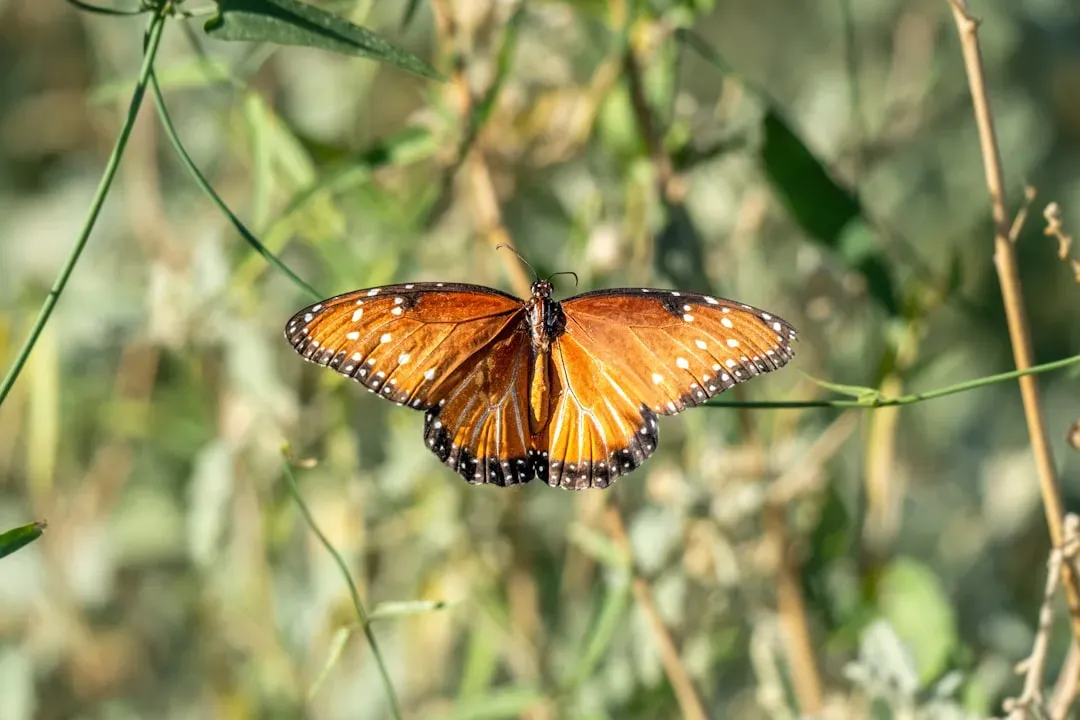
In fall 2025, over 20 research and conservation organizations deployed over 400 ultralight transmitters on migrating monarchs, tracking them from locations throughout North America and the Caribbean to their overwintering sites in Mexico. This was groundbreaking stuff. Previously, scientists had to rely on tagging programs where they’d stick tiny stickers on butterflies and hope someone would spot them later.
In November 2024, a butterfly named Lionel was released in Cape May Point equipped with new programming, providing the first high-resolution track of monarch migration ever recorded, with hundreds of detections to St. Augustine, Florida. Lionel changed everything. Suddenly researchers could watch in near-real-time as individual butterflies navigated across states, revealing patterns never before observed.
The fall 2025 Project Monarch effort united over 20 partner organizations to deploy over 400 transmitters, shattering previous limitations in butterfly tracking and providing scientists with high-resolution data on individual butterflies as they navigate their epic journey south. Partners hope to deploy transmitters on monarchs leaving Mexico in spring 2026, tracking their return journey north. Imagine what we’ll learn when we can track the entire round-trip cycle across multiple generations.
Fighting For Survival Against Mounting Threats

Let’s be real – monarch butterflies are in serious trouble. The probability of extinction in the foreseeable future is 56 to 74 percent for the eastern monarch migratory population and 99 percent for the western migratory population. Those are sobering numbers. The eastern migratory population has declined by approximately 80 percent, while the western migratory population has declined by more than 95 percent since the 1980s.
Researchers estimate that 970 million monarchs have vanished since 1990. Nearly a billion butterflies, gone. In December 2024, the United States Fish and Wildlife Service published a proposed rule that would list the monarch butterfly as a threatened species, with the comment period extended into 2025. In December 2023, the Government of Canada listed the monarch as an endangered species.
Legal and illegal logging and deforestation has destroyed substantial areas of winter shelter in Mexico and California, while pesticides and herbicides kill butterflies and milkweed, and climate change has significantly impacted migration as a fast-growing threat. The use of herbicides in the US has resulted in a loss of milkweeds essential for monarch reproduction, and climate variations affected both the presence of milkweed and the butterflies’ life cycle. Everything these butterflies depend on is under assault from multiple directions simultaneously.
Still, there’s reason for cautious optimism. During the 2024-2025 winter season, eight colonies were located with a total area of 1.79 hectares, a 99 percent increase from the previous season. As of June 2025, at least 14 states had enacted legislation to protect, develop and restore habitat suitable for pollinators. Conservation efforts are ramping up across the continent. In April 2025, the Chicago Park District launched Project Monarch, a citywide initiative to conserve and celebrate monarch butterflies and their habitats.
What This Migration Means For Our World
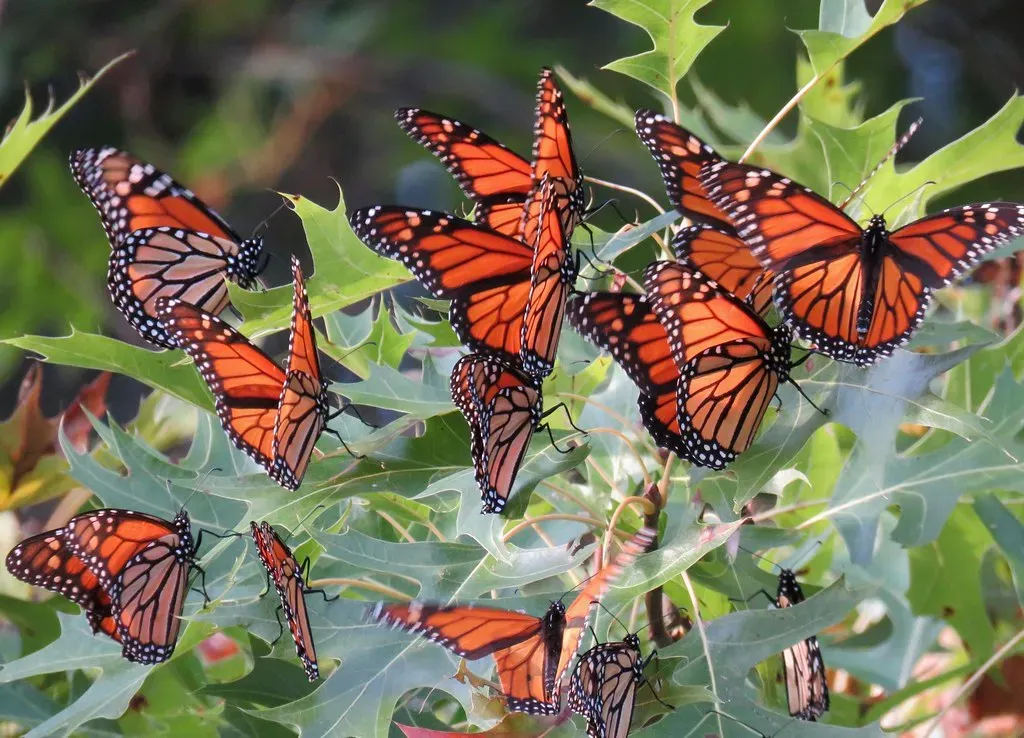
This massive movement of butterflies has been recognized as one of the most spectacular natural phenomena in the world, and rightfully so. The monarch migration represents something larger than just butterflies traveling south for winter. It’s a living connection between countries, ecosystems, and generations. Indigenous communities in Mexico believe the butterflies arriving during Day of the Dead represent returning souls of loved ones, adding profound cultural significance to their annual appearance.
The migration also serves as a biological indicator of environmental health. When monarch populations decline, it signals broader ecosystem problems affecting countless other species, including critical pollinators that our food systems depend on. These butterflies are navigating using tools we’re only beginning to understand – magnetic fields, light wavelengths, temperature cues, and genetic programming passed down through generations. It’s a reminder that nature possesses sophisticated systems far beyond what we often give it credit for.
The fact that a butterfly weighing less than a paperclip can successfully navigate thousands of miles to a specific grove of trees it’s never seen should fill us with wonder. Yet it should also motivate us to protect what remains. The knowledge that future generations might not witness clouds of orange and black butterflies descending on mountain forests is almost unbearable to consider. Conservation isn’t just about saving butterflies – it’s about preserving one of nature’s most incredible performances, a phenomenon that has captivated humans for generations and continues to reveal new secrets even as we race to understand it.
What will you do to help ensure monarch butterflies continue their remarkable journey for generations to come?

- 10 Astonishing Ways Animals Communicate Complex Messages Without Uttering A Single Sound - August 6, 2026
- The World’s Rarest Birds Are Making a Comeback - August 6, 2026
- The US States With the Most Mountain Lions - August 6, 2026