

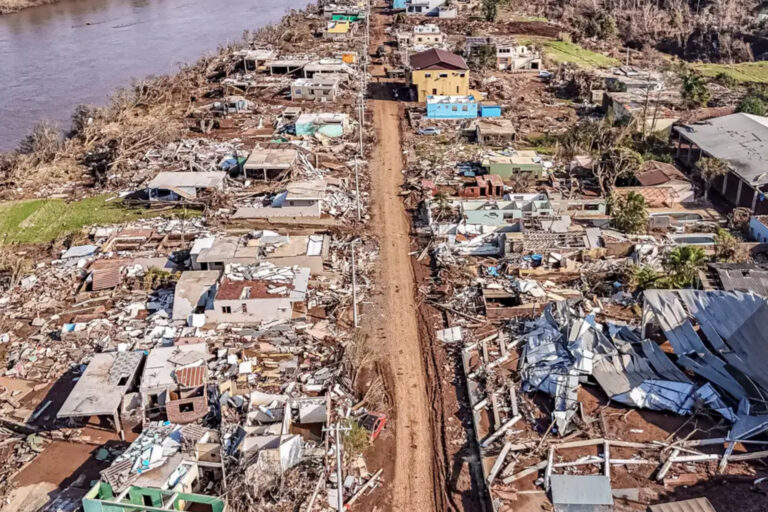
Researchers Uncover a Hidden Surge in Extreme Events (Image Credits: Imgs.mongabay.com)
The Amazon biome registered over 12,500 extreme weather events from 2013 to 2023, but significant reporting gaps across multiple countries obscured the true scale of these disasters.[1][2]
Researchers Uncover a Hidden Surge in Extreme Events
A team of international scientists tallied 12,451 weather-related disasters reported by municipalities during that decade-long period. These incidents reshaped communities through relentless floods, landslides, and fires. The analysis, published in Environmental Research Letters, highlighted how such events already strained the region’s resilience.Environmental Research Letters study[3]
Lead author Rayane Pacheco and colleagues standardized reports into five categories: storms, floods, landslides, droughts, and wildfires. Brazil and Peru emerged as hotspots with the highest volumes. Still, the documented tally likely represented only a fraction of occurrences, as researchers relied on municipal submissions to national governments.
- Floods dominated in low-lying areas.
- Wildfires ravaged drier zones during prolonged dry spells.
- Landslides struck hilly terrains after heavy rains.
- Droughts parched ecosystems and agriculture.
- Storms battered coastal and riverine settlements.
Data Void in Four Amazon Nations
Bolivia, Brazil, Colombia, Ecuador, and Peru supplied the data that fueled the study. However, Venezuela, Guyana, Suriname, and French Guiana offered no records or severely limited information. This omission left thousands of potential disasters invisible to policymakers and scientists.
Gonzalo Ortuño López reported for Mongabay Latam that national inconsistencies hampered a complete picture. Without unified reporting, transboundary effects – like smoke from fires crossing borders – remained unquantified. The study urged Amazonian countries to align their monitoring systems.
Millions Affected, Billions in Damages
These events hurt millions of residents and inflicted substantial costs on public infrastructure. Roads crumbled under landslides, schools closed amid floods, and health centers struggled with surges in patients. Figures showed impacts in the millions for affected individuals across the covered nations.[1]
The human toll extended beyond immediate losses. Displaced families faced long-term hardships, while ecosystems suffered indirectly through habitat disruption. Public spending on repairs drained budgets needed for prevention.
Experts Demand Action on Data and Preparedness
Liliana M. Dávalos, a co-author from Stony Brook University, emphasized the urgency: “What we do not count, cannot be addressed, and this is an opportunity to align data collection to the magnitude of events we expect as climate continues to change.”[1]
Ane Alencar, director of science at the Amazon Environmental Research Institute, noted, “We know South America is becoming hotter and drier with global heating, but how extreme weather is already affecting people on the ground is unknown.” Co-authors called for shared early warning systems and updated disaster plans. All compiled data now stands available to the Amazon Cooperation Treaty Organization (ACTO).
This study serves as a wake-up call for the Amazon’s shared future. Enhanced tracking could save lives and resources amid worsening climate trends. What steps should governments prioritize next? Share your thoughts in the comments.
Key Takeaways
- Over 12,500 extreme events hit the Amazon from 2013-2023, mainly floods and fires.
- Four countries provided no data, understating the crisis.
- Millions impacted; better regional cooperation is essential.

As a little kid, I fell in love with nature, wildlife, and animals. Living in the USA, South Africa, Italy, China and Germany gave me the opportunity to discover the world's Wildlife. My favorite animals are Mountain Gorillas, Siberian Tigers, and Great White Sharks.
I'm a certified PADI Open Water Diver, went to Everest Base Camp and Trekked Gorillas in Uganda. I hold a Master of Science in Economics and Finance.
Please send any feedback to feedback@animalsaroundtheglobe.com
- 10 Most Unique Reptiles You will See in the US - July 21, 2026
- 3 Dangerous Invasive Species the USA Must Eradicate - July 21, 2026
- 10 Things That Calm Cats And 4 That Make Them Nervous - July 21, 2026