

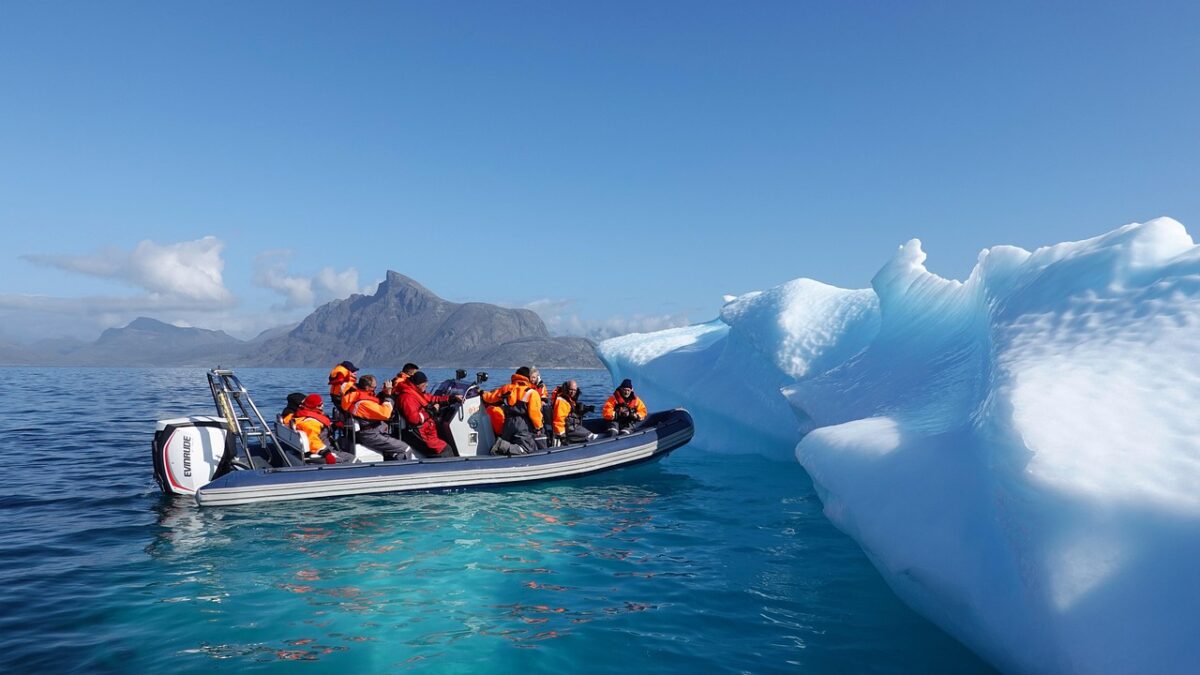

A Colossal Ice Mass Shaping Global Forecasts (Image Credits: Pixabay)
Greenland – an Arctic island largely blanketed in ice – delivers critical insights into how rapidly rising temperatures threaten coastlines worldwide.
A Colossal Ice Mass Shaping Global Forecasts
Picture a volume of ice capable of elevating oceans by seven meters if it melted entirely, equivalent to the height of a two-story building. That potential exists in Greenland’s ice sheet, which covers 80 percent of the island’s surface.[1]
Scientists have long drilled deep into this frozen archive to retrieve ice cores. These samples reveal historical ties between atmospheric carbon dioxide levels and global temperatures, refining models that predict future warming.[1]
Melting accelerates as the planet heats up. The influx of freshwater into the North Atlantic disrupts ocean currents, which could trigger abrupt climate shifts within decades.
NASA missions have mapped the terrain beneath the ice, exposing dynamic changes invisible from the surface. Such efforts underscore Greenland’s unmatched value in climate studies.
Decades of Open International Partnerships
Researchers from around the world, including American teams linked to NOAA, have accessed Greenland through permits issued under Danish oversight. This system fostered fair collaboration essential for tackling shared threats.
Greenland, part of the Kingdom of Denmark and NATO, spans an area comparable to Germany in its ice-free zones. Critical minerals there support renewable energy transitions, adding economic stakes to scientific ones.
Unlike oil or coal, these resources align with green goals. Yet, open access has driven progress without dominance by any single nation.
- Ice core drilling by multinational groups traces millennia of climate patterns.
- Satellite and aerial surveys by NASA track ice loss in real time.
- Ground stations monitor meltwater flows affecting ocean systems.
- Joint studies quantify mineral deposits for sustainable tech.
- Historical expeditions, like early 20th-century ventures, laid groundwork for modern work.
Political Moves Threaten Collaborative Gains
Recent proposals for the United States to assume control of Greenland, cited for national security and resource needs, raise alarms. Former President Donald Trump advocated this approach, even suggesting force, amid his January 2026 withdrawal from the Paris Agreement and IPCC.[1]
A shift to unilateral oversight could restrict permits for non-U.S. scientists. This mirrors past exploitations, such as the 1897 removal of the massive Cape York meteorite by explorer Robert Peary, sold for a fortune after local Inuit assistance.
The U.S. maintains Pituffik Space Base under a 1951 defense pact with Denmark. Expanding influence risks eroding trust in NATO ties and global research norms.
Toward Sustainable Access and Stewardship
Models like Antarctica’s treaty promote peace and science under international rules. Greenland could inspire a similar framework, perhaps through NATO, balancing security, minerals, and research under local regulations.
Greenlanders and Denmark hold the future. Preserving open collaboration ensures continued data flow vital for adaptation strategies worldwide.
Professor Martin Siegert, deputy vice-chancellor at the University of Exeter, highlighted these stakes in a recent analysis for The Conversation.[1]
Key Takeaways:
- Greenland’s ice sheet could raise seas by 7 meters, disrupting global currents.
- International teams rely on open access for ice cores and mapping.
- Geopolitical bids risk halting progress on climate predictions.
Maintaining Greenland’s role demands diplomatic commitment over dominance. Securing unfettered research access protects billions from rising waters. What do you think about balancing geopolitics and science here? Tell us in the comments.

- Beavers Are Nature’s Engineers, Creating Vital Habitats for Other Wildlife Species - July 21, 2026
- The Recovery of the California Condor Offers Hope for Other Critically Endangered Birds - July 21, 2026
- Bats Play a Crucial Role in Controlling Insect Populations Across the United States - July 21, 2026