
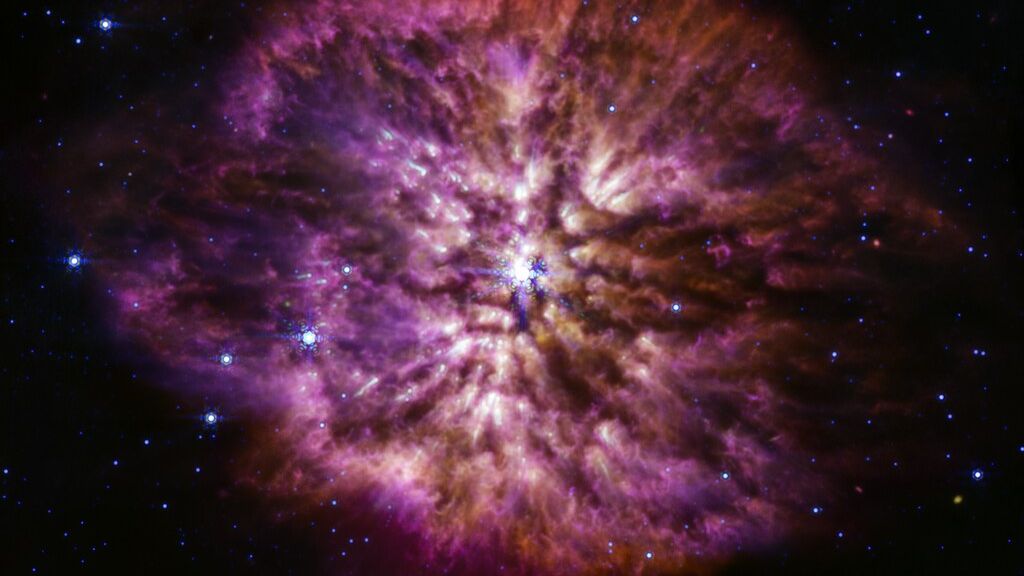
Have you ever wondered if everything around you could vanish in an instant? Like, everything we know could just blink out of existence before we even realized it was happening. It sounds absolutely insane, I know, but scientists are seriously looking at scenarios where the universe could face a dramatic end. Some suggest a Big Crunch is coming, others warn about something even stranger called vacuum decay. Let’s be real, the cosmos isn’t quite as stable as we might hope.
The Big Crunch Could Arrive Sooner Than Expected
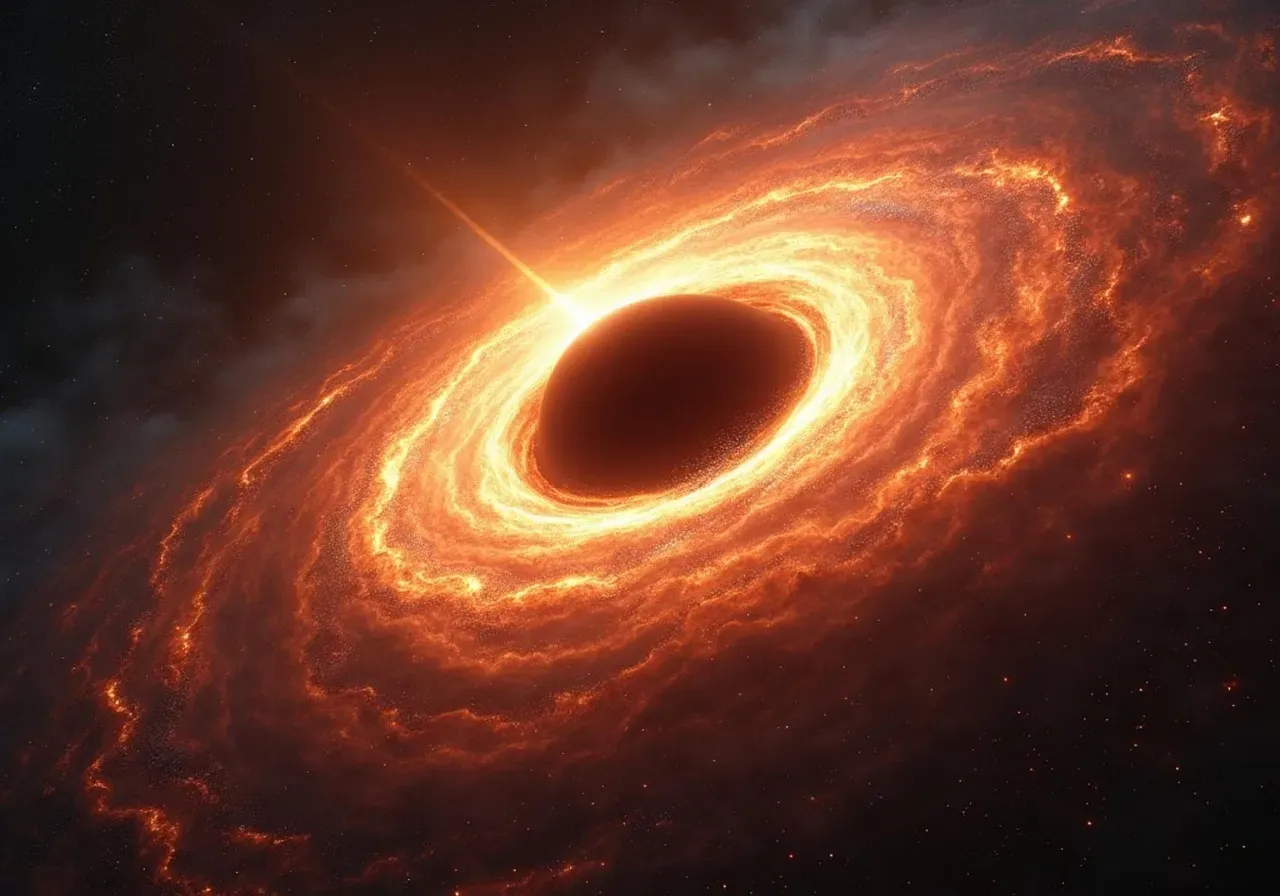
The universe is approaching the midpoint of its 33-billion-year lifespan, a Cornell physicist calculates with new data from dark-energy observatories. The universe is nearing the halfway point of what may be a 33-billion-year lifespan, according to new calculations by a Cornell physicist using updated dark energy data. Henry Tye, an emeritus professor at Cornell, updated his theoretical model with fresh observations from dark energy surveys in Chile and Arizona.
The startling finding suggests our universe isn’t expanding forever. After expanding to its peak size about 11 billion years from now, it will begin to contract – snapping back like a rubber band to a single point at the end. The new data seem to indicate that the cosmological constant is negative, and that the universe will end in a big crunch. Think about it like this: everything that’s spreading outward now could reverse direction and crush itself into nothingness.
Dark Energy Holds the Key to Our Cosmic Fate
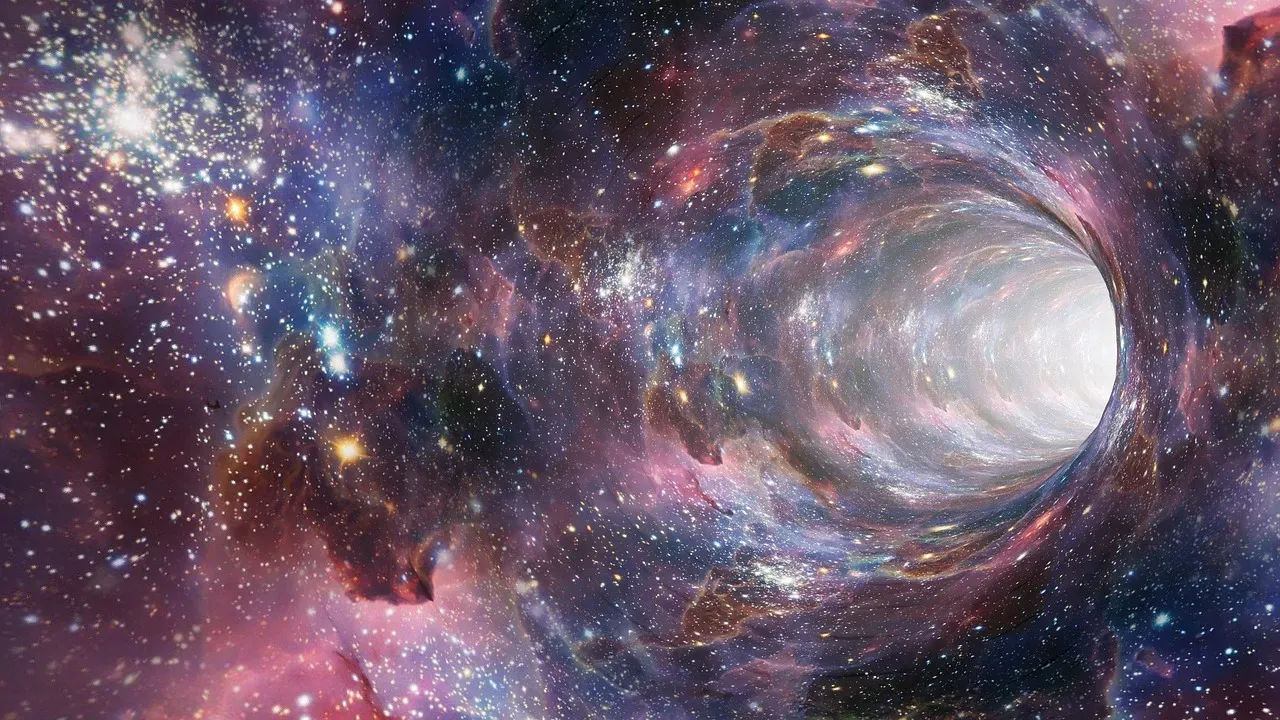
According to Tye, the future depends on the value of the cosmological constant: if it is positive, expansion will continue indefinitely; if it is negative, the universe will eventually reach a maximum size before reversing direction and collapsing entirely. For roughly two decades, cosmologists believed the cosmological constant was positive, meaning eternal expansion. Recent observations from major surveys have challenged this comfortable assumption.
Hundreds of scientists are measuring dark energy by observing millions of galaxies and the distance between galaxies, gathering even more accurate data to feed into the model. The data coming from these observatories paint a less reassuring picture. If the cosmological constant turns out to be negative, gravity will eventually overwhelm the outward push, causing space itself to collapse. His calculations support the latter scenario – a future in which the cosmos contracts to zero, marking the ultimate end of space and time.
False Vacuum Decay Could Rewrite the Laws of Physics
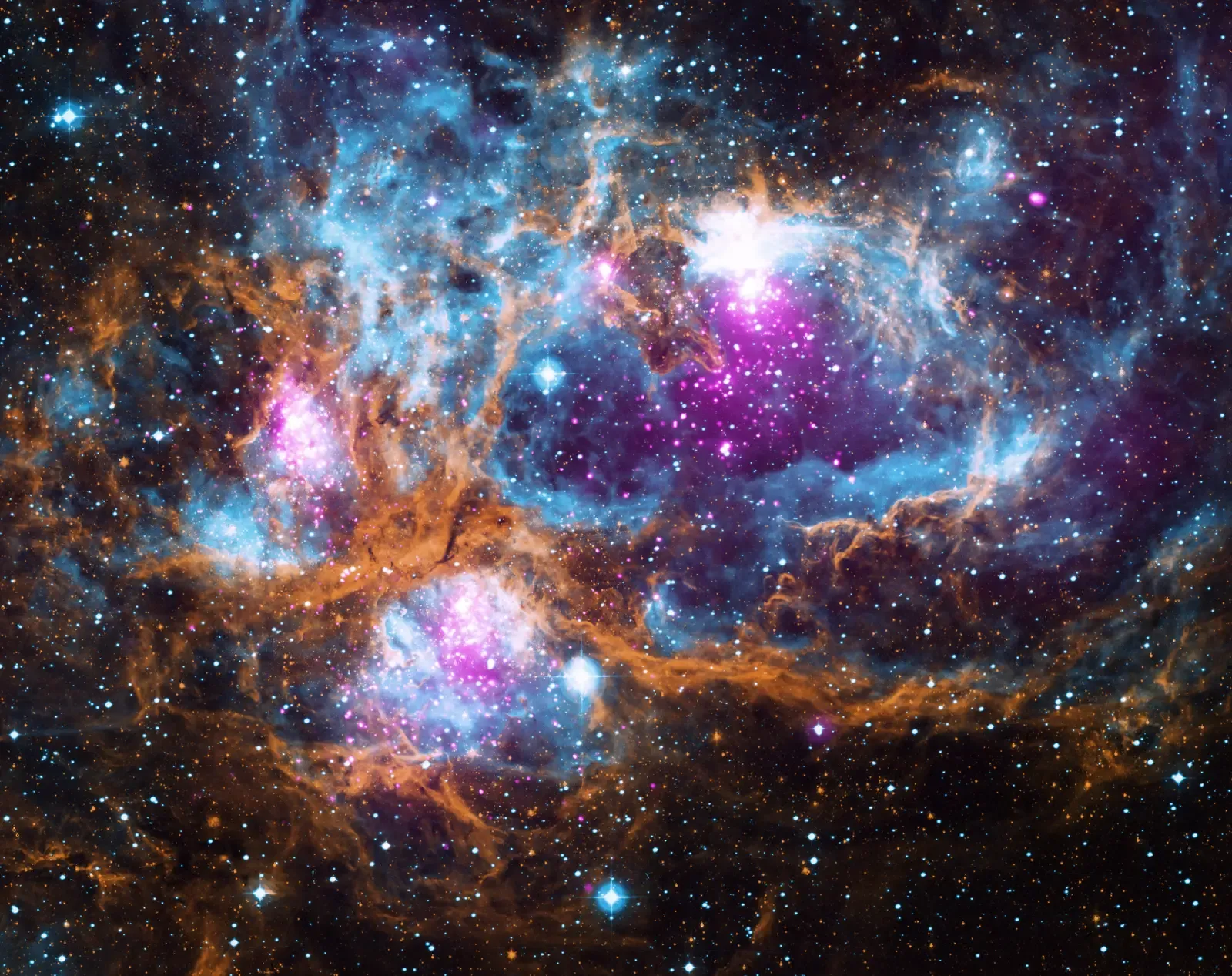
Here’s where things get truly wild. To be in a stable, “true” vacuum state, these fields must be in their lowest energy states. But special properties of the Higgs field, which is generally in charge of giving all particles mass, have led some scientists to theorize that while the Higgs looks stable, it may actually just be in a false or temporary vacuum state, waiting to enter an even lower energy state. Imagine our entire universe sitting in a valley that looks flat, but it’s actually perched on a ledge with an even deeper valley below.
The most common suggestion of how such a decay might happen in our universe is called bubble nucleation – if a small region of the universe by chance reached a more stable vacuum, this “bubble” would spread. The terrifying part? This action would not only transform the Higgs field, but could lead to a radical restructuring of the underlying physics and chemistry of the universe. Once it starts, there’s no stopping it. The bubble expands at nearly light speed, obliterating everything in its path.
The Higgs Field Sits on a Dangerous Edge
The latest calculations of the quantum effects of the Higgs boson and the top quark indicate that the brim of the Mexican hat turns down when the BEH field exceeds its value today by 10 orders of magnitude, implying that the current value is not the lowest energy and hence not the true vacuum of the SM. Scientists discovered the Higgs boson back in 2012, and subsequent measurements have revealed something unsettling about its mass.
A 125.18±0.16 GeV/c2 Higgs boson mass is likely to be on the metastable side of stable-metastable boundary. A definitive answer requires much more precise measurements of the top quark’s pole mass, however, although improved measurement precision of Higgs boson and top quark masses further reinforced the claim of physical electroweak vacuum being in the metastable state as of 2018. Metastable means we’re living in a temporary state that could transition at any moment. The mass of electrons and quarks would suddenly become trillions of times bigger and nuclear reactions no longer work, so stars fail to shine.
Quantum Tunneling Could Trigger Catastrophe Without Warning
Quantum fields are compelled to reach their lowest energy states at all costs, and the problem with the Higgs field is that if it is truly in a false vacuum state, then there is a chance that it could one day move itself to this new “true” vacuum via quantum tunneling – a process in which particles can pass through barriers they normally are not energetic enough to overcome. This is where quantum mechanics gets genuinely scary. Particles don’t always follow the rules we’d expect from everyday experience.
The other problem is that quantum mechanics says that a particle can ‘tunnel’ through a barrier between one region and another, and this also applies to the vacuum state. You wouldn’t see the destruction coming. The walls of the true vacuum bubble would expand in all directions at the speed of light. You wouldn’t see it coming. Vacuum decay is the ultimate ecological catastrophe; in a new vacuum there are new constants of nature; after vacuum decay, not only is life as we know it impossible, so is chemistry as we know it.
Experimental Evidence Confirms Vacuum Decay Is Real
Researchers in Italy recently produced the first experimental proof that vacuum decay actually occurs. At this temperature, bubbles are seen to emerge as the vacuum decays and the Newcastle University’s Professor Ian Moss and Dr Tom Billam were able to show conclusively that these bubbles are a result of thermally activated vacuum decay. They used supercooled atoms at temperatures incredibly close to absolute zero to simulate the conditions.
Vacuum decay is thought to play a central role in the creation of space, time and matter in the Big Bang, but until now there has been no experimental test. In particle physics, vacuum decay of the Higgs boson would alter the laws of physics, producing what has been described as the ‘ultimate ecological catastrophe’. The experiment doesn’t tell us when this might happen to our universe, but it proves the mechanism is real. It’s no longer just theoretical speculation. Still, I think the timeline matters more than the mechanism itself when it comes to actual worry.
Should We Actually Be Concerned About Universe Collapse?
Let’s keep things in perspective here. We now know with a large degree of confidence that our vacuum is on the unstable side and we were able to calculate its decay lifetime. This lifetime turns out to be way larger than the present age of the universe. Even if vacuum decay happens, the timescales are absurdly long. Cosmologists think that it won’t happen between 10100 years… and that is a very, very long time.
He determined from the model that the big crunch will happen about 20 billion years from now. That gives humanity quite a bit of breathing room, assuming we don’t destroy ourselves first through more immediate means. In a 2005 paper published in Nature, MIT physicist Max Tegmark and Oxford philosopher Nick Bostrom calculate the natural risks of the destruction of the Earth at less than 1/109 per year from all natural events, including a transition to a lower vacuum state. They argue that due to observer selection effects, we might underestimate the chances of being destroyed by vacuum decay because any information about this event would reach us only at the instant when we too were destroyed.
Conclusion: Living on the Edge of Cosmic Uncertainty
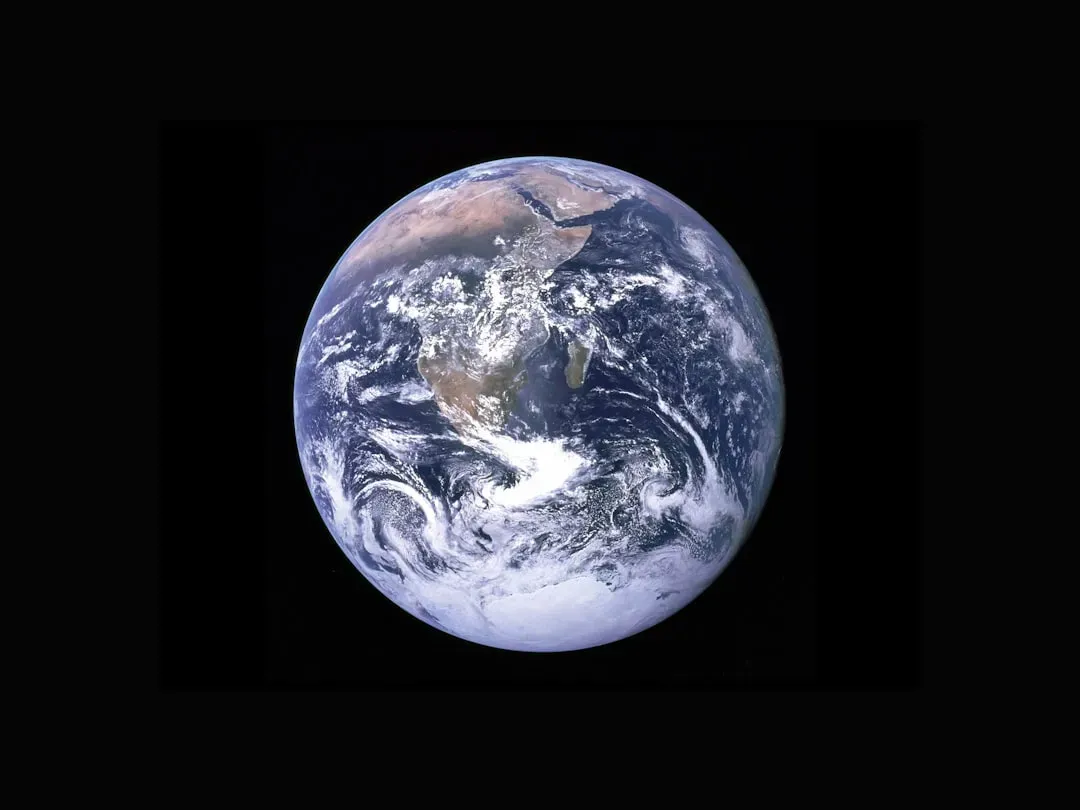
The universe may not be as rock-solid as we once imagined. Whether through a Big Crunch that reverses cosmic expansion or a false vacuum decay that rewrites the fundamental laws of nature, scientists have outlined credible scenarios for the end of everything. Yet these possibilities remain distant, measured in timescales so vast they’re almost incomprehensible.
Honestly, it’s hard to say for sure what fate awaits the cosmos. New observations continue to refine our understanding, and what seems certain today might shift with tomorrow’s data. The real takeaway? Our universe exists in a far more precarious state than most people realize, balanced between stability and catastrophe by forces we’re only beginning to understand.
What do you think about the idea that everything could vanish in an instant? Does it change how you see the universe, or does the enormous timescale make it feel distant and abstract? Share your thoughts.

- 16 Horse Breeds That Vets Say Are Nearly Impossible to Recommend to Beginners Anymore - June 13, 2026
- 6 Signs Your Home Has a Spider Infestation - June 13, 2026
- 8 Things You Should Never Do When Hiking In Angel’s Landing - June 13, 2026