
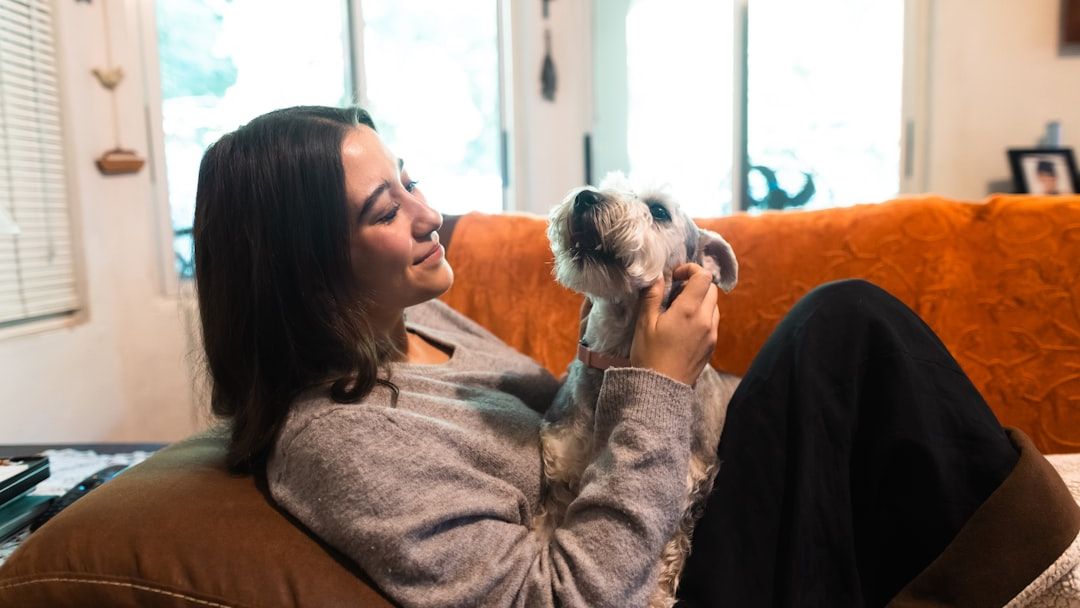
There’s a moment every dog owner knows. You’re sitting quietly, maybe a little sad, and suddenly your dog is right there beside you. No words, no signal. Just presence. You probably chalked it up to coincidence, or maybe wishful thinking. But here’s the thing – science is increasingly telling us that it was neither.
Recent research across multiple disciplines is rewriting what we thought we knew about how dogs process human emotional life. The findings are, frankly, stunning. Dogs are not just reacting to treats and commands. They are reading us, smelling us, and responding to our inner emotional states in ways that seem almost impossibly sophisticated. Let’s dive in.
The Science of Reading Faces: What Dogs Are Actually Seeing
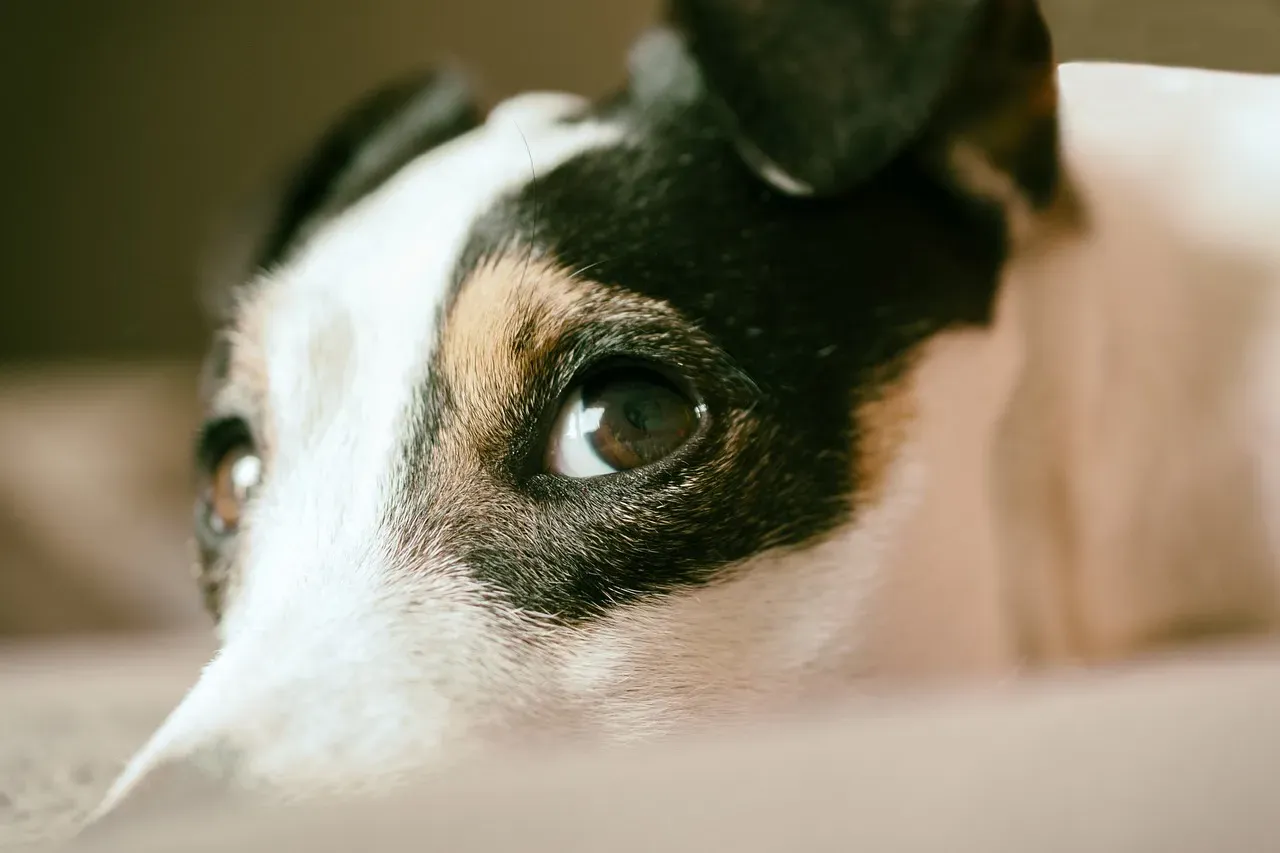
Most of us assume that when a dog stares at our face, they’re just waiting for a cue about food. Turns out, they’re doing something far more complex. Research shows that dogs have the ability to integrate two different sources of sensory information into a coherent perception of emotion in both humans and dogs. Think of it like this – it’s the difference between noticing that someone is wearing a red jacket versus understanding that they’re embarrassed.
Dogs use human emotion as a discriminative cue, and when dogs for whom happy faces were rewarded were tested, they learned the discrimination more quickly than dogs for whom angry faces were rewarded – suggesting that dogs recognized an angry face as an aversive stimulus. That’s not a trained response. That’s emotional reading.
Research shows that dogs pay particularly close attention to human facial expressions, perhaps because we don’t have tails, and our ears don’t move. Honestly, that’s a charming way of putting it. Dogs evolved alongside us, so they had to develop their own toolkit for reading a species that communicates almost entirely with its face.
It’s the first time that a species other than humans has been shown to be capable of interpreting the vocal and facial expressions of an entirely different species of animal – a talent that surely helps dogs survive in their ecological niche: the jungle of the human home.
Your Mood Changes How Your Dog Behaves – Literally

Here’s where it gets really fascinating. It’s one thing for a dog to recognize a smile or a frown. It’s another thing entirely for a dog to change its own behavior based on your emotional state. Yet that is exactly what new research is showing.
A study published in Animal Cognition closes an important gap by testing how dogs respond in real time to genuine human emotions, with results showing that dogs indeed perceive differences in human emotion and behave differently depending on their owner’s emotional state.
Dogs gazed and jumped less often and were less compliant with the ‘sit’ command when learning a new task from a sad owner. By contrast, dogs with happy owners performed better at the new task than dogs with sad or neutral owners. Imagine that. Your mood is literally affecting how well your dog can learn. It’s almost like they’re mirroring your energy – a canine kind of empathy, though researchers are careful about using that exact word.
In one study, dog owners were manipulated to genuinely experience emotions of happiness, sadness, and neutrality, and researchers measured how dogs responded to their owners’ authentic emotions in two different natural situations: induction of the emotion through a video clip and training of a new task. No simulations, no photographs. Real emotions. Real responses.
Dogs also have a knack for adapting to human behavior and emotions, with research showing that dogs synchronize their behavior with both children and adults and produce significantly more facial movements when a human is paying attention to them. The relationship, it seems, goes deeper than we imagined.
The Nose Knows: Dogs Can Literally Smell Your Stress
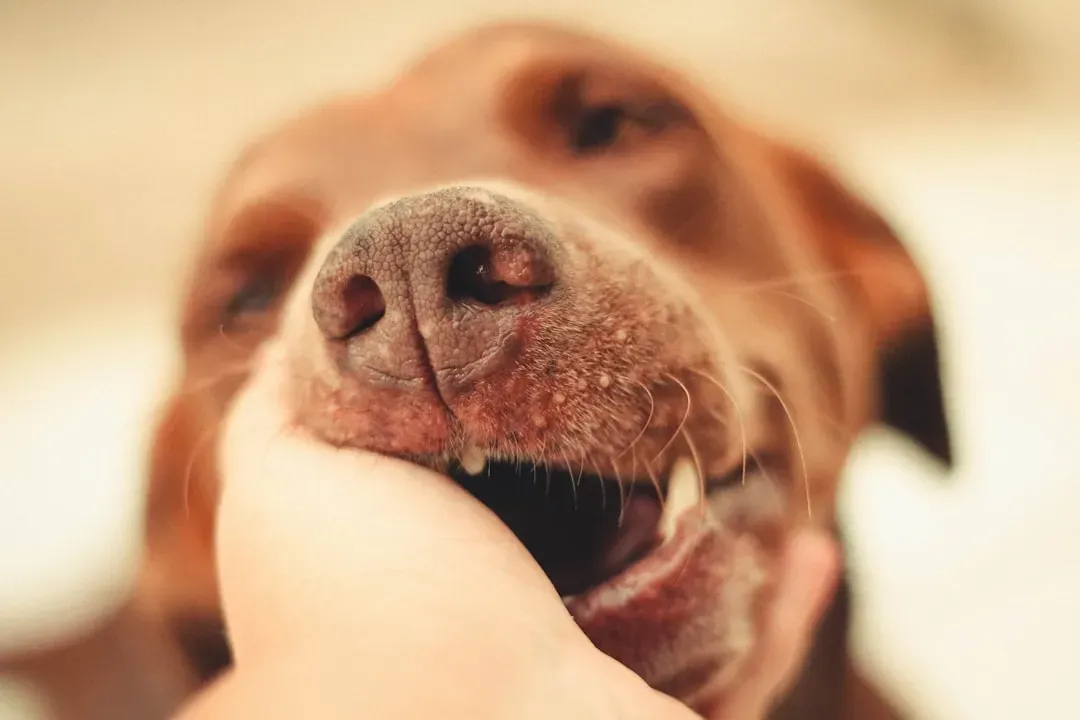
Now this one might blow your mind. It certainly surprised me when I first read about it. We know dogs have extraordinary noses. We know they can detect explosives, cancer cells, and low blood sugar. But smell your stress? In real time? Without any other cues?
The physiological processes associated with an acute psychological stress response produce changes in human breath and sweat that dogs can detect with an accuracy of roughly ninety-four percent, according to a study. That number is almost hard to believe. It makes dogs sound less like pets and more like biological sensors.
Dogs experience emotional contagion from the smell of human stress, leading them to make more ‘pessimistic’ choices, new research finds. So your stress doesn’t just affect your dog emotionally in a vague, general sense. It actually shifts how they process ambiguous situations, making them lean toward negativity.
This is the first study to show that without visual or auditory cues, olfactory cues of human stress may affect dogs’ cognition and learning, which could have important consequences for dog welfare and working performance. This is a seriously significant finding. It means that even if you put on a happy face and speak in a calm voice, your dog might still know something is wrong.
As one researcher explains, being a species that we’ve co-evolved with for thousands of years, it makes sense that dogs would learn to read our emotions because it might be helpful to them to know if there’s something threatening in the environment. Think about it like an early warning system that evolved right alongside us.
Written in Their Faces: How Evolution Wired Dogs to Read Us

Let’s be real – none of this emotional attunement happened by accident. Dogs didn’t wake up one morning and decide to become emotional detectives. This ability was carved into their biology over tens of thousands of years.
The first domesticated taxa were dogs, which diverged from their main ancestor, the gray wolf, between roughly thirty-two thousand and eleven to sixteen thousand years ago. That’s an almost incomprehensible stretch of time living alongside humans – long enough for profound biological changes to occur.
Researchers discovered a key factor that separates wolves from dogs, involving two specialized facial muscles that evolved after they were domesticated by humans. Domestication transformed the anatomy of dogs’ facial muscles so they could communicate with humans, and dogs are able to raise the inner eyebrow intensely, while wolves are not.
This movement resembles an expression humans produce when sad, so its production in dogs may trigger a nurturing response. That’s the “puppy dog eyes” look, and it turns out it’s not an accident. It was literally selected for because it worked on us.
Thousands of years of being man’s best friend have altered the minds of dogs. Dogs now have what are known as ‘theory of mind’ abilities – essentially, mental skills that allow them to infer what humans are thinking and feeling. That, in plain terms, is extraordinary.
Dogs are more skillful in using human communicative cues, like pointing gestures or the direction of a gaze, than even chimpanzees, which are human’s closest living relative. Let that sink in. Not chimpanzees – dogs. The animals that sleep on our couches.
The Surprising Twist: We Might Be Worse at This Than They Are

Here’s where the story takes a genuinely humbling turn. For all of the impressive science showing how well dogs read us, a separate wave of research suggests that we may actually be quite bad at reading them back.
Humans often misinterpret dogs’ emotions, primarily due to projecting human emotions onto them and focusing on situational context rather than the dogs’ actual behavior. Experiments showed that people judged dogs’ emotions based on the context of events rather than the dogs’ actions.
When participants viewed videos of dogs, they correctly predicted a dog’s emotional state based on context. But when the videos were recut so the dog’s reaction no longer matched the original trigger, participants still rated the dog’s emotion based on the trigger they saw. In other words, we weren’t really reading the dog at all. We were reading the situation and projecting.
We know that dogs can reduce emotional distress, increase life satisfaction, and even help treat post-traumatic stress disorder. The therapeutic value is real and well-documented. Yet it seems we benefit enormously from dogs who read us deeply, while we barely scratch the surface in reading them.
When asked how a good dog owner can cut through the biases and misreadings to understand their pet’s true emotional state, researchers suggest the first step is simply being aware that we are not that good at reading dogs’ emotions. We need to be humbler in our understanding of our dogs. That is, honestly, the most quietly revolutionary piece of advice in any of this research.
Conclusion: The Conversation Has Always Been Two-Sided

What all of this research points to is something beautiful and a little bit sobering. Dogs have been paying attention to us, in extraordinary detail, for tens of thousands of years. They evolved unique facial muscles to communicate with us. They developed the ability to smell our cortisol levels. They adjust their behavior based on whether we’re happy or sad. They are, in a very real sense, emotional translators of the human experience.
Dogs and humans have shared a close bond for thousands of years, with dogs becoming incredibly attuned to human emotions, reading our body language, facial expressions, and even our tone of voice. The relationship has always been a conversation. We just didn’t realize quite how sophisticated their side of it was.
The science is clear: your dog understands you better than you probably think. The more interesting question is whether you understand them back. So the next time your dog looks up at you with those soulful eyes, it might be worth wondering – who is really reading whom?

- What It Means When Wrens Build Several Nests but Use Only One - August 7, 2026
- 6 US States With the Most Javelinas - August 7, 2026
- Why Do Octopuses Change Color Instantly? The Scientific Reason Explained. - August 7, 2026