
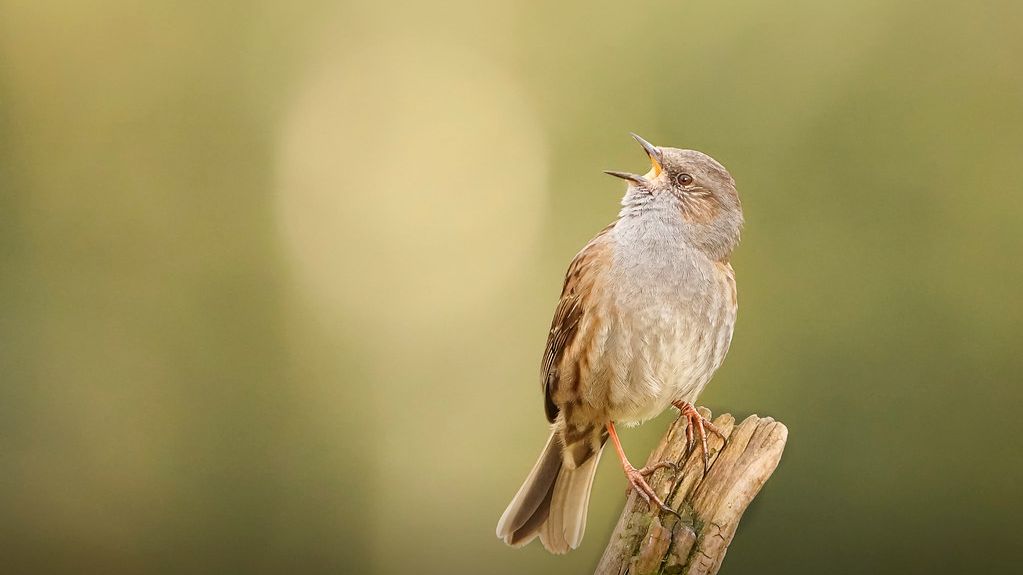
Every morning, before most of us have even thought about hitting snooze, a concert is already in full swing just outside our windows. Birds are singing. Loudly, persistently, and with a kind of passion that honestly puts most of us to shame before 7 a.m. For centuries, people assumed it was simply nature being beautiful, a pleasant soundtrack to the world waking up. Science, it turns out, has a far more fascinating story to tell.
Researchers have recently cracked open some extraordinary new layers of understanding about why birds sing, how those songs are shaped, passed down, and even lost forever. The answers stretch from hormone chemistry and brain biology all the way to the social dynamics of entire communities. Let’s dive in.
It All Starts With Biology: The Hidden Machinery Behind the Song
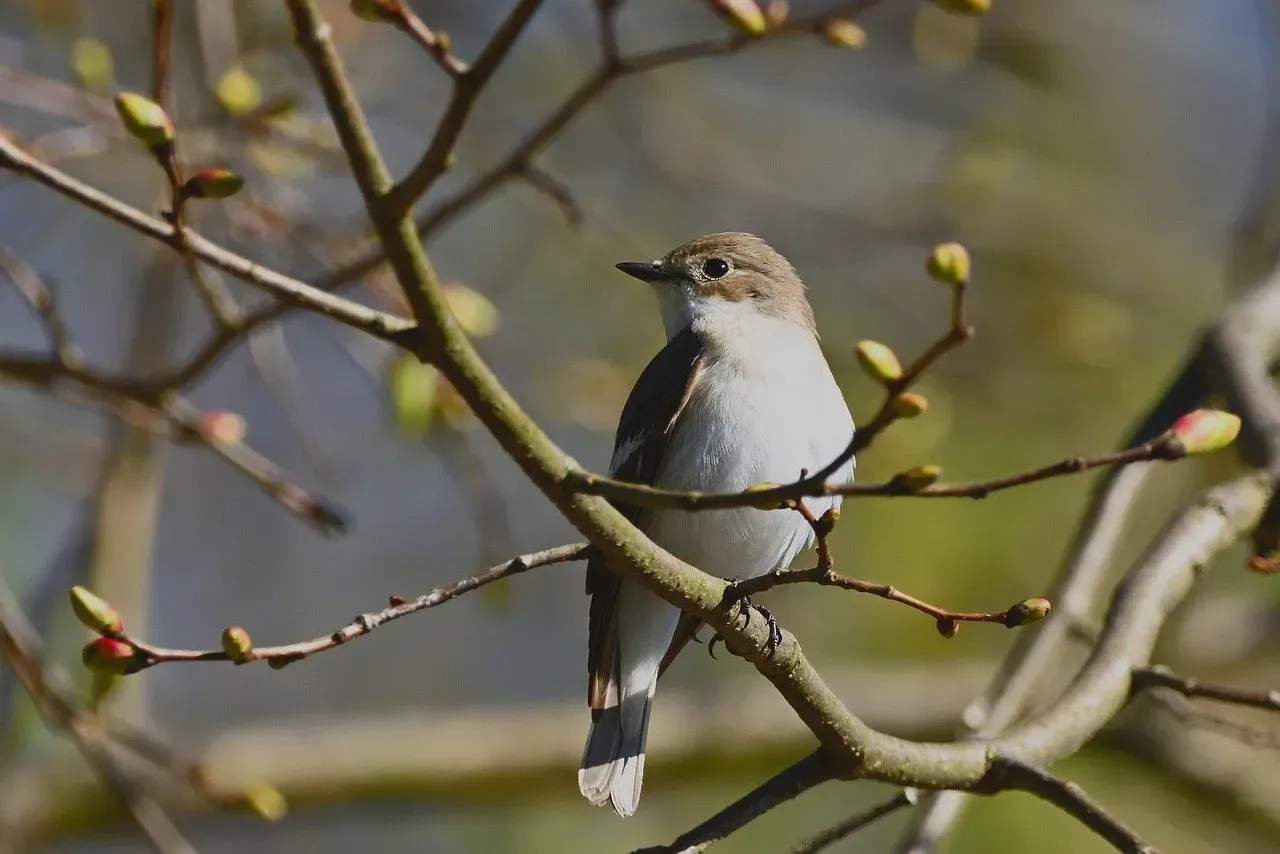
Here is something that might genuinely surprise you. The reason birds burst into song at dawn is not random joy or poetic habit. Researchers found that early morning singing is actually a rebound from silence. During the night, darkness suppresses a bird’s urge to sing. When the first light appears, that urge bursts out. The silence builds tension; the sunrise releases it.
When researchers blocked melatonin’s action in zebra finches, the birds began singing even earlier. The hormone’s natural decline starts the process, and light finishes it. It is a handoff between biology and environment.
Birds actually lose some vocal precision during long silences. The first songs of the day help recover that control. Studies showed finches refined their song patterns faster after longer nights. Singing early was not just habit. It was training. The dawn chorus is essentially vocal exercise that restores performance before the day’s real challenges begin.
Think of it like a musician doing scales before a performance. The bird is warming up, recalibrating, getting sharp. The beauty we hear is a side effect of a biological system running exactly as designed.
The Purpose Behind Every Note: Attraction, Territory, and Identity
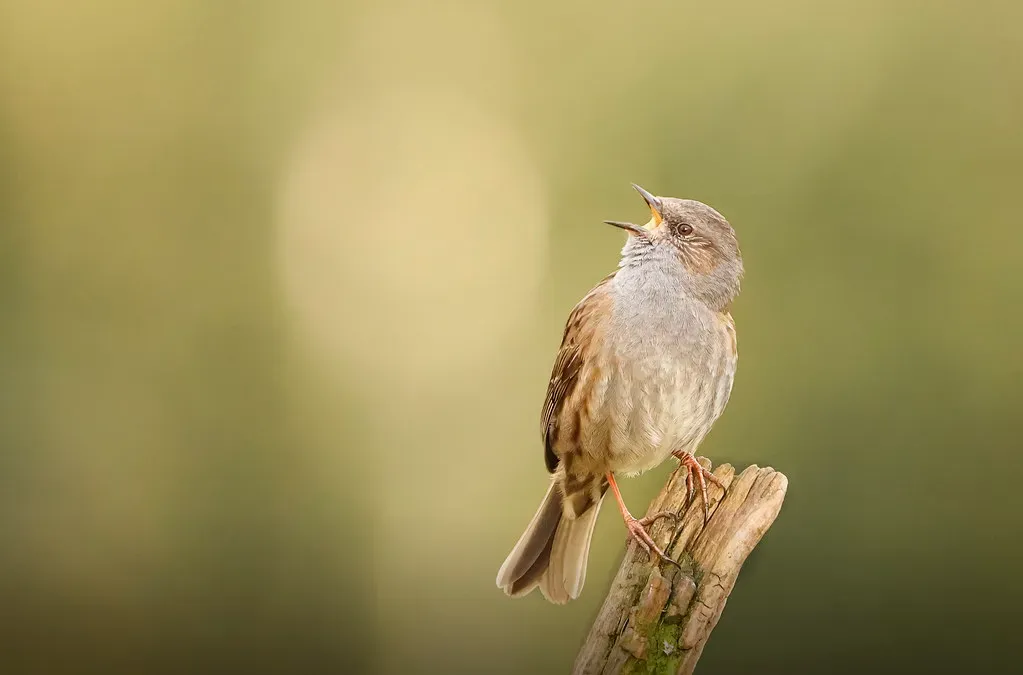
Let’s be real – when it comes to why birds sing, there are two headline reasons that scientists have known about for decades. Birdsong is traditionally defined as the long, often complex learned vocalizations birds produce to attract mates and defend their territories. Simple enough on the surface, yet the depth behind those two purposes is staggering.
Like how humans can recognize people based on their voices, birds can recognize each other based on their songs. Male birds sing to attract females, and song helps birds identify members of the same species and choose a mate.
With their elaborate songs, birds attract mates and defend their territories against conspecific rivals, meaning other birds of the same species who might compete for food, shelter, or breeding ground. It is aggressive communication wrapped in something that sounds, to our ears, surprisingly lovely.
Body size is actually one of the most important factors explaining differences in song. Larger birds produce lower-frequency songs, just like how larger humans have deeper voices. So when you hear that deep, resonant call in a forest, you are likely hearing a bigger bird making a point of sounding impressively large.
Songs Are Learned, Not Born: The Remarkable Science of Vocal Learning
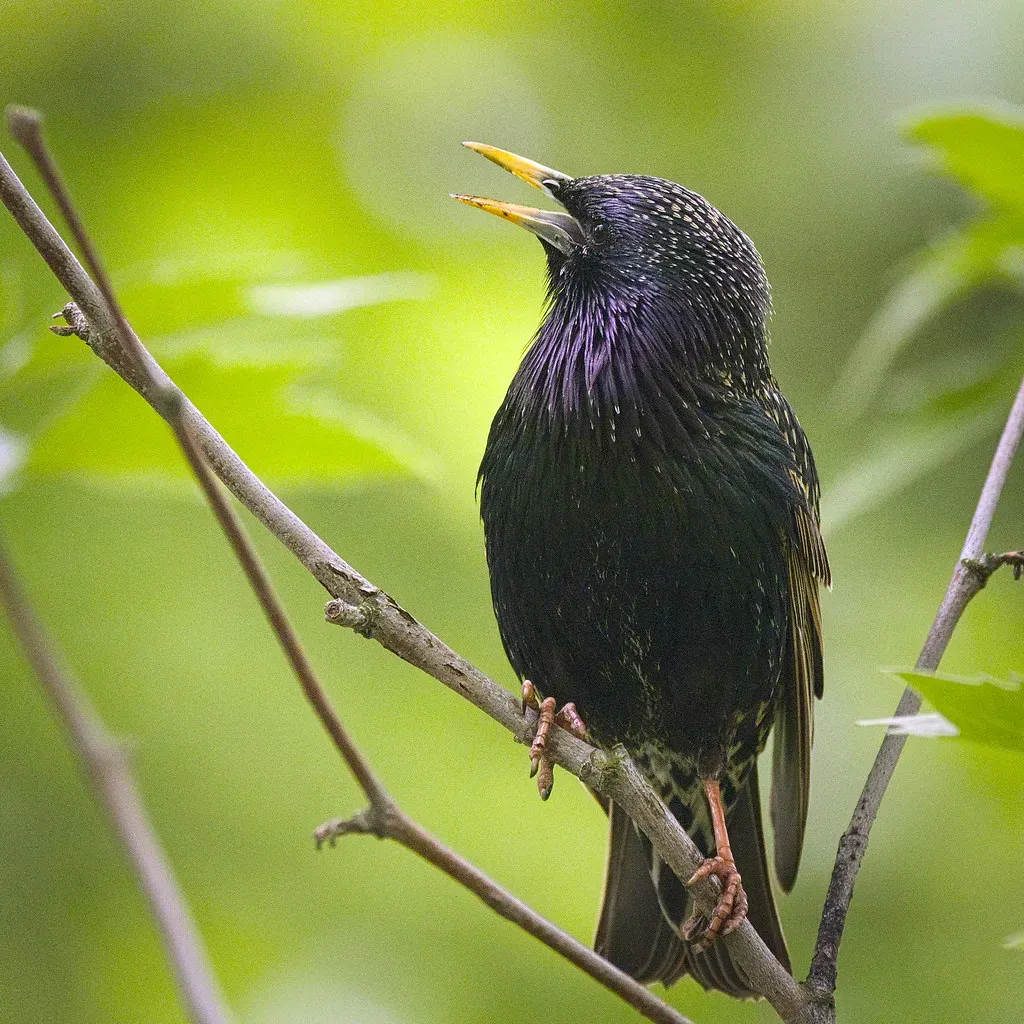
Here is the thing that genuinely blew me away when I first read about it. Most birds do not hatch knowing their song. Both songbirds and humans are not born with the ability to speak or sing, but must learn their language or song by listening to others, a process called vocal imitation learning or simply vocal learning.
Similar to human speech development, song learning is a two-stage process. Birds first memorize a tutor song and form an auditory memory, or “template,” in their brain during the sensory phase. Then they practice, refine, and eventually crystallize that song into their adult repertoire.
Research showed that chaffinches raised in a laboratory without exposure to adult males of the same species developed abnormal songs. When young birds of the same species were exposed to recorded wild chaffinch songs, they sang species-specific songs as adults. This demonstrated that birds must learn songs early in life.
It turns out that some types of birds learn their songs, while others are hard-wired by their DNA to sing a particular song. The learned singers, though, display a kind of cultural transmission that is honestly not so different from how human children pick up language and musical style from the world around them.
A Living Cultural Archive: How Bird Songs Evolve Across Generations
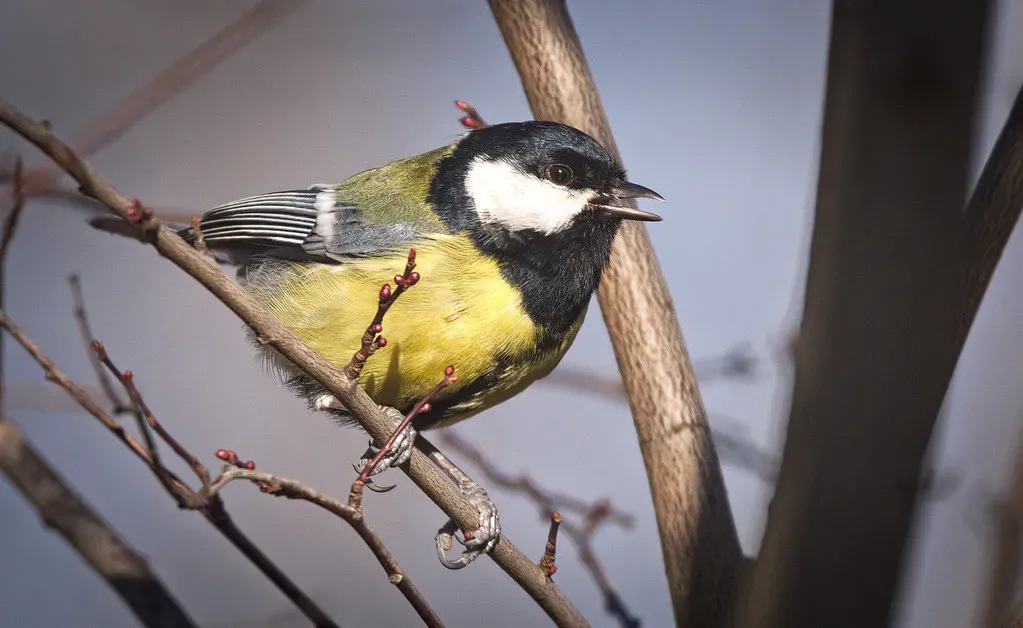
This is where things get genuinely poetic, I think. Birdsong is not a static thing. It is a living, shifting cultural phenomenon. New research from the University of Oxford provided fresh insights into how bird songs evolve over time, revealing a significant role for population dynamics in shaping song diversity and change. The findings were based on an analysis of over 100,000 bird songs.
The researchers spent three years collecting over 20,000 hours of sound recordings from a wild population of great tits in Oxfordshire. Their aim was to investigate how the movement, age, and turnover of birds within a population influences the diversity and evolution of their songs. To achieve this, they used a new approach involving training an AI model to recognize individual birds based on their songs alone.
Touchingly, the oldest birds kept singing songs long after they fell out of favor with younger birds. The older birds acted as archives for otherwise forgotten tunes. When such a bird dies, the songs it has preserved are lost forever.
Areas where birds stay close to their birthplace maintain more diverse and unique song cultures, similar to how isolated human communities often develop distinct dialects or musical styles. It is a mirror of human culture, surprisingly deep and surprisingly fragile.
What Birdsong Does to the Human Brain (And Why It Matters)
Here is a layer of this story that goes beyond the birds themselves. Birdsong does something measurable to us, too. When people reported seeing or hearing birds, they had a significantly better sense of mental well-being, even after researchers accounted for the benefits of being near green and blue spaces. The mental health boost from bird encounters lingered for hours.
Researchers suggest that a suspiciously quiet forest, where all the birds have stopped singing, signals danger to the human brain. Birdsong, over our evolutionary history, may have been a reliable cue that the world is at ease and we can relax. I know it sounds a little crazy, but our brains may be literally tuned, at a deep ancestral level, to find safety in a singing world.
The natural world reduces self-consciousness because it allows us to forget ourselves. Tuning into birds is also a form of mindfulness, because it roots us in the present moment. Honestly, that might be the most practical takeaway from all this science.
This research not only provides insights into bird behavior but also offers valuable perspectives on how demographic changes might affect cultural evolution across animal species, with potential implications for conservation efforts. Understanding birdsong is, in a very real sense, a way to protect it.
Conclusion: More Than Just a Pretty Sound
What science has revealed about birdsong is nothing short of astonishing. It is biology, culture, communication, memory, and emotion all woven together in a few seconds of melody. Those notes drifting through your window in the morning are the result of millions of years of evolution, generations of learned tradition, complex hormonal triggers, and a social world every bit as nuanced as our own.
The song that a bird sings today may have been passed down through dozens of generations, slowly shifting, carrying the memory of birds that no longer exist. When a species falls silent, it does not just disappear. An entire musical culture vanishes with it. That thought should stop us in our tracks.
Next time you hear birds singing at dawn, really stop and listen. You are not just hearing nature’s background noise. You are hearing something ancient, complex, and irreplaceable.
What do you think – does knowing the science behind birdsong make it sound even more beautiful, or does it take a little of the magic away? Tell us in the comments.

- 7 Ways Cats Show They're Secretly Annoyed With You - July 19, 2026
- What Small Dog Breed Are you According to Your Zodiac Sign - July 19, 2026
- What Nocturnal Animal Are You According to Your Zodiac Sign - July 19, 2026