

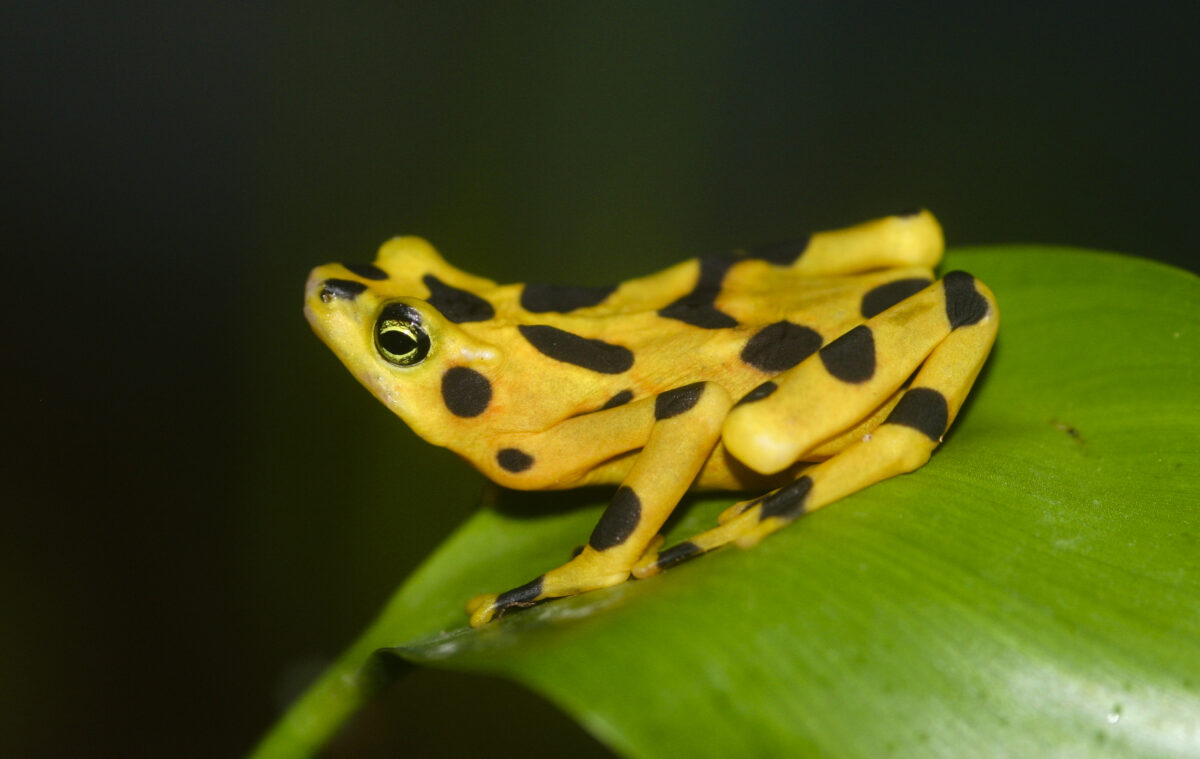
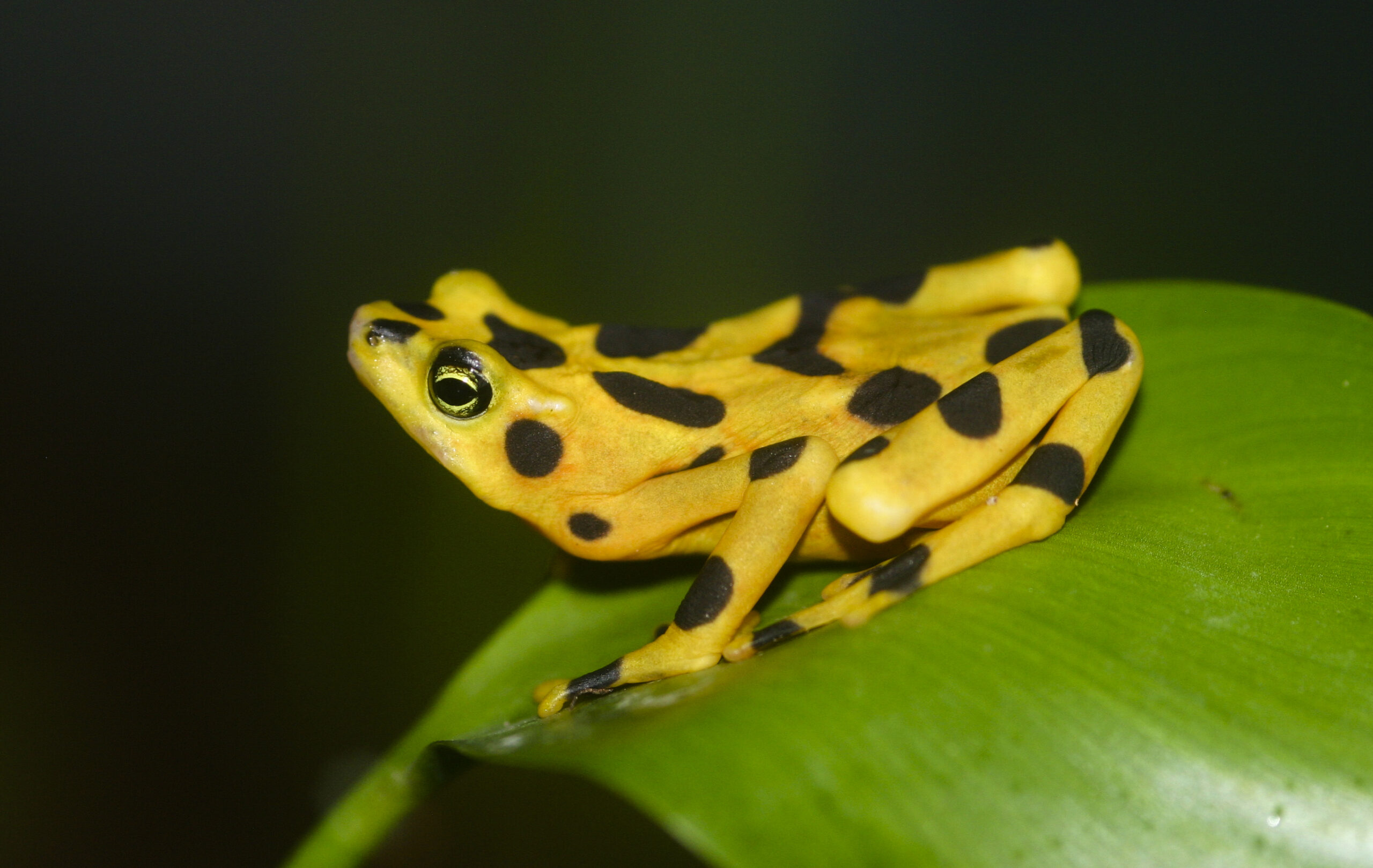
A Symbol Vanishes, Then Fights Back (Image Credits: Upload.wikimedia.org)
Panama – Scientists with the Panama Amphibian Rescue and Conservation Project released captive-bred golden frogs into protected habitats, initiating a crucial phase in efforts to restore the species to its native streams.[1][2]
A Symbol Vanishes, Then Fights Back
The Panamanian golden frog, a vibrant yellow icon endemic to central Panama’s fast-running streams, disappeared from the wild in 2009.[1] Chytridiomycosis, caused by the fungus Batrachochytrium dendrobatidis, swept through populations starting in the late 1980s, reaching the species’ last stronghold at El Valle de Anton in 2004.[2] The disease disrupts amphibians’ skin electrolytes, leading to heart failure and mass die-offs.
Conservationists anticipated the crisis through disease modeling and launched urgent interventions. No sightings have occurred since, classifying the frog as critically endangered. Yet captive breeding preserved genetic lines, setting the stage for reintroduction trials.[3]
The PARC Project’s Long Road to Recovery
The Panama Amphibian Rescue and Conservation Project formed in 2009 as a partnership among the Smithsonian Tropical Research Institute, Smithsonian’s National Zoo and Conservation Biology Institute, Cheyenne Mountain Zoo, and Zoo New England.[3] Roberto Ibañez, PARC director and STRI scientist, oversees operations that safeguard Panama’s most threatened amphibians through breeding and research.[1]
Additional collaborators include Panama’s National System of Protected Areas and the National Secretary for Science, Technology and Innovation. Funding from the Bezos Earth Fund supports the Tropical Amphibian Research Initiative, which coordinates releases. The project maintains assurance colonies and studies disease dynamics to inform restoration.[2]
Executing the High-Stakes Release
Teams placed 100 captive-bred golden frogs into soft-release mesocosms – enclosed pens mimicking natural habitats – near their former ranges in Panama’s central mountains.[1] For 12 weeks, researchers monitored the frogs, swabbing for fungal DNA and analyzing deceased specimens. About 70 percent succumbed to chytridiomycosis, but survivors transitioned to full wild release.
Ibañez noted, “We provide care for some of the most endangered amphibians in Panama, and now we are entering a new phase of our work to study the science of rewilding.”[2] The trial gathered vital data on skin toxin recovery from wild diets, which could bolster natural defenses. Handlers used gloves due to the frogs’ potent toxins, effective against predators.[4]
Building on 2025 Successes
Prior releases under the Tropical Amphibian Research Initiative demonstrated feasibility. In 2025, PARC reintroduced three species with encouraging results:
- Crowned tree frogs (Triprion spinosus): Excellent survivorship confirmed.
- Pratt’s rocket frogs (Colostethus pratti): Survival verified through passive acoustic monitoring.
- Lemur leaf frogs (Agalychnis lemur): Outstanding post-release persistence.
These outcomes exceeded expectations despite ongoing fungal presence.[3] Acoustic surveys in protected areas like Altos de Campana National Park even rediscovered four previously missing species, signaling ecosystem resilience.
Toward Sustainable Rewilding
Brian Gratwicke, a conservation biologist with the National Zoo and Conservation Biology Institute, highlighted strategic modeling: “Our earlier modeling suggested there may be release sites we can select that will be climatic refuges – places that are suitable for the frogs but too hot for the fungus.”[1] Future trials target such warmer sites, with long-term mesocosm maintenance as a bridge.
Data from the golden frog experiment will refine protocols, potentially enabling broader recoveries. Though challenges persist, these steps prove extinction is not inevitable for Panama’s amphibians.
Key Takeaways
- 100 golden frogs entered trial reintroduction, yielding critical disease and toxin data despite 70% losses.
- 2025 releases of other species showed strong survival, paving the way for golden frogs.
- Climatic refuges offer hope for fungus-resistant habitats.
This reintroduction underscores conservation’s power to reverse declines, even against formidable diseases. What steps can communities take to support amphibian habitats? Share your thoughts in the comments.

- Beavers Are Nature’s Engineers, Creating Vital Habitats for Other Wildlife Species - July 21, 2026
- The Recovery of the California Condor Offers Hope for Other Critically Endangered Birds - July 21, 2026
- Bats Play a Crucial Role in Controlling Insect Populations Across the United States - July 21, 2026