
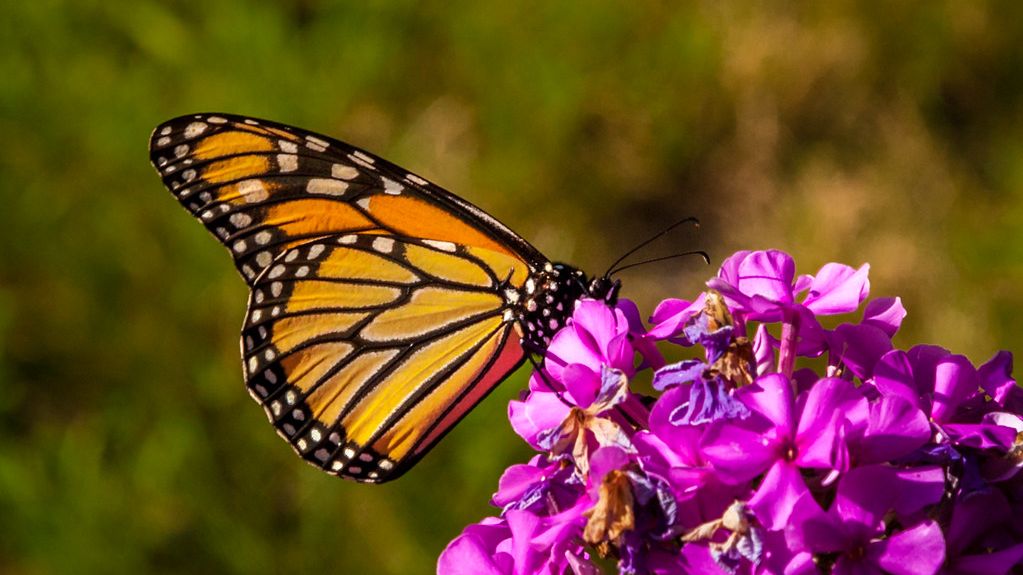
There is something almost unbelievable about a creature that weighs less than a gram navigating thousands of miles across an entire continent, finding its way to forests it has never visited before, and arriving right on schedule. No GPS. No map. No guide. Just wings, instinct, and something science has not yet fully explained.
The monarch butterfly’s annual migration is, without a doubt, one of nature’s most jaw-dropping performances. It is the kind of story that makes you stop and ask: how on earth does something so delicate accomplish something so extraordinary? Buckle up, because the answer is even more fascinating than you might imagine. Let’s dive in.
An Epic Route Spanning Thousands of Miles
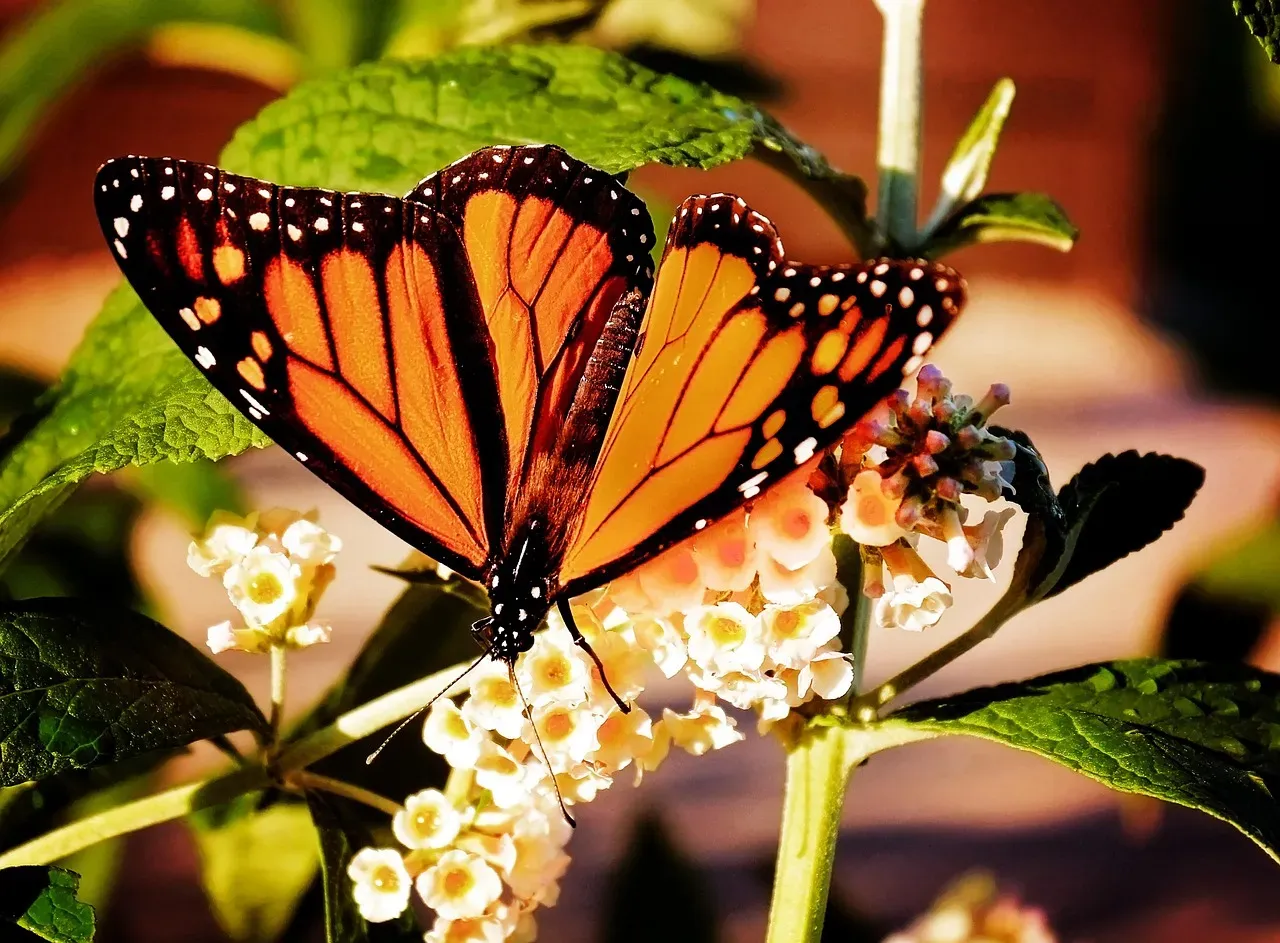
Monarch butterfly migration is a phenomenon, mainly across North America, where the monarch subspecies Danaus plexippus plexippus migrates each autumn to overwintering sites near the west coast of California or mountainous sites in central Mexico. Think about that for a moment. We are talking about an insect, not a bird, not a whale, completing a transcontinental journey that would exhaust most seasoned hikers.
The annual migration of the eastern monarch butterfly might be one of nature’s most impressive feats. Each year, a “super generation” of monarchs flies up to nearly 3,000 miles from the northern United States and southern Canada all the way down to the Monarch Butterfly Biosphere Reserve in central Mexico.
Monarchs can travel between 50 and 100 miles a day, and it can take up to two months to complete their journey. The farthest-ranging monarch butterfly on record traveled an astonishing 265 miles in a single day. Honestly, that’s more ground than most of us cover in a week of commuting.
This massive movement of butterflies has been recognized as one of the most spectacular natural phenomena in the world. The North American monarchs begin their southern migration in September and October, originating in southern Canada and the northern United States, then traveling thousands of kilometers to overwintering sites in central Mexico, arriving at their roosting sites in November.
Nature’s Built-In Navigation System

Here’s the thing that really blows my mind. These butterflies have never made this trip before. The migrating generation was born just months earlier. Yet somehow, they find the exact same mountain forests their ancestors used. It is like moving to a new city based on a memory you were born with.
Researchers are still investigating what directional aids monarchs use to find their overwintering location. It appears to be a combination of directional aids such as the magnetic pull of the earth and the position of the sun, not any single mechanism in particular.
Although each monarch only migrates once, it can find the exact overwintering groves its ancestors used, probably using magnetism and sunlight to help navigate. The precision of this is staggering. It is the biological equivalent of hitting a bullseye from across a continent.
Monarchs use a combination of air currents and thermals to travel long distances, with some flying as far as 3,000 miles to reach their winter home. They ride invisible highways in the sky, surfing warm air columns to conserve precious energy for the long haul ahead.
Eastern migratory monarchs that emerge as adults around mid-August or later will be in reproductive diapause and spend their first few months of adulthood flying to their overwintering sites in Mexico. Instead of being ready to mate and lay eggs, they delay reproductive maturity until spring. This change is triggered by hormonal shifts resulting from environmental cues like decreasing daylight, cooler nights, and aging host plants.
The Overwintering Miracle in Mexico

If you have ever seen photographs of the Mexican oyamel fir forests draped in millions of orange wings, you already know the feeling. It is overwhelming. Otherworldly. Millions of monarchs drape large swathes of forest in Mexico, creating an amazing phenomenon where the sheer density of butterflies transforms the trees themselves.
Monarchs roost for the winter in oyamel fir forests at an elevation of 2,400 to 3,600 meters, nearly two miles above sea level. The mountain hillsides of oyamel forest provide an ideal microclimate for the butterflies, where temperatures range from 0 to 15 degrees Celsius.
Monarchs cluster together to stay warm, and tens of thousands of them can cluster on a single tree. Although monarchs alone weigh less than a gram, tens of thousands of them together weigh a tremendous amount. The branches actually bend and sometimes break under the sheer living weight of them.
For the current 2025 to 2026 season, monarchs began arriving at key sites like El Rosario and Sierra Chincua sanctuaries in the Monarch Butterfly Biosphere Reserve as early as November 2025. In Mexico, the beloved butterflies arrive for the winter during Day of the Dead celebrations, where they symbolize the souls of the departed. The cultural and spiritual weight of their arrival adds another dimension to what is already an astonishing natural event.
A Species Under Serious Threat
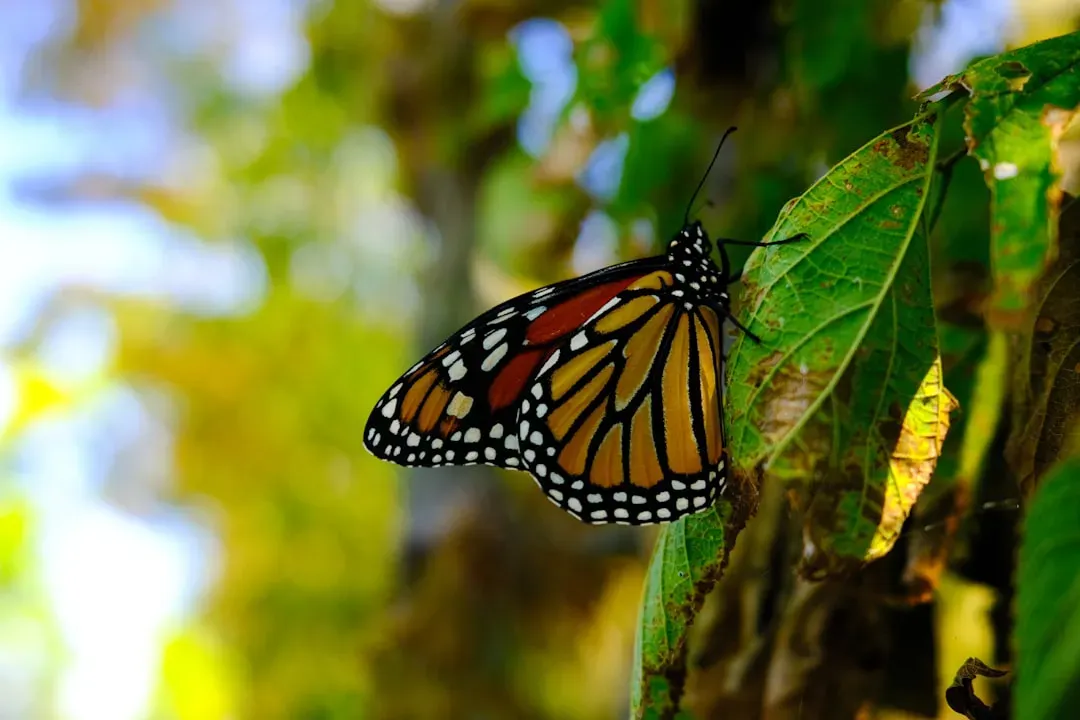
I know it sounds crazy, but one of the most iconic insects on earth is quietly sliding toward extinction. The numbers, when you look at them plainly, are deeply sobering.
In the 1990s, nearly 700 million monarchs made the epic flight each fall from the northern plains of the U.S. and Canada to sites in the oyamel fir forests. Now, researchers and citizen scientists estimate that only a fraction of the population remains, with monarchs having declined by more than 80% since the 1990s in central Mexico, and by more than 95% since the 1980s in coastal California.
On December 12, 2024, the U.S. Fish and Wildlife Service published a proposed rule that would list the monarch butterfly as a threatened species. The agency estimated that the probability of extinction in the foreseeable future, roughly 60 years, is 56 to 74 percent for the eastern monarch migratory population and a staggering 99 percent for the western migratory population.
Milkweed is the only plant on which monarchs will lay their eggs and the only food source for baby caterpillars. Urban planning and agricultural expansion in the United States and Canada have paved and plowed over millions of acres of milkweed. The development of genetically modified crops has played a major role in this loss.
Climate change is projected to reduce and shift suitable habitat for southward by up to roughly 40 percent by 2070, concentrating resources in southern Mexico and fragmenting migration routes. These changes may increase the likelihood of resident populations forming in Mexico, potentially disrupting the species’ traditional long-distance migration entirely. That is not a distant threat. It is already unfolding.
Signs of Hope and the Road to Recovery
Let’s be real, the situation is serious. Yet even in difficult circumstances, there are genuine reasons to feel cautiously hopeful. The monarch story is not over, and there are people working incredibly hard to make sure it never ends.
In encouraging news, the eastern monarch butterfly population nearly doubled in 2025, according to a report announced in Mexico. The population wintering in central Mexico’s forests occupied 4.42 acres, up from 2.22 acres during the previous winter. That is not a small bounce. It suggests that when conditions improve and conservation efforts take hold, the monarchs respond.
In 2025, Project Monarch deployed over 400 solar-powered ultralight transmitters on southward-migrating monarchs, tracking butterflies from locations throughout North America and the Caribbean all the way to their overwintering sites in Mexico. The technology we now bring to understanding monarch behavior is extraordinary compared to even a decade ago.
In December 2023, the Government of Canada listed the monarch as an endangered species under the federal Species at Risk Act. As of 2025, at least 14 U.S. states had enacted legislation to protect, develop, and restore habitat suitable for pollinators. Governments are finally catching up to what scientists have been saying for years.
The good news is that many of us can take action to help milkweed and the monarch. By planting milkweed or simply letting it grow, you directly support monarch breeding and migration. It is one of the rare cases where a backyard garden decision genuinely contributes to a species’ survival. That, I think, is something worth holding onto.
Conclusion
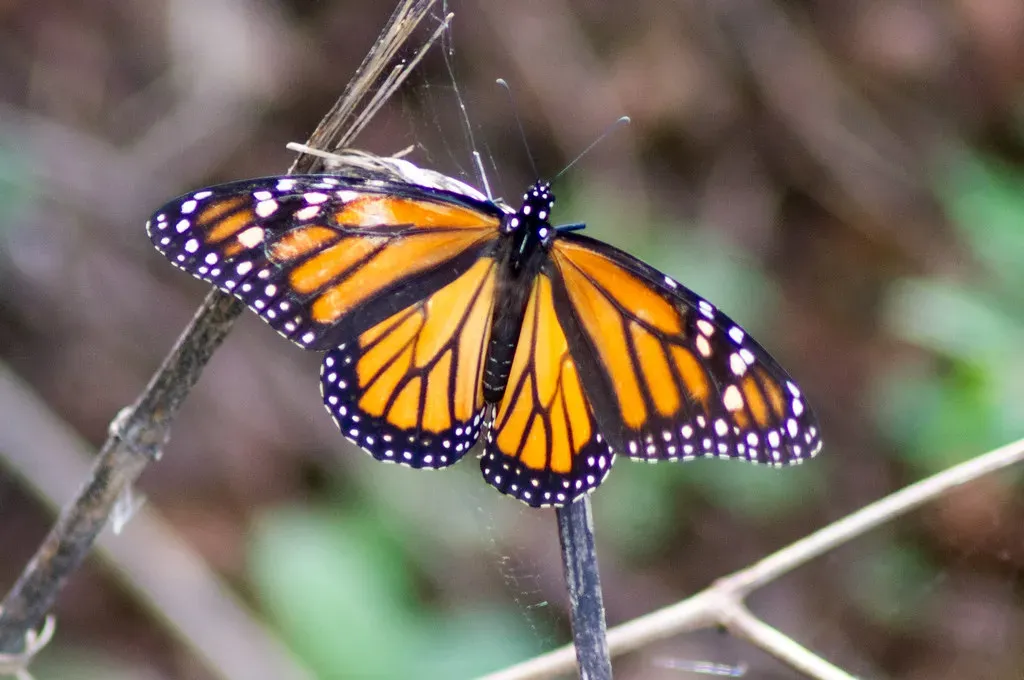
The monarch butterfly’s migration is, at its heart, a story about resilience. It is a reminder that nature operates on a scale and with a complexity that consistently humbles even our best scientific minds. These fragile, brilliant creatures have been making this journey for thousands of years, guided by forces we are only beginning to understand.
The threats they face today are real and urgent. Habitat loss, pesticide use, and a rapidly shifting climate are collectively rewriting the conditions under which monarchs have always survived. Yet the near-doubling of the eastern population in 2025 shows that recovery, while slow, is possible. Conservation matters. Individual action matters. Political will matters.
The monarch butterfly does not know it is endangered. It simply flies. Every autumn, it rises on a thermal current, points itself south, and does what its ancestors always did. The question now is whether we will do what ours should have done much sooner. What would it take for your own garden, your own community, to become part of the answer?
