
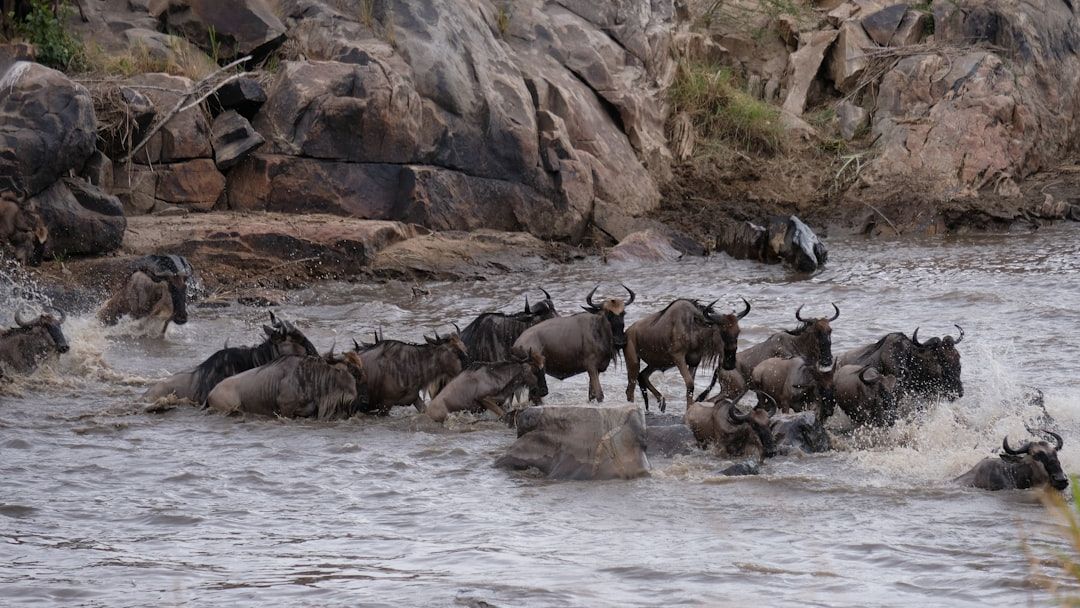
Every year, billions of creatures vanish from one part of the Earth and reappear somewhere else entirely, often thousands of miles away, without a map, without a guide, and without ever having made the trip before. It sounds impossible. Honestly, it sounds like something out of science fiction. Billions of animals set off on journeys that defy easy explanation, crossing oceans and traversing entire continents with a precision that puts human GPS technology to shame.
Scientists have shed light on some of the enduring mysteries about how species navigate and what drives them to leave a habitat, but we still have a lot to learn. We’re in a golden age of animal tracking, but somehow, the more we discover, the more mysterious animal migration seems. The seven journeys below are proof of that. Let’s dive in.
The Monarch Butterfly: A Multigenerational Puzzle That Defies Logic
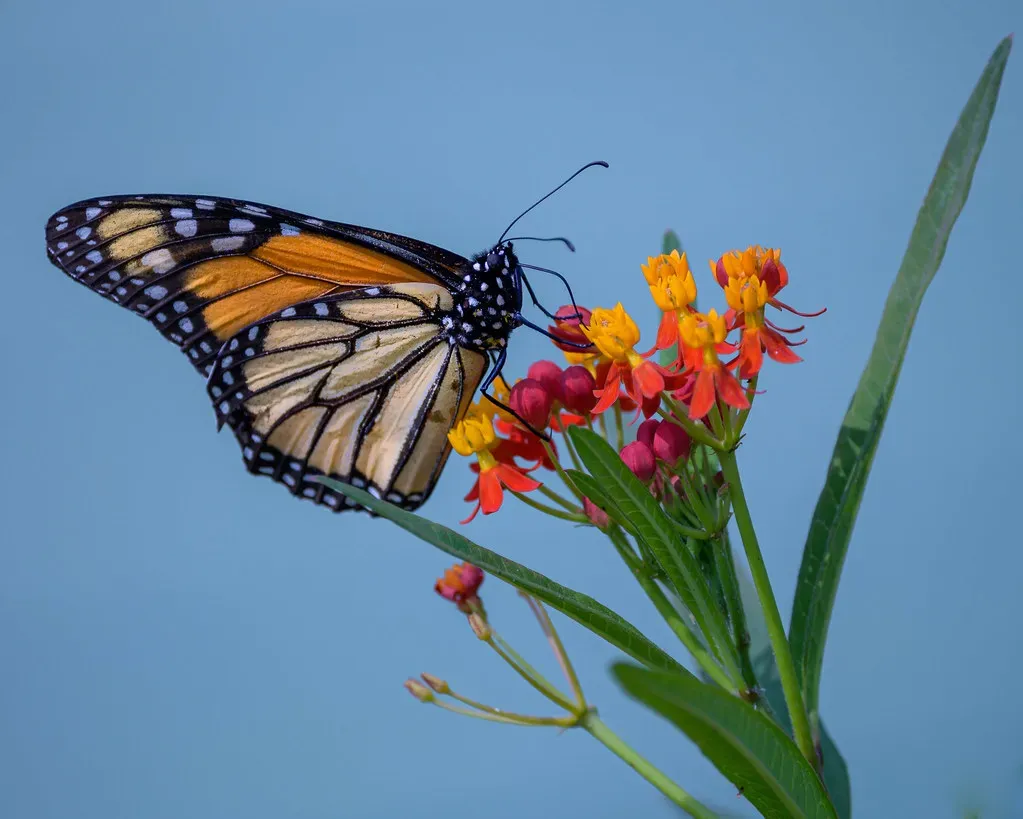
Here’s a fact that genuinely stops people in their tracks: none of the monarchs on the fall migration path have ever been to their destination before, and yet they know exactly where to go. Think about that for a second. Imagine being handed an atlas you’ve never read, in a language you’ve never studied, and navigating perfectly on your first try.
The complete migration requires an intergenerational relay. No single individual makes the entire round trip, as the duration of these journeys exceeds their lifespan. Recent studies have illuminated the mechanisms behind their southward navigation, using a time-compensated sun compass. Skylight cues, such as the sun itself and polarized light, are processed through both eyes and likely integrated in the brain’s central complex. Time compensation is provided by circadian clocks that reside in the antennae, and monarchs may also use a magnetic compass because they possess two cryptochromes that have the molecular capability for light-dependent magnetoreception.
A migrating monarch can fly up to 2,500 or sometimes even 3,000 total miles before reaching its destination. A monarch can travel over 100 miles in a single day, with the right conditions, coasting on air currents to move quickly and conserve energy. It typically takes up to three generations of butterflies to make the complete journey, meaning the navigation information is genetically programmed. It’s hard to say for sure where genetics end and mystery begins, but I think that’s exactly what makes the monarch so endlessly captivating.
The Bar-Tailed Godwit: The World’s Most Extreme Nonstop Flier
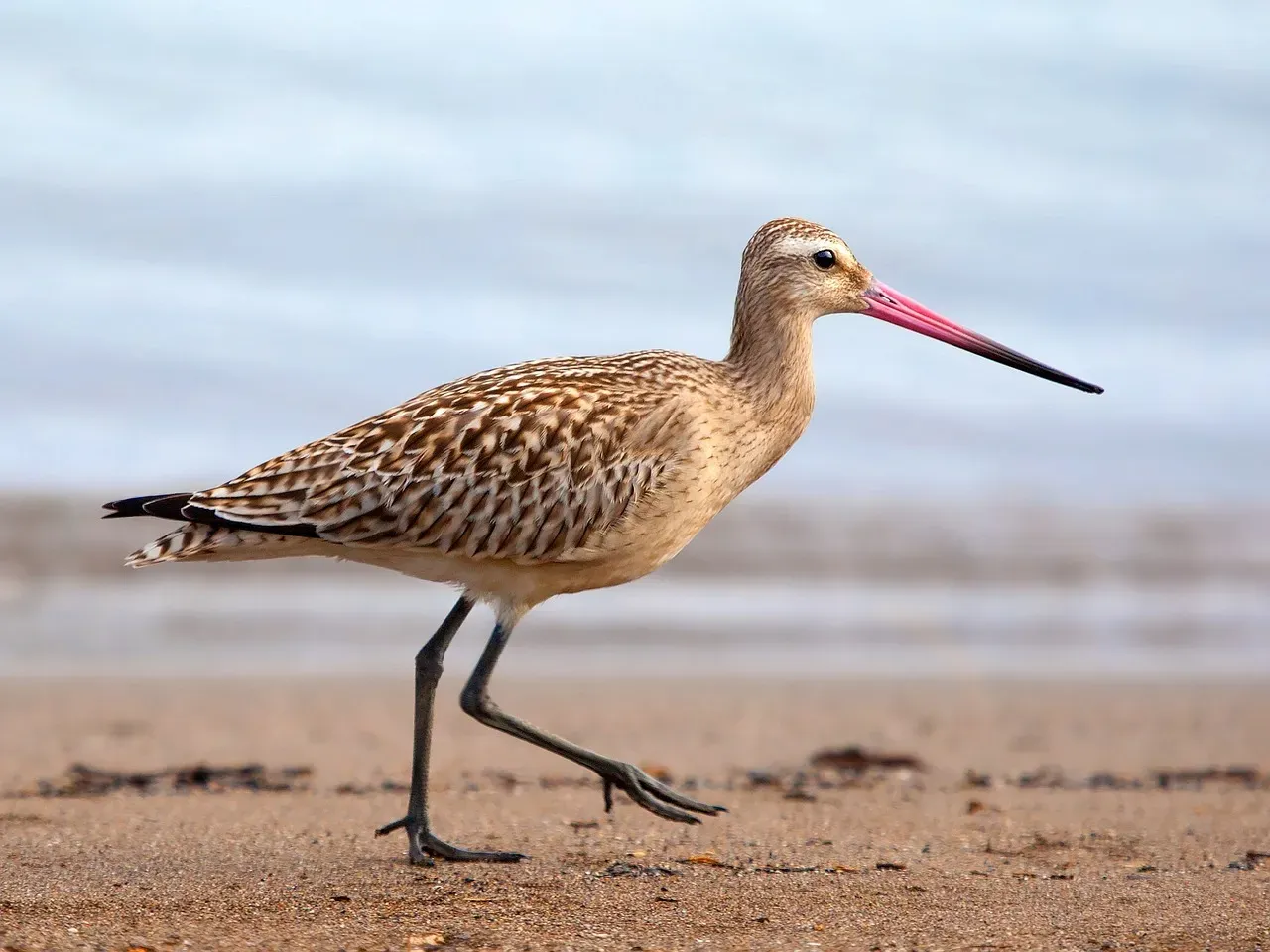
The migration of the subspecies Limosa lapponica baueri across the Pacific Ocean from Alaska to New Zealand is the longest known nonstop flight of any bird, and also the longest journey without pausing to feed by any animal. Let that sink in. No food. No rest. Just pure biological willpower for over a week straight.
A four-month-old bar-tailed godwit known as B6 set a new world record by completing a nonstop 11-day migration of 8,425 miles from Alaska to Tasmania, Australia, representing the longest documented nonstop flight by any animal. After fueling for the trip, these birds roughly double their weight in fat. Even their kidneys, liver, and intestines shrink to make room for more fat so they don’t exceed maximum weight for efficient flight.
Aided by strong tailwinds, they average speeds of 56 kilometers per hour. Godwits fly extraordinary distances, yet they aren’t particularly different from other migrating birds. It’s just that they do everything really well. Structurally, they have a wing shape designed for fast, efficient long-distance flight, and their feathers are very sleek so that the wind can pass over as smoothly as possible. Nature’s version of an optimized aircraft, basically.
The Arctic Tern: Chasing Endless Summer Across the Entire Planet
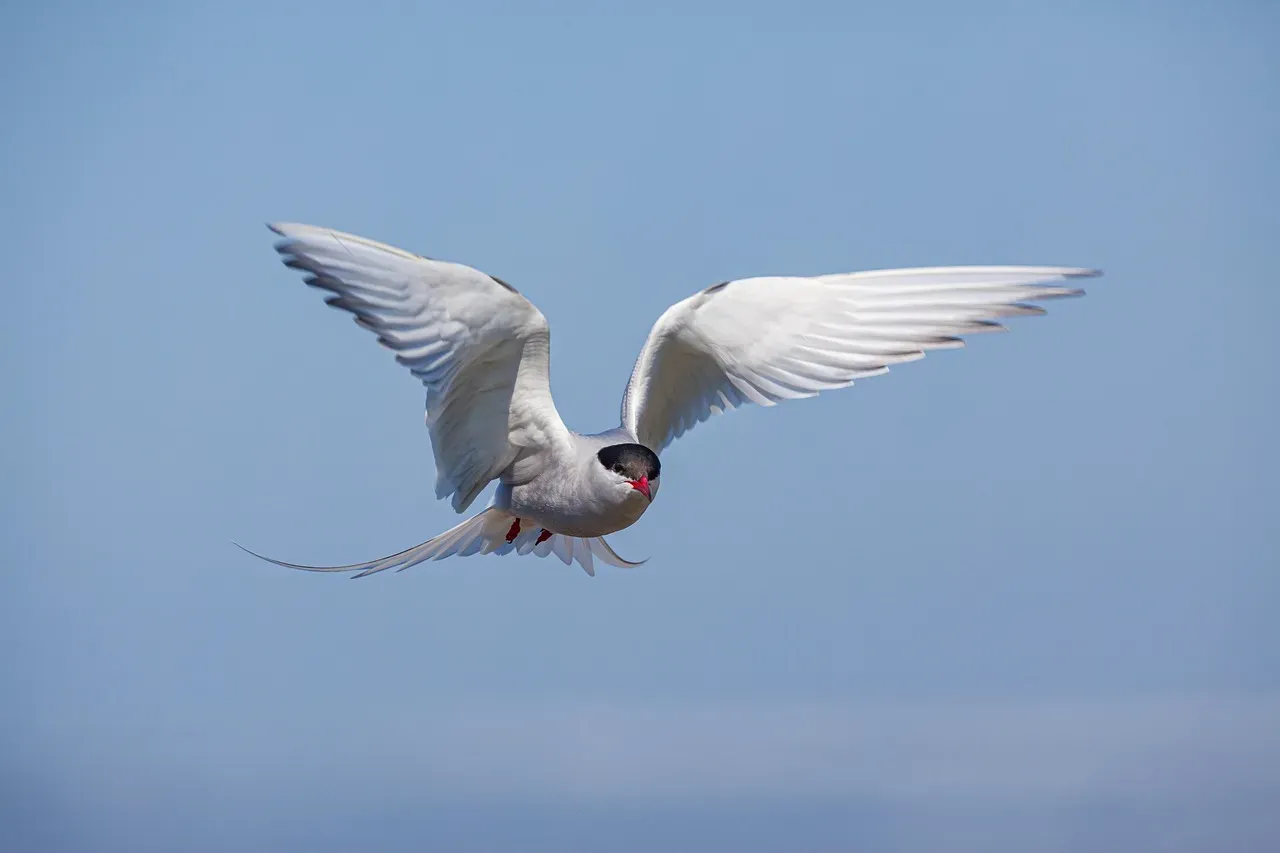
Each year, a small seabird no bigger than a robin completes a round-trip journey of roughly 40,000 kilometers, from the Arctic to the Antarctic and back again. The arctic tern doesn’t just hold the record for the longest migration on Earth; it experiences more daylight than any other animal, chasing summer across both poles. That’s not just impressive. That’s almost unfair.
Tracking studies have revealed that the average annual distance traveled by Arctic terns is approximately 70,900 kilometers. One individual bird was recorded covering 96,000 kilometers in a single year, a distance far exceeding any other known animal migration. Over a lifespan that can reach 30 years, an Arctic tern may accumulate a total travel distance of over 2.4 million kilometers.
They follow complex routes that take advantage of global wind patterns, gliding effortlessly across oceans, and use the Earth’s magnetic field, the sun, and even polarized light patterns to find their way with remarkable precision. In the span of a single year, an Arctic tern experiences two summers and more daylight than any other being on Earth. Over a lifetime, these birds may fly the equivalent of three round trips to the Moon. I honestly don’t know whether to call that science or poetry.
The European Eel: The Migration Nobody Has Ever Witnessed
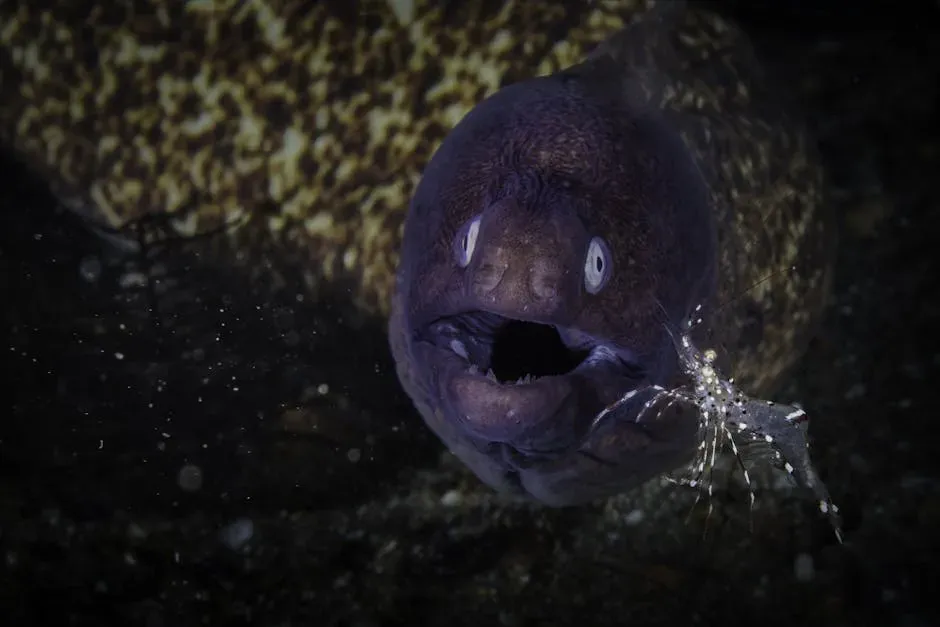
The European eel might be the most quietly bizarre creature on the planet. European eels are born in the mysterious Sargasso Sea, near Bermuda. These eels hatch there, then migrate over 5,000 kilometers to the rivers of Europe, where they live for 10 to 20 years in freshwater. Already wild, right? It gets stranger.
When they’re ready to reproduce, they leave the rivers and return, somehow, to the exact region in the Sargasso Sea to spawn. Here’s the mystery: no human has ever seen European eels spawn. We know they go back, but the spawning has never been directly observed. Tiny eel larvae drift slowly east on ocean currents for one to three years, and off the coasts of the UK and mainland Europe, they transform into transparent eels and enter estuaries and freshwater rivers, where they grow and mature over a period of up to 20 years.
We have documented nearly every corner of this planet. We have robots on Mars. Yet somehow, no scientist has ever witnessed this animal reproduce. That single fact is more haunting than almost anything in natural science. It’s the kind of thing that makes you wonder what else is hiding in plain sight.
The Humpback Whale: Songs, Secrets, and Thousands of Miles at Sea
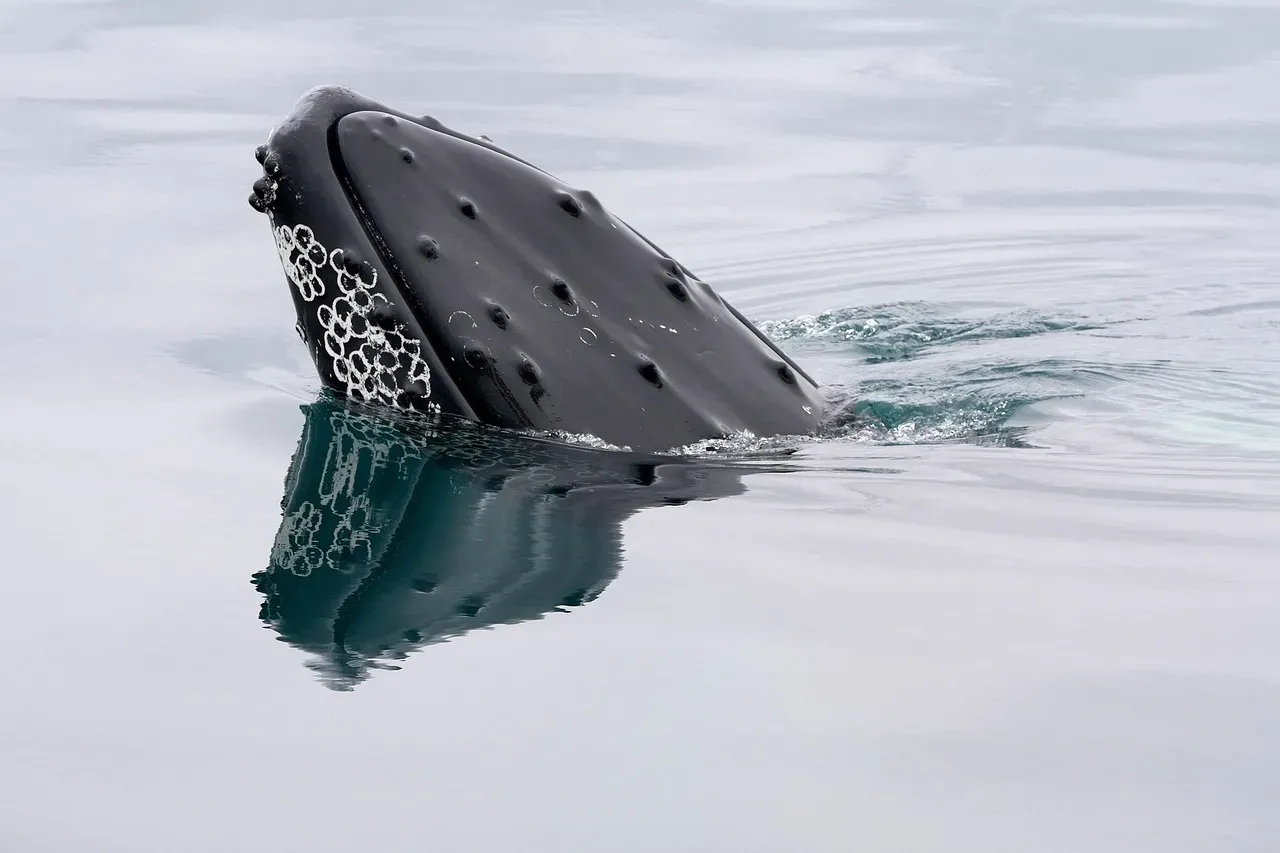
Humpback whales engage in one of the longest migrations among mammals. These majestic creatures travel from their feeding grounds in the cold waters of the Arctic and Antarctic to the warmer waters near the equator, where they mate and give birth. The migration can stretch up to 5,000 miles, with the whales taking several months to reach their destination.
What’s most astonishing is that humpbacks navigate with uncanny accuracy. Scientists believe they use the Earth’s magnetic field, ocean currents, and even the position of the sun and stars to find their way. Along the journey, they sing, and their haunting songs can travel hundreds of miles underwater. Remarkably, they do not eat during migration, relying on stored body fat. Their haunting songs echo through the ocean, a mysterious communication method studied by scientists worldwide.
Recent findings suggest that humpback whales are now giving birth well outside their previously recognized tropical calving grounds. Several factors may contribute to this shift, and climate change has led to a rise in sea surface temperatures, making southern waters more hospitable for calving. The science, it turns out, still hasn’t caught up with where these whales are actually going.
The Leatherback Sea Turtle: Ancient Navigator of the Open Ocean
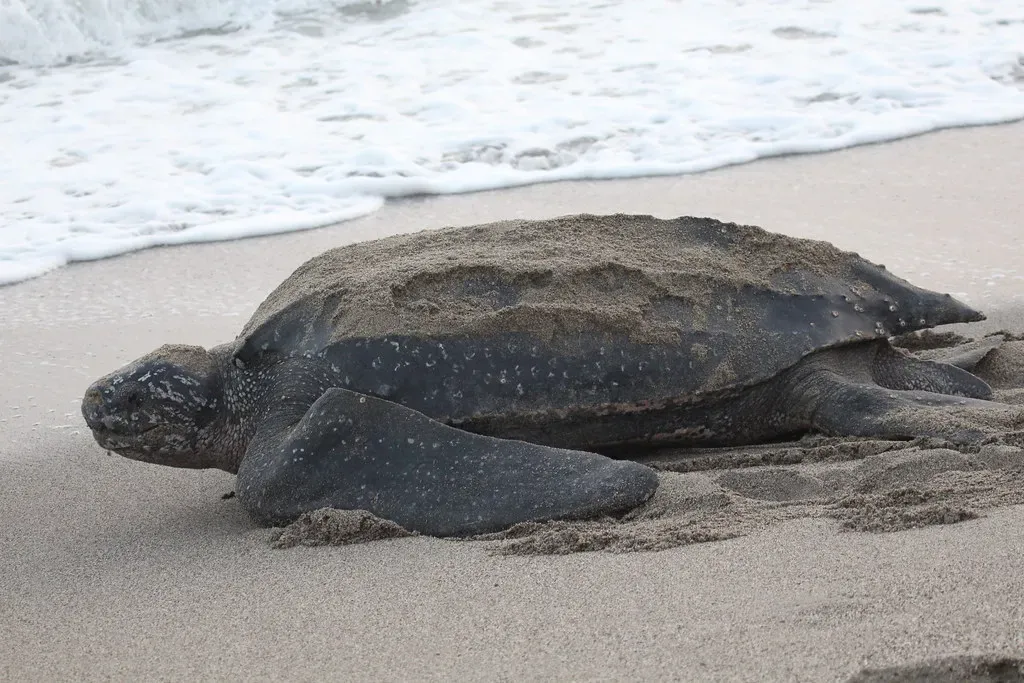
For over 100 million years, the leatherback sea turtle has been crossing oceans, surviving mass extinctions and changing climates. Today, it remains one of the greatest navigators in the animal kingdom. Leatherbacks can travel more than 10,000 miles a year, from tropical nesting beaches to cold, food-rich waters near the poles.
Sea turtles hatch from eggs with no parents anywhere around. Nobody is going to lead them, and they swim off to the exact right island. Hatchling loggerhead sea turtles from Florida, when exposed to magnetic fields that exist at two locations with the same latitude but on opposite sides of the Atlantic Ocean, responded by swimming in different directions that would, in each case, help them advance along their circular migratory route. The results demonstrate for the first time that longitude can be encoded into the magnetic positioning system of a migratory animal.
What makes their journey remarkable is their ability to maintain body temperature in frigid seas, thanks to a unique system of fat insulation and counter-current blood flow. Female leatherbacks return to the very beaches where they were born to lay eggs, often after decades at sea. Decades. Away. And they still find their way home. No GPS, no compass. Just something ancient and invisible written into their biology.
The Wildebeest Great Migration: A Living River of Instinct and Survival
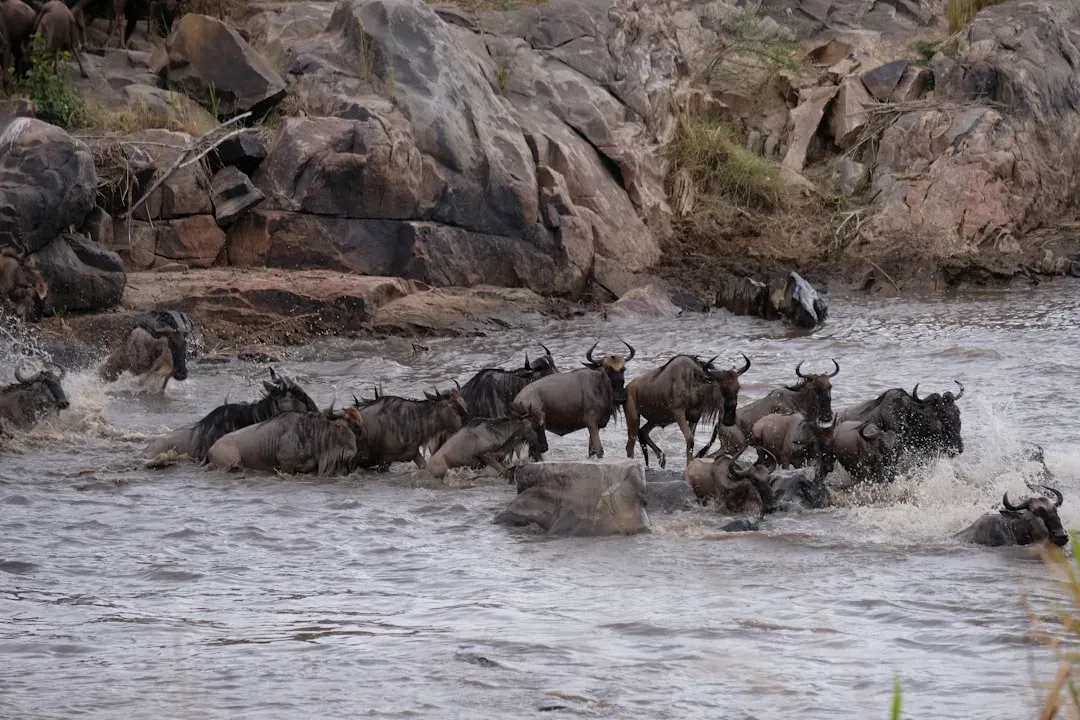
Mass migration in the Serengeti is an annual circular pattern of movement with some 1.7 million wildebeest and hundreds of thousands of other large game animals, including gazelles and zebra. It’s the largest overland migration on the planet, and it operates like a living, breathing clock. Every year, like clockwork, chaos and beauty collide.
Spanning roughly 1,600 kilometers across Tanzania and Kenya, this migration is driven by the search for fresh grazing and water in a cyclical pattern dictated by rainfall. The herd moves as a great swarm, and individuals must keep up or risk being picked off by the lions, hyenas, and crocodiles that gather to hunt. It’s a gauntlet, not just a journey.
Unlike the monarch’s finely tuned compass, wildebeest navigation is influenced by environmental cues such as rainfall patterns, fresh grass availability, and the movement of the herds themselves. Social dynamics, memory, and instinct combine to guide the vast procession, a testament to collective behavior and ecological adaptation. Predators such as lions, hyenas, and crocodiles follow the herds, while scavengers depend on the leftovers. The nutrient cycling from the movement of millions of animals fertilizes the soil, sustaining plant growth and the broader food web. The whole Serengeti ecosystem, essentially, depends on this single act of movement.
Conclusion: The Migrations That Still Humble Science
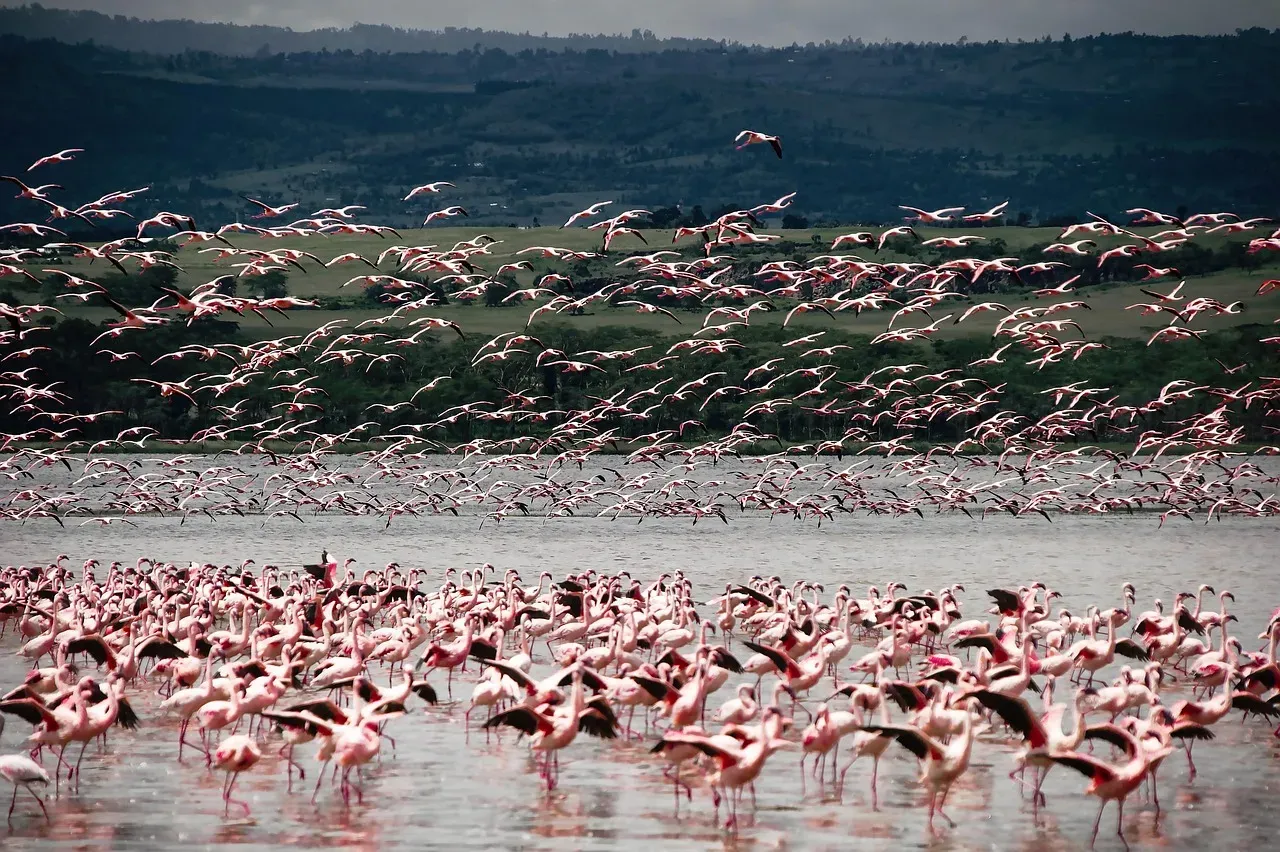
What these seven journeys share is something bigger than biology. They represent the edge of human understanding. These incredible journeys are certainly captivating, but they also have a vital role to play in the ecosystem. Migration affects the distribution of prey and predators, keeps nutrients cycling around the planet, helps with the spread of pollen and seeds, and even influences human economies.
Migration is encoded in their DNA, but it’s also adaptive. As climates shift and habitats change, many species adjust their timing or routes, proving that nature’s navigation is not rigid, it’s responsive, alive, and intelligent. From a tiny butterfly running on a sun-powered clock to a whale singing its way across the Pacific, every single one of these migrations reminds us how much the natural world still outpaces our ability to explain it.
There is something deeply humbling about that. We have telescopes that see the edge of the universe, and yet a four-month-old godwit can fly 8,000 miles over open ocean on its very first try without any help at all. Which of these seven migrations do you find most mind-blowing? Tell us in the comments.

- The Perfect Pet for Each Zodiac Sign - July 7, 2026
- The Wild Animal That Embodies Your Zodiac Sign’s Spirit - July 6, 2026
- 7 Steps to Planting Admirably Beautiful Bluebonnets - July 6, 2026