
n the dim twilight of North American forests, a hidden spectacle unfolds that humans can only imagine. White-tailed deer (Odocoileus virginianus), those elegant icons of the wild, have evolved a sophisticated communication system that combines scent with an invisible visual language powered by ultraviolet (UV) light. During the autumn rut, males create special markings—rubs on trees and scrapes on the ground—that glow like neon signposts when bathed in the UV rays abundant at dawn and dusk. A landmark 2025 study from the University of Georgia Deer Lab has revealed this photoluminescent wonder for the first time, showing how these “signposts” stand out vividly to deer eyes while remaining invisible to ours. This discovery opens a dazzling new window into animal perception and social signaling.
The Unique Vision of White-Tailed Deer
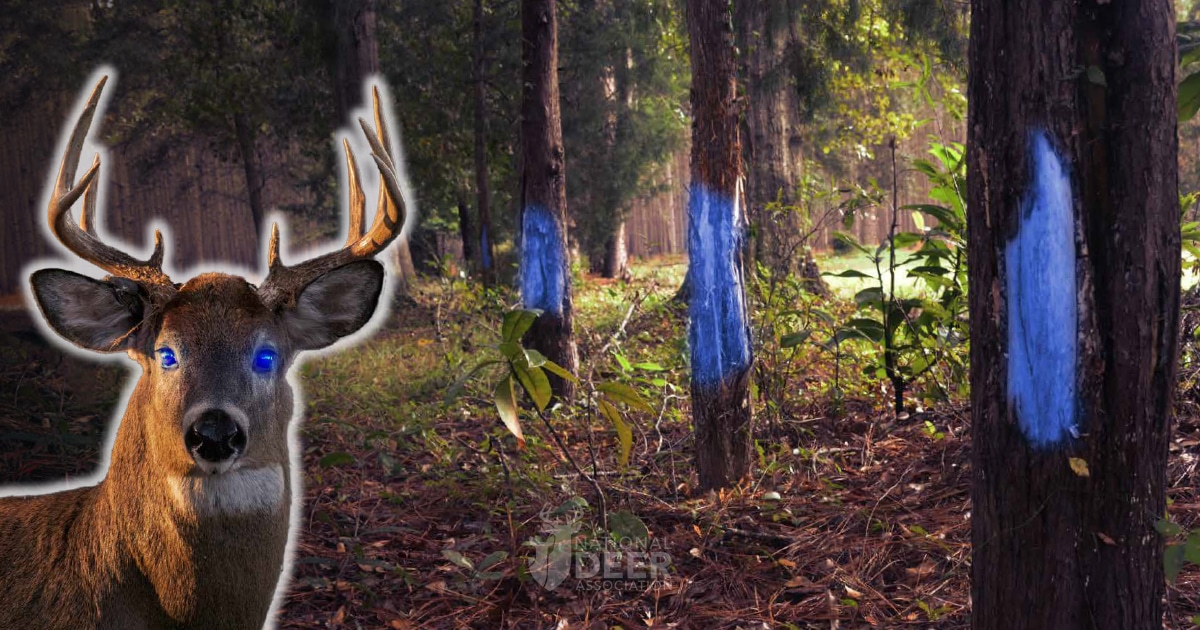
White-tailed deer possess dichromatic vision tuned perfectly for low-light conditions, with peak sensitivities at around 450 nanometers (deep blue) and 537 nanometers (green). Unlike humans, whose eye lenses filter out most UV wavelengths below 400 nm, deer eyes transmit these short waves freely, making them roughly 20 times more sensitive to ultraviolet light. This adaptation allows them to detect subtle contrasts in the forest that remain hidden from our trichromatic sight, especially during crepuscular hours when they are most active.
Their vision turns the ordinary woodland into a vibrant canvas of blues, greens, and glowing UV signals. Research confirms this sensitivity evolved alongside their crepuscular lifestyle, enabling them to navigate, forage, and communicate effectively when visible light fades and UV dominates the spectrum. What appears as dull bark or earth to us becomes a luminous network of messages for them.
Signposts: Rubs and Scrapes as Communication Hubs
Male white-tailed deer meticulously craft “signposts” during the rut: antler rubs where they strip bark from trees with their foreheads and antlers, depositing secretions from specialized glands, and scrapes where they paw the ground into bare patches often accompanied by urine. These marks serve dual purposes—olfactory billboards rich in pheromones and now, visual beacons that glow under UV. Bucks revisit and refresh them to advertise dominance, territory, and mating readiness to does and rival males alike.
The strategic placement on field edges or prominent trees maximizes exposure to ambient light, turning scattered forest features into a connected communication network. Fresh rubs in particular intensify as hormone levels rise, creating a dynamic map of social information that other deer can interpret from afar without needing close inspection.
Photoluminescence: The Science Behind the Glow
Photoluminescence occurs when organic compounds in rubbed bark or urine absorb ultraviolet photons and re-emit them at longer, visible wavelengths—essentially turning invisible energy into a deer-visible glow. In the University of Georgia study, researchers analyzed 109 rubs and 37 scrapes using 365 nm and 395 nm UV lights (mimicking natural twilight conditions) and a spectrometer, finding significant irradiance contrasts compared to surrounding bark and soil.
Exposed lignin, terpenes from tree cambium, and phenols from forehead glands in rubs produce blue-green peaks around 450 nm and 550 nm, while urine adds violet or turquoise hues from porphyrins and amino acids. These emissions align precisely with deer cone sensitivities, creating standout “highway reflectors” against the darker forest background.
Twilight Glow: Perfect Timing for Communication
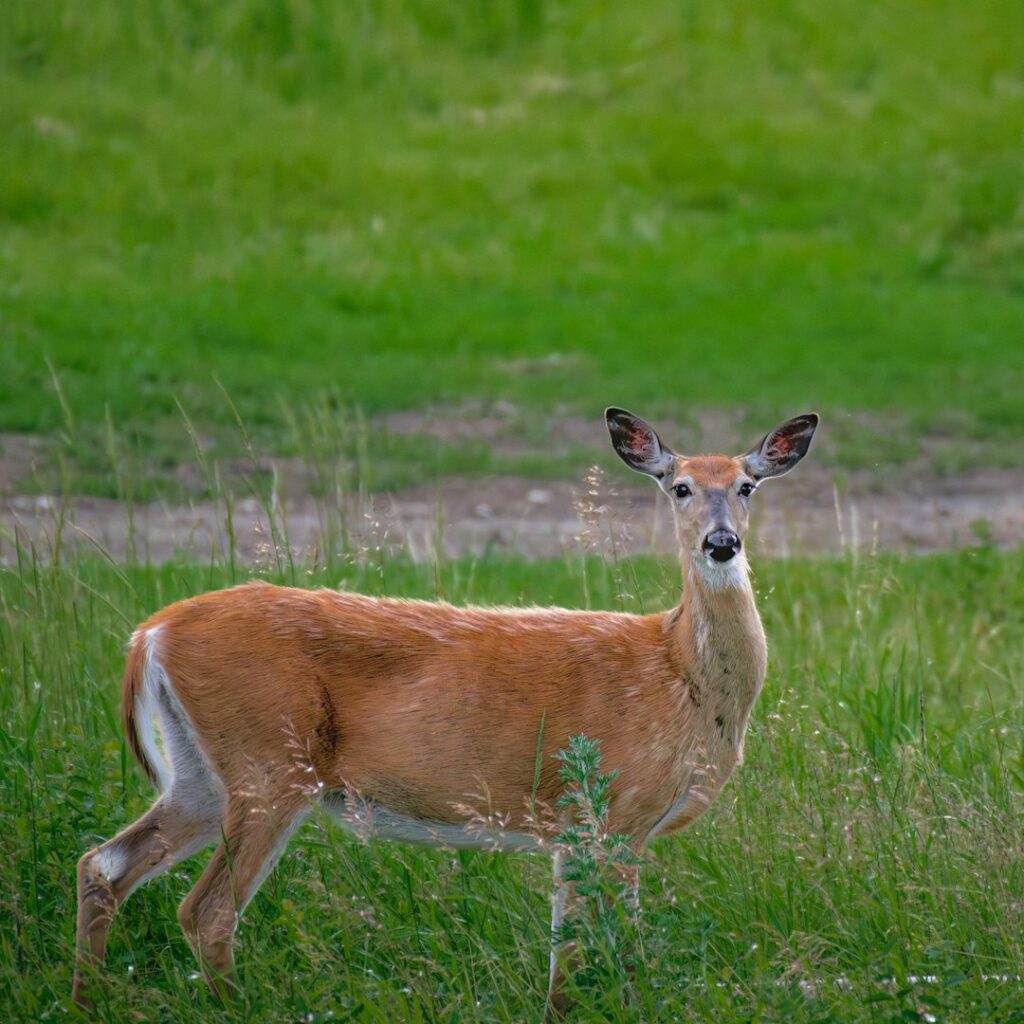
Dawn and dusk bring a surge of short-wavelength UV light as the sun’s visible spectrum dims, exactly when white-tailed deer move most freely and interact socially. Excitation wavelengths of 365–395 nm flood the environment then, triggering photoluminescence in signposts that would otherwise remain subdued. This natural timing ensures the glows activate precisely during peak activity periods, amplifying their effectiveness as visual cues.
The crepuscular synchronization also minimizes energy waste, as the signals shine brightest when deer need them most for locating mates, assessing rivals, or navigating territories. In essence, the forest transforms into a glowing gallery tailored to their lifestyle, invisible yet unmistakable to them.
Urine: The Brightest Beacon in the Mix
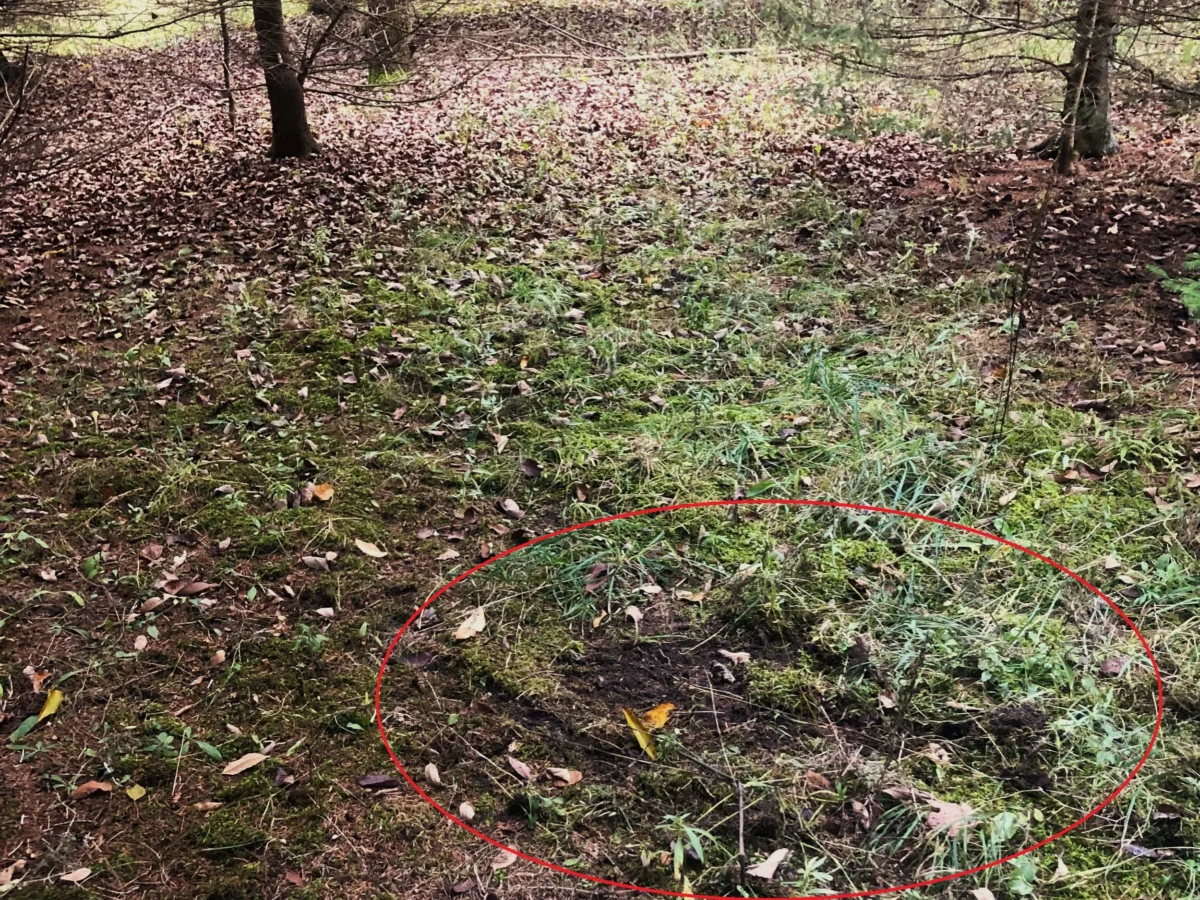
Urine deposited in scrapes produces the most striking photoluminescence, appearing as milky-white or violet patches under UV that outshine even the rubbed trees. Compounds like porphyrins (excited near 385–398 nm) and amino acid metabolites cause this vivid re-emission across 420–600 nm, creating high-contrast beacons on the forest floor. Pre-rut scrapes lack this glow until urine appears in peak rut, coinciding with intensified breeding signals.
Bucks consistently urinate on one side of scrapes, suggesting deliberate placement for directional messaging or scent layering. This radiant addition turns humble pawed patches into dual-purpose hubs—olfactory calling cards enhanced by eye-catching visual flair that draws does and challenges rivals from a distance.
Ecological and Behavioral Impacts
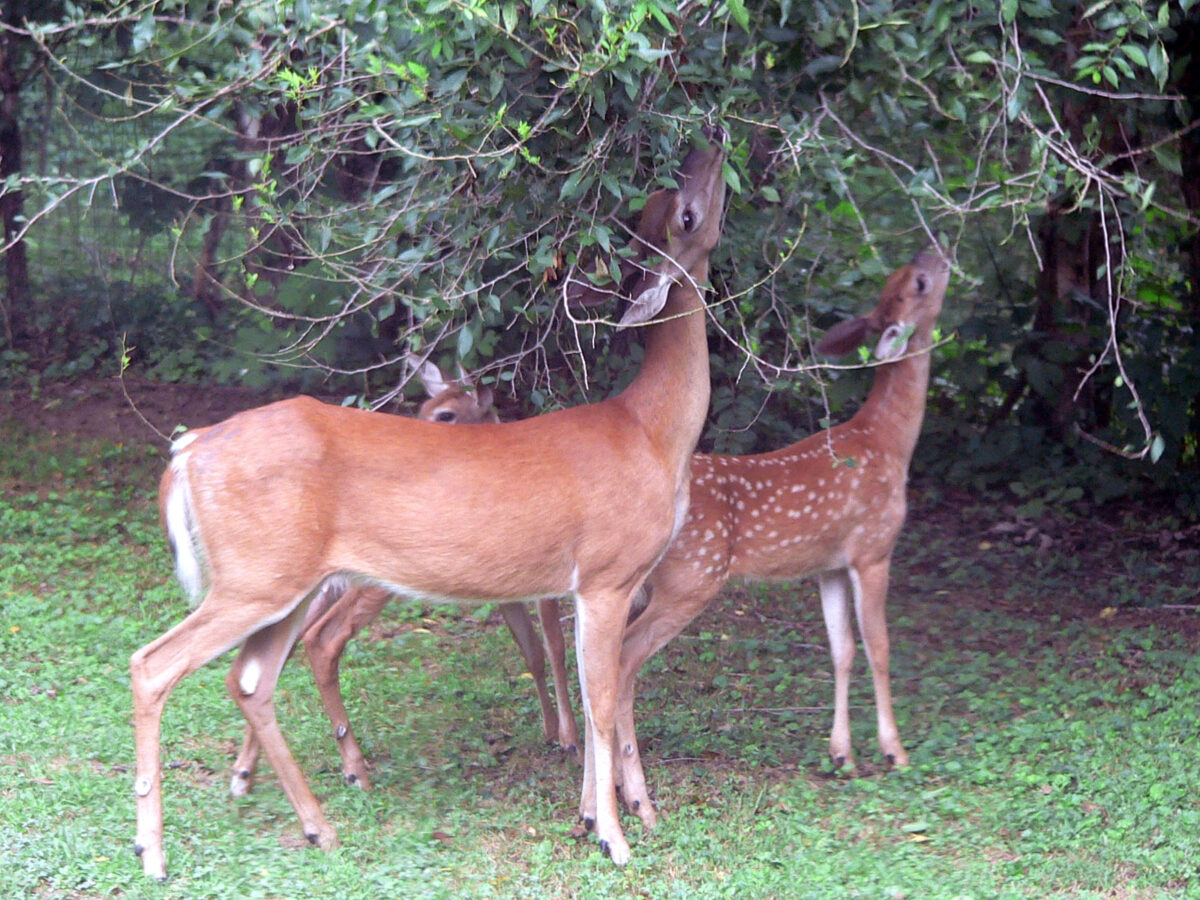
This UV communication layer likely speeds up deer interactions, allowing quicker mate location, dominance displays, and rival avoidance while reducing unnecessary close encounters that could risk injury. It adds a visual dimension to traditional scent-based signaling, creating richer “signpost” hubs that may guide movement like illuminated pathways through the woods. Ecologically, it underscores how deer perceive environments in ways vastly different from humans, potentially influencing population dynamics and habitat use during the rut.
For wildlife managers and hunters, the findings highlight the importance of fresh signposts and crepuscular timing, while opening doors to new research on how environmental factors like tree species or light pollution might affect these hidden signals. The phenomenon enriches our understanding of mammalian sensory worlds beyond the visible.
In conclusion, white-tailed deer have mastered a luminous language of UV light that turns ordinary forest marks into extraordinary communication tools, blending ancient instincts with cutting-edge biological adaptations. This 2025 discovery reminds us that the natural world holds countless unseen wonders waiting to be unveiled—proof that even familiar animals like these graceful deer still hold amazing secrets. As we peer deeper into their twilight realm, we gain not just knowledge but profound appreciation for the intricate, glowing tapestry of animal life.
