

When a volcano destroys everything in its path, most people picture a barren, lifeless wasteland left behind. Miles of ash. Silence. A landscape that looks more like the surface of Mars than anything you’d find in the Pacific Northwest. What comes next seems almost impossible to imagine.
Yet nature has a way of surprising us, and the story of Mount St. Helens’ recovery is one of the most fascinating ecological tales in modern science. The unsung heroes of that comeback? A small, burrowing rodent most people barely think about. Let’s dive in.
The Day Mount St. Helens Changed Everything
On May 18, 1980, Mount St. Helens in Washington State erupted with a force roughly equivalent to 1,500 atomic bombs. The blast obliterated over 230 square miles of forest, wiped out entire ecosystems, and deposited meters of volcanic ash across the surrounding landscape. It was one of the most catastrophic volcanic events in modern American history.
The eruption killed an estimated 57 people and displaced countless animals. The blast zone looked utterly, completely dead. Scientists who visited the site in the days and weeks after described it as one of the most alien environments they had ever witnessed on Earth.
What nobody expected was how quickly, and in some cases how unexpectedly, life would begin to stir.
The Wasteland That Wasn’t Totally Empty
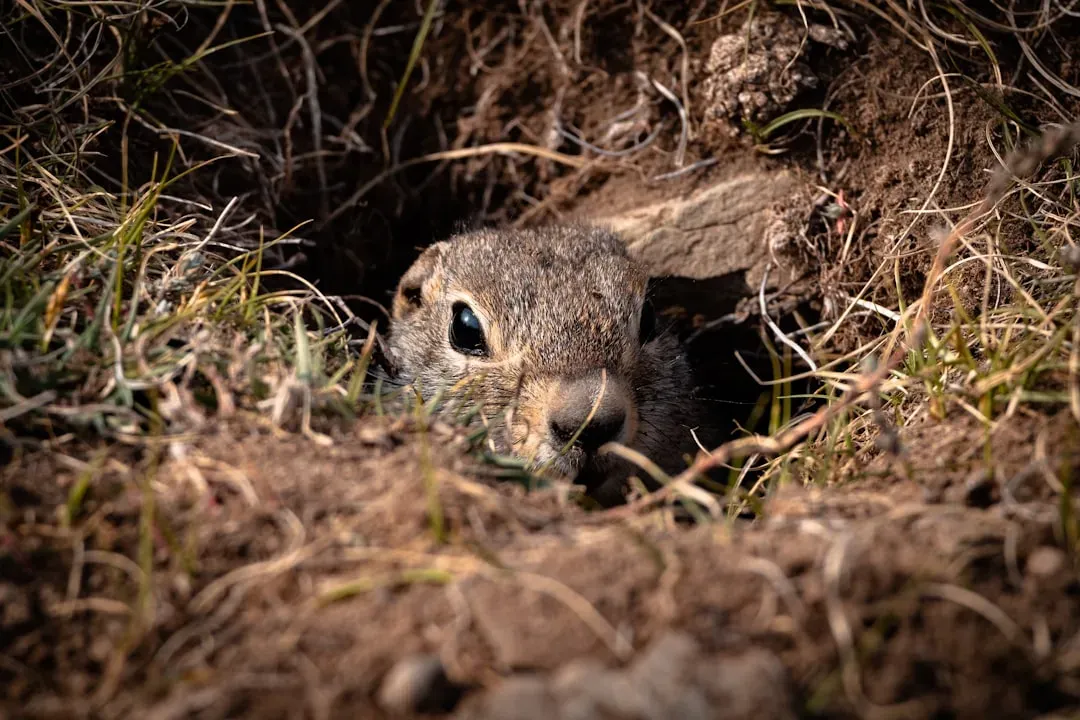
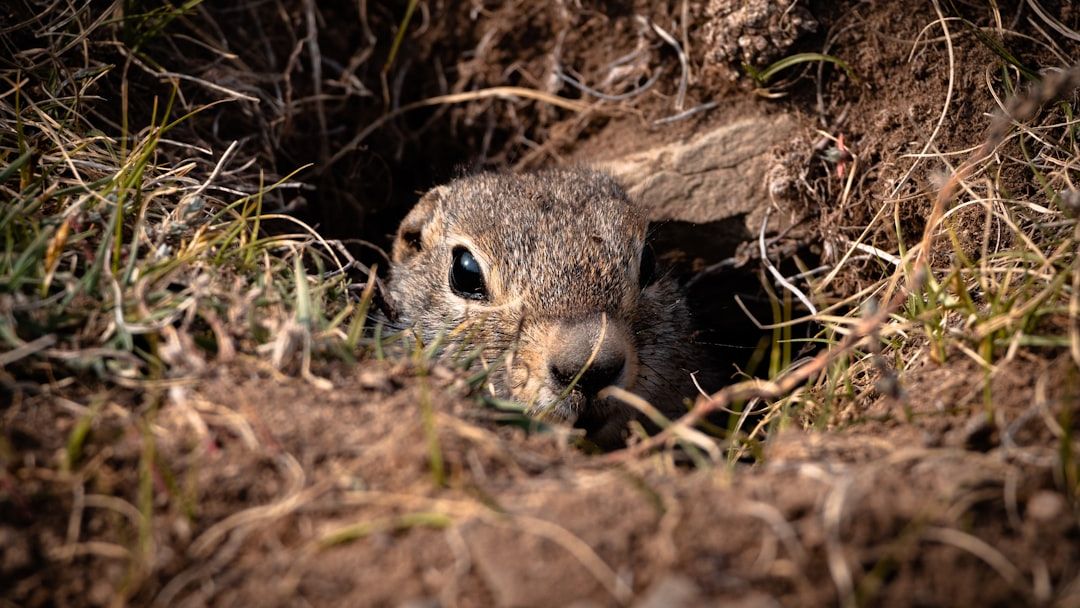
Here’s the thing most people don’t realize: not everything died. Some animals were underground, or sheltered beneath snowpack, or simply lucky enough to survive the initial devastation. Pocket gophers, small fossorial rodents that spend the majority of their lives burrowing beneath the surface, were among those survivors.
Because they live underground, many gophers were insulated from the worst of the heat and the pyroclastic flows. When the dust, quite literally, settled, these small creatures emerged into a world covered in gray ash and stripped of virtually all vegetation. They were hungry, displaced, and surrounded by almost nothing. Yet their survival would turn out to be critical.
It’s honestly one of those stories that makes you rethink everything you assume about which animals matter in an ecosystem.
What Pocket Gophers Actually Do Underground
Pocket gophers are not glamorous animals. They don’t inspire wildlife documentaries or conservation campaigns. They’re small, somewhat potato-shaped, and spend most of their time doing something that sounds remarkably boring: digging. Yet that digging is exactly what makes them so ecologically powerful.
As gophers burrow, they mix soil layers, bringing nutrient-rich material from below up to the surface. This process, known as bioturbation, essentially turns over the ground like a slow, living plow. They also drag organic material underground, and their tunnels aerate the soil and create pathways for water infiltration.
In a normal forest, this is useful but unremarkable. In a volcanic blast zone buried under sterile ash? It’s transformative.
Mixing Ash With Soil: The Secret to Recovery
The volcanic ash deposited by Mount St. Helens was not inherently fertile. It was, in many ways, chemically hostile to plant life, lacking the organic matter and microbial communities that healthy soil depends on. Plants need more than just minerals; they need a living, breathing soil ecosystem.
When pocket gophers began digging through the ash layer and mixing it with the older, biologically rich soil beneath, they created something far more hospitable. Their tunnels acted like tiny lifelines, connecting the barren surface to the surviving underground ecosystem. Seeds that fell onto this mixed substrate had a dramatically better chance of germinating and taking hold.
Researchers studying the blast zone found that vegetation recovery was noticeably faster and more vigorous in areas where gopher activity was highest. That comparison is striking when you look at it laid out on a map.
Plants, Seeds, and the Chain Reaction That Followed
Once plants began establishing themselves in gopher-disturbed patches, the cascade effect was remarkable. More plant cover meant more food sources for herbivores, more habitat structure for insects, and eventually more prey for predators. Ecology doesn’t work in straight lines; it works in webs, and the gophers helped weave one of the first threads.
Prairie lupine was among the earliest colonizers, and it played a huge role in fixing nitrogen back into the ash-blanketed soil. Nitrogen fixation is essentially nature’s way of fertilizing the ground, and it made subsequent plant establishment much easier. The gophers didn’t do this alone, but their soil mixing created the conditions in which these early pioneers could survive.
It’s a bit like clearing a path through a jungle. The gophers didn’t build the forest, they just made it possible for the forest to build itself.
What Scientists Learned From Studying the Recovery
Mount St. Helens became one of the most studied ecosystems on the planet after the eruption precisely because it offered scientists a rare, large-scale natural experiment. The blast zone was essentially a blank slate, and researchers could watch ecological succession unfold in real time, something that’s almost impossible to observe in established ecosystems.
The role of small mammals, especially gophers, was not initially predicted to be so pivotal. Early ecological models focused on wind-dispersed seeds and pioneer plant species as the primary drivers of recovery. The gopher data reframed the conversation significantly.
It’s hard to say for sure exactly how much of the recovery can be attributed to gophers versus other factors, but the evidence is compelling enough that scientists now take small burrowing mammals much more seriously when modeling ecosystem resilience. That’s a meaningful shift in thinking.
Why This Story Matters Far Beyond One Volcano
The gopher story from Mount St. Helens isn’t just a charming wildlife footnote. It carries real implications for how we think about ecosystem restoration, conservation biology, and even climate resilience. If a creature as overlooked as the pocket gopher can drive landscape-scale recovery, what does that tell us about the species we’re casually dismissing or failing to protect right now?
Ecologists increasingly talk about “ecosystem engineers,” organisms whose physical activities fundamentally reshape the environment around them. Beavers are the famous example. Elephants are another. Pocket gophers deserve a spot on that list, even if they’ll never make the cover of a wildlife magazine.
The Mount St. Helens story is ultimately a lesson in humility. Nature doesn’t recover the way we expect it to. It recovers through the work of small, unglamorous, unremarkable creatures doing exactly what they’ve always done. That’s worth sitting with for a moment. What other overlooked species might be holding ecosystems together in ways we haven’t even noticed yet?

- Urban Coyotes Show Remarkable Adaptability, Learning to Thrive in City Environments - July 22, 2026
- Beavers Are Nature’s Engineers, Creating Vital Habitats for Other Wildlife Species - July 21, 2026
- The Recovery of the California Condor Offers Hope for Other Critically Endangered Birds - July 21, 2026