
There are birds that dazzle with color, birds that sing like they were born for a stage, and then there is the Kori Bustard – a bird that looks like it shouldn’t exist at all. Massive, ancient-looking, and strangely dignified, this creature walks the African savanna like it owns the place, because in many ways, it does.
Honestly, I think most people have never even heard of the Kori Bustard. Yet it holds one of the most remarkable titles in all of the animal kingdom. What you are about to discover will likely surprise you – and maybe even leave you a little in awe. Let’s dive in.
1. It Holds the Title of the World’s Heaviest Flying Bird
Here’s the thing – when we talk about the heaviest flying bird on the planet, most people guess the eagle, or maybe a pelican. Very few would picture a ground-walking bird strutting through African grasslands. Yet that is exactly what the Kori Bustard is. Adult males are notable for being the world’s heaviest living flying animals and the largest members of the bustard family, Otididae.
The male Kori Bustard may be the heaviest living animal capable of flight. Think about that for a second. Not the heaviest flier in Africa, not the heaviest on a continent – potentially the heaviest flying animal anywhere on Earth. That is a staggering claim for a bird most of the world has never seen.
2. Its Weight Is Almost Hard to Believe
Male Kori Bustards range in weight from 24 to 42 pounds (11 to 19 kilograms), and females are roughly half the size of the males. To put that into perspective, that’s heavier than many medium-sized dogs. Imagine a Labrador with wings – and you’re getting close.
The larger exceptional males can scale up to 16 to 19 kg, and a few exceptional specimens may weigh up to at least 20 kg. The female Kori Bustard weighs an average of 4.8 to 6.1 kg, with a full range of 3 to 7 kg. The sheer difference in size between male and female is striking – one of the most dramatic examples of size difference between sexes in the bird world.
3. It Has a Wingspan Built for a Giant
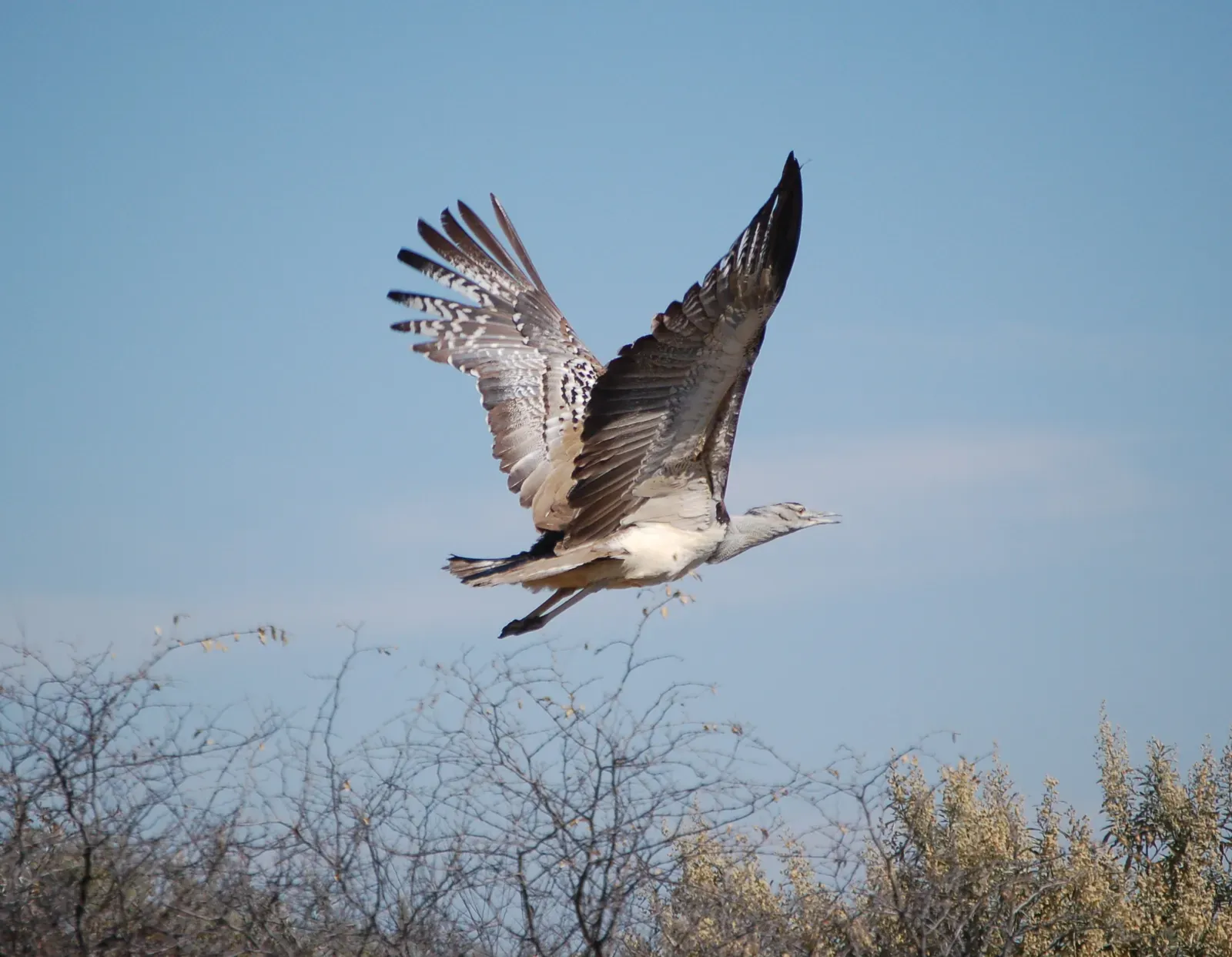
The male Kori Bustard has a length of 105 to 135 cm and a wingspan of 230 to 275 cm. That wingspan, nearly the length of a small car, is what makes flight even remotely possible for this enormous creature. Without it, this bird would be earthbound like an ostrich.
This lengthy spread of their wings is necessary to get their massive bodies into the sky. Even with those enormous wings, flight is far from effortless. If they don’t succeed with an on-foot getaway, they take to the air with heavy, slow wingbeats. It’s breathtaking in the truest sense – both for the bird and for any lucky observer watching it rise.
4. It Prefers Walking Over Flying – By a Long Shot
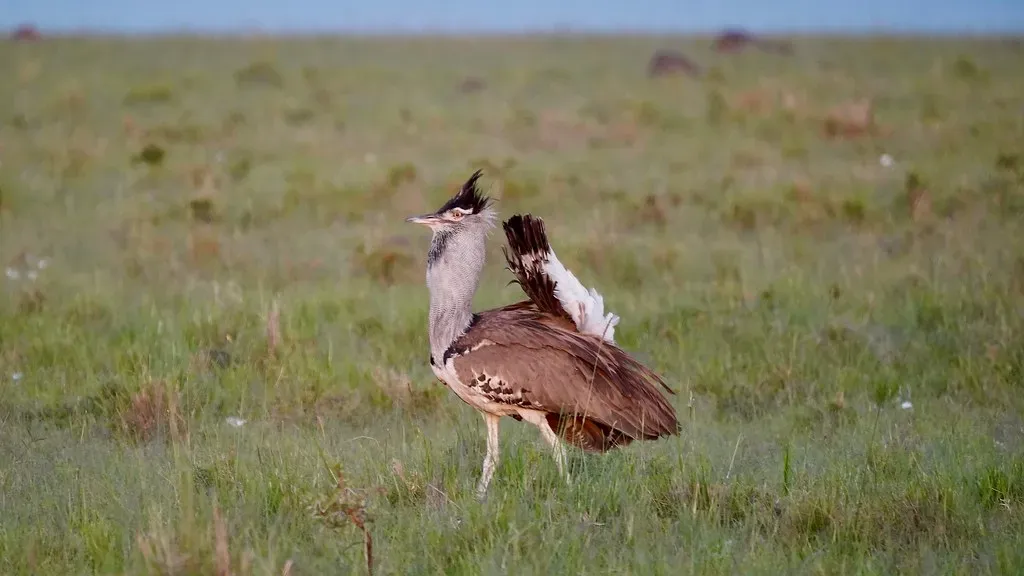
The Kori Bustard is one of the world’s heaviest flying birds; however, it lives on the ground and is reluctant to fly unless in serious danger. In a way, it is the reluctant flier of the bird world. It has the ability, but uses it as a last resort – like someone who owns a sports car but only drives it once a year.
Kori Bustards spend most of their time on the ground, with up to 70% of their time being on foot, although they do occasionally forage in low bushes and trees. Kori Bustards don’t fly for long and will land soon after taking flight – normally, within sight of their launch. They also keep low to the ground when flying. It’s almost comically practical for such a magnificent creature.
5. Its Diet Is as Diverse as the African Landscape
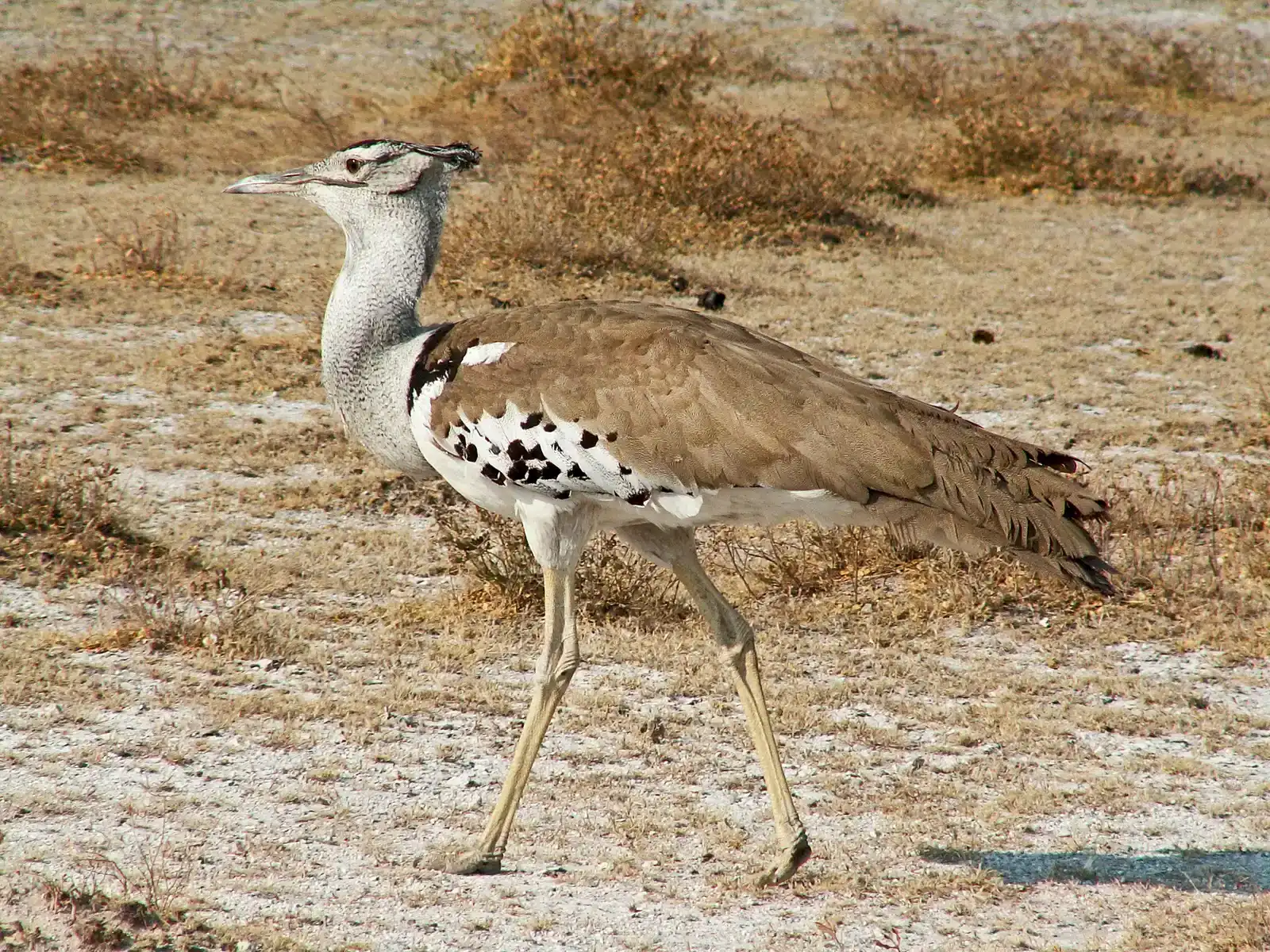
Kori Bustards are omnivorous birds, although they tend to be more carnivorous than other species of bustards. They are genuine opportunists of the savanna, eating whatever the land provides – and the land provides quite a bit. Think of them as the food adventurers of the bird world, never too picky, always ready for the next meal.
Kori Bustards eat nearly anything they can find, including larger insects such as locusts and dung beetles, as well as vertebrates such as other birds, lizards, or small mammals. They will consume carrion when they find it and actively seek out a variety of fruits, seeds, and flowers. It has been found that they eat the gum from the Acacia tree, though whether they are feeding on insects who may eat the gum themselves or are digesting the gum directly has not been determined.
6. Their Courtship Display Is One of Nature’s Most Spectacular Performances
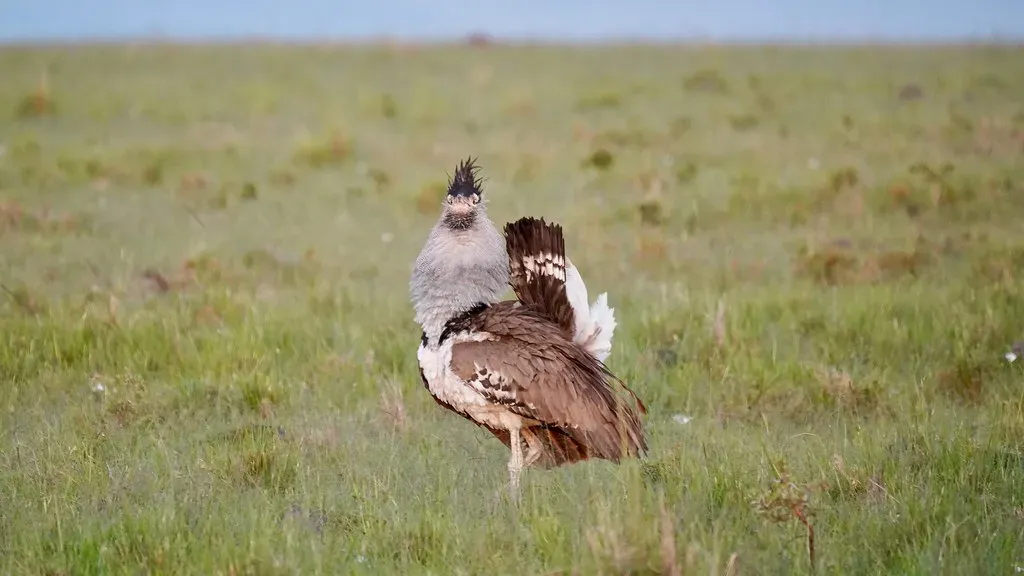
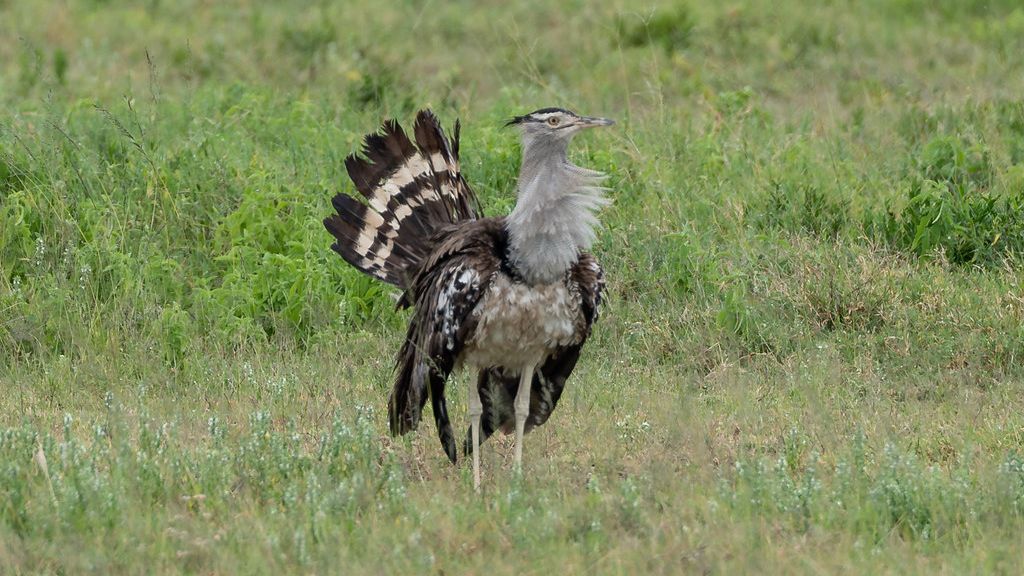
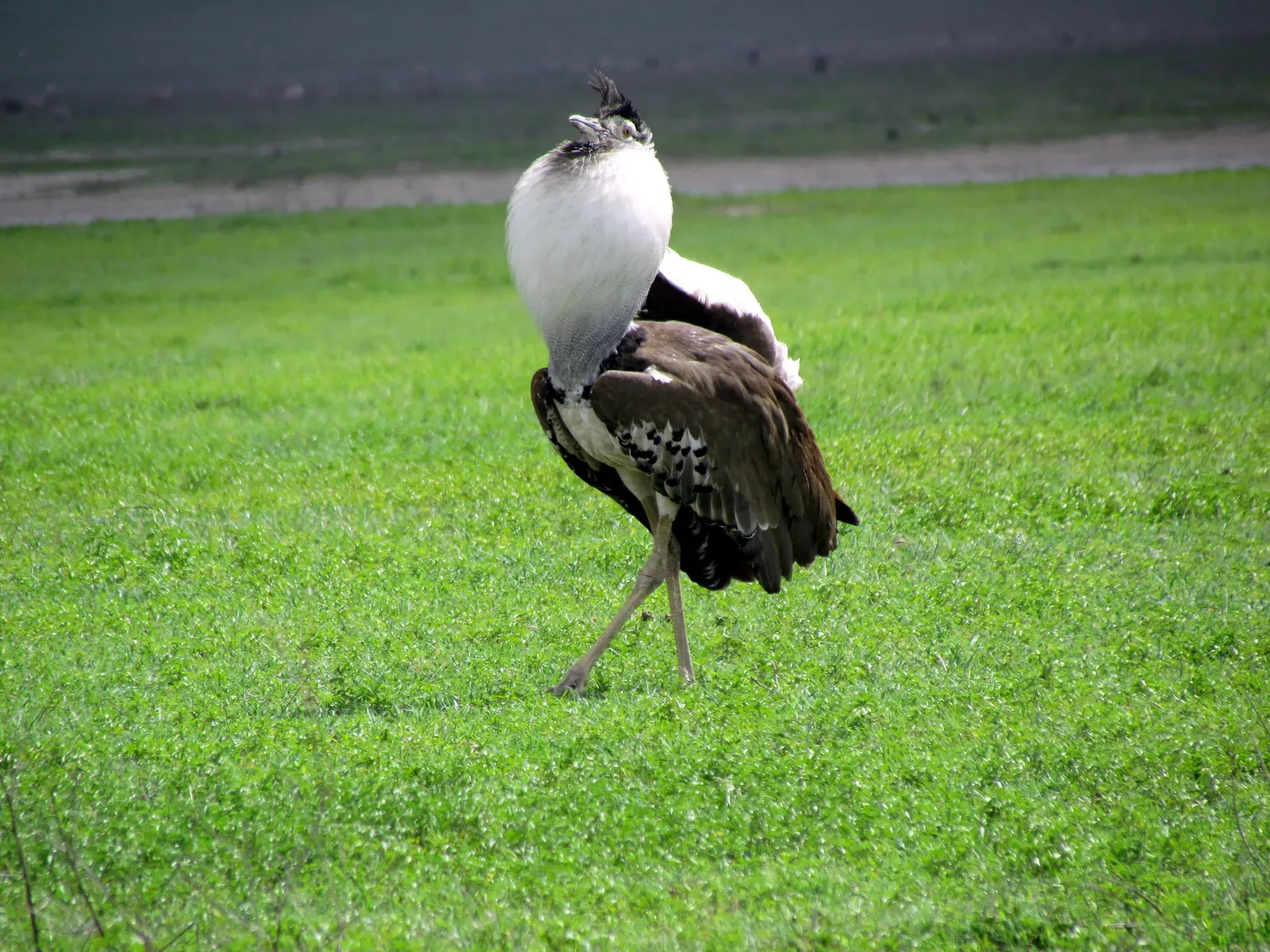
If there were an award for the most dramatic attempt to impress a date in the animal kingdom, the male Kori Bustard would be a serious contender. During the breeding season, males perform elaborate displays, including deep booming calls, inflating their esophagus up to four times its usual size, erecting neck feathers, and fanning the tail to expose their white under-tail coverts. These displays can last for several days and can be performed singly or in a group.
The males attract the females with their deep booming calls, and they show off their plumage to full effect during elaborate courtship displays known as leks. A lek breeding system, common in many bird species, involves the males gathering in a specific area and simultaneously displaying their courtship behaviors and vocalizations. The females, for their part, get to wander through and simply pick whoever impresses them most. Let’s be real – that sounds like quite the arrangement.
7. Females Do All the Parenting – Completely Alone
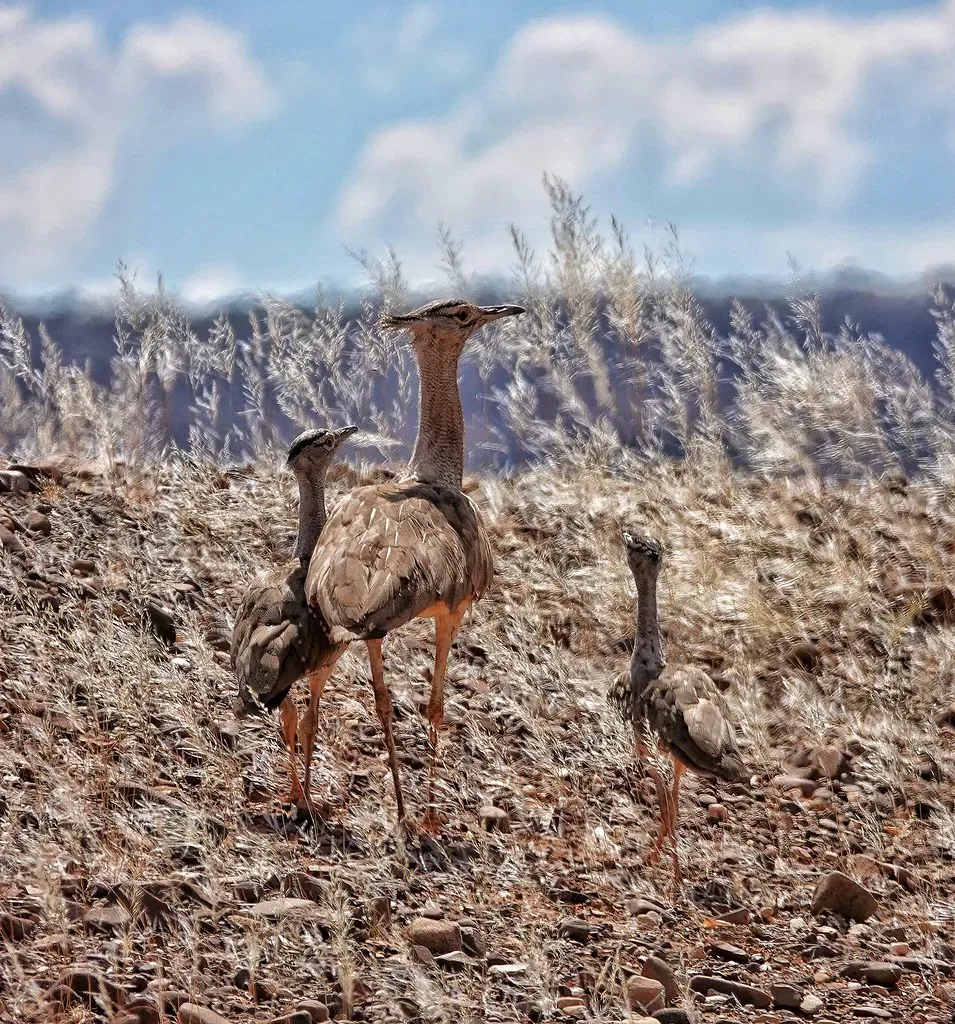
Male Kori Bustards, which can be more than twice as heavy as the female, attempt to breed with as many females as possible and take no part in the raising of the young. Once the display is done and mating is over, the male is essentially gone. No co-parenting, no nest-building, no feeding chicks. Just absence.
After mating, the female is left to build the nest – which is a rough scrape on the ground – where she will deposit one to two eggs and incubate them until they hatch, some 23 days later. At first, the mother feeds soft food to the chicks, but after three to four months the young can search for their own food. Although the young learn to fly at about five weeks of age, they will not become fully independent until age one. The mother carries all of this responsibility alone, which is frankly extraordinary.
8. It Has a Fascinating and Unusual Plumage System
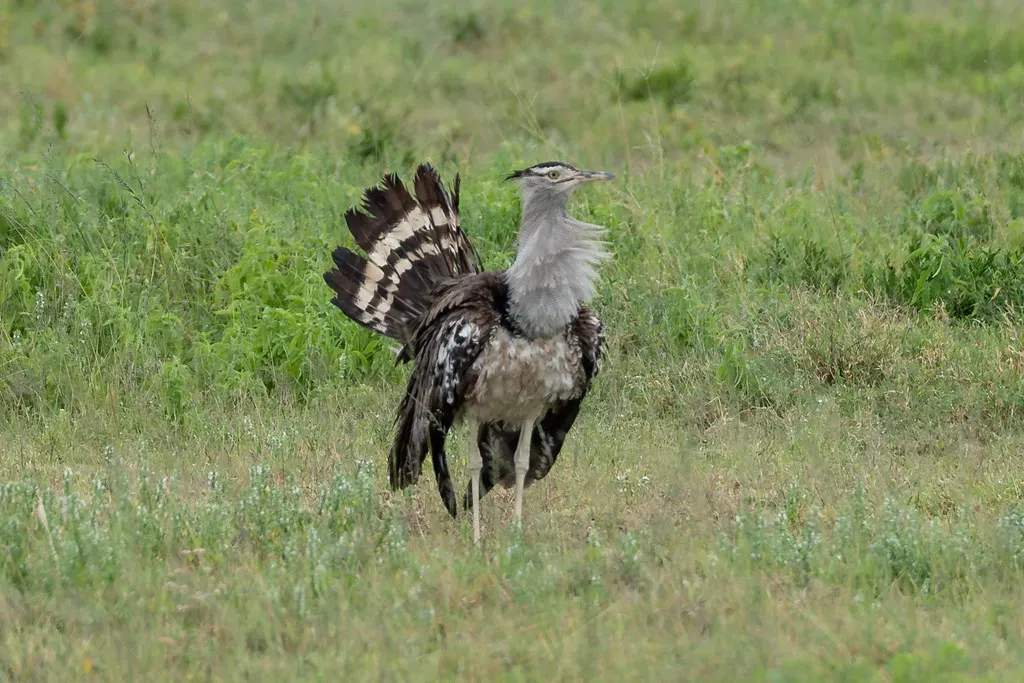
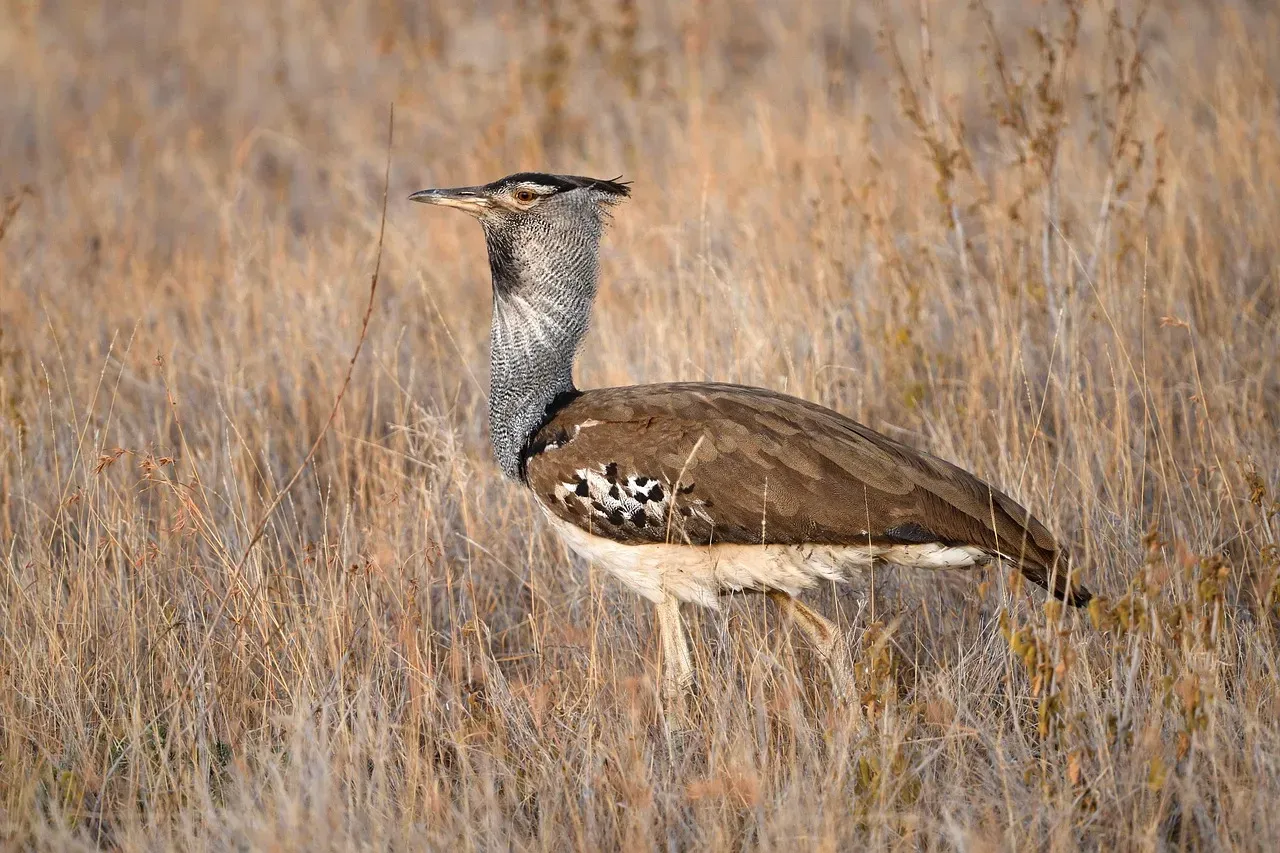
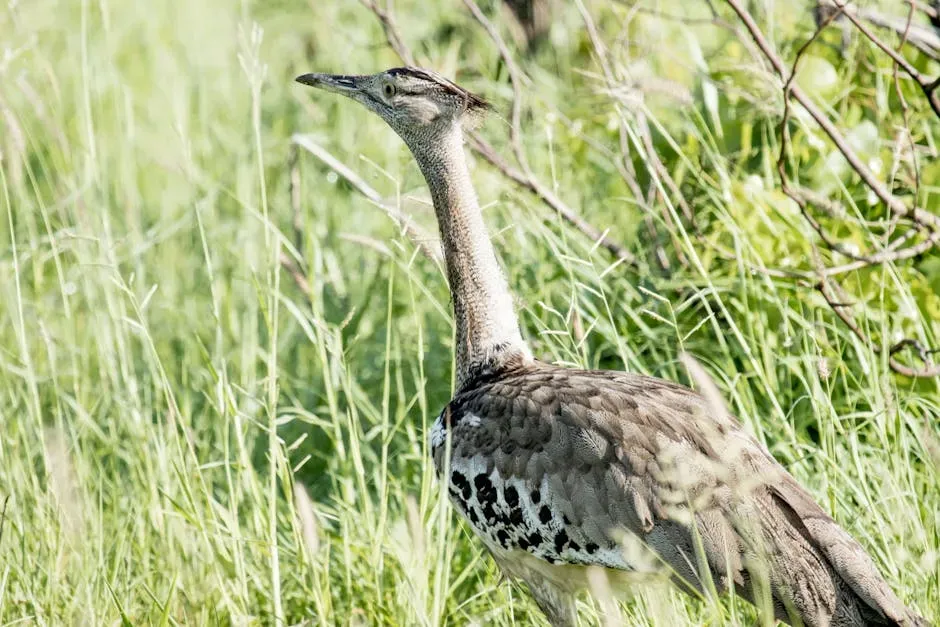
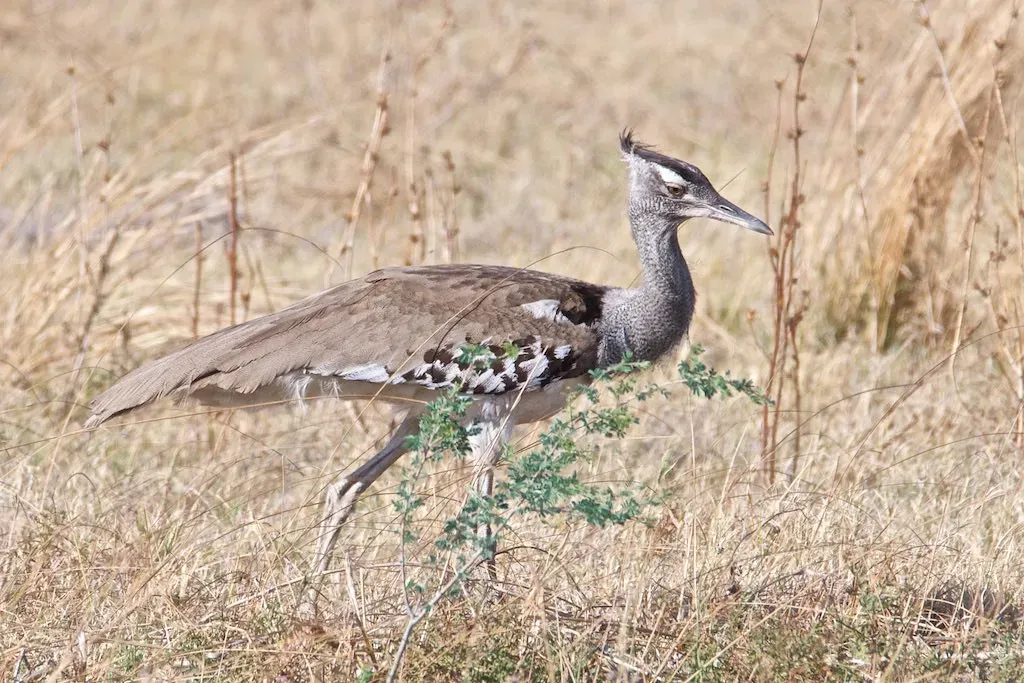
The Kori Bustard is cryptically coloured, being mostly grey and brown, finely patterned with black and white coloring. The upper parts and neck are a vermiculated black and greyish-buff colour. The ventral plumage is more boldly colored, with white, black, and buff. It’s a bird built to disappear into the landscape – until it doesn’t want to.
Here’s something I find genuinely fascinating: their feathers are unique, as bustards do not have a preening gland. Preening glands produce an oily substance that helps keep a bird’s feathers clean. Instead, Kori Bustards produce a powder down and will bathe in the sun and dust to keep parasites away. It’s an ancient, almost primal system – and it works perfectly.
9. It Is Near Threatened and Facing a Growing Range of Pressures
The Kori Bustard has been classified as near threatened by the International Union for Conservation of Nature and Natural Resources (IUCN) since 2013. It’s hard to say for sure how quickly the decline is happening, but the warning signs are real and present across multiple countries. A bird this remarkable deserves better odds.
Since 1970, Kori Bustard ranges have shrunk more than roughly a fifth in East Africa, and close to 10 percent in southern Africa. The distribution of this Kori subspecies is becoming fragmented and is declining in numbers due to a slow reproduction rate, hunting, and habitat destruction from agriculture and development. Kori Bustards are also threatened by high-voltage power lines, which are potentially dangerous for flying birds. In addition, they attract hunters for their meat as well as feathers, which are used by the American fly fishing trade.
Conclusion
The Kori Bustard is one of those rare creatures that manages to be both physically extraordinary and behaviorally captivating. It walks like a king, flies like it has something to prove, and raises its young with a kind of quiet, solo resilience that is genuinely moving. In a world obsessed with the flashiest or fastest animals, this bird deserves far more attention than it gets.
The fact that it is slowly retreating from its natural range is a reminder that even the most impressive animals on Earth are vulnerable. If we’re not careful, future generations might only read about this bird in articles exactly like this one. For a creature this remarkable, that would be a genuine tragedy.
Next time you picture the sky’s greatest flying animal, I hope it’s not a hawk or a condor that comes to mind. It’s a massive, dignified bird striding across an African plain – wings folded, eyes sharp, owning every inch of the ground beneath its feet. What other creature do you know that can carry that kind of weight and still take to the sky?

- 14 Quiet Signs Your Dog Knows Its Time Is Near and Wants You Close - July 22, 2026
- 10 Falcon Facts That Will Blow Your Mind - July 22, 2026
- 5 Incredible Migratory Journeys Animals Make Every Year - July 22, 2026