

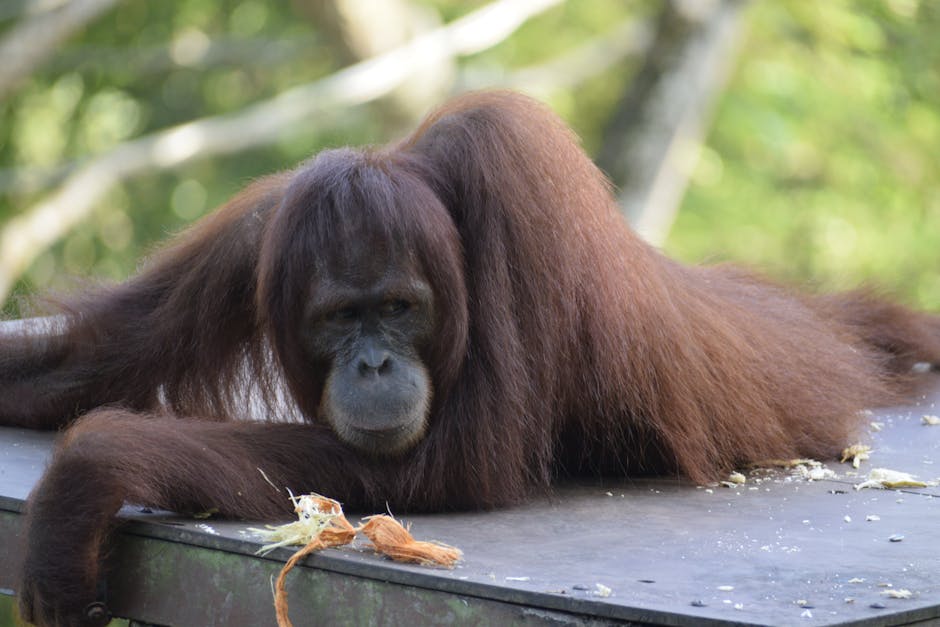
A Species Hanging by a Thread (Image Credits: Pexels)
Ehime Prefecture, Japan – Tobe Zoological Park marked a significant step in wildlife conservation last December when it received a female Bornean orangutan from Indonesia. The arrival of 15-year-old Jennifer paired her with resident male Hayato, both now of prime breeding age. This collaboration underscores growing international resolve to safeguard a species teetering on the edge of extinction.[1][2]
A Species Hanging by a Thread
Bornean orangutans face dire threats in their native habitats on Borneo, where habitat destruction from logging and palm oil plantations has slashed populations. Classified as critically endangered by the International Union for Conservation of Nature, their wild numbers hover around 104,700, with ongoing declines reported.[3][4] Captive breeding programs worldwide now play a pivotal role, as zoos work to maintain genetic diversity.
Tobe Zoo previously succeeded in breeding Sumatran orangutans, a related but distinct subspecies. That experience positioned the facility as a strong candidate for this Bornean initiative. Hayato, born in 2010, had reached maturity without a suitable mate, highlighting the scarcity of these apes in Japanese collections.[1]
Jennifer’s Long Journey to Japan
Jennifer traveled from Taman Safari Indonesia, arriving at Tobe Zoological Park on December 11, 2025, following a November transport and mandatory quarantine period. At 15 years old, she entered her prime breeding window, typically between ages 12 and 15 for females. The zoo now houses three orangutans, including one Sumatran, elevating Japan’s captive Bornean count to 26.[2][1]
Visitors first saw Jennifer publicly in March 2026, where her calm demeanor quickly won fans. Caretaker Eriko Inoue described her charge glowingly: “She is smart, gentle, and loves to eat, especially oranges from Ehime Prefecture.”[1] Inoue also noted Jennifer’s fondness for local mandarin oranges and persimmons, aiding her adjustment to the new environment.
Forging Ties Across Borders
The partnership traces back to 2018, when Taman Safari Indonesia proposed a joint conservation project to Tobe Zoo. Formal momentum built with a 2024 wildlife conservation agreement between Ehime Prefecture and Indonesia. This paved the way for a specific breeding loan deal signed in April 2025.[1]
Such international loans address the challenges of pairing rare animals. Keepers monitor Hayato and Jennifer closely, introducing them gradually to foster natural bonds. Inoue expressed optimism: “We hope this matchmaking is successful.”[1] The effort not only targets offspring but also educates the public on wild orangutan perils.
Challenges and Strategies in Captive Breeding
Breeding orangutans demands patience, given their long gestation of about 245 days and solitary natures. Zoos follow studbooks to avoid inbreeding, tracking lineages like Hayato’s and Jennifer’s. Tobe Zoo’s prior success offers a blueprint, yet experts stress that captive births alone cannot replace habitat protection.[5]
- Habitat loss remains the primary threat, driven by agriculture expansion.
- Poaching and the pet trade further diminish numbers.
- Climate change exacerbates forest fragmentation.
- Captive programs preserve genetics for potential reintroduction.
- Public awareness campaigns boost funding for on-the-ground efforts.
Through Jennifer’s story, Tobe Zoo aims to spotlight these issues. Inoue hopes observers grasp the urgency: “I also hope this will be an opportunity for people to learn about the circumstances of wild orangutans, which are on the verge of extinction.”[2]
Key Takeaways
- Tobe Zoo’s trio now includes two prime Bornean breeders, boosting Japan’s conservation capacity.
- Indonesia-Japan pacts from 2024-2025 enable vital animal exchanges.
- Success here could yield offspring, enriching the global gene pool.
This initiative at Tobe Zoological Park exemplifies how targeted diplomacy and expertise can rally against species loss. Successful pairings like Hayato and Jennifer’s may yield the next generation, offering a beacon for Bornean orangutans worldwide. What do you think about these global conservation partnerships? Tell us in the comments.

- Urban Coyotes Show Remarkable Adaptability, Learning to Thrive in City Environments - July 22, 2026
- Beavers Are Nature’s Engineers, Creating Vital Habitats for Other Wildlife Species - July 21, 2026
- The Recovery of the California Condor Offers Hope for Other Critically Endangered Birds - July 21, 2026