
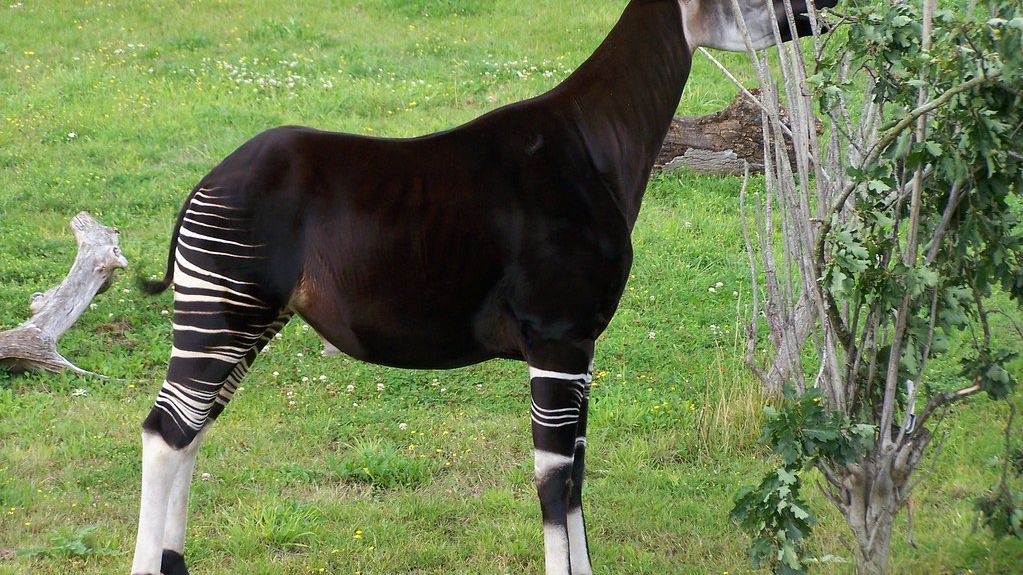
There are animals in this world that seem almost too strange to be real. Part zebra, part giraffe, part something entirely its own – the okapi is the kind of creature that makes you question everything you thought you knew about the animal kingdom. It hides in one of the most impenetrable rainforests on the planet, speaks in sounds humans literally cannot hear, and managed to stay hidden from Western science well into the twentieth century.
Honestly, if you described an okapi to someone who had never heard of it, they might think you were making it up. But this is very much a real animal – and one of the most extraordinary on Earth. Let’s dive in.
1. Western Science Didn’t Even Know It Existed Until 1901
For years, Europeans in Africa had heard of an animal that they came to call the “African unicorn.” Think about that for a second. A large mammal, well over 400 pounds, and somehow the scientific world had zero confirmed knowledge of it. That’s mind-blowing.
It was brought to prominent European attention by speculation found in press reports covering Henry Morton Stanley’s journeys in 1887. In his travelogue of exploring the Congo, Stanley mentioned a kind of donkey that the natives called the “atti,” which scholars later identified as the okapi.
Though Johnston did not see an okapi himself, he did manage to obtain pieces of striped skin and eventually a skull. From this skull, the okapi was correctly classified as a relative of the giraffe; in 1901, the species was formally recognized as Okapia johnstoni. A skull and a few scraps of skin – that’s all it took for the world to finally meet this ghost of the forest.
2. It Looks Like Three Animals Stitched Together
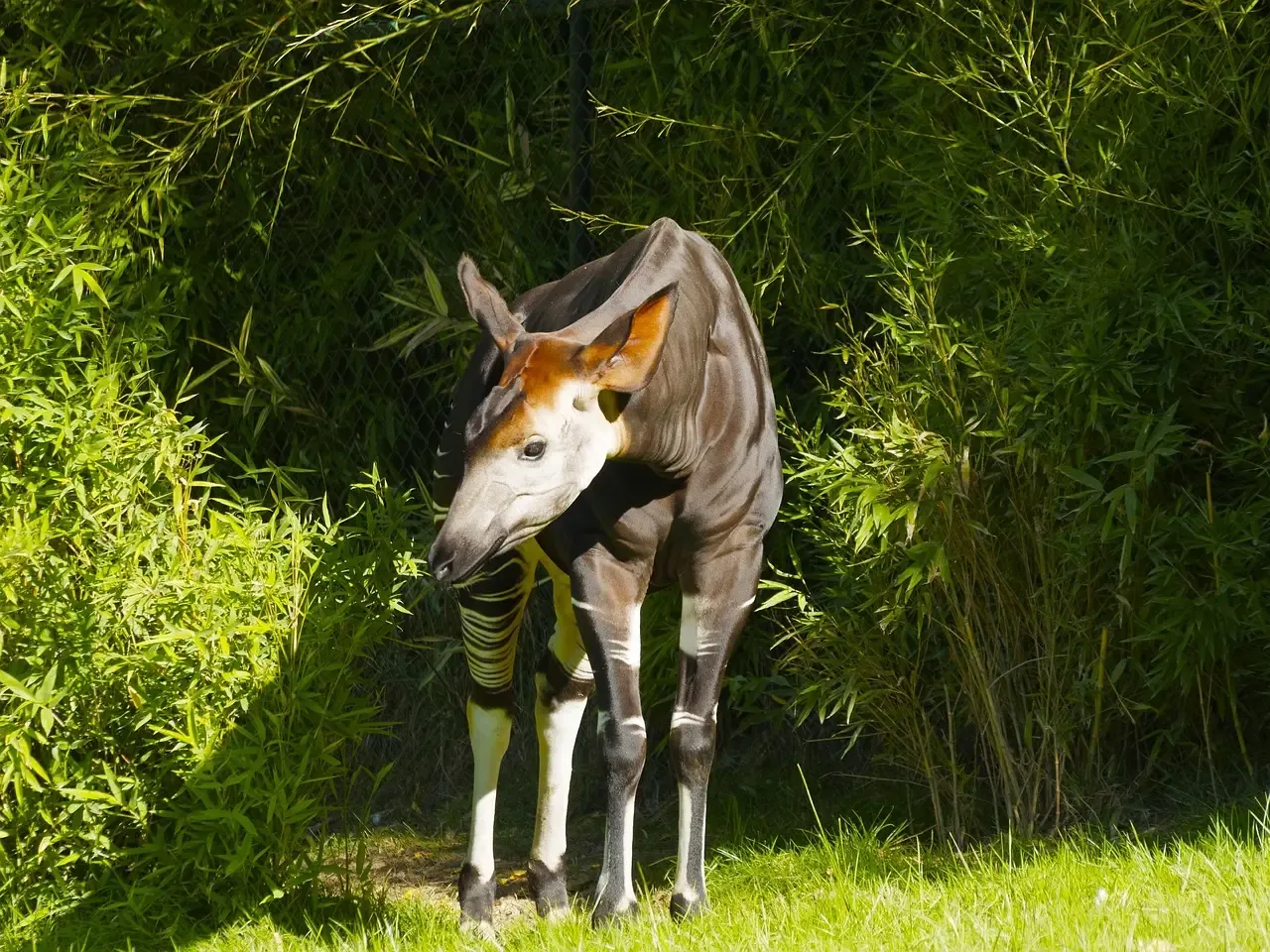
Known as the “forest giraffe,” the okapi looks more like a cross between a deer and a zebra. Nevertheless, it’s the giraffe’s only living relative. I know it sounds crazy, but that’s the reality. Nature apparently decided the blueprints for one species just weren’t quite enough here.
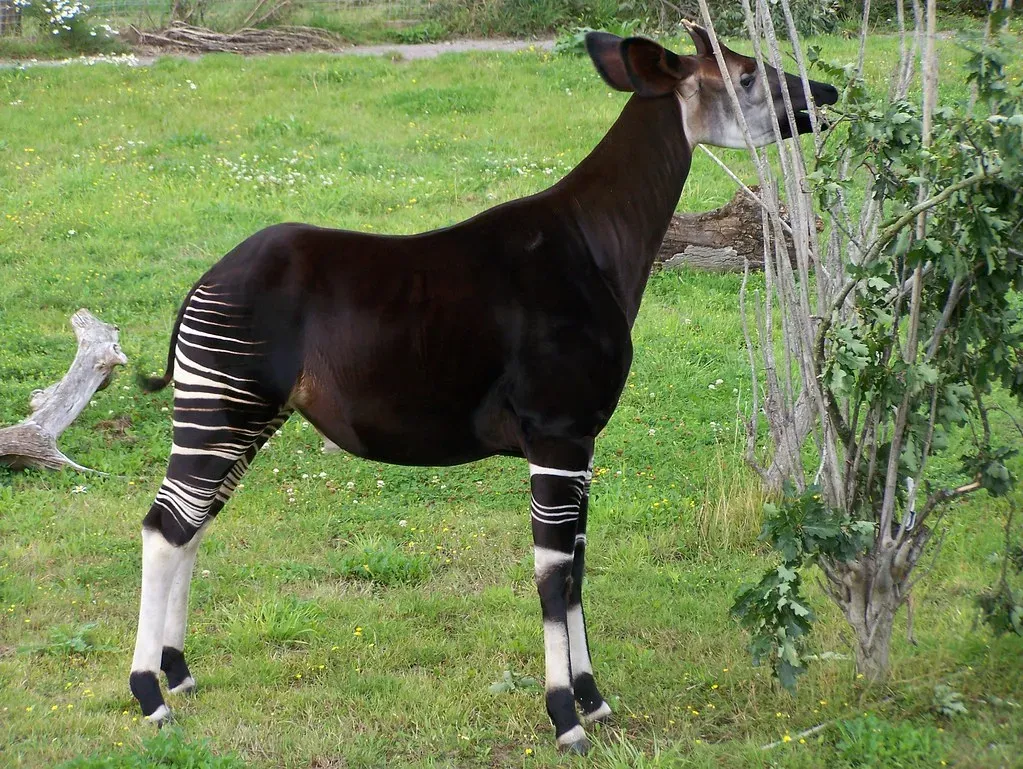
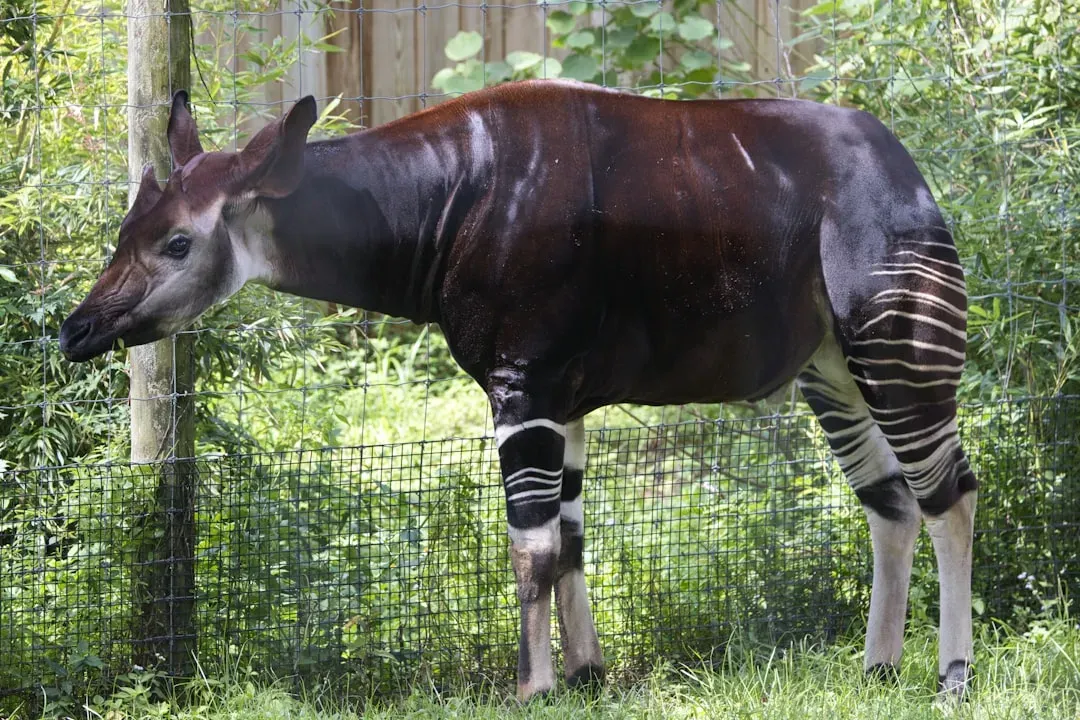
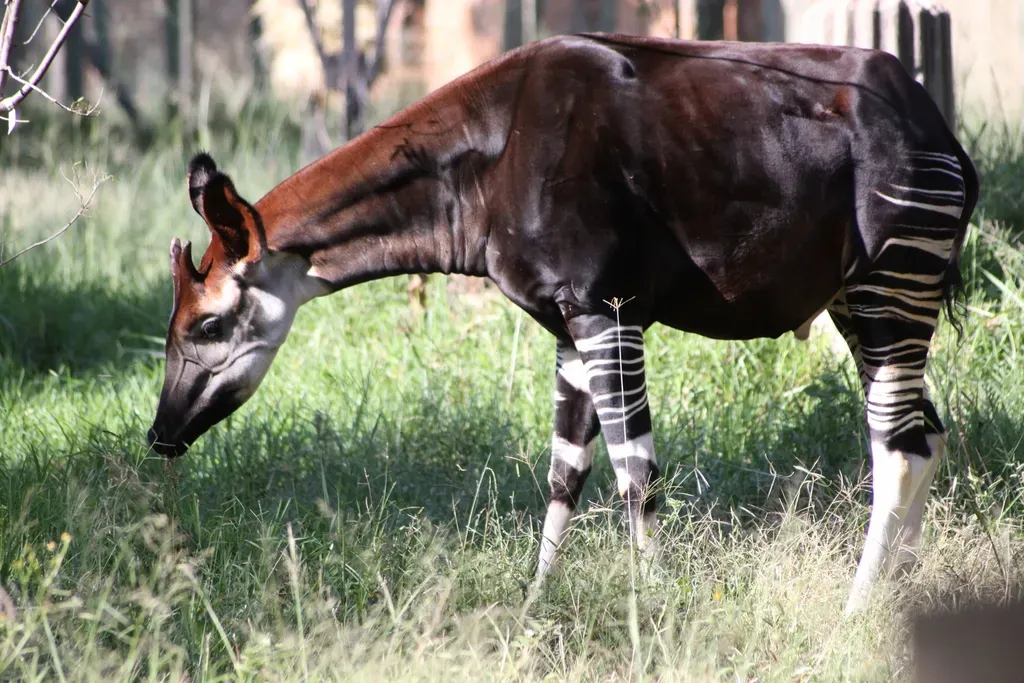
The coat of the okapi is sleek and deep brown, almost purple, with the sides of the face pale white, and the forehead and ears may have a dull reddish cast. The buttocks, thighs, and tops of the forelegs are horizontally striped with black and white, and the lower parts of the legs are white with black rings above the hooves.
Okapi are one of the few species of mammals where the females are bigger than the males – the average okapi weighs between 200 and 300 kg. They also get to be around 6.5 feet tall and have an average length of 8 feet. For a creature that’s supposedly impossible to find, it’s not exactly small.
3. Its Stripes Are Like Fingerprints – Completely Unique to Each Individual
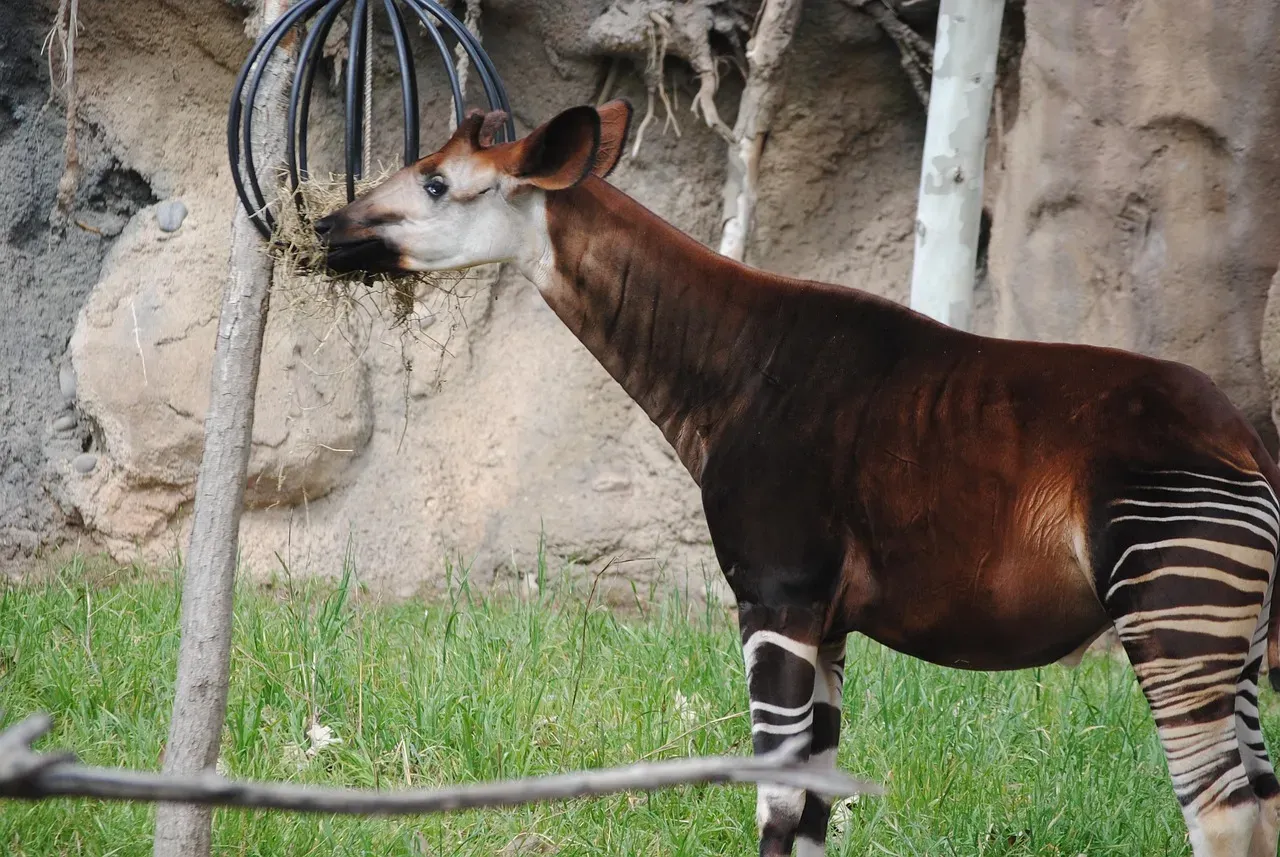
The stripes coloring their rears and hind legs are unique to each individual, to the point where they can be used for identification like a set of fingerprints. Nicknamed “follow me” stripes, these patterns let calves easily track their mothers as they make their way through the foliage. They also act as an effective form of camouflage, mimicking the shifting beams of light that manage to pierce through the rainforest canopy and fall to the floor.
The stripes are thought to resemble streaks of sunlight penetrating the dark forest, enabling the okapi to blend in with its surroundings. It’s like nature designed a personal ID card that also doubles as an invisibility cloak. Efficient, to say the least.
Camera trapping has the potential to be very useful in determining okapi population size and enhancing current population estimates, as before camera traps, the populations were estimated using dung counts. The fact that scientists had to count dung to even estimate how many exist tells you everything about just how elusive these animals really are.
4. It Has a Secret Language Humans Cannot Hear
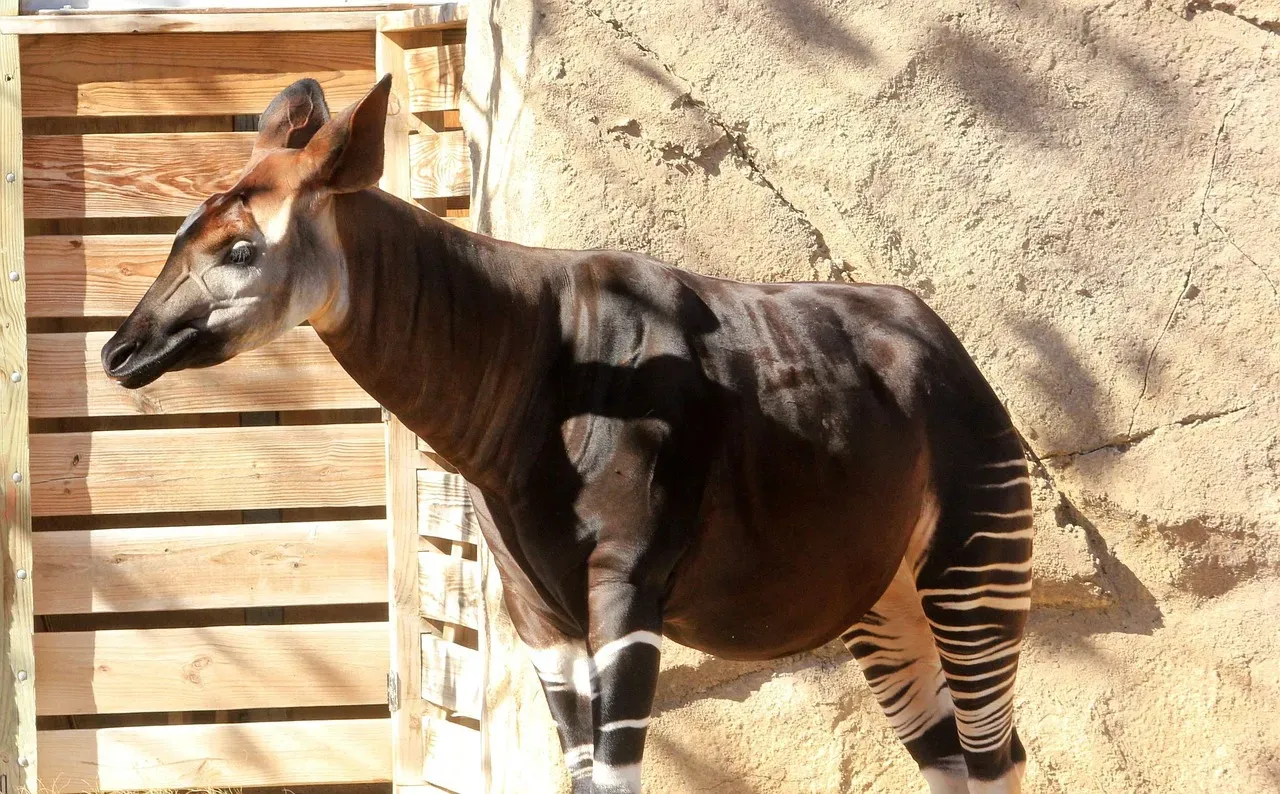
Here’s the thing – when you think of animal communication, you probably think of roars, howls, or chirps. The okapi does something far more sophisticated. The San Diego Zoo Wildlife Alliance reports that its conservation scientists have been able to track the okapis’ secret language, dubbed “infrasonic mutterings,” which take place at a frequency beyond our own hearing range as humans.
One explanation is that these calls have evolved for communication between a mother and her baby while she’s out foraging. In this situation, a mother can “check in” with her offspring without alerting potential predators to the fact that her baby is vulnerable. That’s not just clever – that’s genius-level parenting strategy.
Their large ears can rotate in different directions to hear things from all sides – front or behind, left or right. Combine that with ultrasonic whispers only they can understand, and you’ve got an animal that communicates like it’s operating on its own private radio frequency.
5. That Tongue Is Unlike Anything You’ve Seen
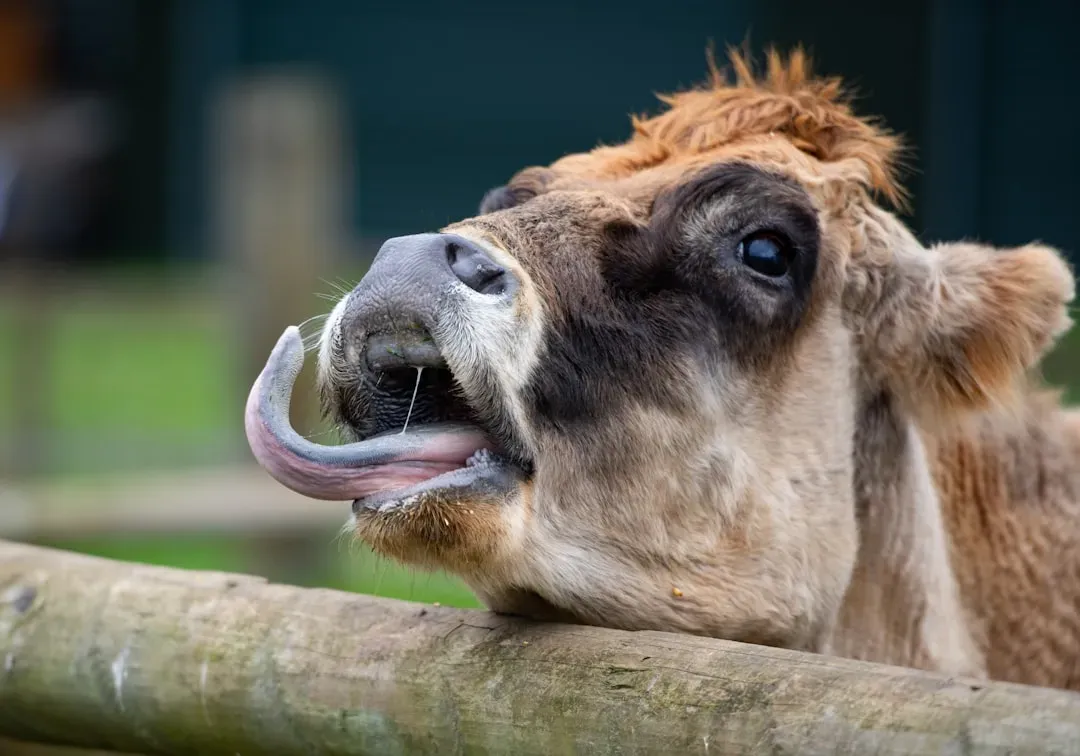
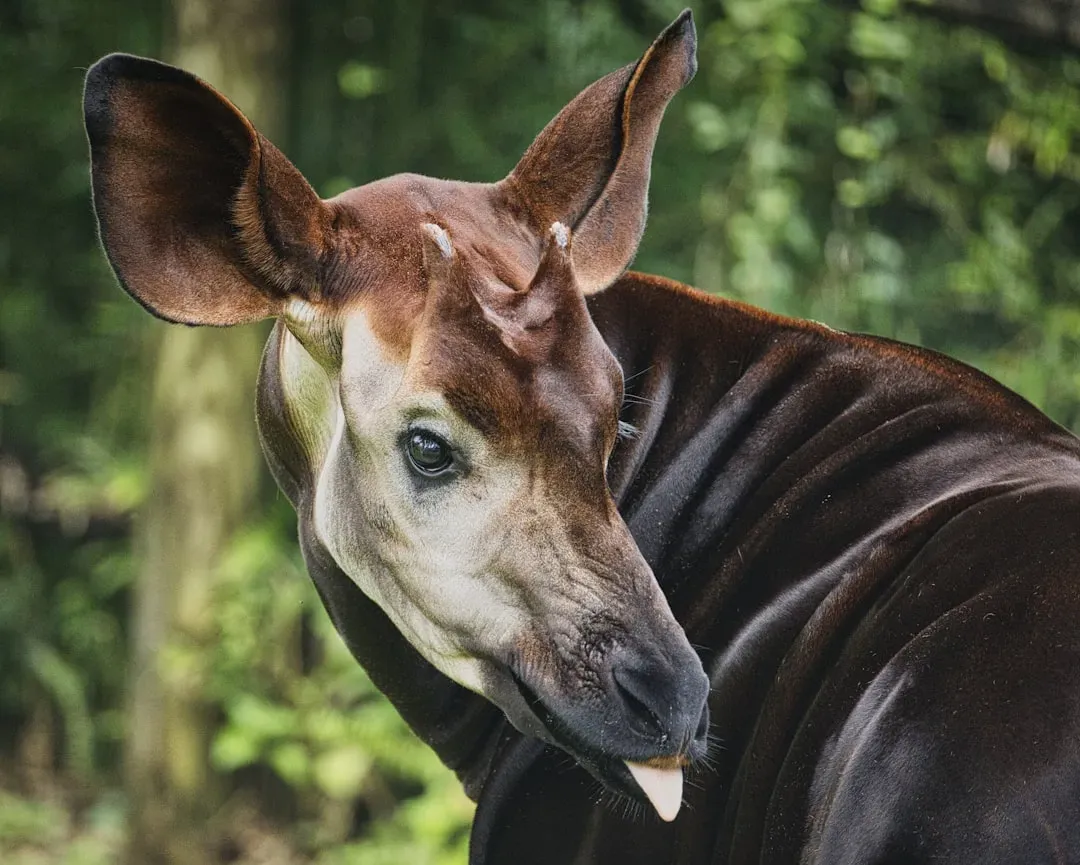
The dark blue prehensile tongue is adapted for selective browsing and can be up to 18 inches (45 cm) in length, long enough that the animal uses it to clean its own eyes and ears. Let that sink in. Eighteen inches. That’s longer than a standard school ruler.
They are unique in the Ituri Forest as they are the only known mammal that feeds solely on understory vegetation, where they use their 18-inch-long tongues to selectively browse for suitable plants. Selective is the key word there. These aren’t animals that just eat whatever is nearest – they have preferences.
The okapi, thanks to its extra long tongue, is one of the only mammals in the world that can lick its own ears. I think that’s the kind of party trick that deserves far more recognition than it gets.
6. It Eats Over 100 Plant Species – Including Ones Poisonous to Humans
The okapi has been known to feed on over 100 species of plants, some of which are known to be poisonous to humans and other animals. Fecal analysis shows that none of those 100 species dominates the diet of the okapi. So it’s not just eating poison occasionally – it’s rotating through a diverse menu of potentially lethal greens and somehow thriving.
An okapi consumes between 45 and 60 pounds of food each day, including riverbed clay for minerals and salt. It will occasionally eat bat excrement for nutrients. Yes, you read that right. Bat droppings. Honestly, if it works, it works.
Just like the giraffe and cow, the okapi has four stomachs that aid with digesting tough plants. Four stomachs processing poisonous plants and bat guano. Wild doesn’t even begin to cover it.
7. Its Newborns Have a Bizarre but Brilliant Survival Strategy
Okapi calves are born into one of the most predator-rich environments on the planet. So they’ve developed one of the most unusual survival tricks in the animal world. An okapi calf is able to walk just 30 minutes after it’s born but can’t defecate until it’s at least a month old – that way, the smell of feces won’t attract predators.
When a female gives birth, the calf finds a safe place to nest and remains there for roughly two months while the mother goes off to feed, ensuring her scent stays away from the youngster. The calf only leaves the nest to feed when the mother calls using infrasonic sound at a level that both humans and leopards cannot hear.
It’s believed that the gestation period of the okapi can be as long as 16 months, with the female giving birth to a calf that is capable of standing up by itself within 30 minutes of being born. Nearly a year and a half of pregnancy – and then the calf is up on its feet in half an hour. Remarkable.
8. It Walks Like No Other Hoofed Animal on Earth
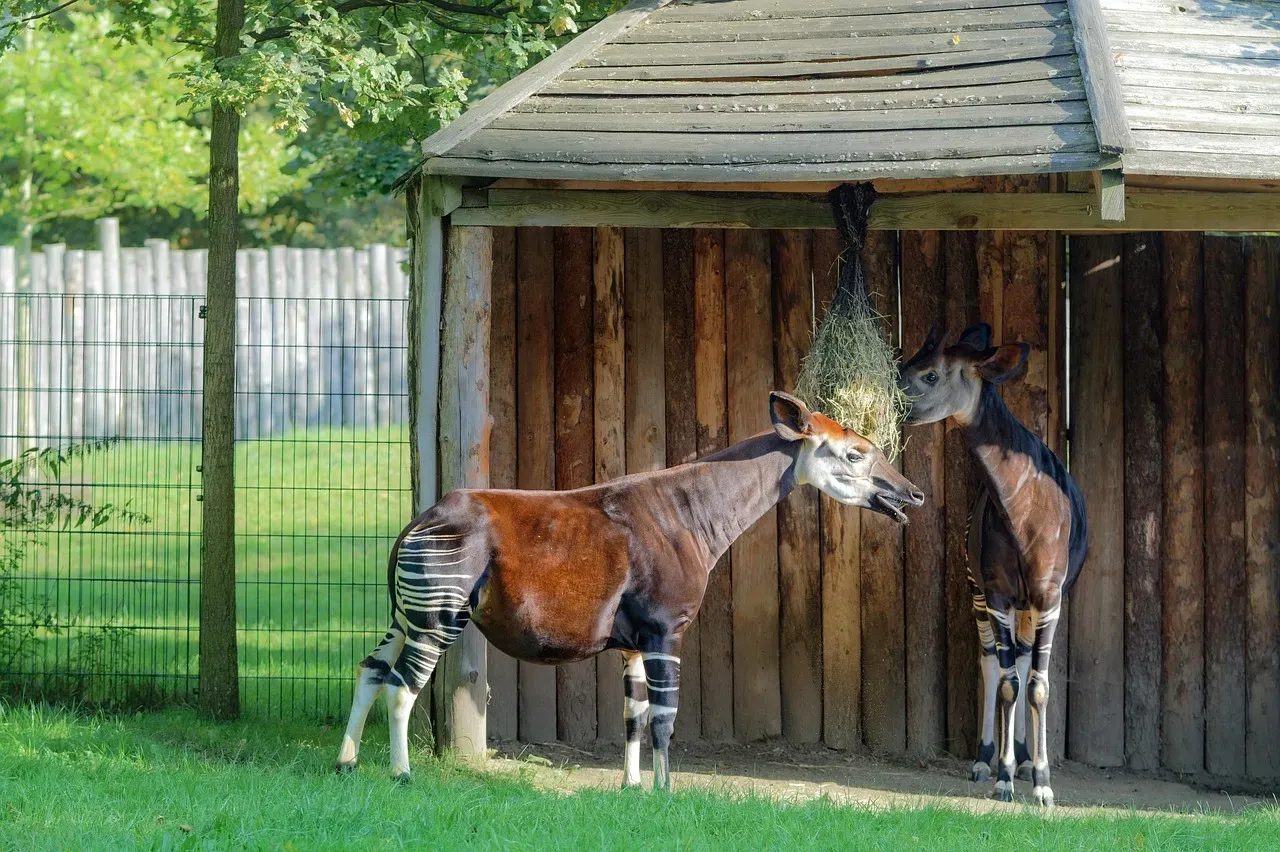
Most four-legged animals move by alternating legs on either side of the body – think of how a horse trots. The okapi does something completely different. Morphological features shared between the giraffe and the okapi include a similar gait – both use a pacing gait, stepping simultaneously with the front and the hind leg on the same side of the body, unlike other ungulates that walk by moving alternate legs on either side of the body.
Think of it like walking with both your left arm and left leg at the same time, then both your right arm and right leg. It looks unusual but it’s perfectly adapted for navigating the tangled, root-heavy floors of the Ituri rainforest. The anklets and stockings of white on the lower legs perhaps enable other okapis to easily follow through dark forests, as they have poor eyesight.
The okapi represents a fascinating evolutionary branch that has remained largely unchanged for millions of years, adapted perfectly to its forest habitat rather than the open savanna. This evolutionary distinctiveness adds to its mysterious allure, as it provides a living window into ancient mammalian adaptations that have otherwise disappeared from Earth.
9. It Marks Territory in Three Different Ways Simultaneously
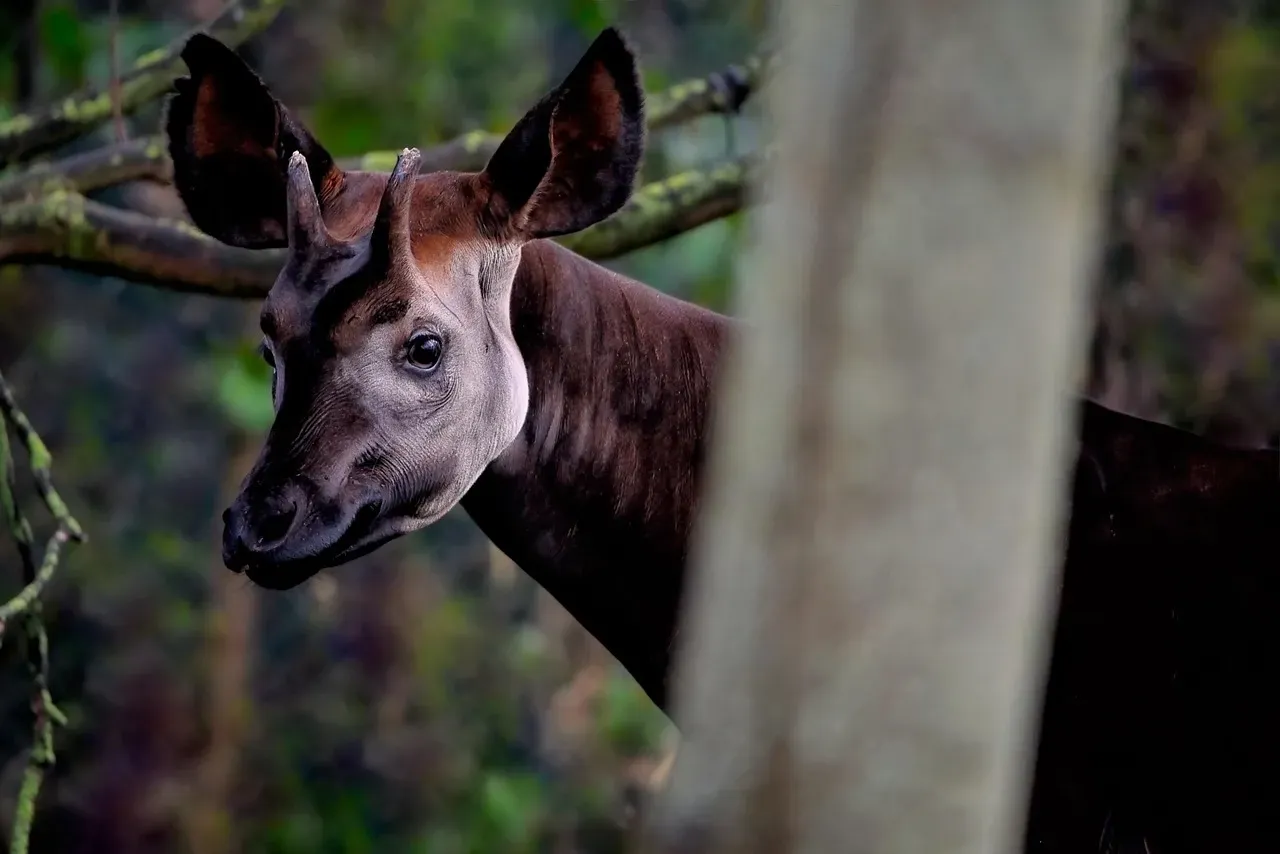
The okapi isn’t just elusive – it’s also surprisingly territorial. Okapi mark their territory by spraying urine, secreting a black tar-like substance from scent glands on each foot, and rubbing their necks on trees. Three entirely different methods at once. It’s like the animal equivalent of locking your front door, setting an alarm, and installing a security camera all at once.
A scent gland on each foot leaves behind a sticky, tar-like substance wherever they walk, marking their territory. Because they have a great sense of smell, an okapi can tell if another okapi has been there by sniffing out these scent marks left on the ground. So every step they take is essentially leaving a note for other okapis.
Males will defend their territories from other males but will allow females to pass through. To show dominance, one okapi will raise its head above the other. To show submission, an okapi will lay its head and neck on the ground. That’s a surprisingly nuanced social hierarchy for an animal that supposedly prefers solitude.
10. It’s Endangered – and the Fight to Save It Is Very Real
According to the IUCN Red List of Threatened Species, the okapi is endangered. While it’s not clear how many remain in the wild, scientists estimate that populations may have been slashed in half over the past two decades. For a species that only revealed itself to science roughly 125 years ago, that decline is sobering.
Though the leopard is the okapi’s chief predator in the wild, human hunters pose a greater threat to the okapi’s existence. In 2012, a militia group killed 14 okapis at a conservation center located at the headquarters of the Okapi Conservation Project. Today, poachers continue to kill okapis for their meat and skin, and civil unrest in the Democratic Republic of Congo makes enforcement of wildlife protection laws increasingly difficult.
Today, the okapi remains an important cultural symbol in the Congo, appearing on Congolese franc banknotes and serving as a national emblem – a mysterious forest spirit that has emerged as an ambassador for one of Africa’s most biodiverse yet threatened ecosystems. A face on a banknote, yet vanishing from the very forests it symbolizes. That’s a tension worth paying attention to.
Conclusion: The Ghost of the Congo Deserves Our Attention
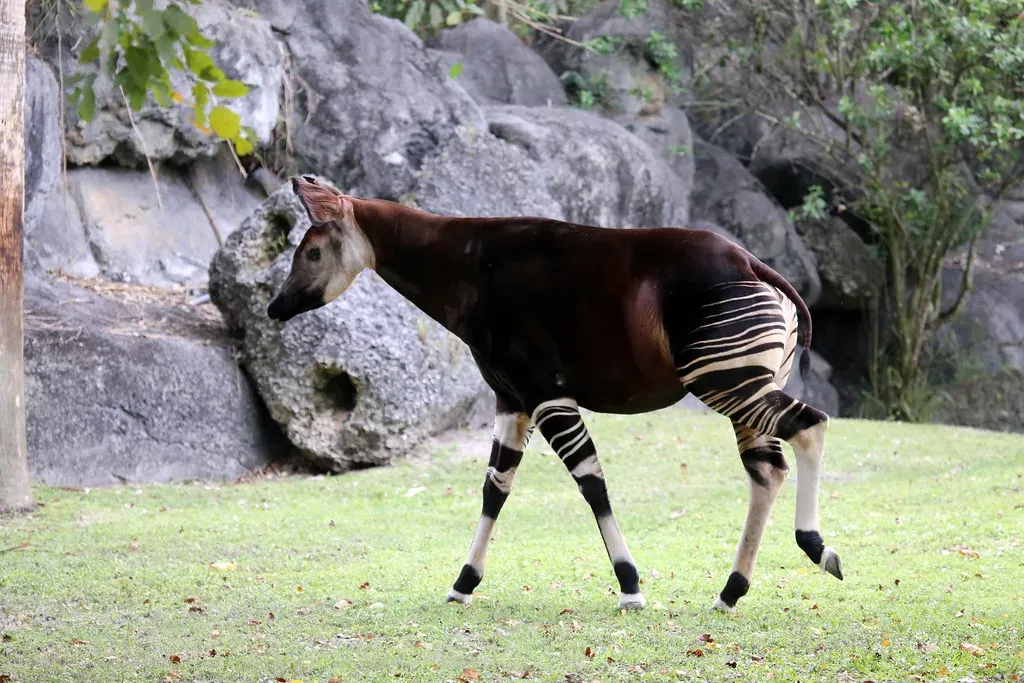
The okapi is, without question, one of the most astonishing animals to ever walk this planet. It hid from science for millennia, communicates in frequencies we can’t hear, eats toxic plants for breakfast, and walks unlike any other hoofed creature on Earth. It is, in every sense of the word, extraordinary.
Yet despite all its extraordinary qualities, the okapi is disappearing. Quietly, just as it has always lived – without fanfare, without drama, slipping further from the world while most people have never even heard its name.
The more we learn about this animal, the more we realize how much there still is to discover. As research continues and technology advances, we may gradually unveil more of the okapi’s secrets, but its remote habitat and inherently secretive nature ensure that some aspects of its life will likely remain hidden from human understanding. Perhaps that’s the most human thing about it – the okapi reminds us that mystery, real and raw and alive, still exists in this world. The question is whether we’ll protect it before it disappears for good. What do you think – did any of these facts surprise you? Share your thoughts in the comments.
