
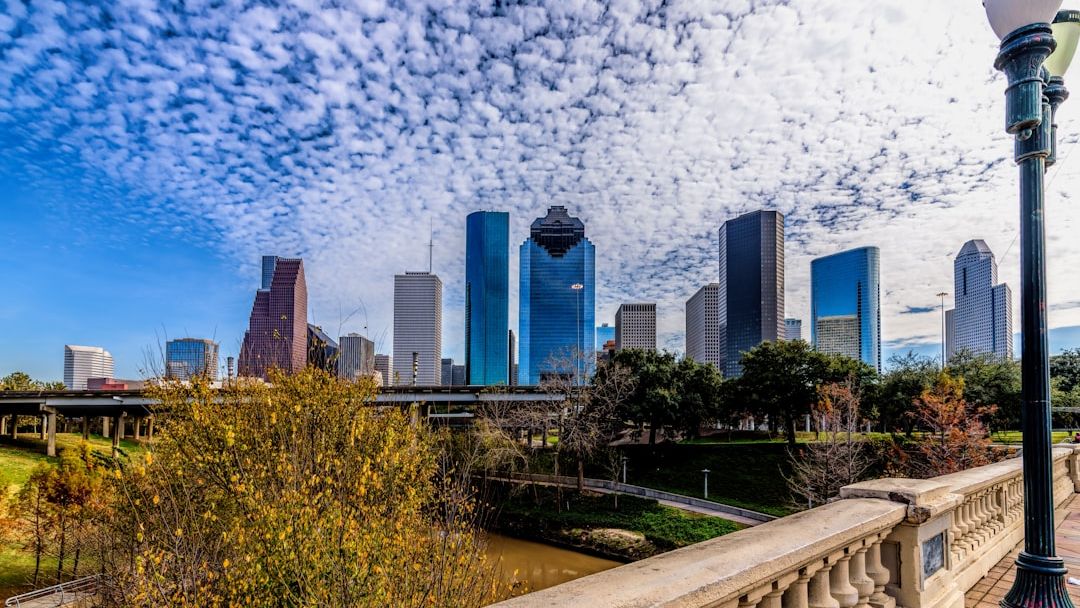
Picture a city of millions, buzzing with energy, new suburbs sprouting by the month, oil rigs humming in the background, and beneath all of it, the ground slowly, silently disappearing. That is exactly what is happening in Houston, Texas, right now. It is not some distant future dystopia scenario. It is already underway.
Most people picture sinking cities as a coastal drama, something happening to Venice or Jakarta far away. Houston’s story is different, more complicated, and in many ways more alarming. The science behind it touches on groundwater, booming growth, energy extraction, and decades of infrastructure decisions that are finally catching up with one of America’s largest cities. Let’s dive in.
The Study That Shocked America
Honestly, sometimes a piece of research comes along and makes you stop mid-scroll. A landmark study published in the journal Nature Cities did exactly that. The study used satellite data spanning six years to measure how fast the twenty most populous cities in the US are sinking. The verdict was stunning.
The fastest-sinking city turned out to be Houston, with more than forty percent of its area subsiding more than 5 millimeters per year, and twelve percent sinking at twice that rate. To put that in plain terms, imagine your kitchen floor slowly tilting, year after year, while you keep adding furniture on top of it.
The research team, led by Columbia University’s Leonard Ohenhen with contributions from Virginia Tech and UC Berkeley, used six years of satellite-based radar data to track vertical land motion across 28 major US metro areas. What they found went well beyond what most experts had previously documented.
Across the region, long-term groundwater mining and oil and gas extraction have pushed sinking rates up to 2 inches per year in certain areas. That is not just alarming. That is genuinely hard to wrap your head around when you think about the millions of homes and roads sitting on top of it all.
What Is Actually Causing Houston to Sink
Here’s the thing: the ground under Houston is not just randomly collapsing. There is a very specific reason it is happening, and it has everything to do with what humans have been pulling out from beneath it for over a century. In the Houston-Galveston region, land subsidence is caused by compaction of fine-grained aquifer sediments, silts and clays, below the land surface due to groundwater withdrawals.
Think of it like this. The aquifer beneath Houston acts like a giant underground sponge. When cities pump water out of that sponge, the solid material above it compresses and sags. Removing water from fine-grained aquifer sediments compresses the aquifer, leaving less pore space available to store water, resulting in the lowering of the land surface.
Research found that roughly eighty percent of all subsidence relates to groundwater extraction. The rest is largely connected to oil and gas extraction, which has been a core part of Houston’s economic identity for generations. Houston’s added burden comes from decades of oil and gas extraction, which also contributes to ground instability.
What makes this particularly chilling is that the damage does not stop when you stop pumping. Subsidence is caused by the settling of the ground into the voids left behind after water or oil is removed. The earth has already compacted. You cannot simply refill the void and expect the land to bounce back. Once groundwater is depleted and land subsides, it cannot realistically be reversed.
A Problem a Century in the Making
This is not some brand-new crisis that appeared overnight. Houston has been sinking for a long, long time. Significant issues with subsidence in the Houston area were documented as early as 1918, when the Goose Creek Oil Field near Galveston Bay began to display surficial fissures caused by oil and water extraction beneath the surface.
The Greater Houston region has undergone substantial land subsidence over the past century, with rapid subsidence occurring from the late 1940s to the 1970s and more controlled rates thereafter. When Houston’s population boomed after World War II, so did its thirst for groundwater, and nobody was watching the gauges closely enough.
By 1977, the withdrawals had resulted in water-level altitude declines of 350 feet below datum in the Chicot-Evangeline aquifer in southeastern Harris County, and correspondingly, by 1979, as much as 10 feet of subsidence had occurred in the Houston-Galveston region. Ten feet. The scale of that is remarkable.
The most startling example of subsidence in the Houston region was the sinking of the Brownwood neighborhood near the Houston Ship Channel. Between 1943 and 1973, about 4,700 square miles of land southeast of downtown Houston sank at least six inches, with the area near the Ship Channel and Brownwood sinking about nine feet. That neighborhood is now effectively gone, swallowed by the bay. Let that sink in, pun intended.
How Sinking Ground Turns Into Flooding Catastrophes

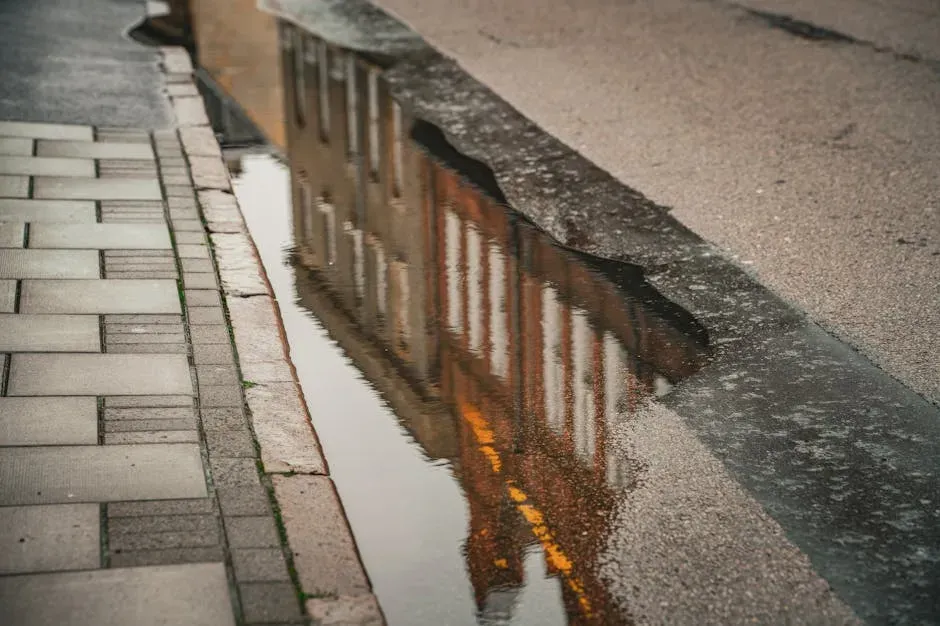
I think this is the part that most people do not connect. Subsidence is not just about land going lower. It is about what happens to water when the landscape tilts and warps. When a land area subsides, it can make the region more prone to flooding, and previous research has suggested that subsidence exacerbated the flooding seen during Hurricane Harvey in 2017.
Think of subsidence like slowly pressing down on one edge of a bathtub. Water that used to drain outward now pools. Flooding disasters can be exacerbated by subsidence, especially with Houston’s proximity to the Gulf Coast and its connection to Galveston Bay through Buffalo Bayou. The geography was already challenging. Subsidence makes it dramatically worse.
Subsidence alters the flow of creeks and bayous, which may increase the frequency and severity of flooding, and damages roadways, bridges, building foundations, and other infrastructure. These are not abstract risks. Houstonians deal with cracked roads and flooded underpasses regularly, and subsidence is quietly a major factor.
Houston and seven other cities reportedly account for more than sixty percent of the people living on sinking land, and those eight cities have seen more than ninety significant floods since the year 2000. That correlation between sinking cities and repeated flooding is no coincidence. It is cause and effect playing out in slow motion, decade after decade.
What Is Being Done and What Comes Next
So what is anyone actually doing about this? The good news is that some regulatory structures have been in place for a while. The establishment of the Harris-Galveston Subsidence District in 1975 marked a pivotal milestone in subsidence management, primarily by regulating previously uncontrolled groundwater extraction. That intervention genuinely helped, particularly in older parts of the city.
The Subsidence District’s latest groundwater report shows that their efforts have almost halted subsidence where they have succeeded in shifting areas from groundwater to surface water, specifically in the areas where the district first started regulating groundwater about fifty years ago. So regulation does work. The problem is keeping pace with growth.
The relentless growth of Houston, especially on the north and west sides, has created a belt of subsidence where new areas have largely not yet converted to surface water. Fulshear, a western suburb, is a perfect example. The highest rate of subsidence in the Houston region was found near Fulshear, which is subsiding at a rate of 1.3 inches per year, or more than a foot per decade.
A pipeline project aimed at replacing groundwater with surface water carries a total estimated cost of at least 1.2 billion dollars. Meanwhile, researchers behind the landmark study say subsidence monitoring should be part of urban planning, and that strategies like groundwater management should be put in place to reduce excessive withdrawals, alongside enhanced infrastructure resilience planning and long-term monitoring for early detection and intervention. The science is clear. The solutions exist. Whether political will and funding arrive fast enough is the real question.
Conclusion
Houston’s story is a cautionary tale told in millimeters, one that has been unfolding quietly beneath busy highways, freshly poured concrete foundations, and master-planned communities for over a century. It is a story of a city that grew incredibly fast, drew everything it needed from the ground beneath it, and is now facing the long-term bill for that extraction.
The science is not doomsaying. It is a data-driven call to action. Satellite imagery, aquifer models, and decades of monitoring all tell the same story: the ground is sinking, the flooding risk is rising, and the window for meaningful intervention is not unlimited.
What makes Houston’s situation genuinely fascinating, and sobering, is that it is not unique in kind, only in scale. Researchers found that twenty-five of the twenty-eight cities studied are subsiding, affecting more than thirty-three million people, over ten percent of the US population, who live on sinking land. Houston just happens to be at the extreme end of the curve.
The ground under one of America’s most dynamic cities is slowly disappearing. The question now is not whether Houston will face consequences. It already is. The question is whether the response will be bold enough, and fast enough, to matter. What would it take for your city to face the same reckoning?

- The Ancient Secrets of Yellowstone’s Wild Animals Revealed - August 6, 2026
- Are Some Common Pet Behaviors Actually Signs of Undiagnosed Stress? - August 6, 2026
- 8 US States With the Most Horseshoe Crab Spawning Beaches - August 6, 2026