
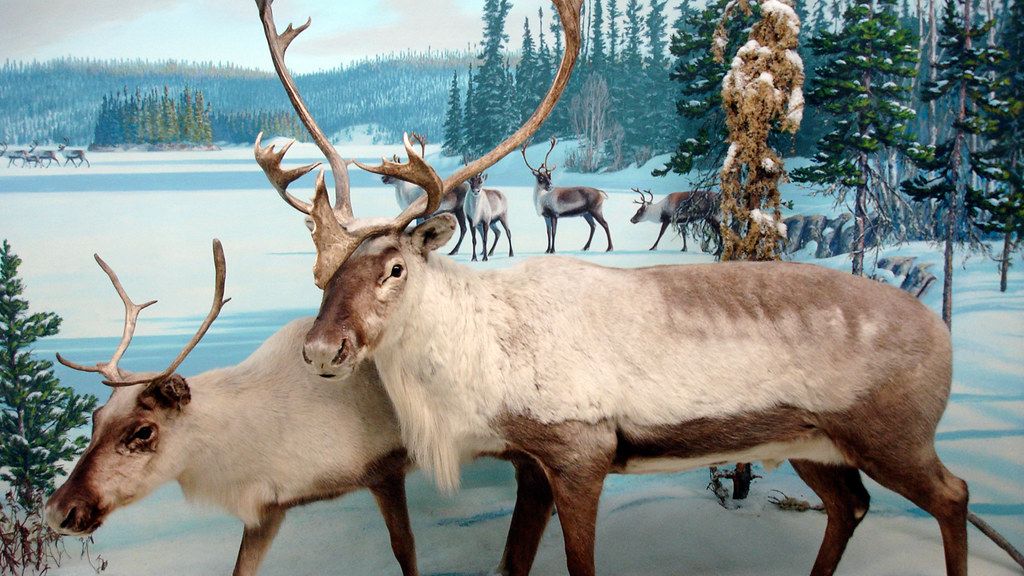
Every year, something extraordinary unfolds across the skies, oceans, and plains of our planet. Animals by the billions pack up, so to speak, and set off on journeys so massive and so precisely timed that they make human GPS navigation look like a rough guess. Some cross entire oceans without stopping. Others hand off a route to their children, their grandchildren, and even great-grandchildren, none of whom have ever seen the destination.
Migration is one of nature’s most spectacular and misunderstood phenomena. There is far more to these journeys than simple instinct, and some of the facts behind them will genuinely stop you in your tracks. Let’s dive in.
1. The Arctic Tern Lives Two Summers Every Single Year
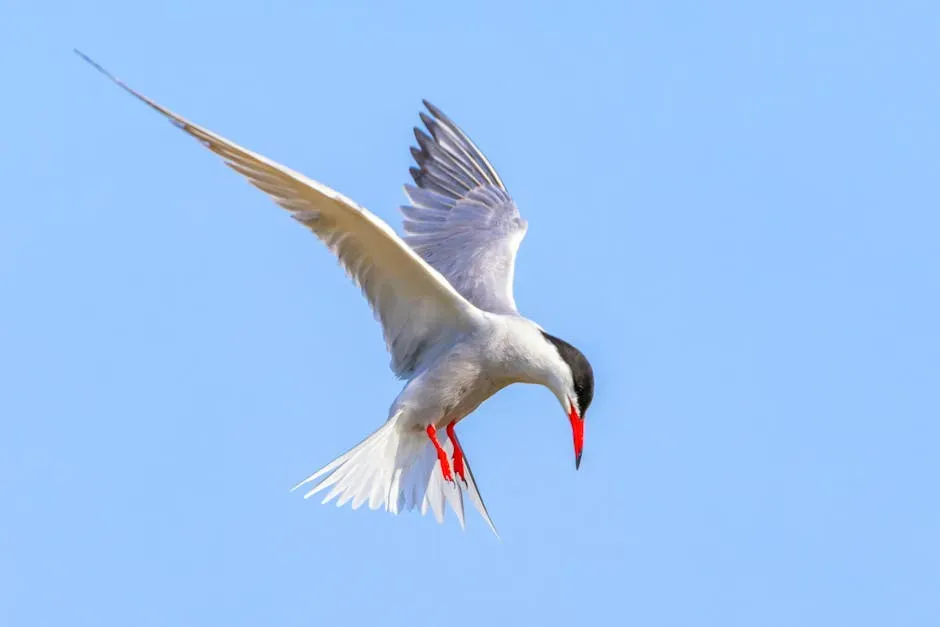
Here is a fact that honestly took me a moment to fully absorb: there is a bird out there that never experiences winter. Arctic terns see more daylight than any other species on the planet, because their migration takes them from the Arctic summer to the Antarctic summer and back again every year. They are, in effect, chasing the sun across the entire globe, pole to pole, season after season.
Tracking studies have revealed that the average annual distance traveled by Arctic terns is approximately 44,000 miles, and one individual bird was recorded covering nearly 60,000 miles in a single year, a distance far exceeding any other known animal migration. Think about that for a second. That is more than twice the circumference of the Earth, completed by a bird you could hold in your palm.
If a tern reaches its maximum lifespan of 30 years, it will have flown more than one million miles in migration. That is the equivalent of traveling to the Moon and back three times. In a lifetime. As a bird.
2. A Baby Bird Flew 8,425 Miles Nonstop in 11 Days Without Eating
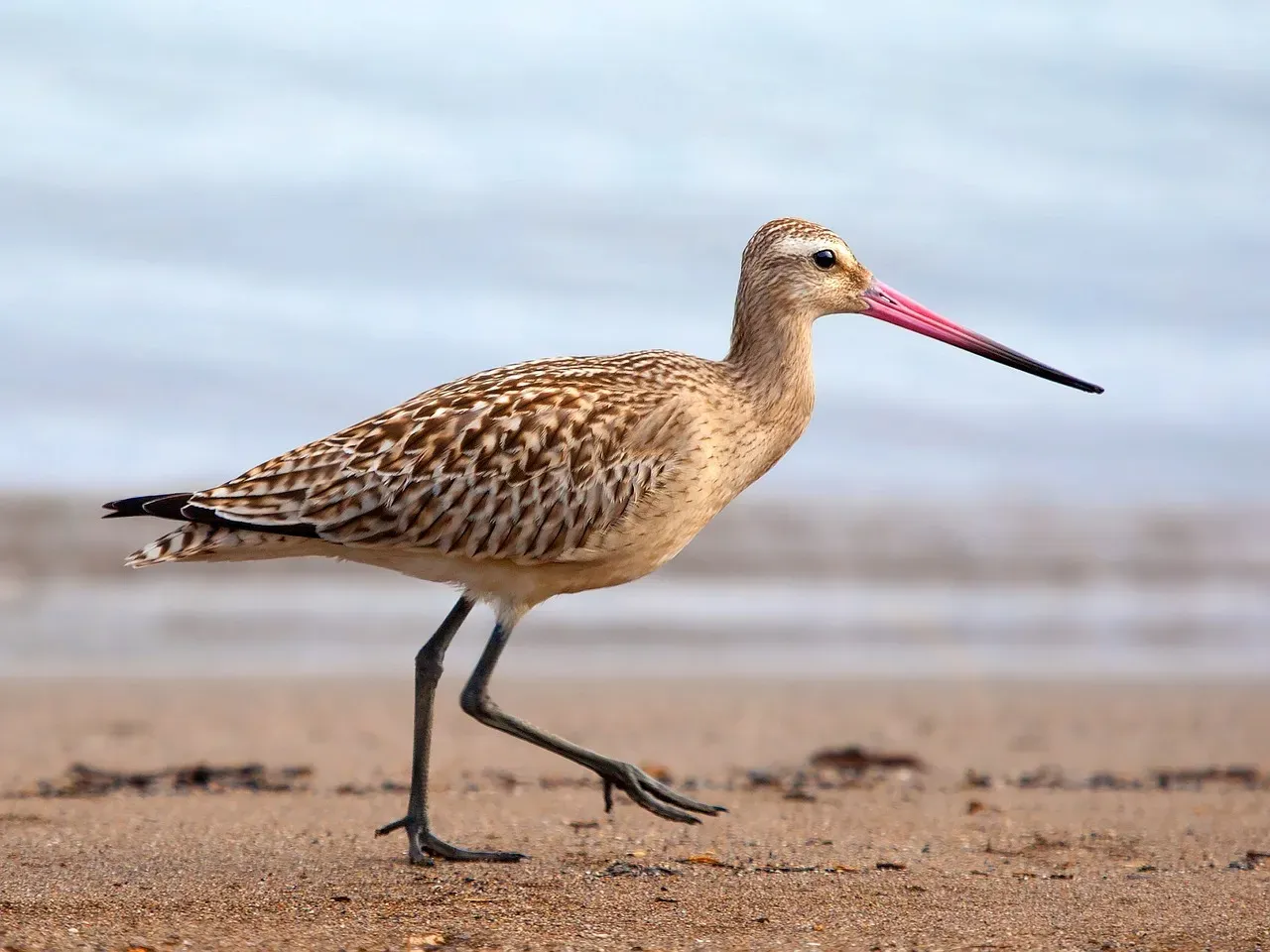
This one sounds like something from a nature documentary that you would pause and rewind just to make sure you heard it right. A four-month-old bar-tailed godwit known as B6 set a new world record by completing a nonstop eleven-day migration of 8,425 miles from Alaska to Tasmania, Australia, representing the longest documented nonstop flight by any animal. No food. No rest. No landing. Just relentless, biological willpower over open ocean.
After fueling for the trip, these birds roughly double their weight in fat. Even their kidneys, liver, and intestines shrink to make room for more fat so they do not exceed maximum weight for efficient flight. The body essentially dismantles itself and rebuilds into a more aerodynamic, fuel-efficient machine. It is, honestly, one of the most extraordinary physiological transformations in the animal kingdom.
While bar-tailed godwits are in flight, they sleep with one eye open and switch half of their brain off at a time, allowing them to continue their journey uninterrupted over a stretch of days. Half-asleep, flying over the Pacific. Nature never fails to astonish.
3. Monarch Butterflies Navigate a Route They Have Never Seen Before
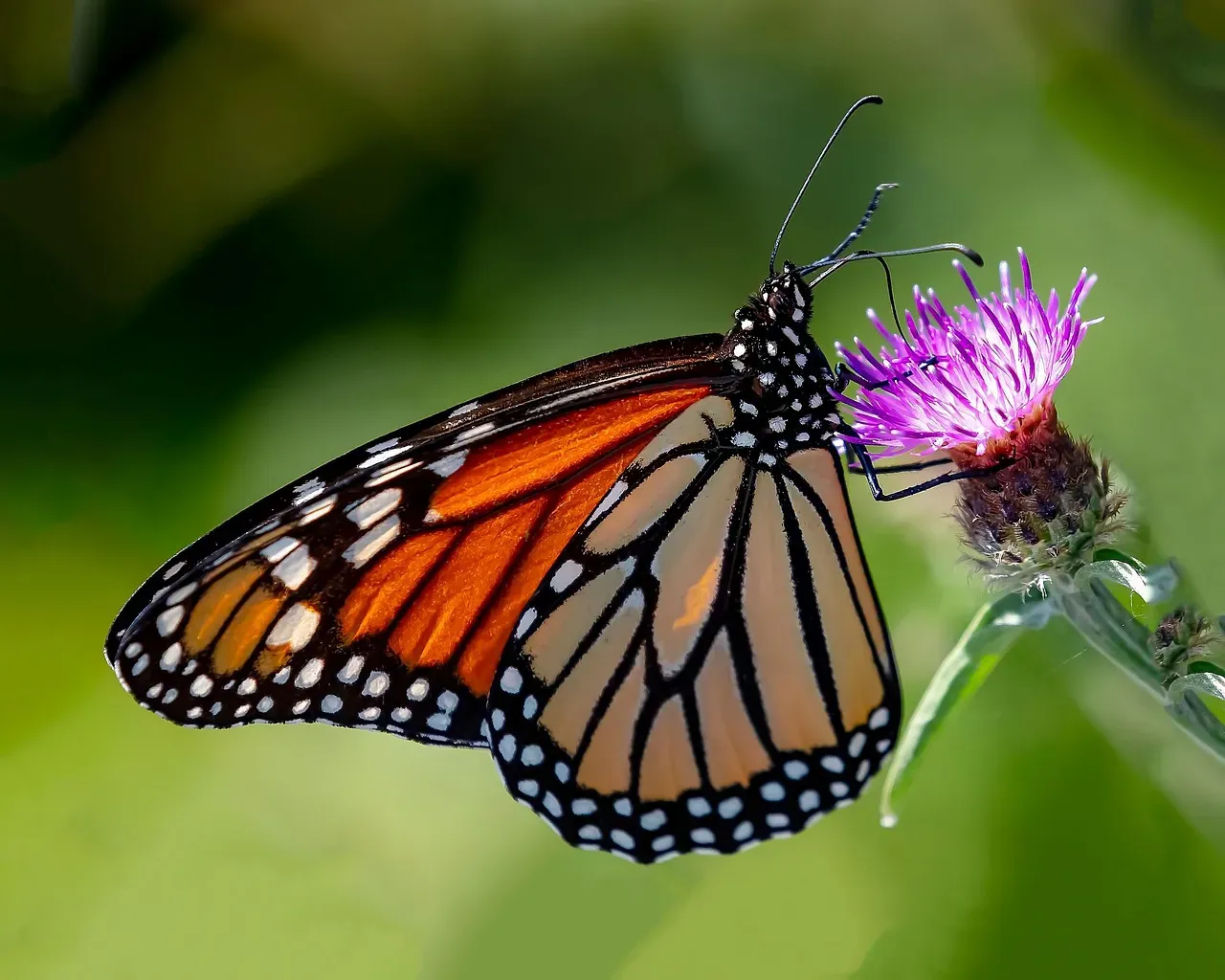
None of the monarchs on the fall migration path have ever been to their destination before, and yet they know exactly where to go. Let that sink in. No teacher. No map. No memory of the route passed down through conversation. Just an inherited, almost mystical knowledge encoded somewhere inside a creature with a brain smaller than a pinhead.
The round trip from Canada to Mexico and back to Canada takes longer than the butterflies’ maximum lifespan, so the migrating butterflies are actually made up of four to five generations. Along the way, female butterflies lay eggs on milkweed plants, the eggs hatch, the caterpillars eat, and then the mature butterflies continue the trip started by their parents and grandparents. It is like a relay race where no runner ever knows they are in one.
Scientists say that some butterflies are able to return to the exact same tree as their ancestors. Generation after generation, landing in the same spot. I think that is one of the most quietly staggering facts in all of natural science. How? Honestly, researchers are still working on it.
4. Caribou Hold the Record for the Longest Land Migration on Earth
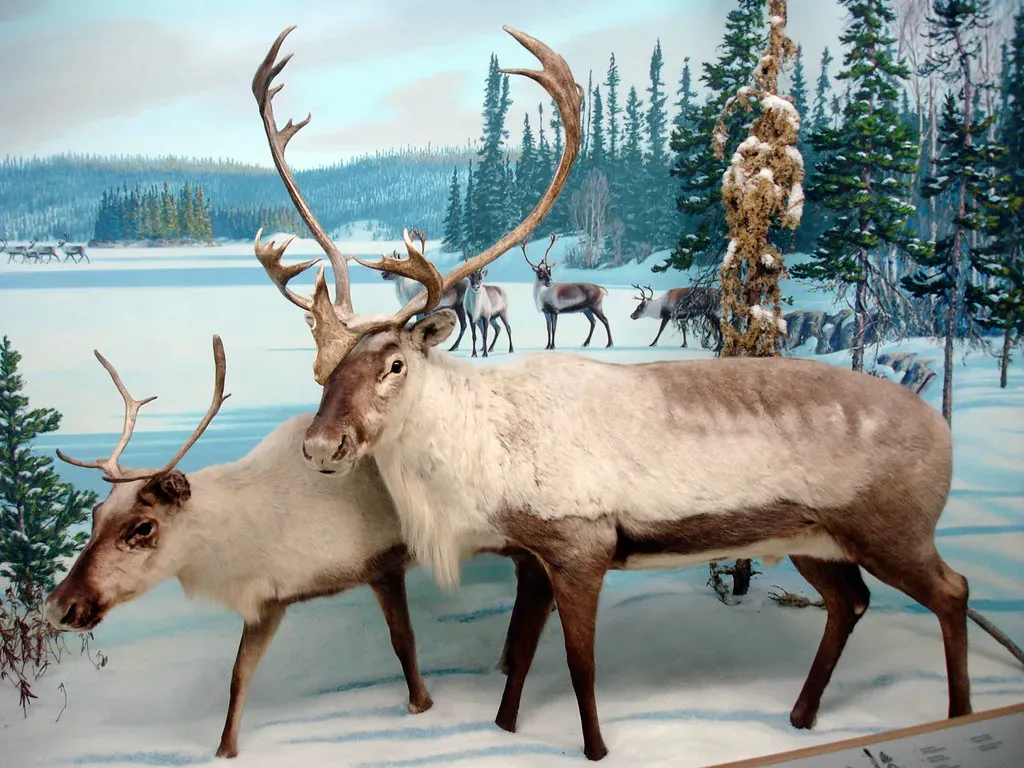
When people picture epic migrations, they often picture wildebeest stampeding across the Serengeti. However, the true champions of overland travel are actually the caribou of the Arctic. Caribou, from numerous populations, were found to have the longest existing migrations in the world, with round-trip distances exceeding 745 miles. That finding came from a rigorous international scientific study published in the journal Scientific Reports, so this is not just folklore.
Caribou in large Arctic herds can walk more than 2,000 miles each year, a distance that often adds up to walking the diameter of the Earth within their lifetimes. They migrate to find optimal forage, to reduce exposure to insects in summer, to avoid predators, and females migrate specifically to give birth to calves on calving grounds in early summer. It is a migration driven by nearly every survival need imaginable, all at once.
Research confirmed that caribou likely exhibit the longest terrestrial migrations on the planet, but over the course of a year, gray wolves actually move the most overall. So the predators are, in a very real sense, chasing the prey across the tundra. A migration driving another migration. Nature stacking its wonders.
5. A Tiny Dragonfly Crosses an Entire Ocean to Complete Its Journey
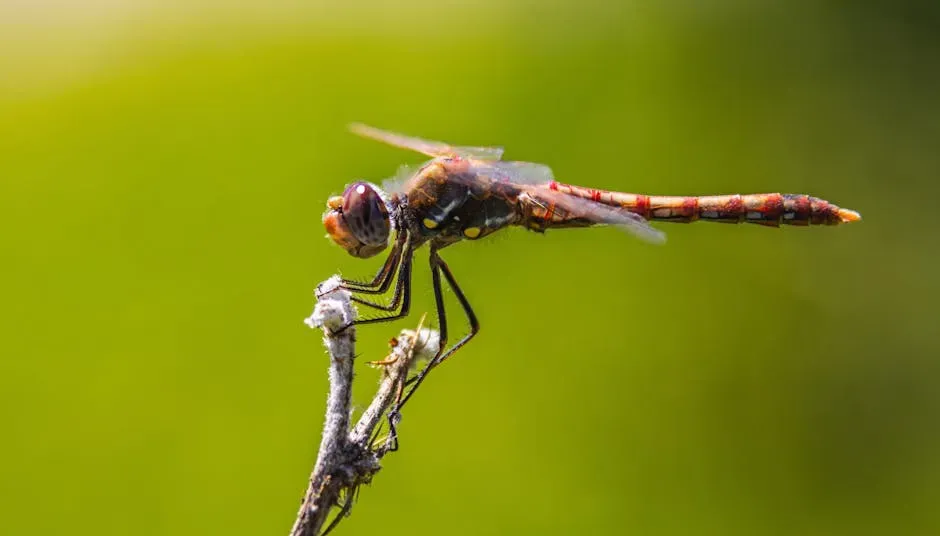
Let’s be real: when you think of great animal migrations, dragonflies are probably not the first creature that springs to mind. They are fragile, shimmering, and seemingly built for lazy summer afternoons near a pond. So it is genuinely shocking to learn what some of them actually do. The globe skimmer dragonfly is a true migration champion, traveling from India across the Indian Ocean to East Africa, covering up to 11,000 miles in a series of generational hops.
The globe skimmer dragonfly traverses up to 11,000 miles between India and Africa. Like the monarch butterfly, no single individual completes the full journey. Instead, generations of dragonflies carry the torch across one of the world’s most formidable ocean crossings. Think of it as a baton relay race conducted over open water by insects that weigh less than a paperclip.
This is one of those facts that reminds you that size and strength have almost nothing to do with resilience. Some of the mightiest travelers on Earth are also the most delicate looking. Migration, it turns out, is not about muscle. It is about an ancient and astonishing drive to survive.
6. Humpback Whales Are Changing Their Migration Routes Right Now
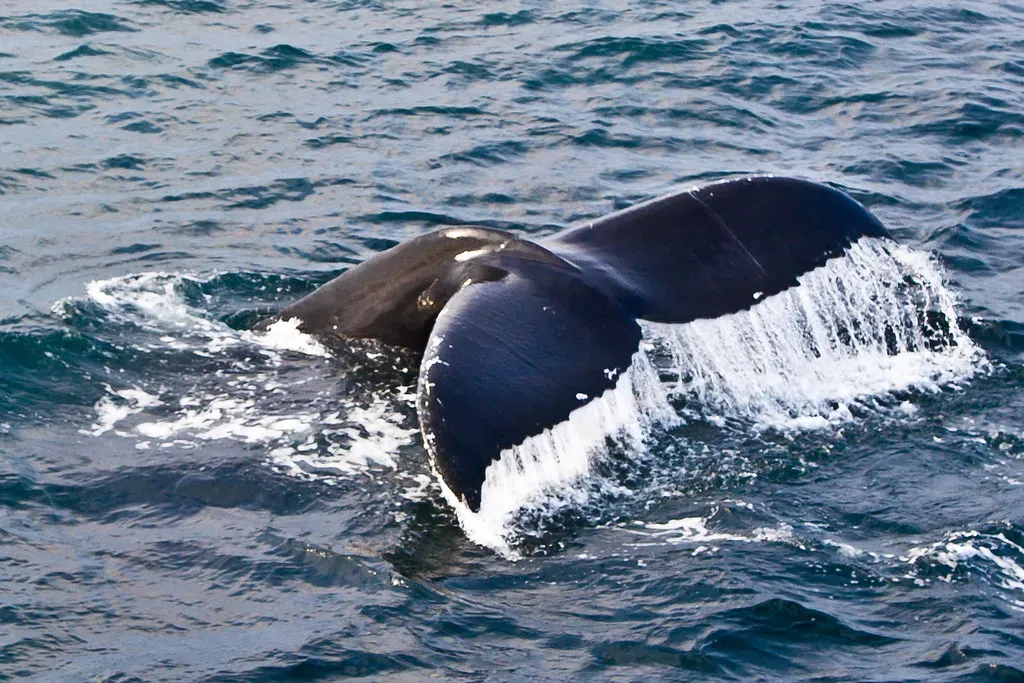
Humpback whales are already remarkable migrants. Their journey can cover more than 4,970 miles each way, making it the longest migration of any mammal on Earth. Humpback whales are slow swimmers, but they make up for it by traveling nonstop for days at a time, and they do not feed along their migration route, surviving instead on fat reserves built up during the summer months. They are essentially fasting marathoners of the sea.
Here is where things get surprising and more than a little unsettling. Recent findings suggest that humpback whales are now giving birth well outside their previously recognized tropical calving grounds, with climate change leading to a rise in sea surface temperatures, making southern waters more hospitable for calving. Their ancient routes are shifting in real time, driven by a warming planet.
In 2024, a male humpback whale made headlines after scientists recorded it making one of the longest-ever migrations known in the species, traveling from the Pacific Ocean off Colombia to Zanzibar in the Indian Ocean in a journey of at least 13,000 kilometers. That is an animal crossing between two entirely different ocean systems. The science, as researchers themselves admit, has not yet caught up with where these whales are actually going.
7. Climate Change Is Already Shifting the Timing and Routes of Migrations Worldwide
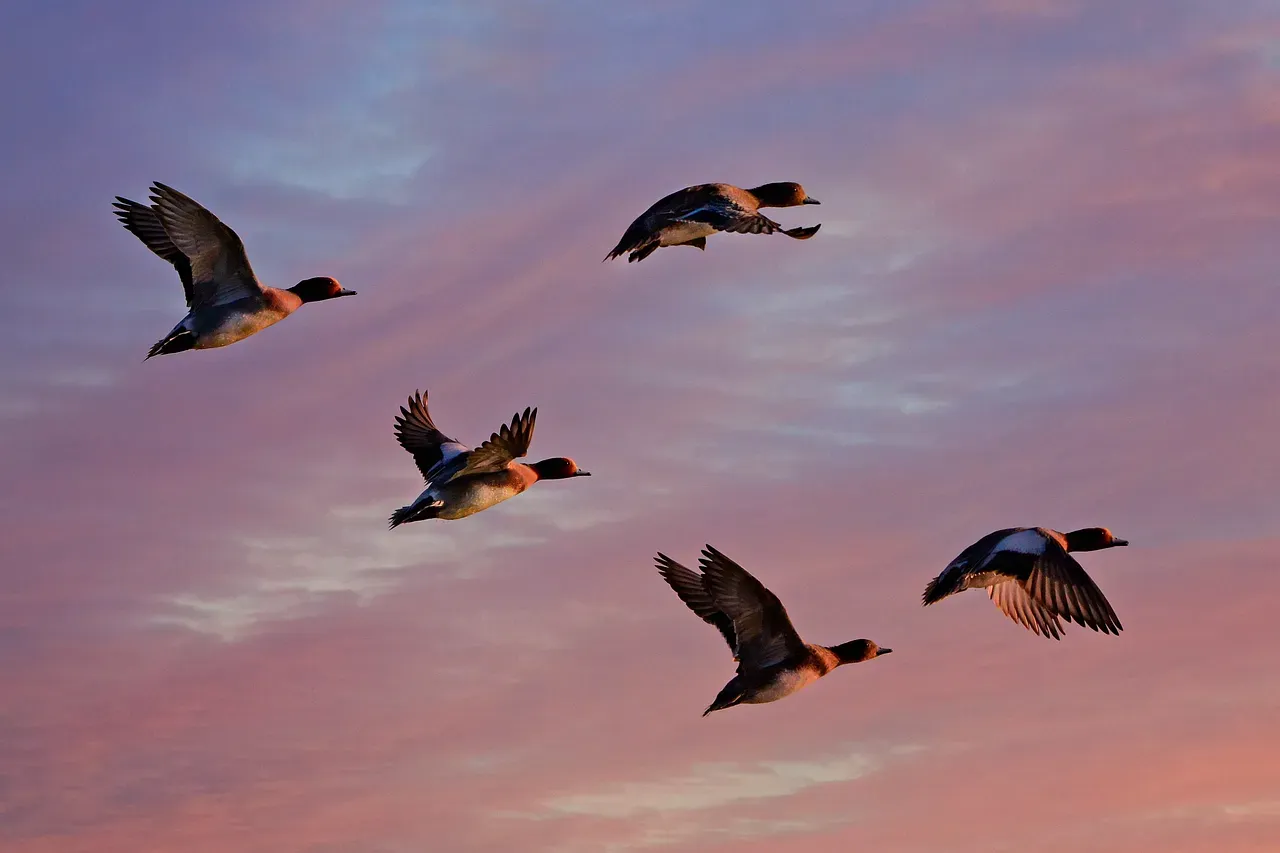
This is where things move from surprising to genuinely urgent. Migration is not just a spectacular natural show. It is a finely calibrated system, and that system is under pressure. Data from 2025 shows North American birds arriving two to five days earlier than they did in 1990. That might sound minor, but in ecology, timing is everything. A few days off can mean the difference between finding food and finding nothing.
When food peaks too early, chicks starve. This mismatch reduces breeding success significantly. Insects emerge, flowers bloom, and prey peaks at a specific window. When a migrating bird arrives even slightly late, or slightly early, the entire system can fall out of sync. It is like arriving at a dinner party where the food has already been eaten and the kitchen is closed.
As of 2026, over 2,000 bird species show regular migratory behavior, equaling nearly one fifth of the world’s known bird species. The stakes of getting migration wrong, then, are enormous. Migration affects the distribution of prey and predators, keeps nutrients cycling around the planet, helps with the spread of pollen and seeds, and even influences human economies. Disrupting migration is not just an ecological issue. It ripples outward into everything.
Conclusion: The Greatest Journeys on Earth Are Still Full of Mystery
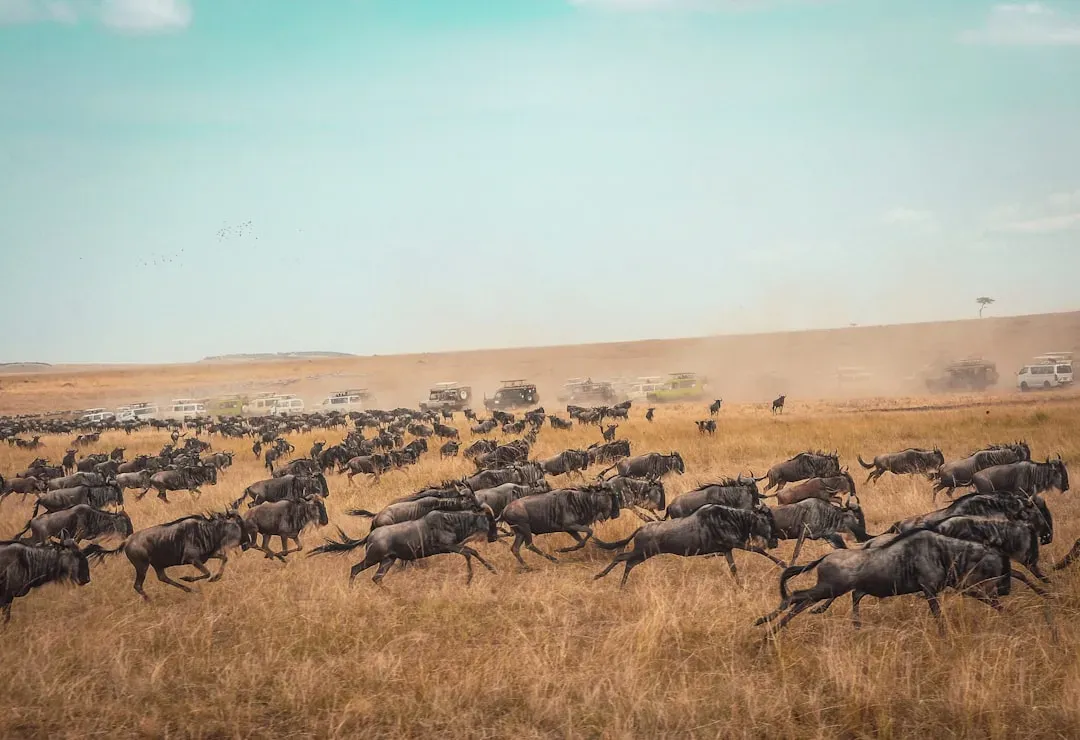
Animal migration is one of those subjects where the more you learn, the more humbled you feel. A bird the weight of a few coins flies from pole to pole. A butterfly generation that has never seen Mexico navigates its way there with perfect accuracy. A whale rewrites its ancient route in response to a warming ocean. These are not small things.
Billions of animals set off on journeys that defy easy explanation, crossing oceans and traversing entire continents with a precision that puts human GPS technology to shame. Scientists have shed light on some of the enduring mysteries about how species navigate and what drives them to leave a habitat, but there is still a lot to learn.
There is something deeply moving about all of this. These creatures do not migrate for adventure or curiosity. They do it because they must. And somehow, against all odds, they find their way. Which of these seven facts surprised you the most? Share your thoughts in the comments below.

- The Ancient Secrets of Yellowstone’s Wild Animals Revealed - August 6, 2026
- Are Some Common Pet Behaviors Actually Signs of Undiagnosed Stress? - August 6, 2026
- 8 US States With the Most Horseshoe Crab Spawning Beaches - August 6, 2026