

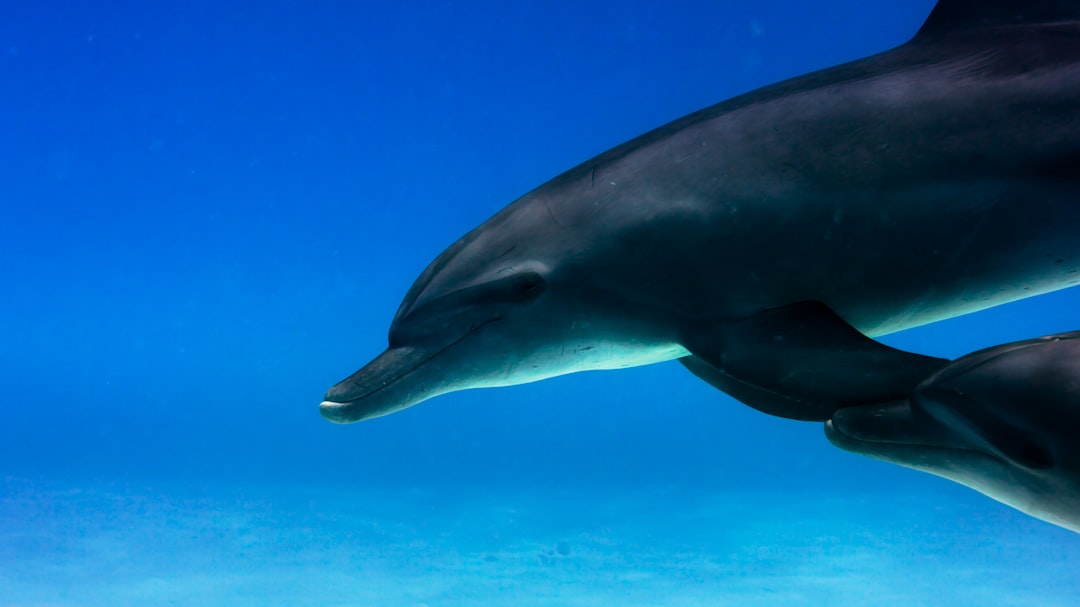
Researchers recently identified per- and polyfluoroalkyl substances, or PFAS – commonly called forever chemicals – in samples of dolphin milk. These persistent pollutants, which resist breakdown in the environment, transfer from mother dolphins to their calves during nursing. The discovery, based on decades-old archived samples analyzed with advanced techniques, underscores the long-reaching impact of industrial contaminants on marine life.[1][2]
Advanced Techniques Reveal Broad PFAS Presence
Scientists employed a cutting-edge multidimensional analytical method to detect PFAS in the milk. This approach combined liquid chromatography, ion mobility spectrometry, and mass spectrometry, allowing identification of compounds beyond standard tests. Traditional methods focus on a limited set of known PFAS, but this technique uncovered a wider array.[3]
Dr. Erin Baker, a professor at the University of North Carolina at Chapel Hill and principal investigator, explained the advantage: “Traditional testing methods typically look for a limited number of known PFAS compounds. By combining multiple analytical techniques, we can identify a much broader range of chemicals and be more confident in what we are detecting.”[1] The team, part of the Texas A&M Superfund Research Center, scaled findings to human health benchmarks to gauge risks for dolphins.
Longitudinal Analysis Uncovers Persistent Contamination
The study examined milk from a single mother dolphin collected over a two-year lactation period, spanning 103 to 706 days postpartum. These samples, archived from 1991 to 1993, showed 36 PFAS compounds, with 17 detected consistently throughout. PFOS, a prevalent forever chemical, appeared at levels exceeding weekly intake recommendations from the European Food Safety Authority and Food Standards Australia New Zealand by 1,000-fold.[3]
Concentrations of PFOS declined slightly over time, likely as the chemicals passed to the calf through feedings. Non-targeted screening revealed 13 additional suspects, including long-chain perfluorosulfonic acids and precursors like perfluoroethylcyclohexane sulfonate and 2-(N-ethylperfluorooctanesulfonamido)ethyl phosphate. Such persistence in milk highlights bioaccumulation and biomagnification up the food chain.[2]
Maternal Transfer Amplifies Early-Life Exposure
Dolphins nurse their young for extended periods and produce milk rich in fat, an ideal carrier for lipophilic contaminants like PFAS. This pathway delivers high doses directly to calves during critical development phases. The research confirmed maternal transfer as a primary route, especially for long-chain PFAS that accumulate in fatty tissues.
- High-fat milk facilitates efficient pollutant passage from mother to offspring.
- Prolonged lactation – up to two years – prolongs exposure windows.
- Bioaccumulated PFAS in the mother’s body burden reduce her levels but burden the calf.
- Compounds persist even in samples from over 30 years ago, signaling ongoing environmental presence.
Collaborators from the University of North Carolina at Chapel Hill, Texas A&M College of Veterinary Medicine & Biomedical Sciences, and the Smithsonian’s National Zoo and Conservation Biology Institute emphasized this vector’s role in marine ecosystems.[1]
Health Threats Echo Across Species
Early exposure to PFAS raises concerns for dolphin calves’ immune systems, growth, and organ function. Dr. Weihsueh Chiu, a professor at Texas A&M’s Department of Veterinary Physiology & Pharmacology, noted: “One of the concerns with PFAS exposure is immunotoxicity. It can suppress the immune system.” Such effects could heighten vulnerability to diseases in populations.[1]
Dolphins serve as sentinels for ocean health. Chiu added: “Dolphins are a potential sentinel of global contamination; changes in their health can reveal broader environmental problems that may eventually affect other wildlife and humans.”[2] Parallels exist in humans, where breastfeeding transmits PFAS, informing regulations like drinking water limits. The borderless nature of these chemicals demands global action, as Chiu stated: “This is a global contamination problem, and it doesn’t have borders.”
The findings appeared in Analytical and Bioanalytical Chemistry, building on a bioRxiv preprint.[3]
Key Takeaways
- 36 PFAS detected in dolphin milk, with PFOS levels 1,000 times above safe intake thresholds.
- Milk transfer poses major early-life risk, particularly for long-chain compounds.
- Advanced LC-IMS-MS broadens detection of emerging contaminants.
This research illuminates how everyday products’ legacy pollutants infiltrate vital wildlife pathways. As marine mammals mirror human exposures, the call grows for reduced PFAS emissions worldwide. What steps should follow to protect ocean dwellers and our shared environment? Share your thoughts in the comments.

- Urban Coyotes Show Remarkable Adaptability, Learning to Thrive in City Environments - July 22, 2026
- Beavers Are Nature’s Engineers, Creating Vital Habitats for Other Wildlife Species - July 21, 2026
- The Recovery of the California Condor Offers Hope for Other Critically Endangered Birds - July 21, 2026