

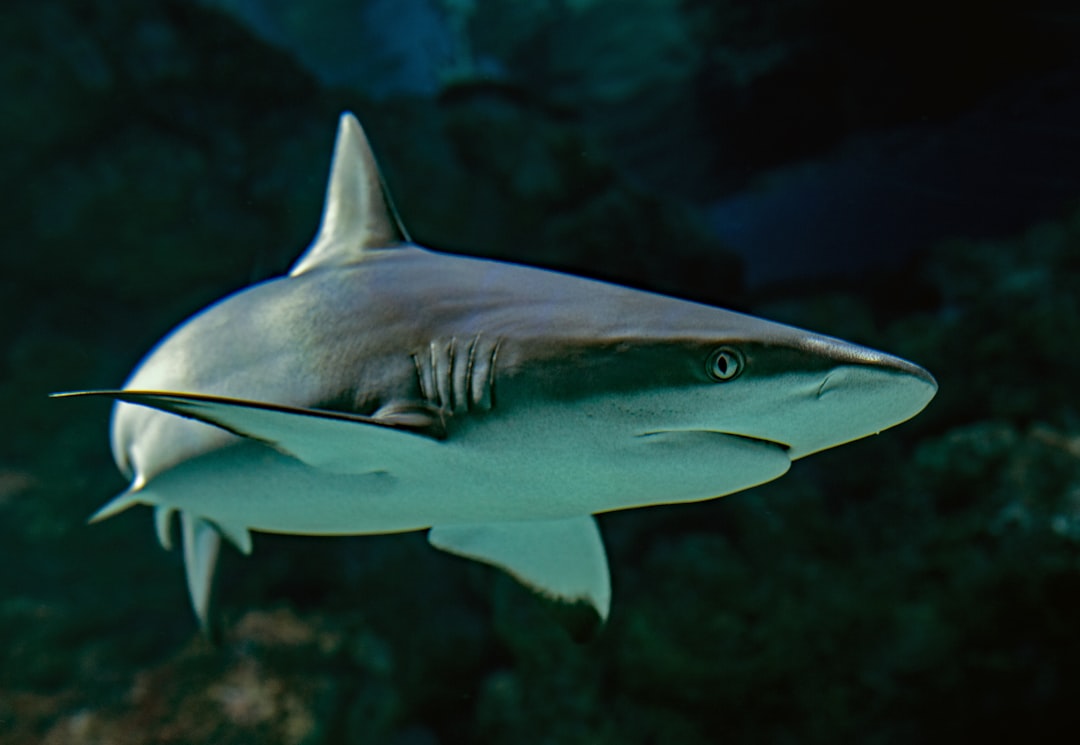
Oceans cover much of the planet, yet their warming trends pose escalating threats to top predators. Researchers from Trinity College Dublin and the University of Pretoria analyzed data from sensors on free-swimming fish, revealing that warm-bodied species like tunas and select sharks expend nearly four times the energy of cold-blooded peers.[1] This metabolic intensity, once an advantage for speed and hunting prowess, now amplifies risks from hotter waters and scarcer prey. As climate change accelerates, these elite hunters confront shrinking livable spaces.
Mesothermic Marvels: A Rare Evolutionary Edge
Fewer than 0.1 percent of fish species qualify as mesothermic, meaning they retain metabolic heat to warm key body parts beyond ambient seawater temperatures.[1] This trait evolved separately in tunas and sharks such as the great white and basking shark, granting superior swimming speeds and endurance for long migrations. Basking sharks, which can reach 3.5 metric tons, exemplify these giants’ capabilities.
Scientists developed innovative methods to gauge metabolic rates by processing biologging data on body and water temperatures. They integrated field recordings from massive specimens with lab data from smaller ones. Such approaches unveiled the true cost of this high-performance physiology.
Energy Demands Soar in Warm-Bodied Fish
Mesothermic fishes burn about 3.8 times more energy than similarly sized ectothermic, or cold-blooded, counterparts after adjusting for size and temperature, according to the study published in Science.[1]Science study A 10°C rise in body temperature more than doubles routine metabolic rates, compelling these predators to devour far more food daily. Dr. Nicholas Payne, the lead author from Trinity’s School of Natural Sciences, noted the stark disparity.
“The results were really quite striking,” Payne stated.[1] Larger bodies exacerbate the issue, generating heat faster than it dissipates due to geometry and physics. High metabolisms intensify this retention, pushing giants toward physiological strain.
Overheating Thresholds Threaten Survival
Researchers established “heat-balance thresholds,” water temperatures beyond which large mesotherms cannot maintain stable body heat without behavioral shifts. A one-metric-ton warm-bodied shark, for instance, falters above roughly 17°C. Professor Andrew Jackson, senior author from Trinity, highlighted these limits.
“Above such thresholds, fish must slow down, alter blood flow, or dive into cooler depths to avoid dangerous warming,” Jackson explained, “but that comes at a cost too.”[1] Such adaptations hinder foraging, especially for speed-reliant hunters. Observations confirm large fishes cluster in cooler latitudes, depths, or during colder seasons.
- Great white sharks favor temperate zones.
- Basking sharks migrate seasonally off Ireland.
- Atlantic bluefin tunas dive temporarily for relief.
- Overall patterns align with heat avoidance.
Climate Change Amplifies the Crisis
Warming scenarios predict contracted summer habitats for large mesotherms, forcing poleward migrations into restricted polar waters. Overfishing already stresses these species and their prey, tightening energy budgets further. Dr. Snelling from the University of Pretoria emphasized the narrowing margins.
Past extinctions, like the megalodon, link to similar climate disruptions when prey vanished. Today’s rapid ocean changes ring similar alarms. Fossil records underscore disproportionate impacts on warm-bodied giants.
| Factor | Ectothermic Fish | Mesothermic Fish |
|---|---|---|
| Energy Use | Baseline | 3.8x higher |
| Heat Retention | Low in large sizes | High, scales with size |
| Habitat Risk | Moderate | Thresholds like 17°C |
- Mesotherms’ speed advantage turns liability in hot oceans.
- Prey declines compound metabolic needs.
- Poleward shifts offer limited safe havens.
These revelations frame a predictive tool for vulnerable marine species amid global warming. Conservation demands attention to these physiological constraints before ecosystems unravel. What steps should protect these ocean icons? Share your thoughts in the comments.

- Urban Coyotes Show Remarkable Adaptability, Learning to Thrive in City Environments - July 22, 2026
- Beavers Are Nature’s Engineers, Creating Vital Habitats for Other Wildlife Species - July 21, 2026
- The Recovery of the California Condor Offers Hope for Other Critically Endangered Birds - July 21, 2026