

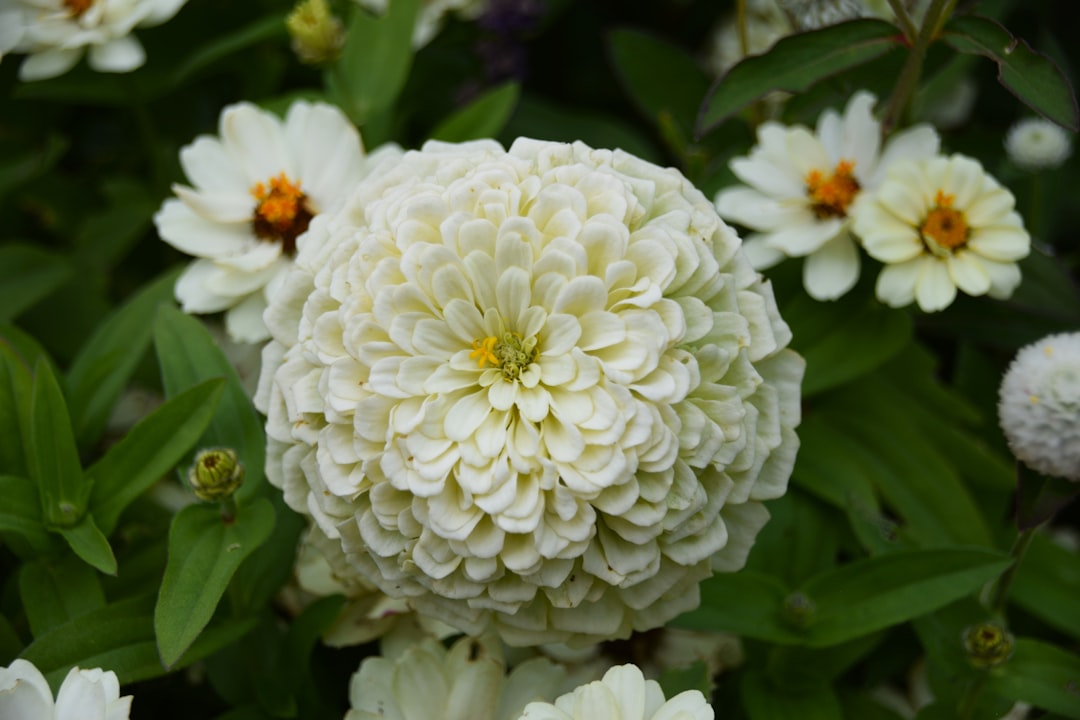
Most gardeners believe that buying the brightest, most expensive flowering perennials from a big-box nursery is the fast track to a backyard full of Monarchs and Swallowtails. It turns out, you are likely wasting your money on “sterile” cultivars that have been bred for looks rather than nectar quality. While those vibrant store-bought petunias look stunning to the human eye, many of them offer zero nutritional value to local pollinators. If you want a swarm of wings rather than a few lonely visitors, you have to pivot toward high-octane native “super-plants.” Here’s what the master lepidopterists actually say.
#13 — Goldenrod (Solidago)

Most people mistake this powerhouse for ragweed and pull it out of their garden immediately, thinking it’s the source of their fall allergies. In reality, Goldenrod is one of the most essential late-season fuel sources for migrating butterflies, especially the Monarch. It produces a massive amount of high-sugar nectar at a time when other flowers are already shriveled and dying.
While suburban gardeners favor manicured roses, experts know that a single Goldenrod cluster can support over 100 different species of pollinators. These plants are rugged, drought-resistant, and virtually impossible to kill once they take root. If you want a “lazy” garden that stays alive while you’re on vacation, this is your gold mine.
- It is a myth that Goldenrod causes hayweed; its pollen is too heavy to be wind-borne.
- The bright yellow plumes act as a literal landing strip for heavy-bodied butterflies.
You might think you need a massive bush to get these results, but wait until you see the “butterfly magnet” at #12…
#12 — Joe-Pye Weed (Eutrochium)

If there was a “king” of the summer meadow, this towering giant would wear the crown. Many homeowners avoid it because it can grow up to seven feet tall, but cutting it back in early June creates a bushier, more manageable plant with twice as many flowers. It produces massive, vanilla-scented clusters that act like an all-you-can-eat buffet for Tiger Swallowtails.
This plant is unique because it thrives in those soggy, “problem” areas of your yard where other flowers rot. Scientific observations show that butterflies will often bypass decorative hibiscus just to reach the concentrated nectar found in a single Joe-Pye flower head. It’s the ultimate high-volume nectar producer for those who have the vertical space.
- Ideal for rain gardens or low spots in the lawn.
- Consistently attracts the largest butterfly species in North America.
But if you want a plant that focuses on the “cradle” of the butterfly life cycle, you need to look at #11…
#11 — Common Milkweed (Asclepias syriaca)

You’ve heard the name, but most gardeners treat it like a common weed because it spreads through underground runners. However, buying “fancy” tropical milkweed at the store can actually harm butterflies by spreading parasites that don’t die off in the winter. The plain, old-fashioned Common Milkweed is the only biological “nursery” the Monarch butterfly can use to lay eggs.
Beyond being a host plant, the fragrance of its blooms is arguably the most intoxicating scent in the plant kingdom—often compared to lilacs and expensive honey. It is widely considered the single most important plant for the survival of the Monarch species. If you don’t have this, you aren’t running a butterfly garden; you’re just running a snack bar.
- Contains cardenolides which make the caterpillars toxic to predators.
- Produces a specialized “sticky” pollen that hitches a ride on butterfly legs.
The scent of milkweed is great, but the vibrant “landing pad” of #10 is what catches a butterfly’s eye from a mile away…
#10 — Zinnia (Zinnia elegans)
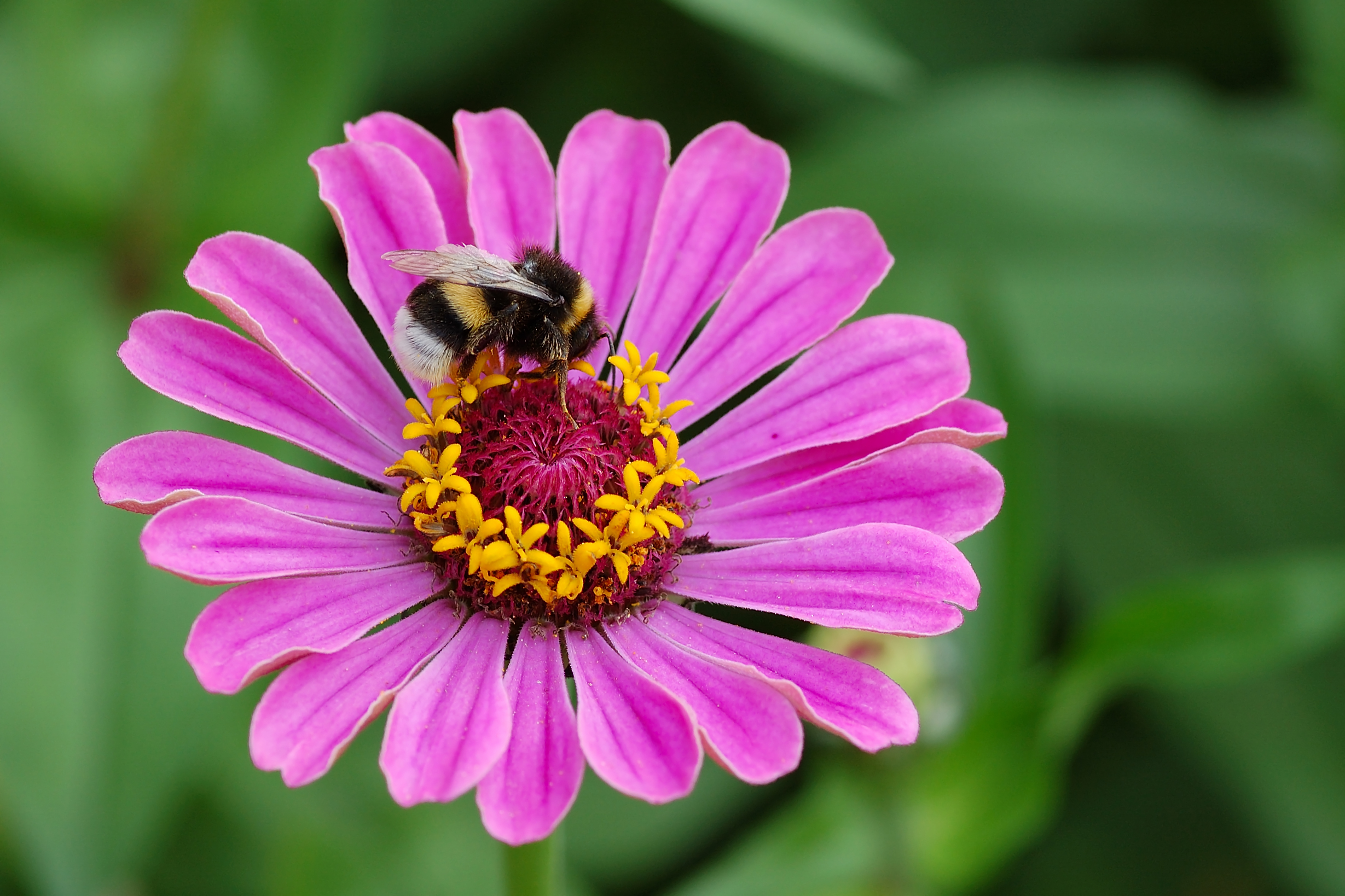
While we advocate for natives, the Zinnia is the one “store-bought” exception—if you get the right variety. Most people buy the short, “pom-pom” zinnias, but butterflies actually prefer the flat-topped “State Fair” or “Benary’s Giant” varieties. A flat surface allows a butterfly to rest its wings and feed without fighting the breeze, which is a major factor in how long they stay in your yard.
Zinnias are the ultimate “hack” for high-RPM gardening because they bloom harder the more you cut them. If you spend five minutes deadheading these on a Saturday, you’ll have triple the nectar production by Wednesday. They are the definition of high-yield, low-effort gardening that puts expensive nursery perennials to shame.
- Must be the “single” or “semi-double” flower type so nectar is accessible.
- One of the few plants that provides consistent color from July until the first frost.
As great as zinnias are for nectar, they can’t compete with the “electric” blue of our #9 entry…
#9 — Blue Mistflower (Conoclinium coelestinum)

Often called “hardy ageratum,” this plant looks like a fuzzy blue carpet that has been plugged into an electric socket. It is a secret weapon for late summer when the “summer slump” hits most gardens. Interestingly, male Queen and Monarch butterflies are chemically addicted to this plant because it contains alkaloids they need to produce pheromones to attract mates.
If you plant this, you won’t just see butterflies passing through; you will see them hovering and “dancing” around the blooms for hours. It spreads quickly, making it a “groundcover of choice” for those looking to eliminate their mulch bills entirely. It’s a literal pheromone factory disguised as a flower.
- The blue color is rare in nature and highly visible to pollinators.
- Thrives in partial shade, unlike 90% of other butterfly plants.
If you think a groundcover is impressive, wait until you see the iron-clad durability of #8…
#8 — Ironweed (Vernonia)

This is the plant for people who claim they have a “black thumb.” It is named Ironweed because its stem is virtually unbreakable and it can survive extreme heat and poor soil that would kill a rose bush in forty-eight hours. The intense, deep purple hue is a beacon for the Great Spangled Fritillary and other high-energy flyers.
While most store-bought flowers fade by mid-August, Ironweed is just getting started. It provides a critical protein-rich nectar that helps butterflies build the fat reserves they need for the long journey south. It’s not the “prettiest” plant in a traditional sense, but in terms of biological value, it’s a gold medalist.
- Grows in clumps, so it won’t “take over” your entire lawn.
- Matches perfectly with the yellow of Goldenrod for a stunning fall display.
But for sheer “volume” of visitors per square inch, you have to see #7…
#7 — Buttonbush (Cephalanthus occidentalis)
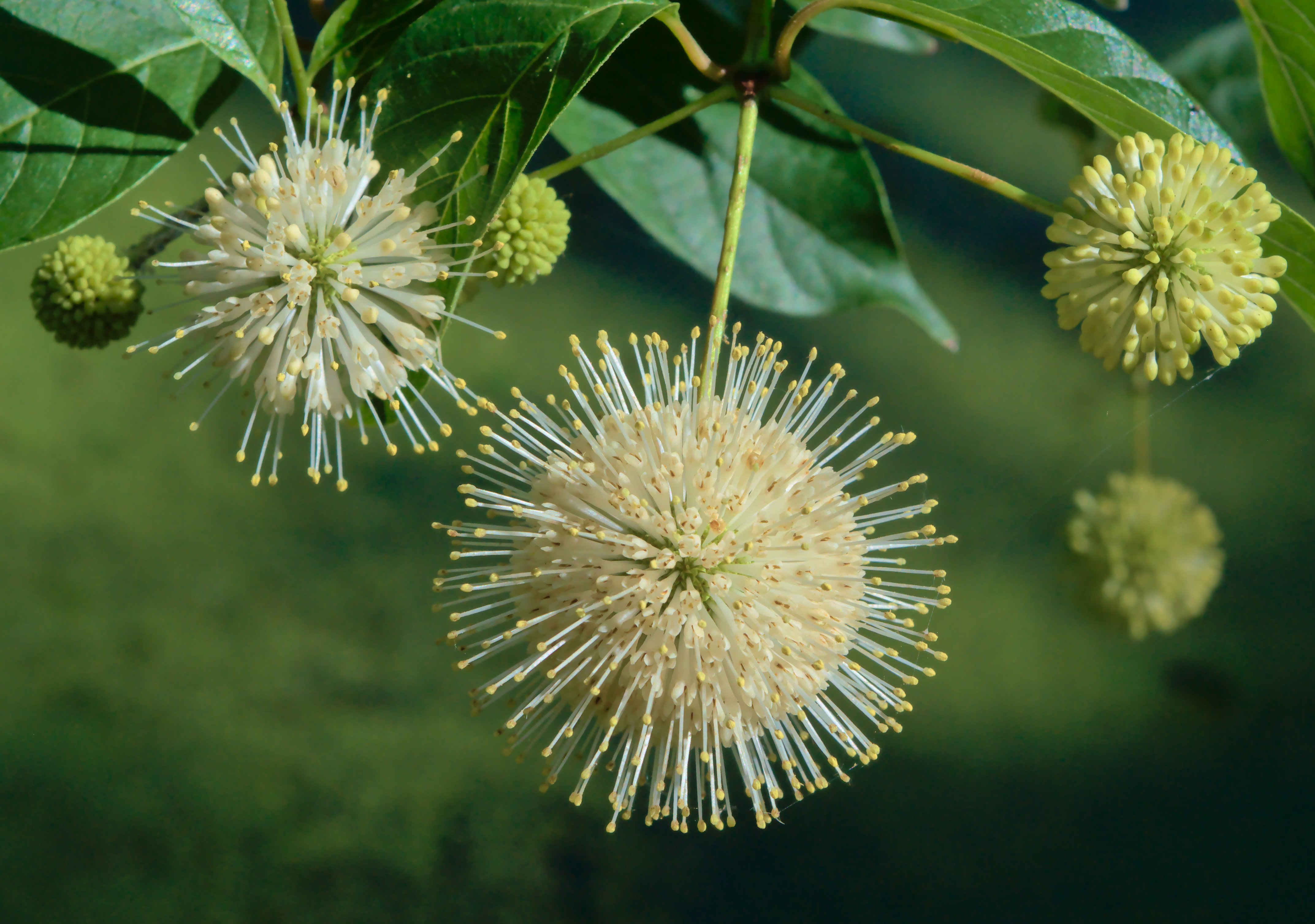
This isn’t just a flower; it’s a structural masterpiece. The blooms look like little white “pincushions” or white planets with tiny antennas sticking out. Each “pin” is actually a separate nectar tube, meaning dozens of butterflies can feed on one single flower at the exact same time without competing for space.
It is a water-loving shrub, making it the perfect choice for that “swampy” spot near your gutter spout. Experts argue that Buttonbush is the highest-rated shrub for biodiversity in the Eastern United States. If you have the space for a woody bush, this out-performs the popular (and invasive) Butterfly Bush ten to one.
- Flowers look like something out of a sci-fi movie.
- The seeds provide high-quality food for ducks and birds in the winter.
The “pincushion” look is unique, but the “cone” shape of #6 is a classic for a reason…
#6 — Purple Coneflower (Echinacea purpurea)

You probably know this one as a medicinal herb, but in the garden, it’s a high-retention powerhouse. The “cone” in the center is actually a collection of hundreds of tiny seed heads, which provides a sturdy, non-slip platform for butterflies to grip while they feed. This is crucial on windy days when flimsier flowers are tossing their guests around.
The mistake most people make is buying the “designer” colors like orange, lime green, or double-petaled varieties. These “fancy” echinaceas are often functionally sterile, offering no nectar to the insects. Stick to the native purple variety; it’s what the butterflies evolved to recognize over thousands of years.
- Extremely drought-tolerant once the root system is established.
- The dried seed heads attract Goldfinches in the autumn.
Purple is great, but butterflies are actually more “hard-wired” to see the color of #5…
#5 — Mexican Sunflower (Tithonia rotundifolia)

If you want to see a butterfly “frenzy,” plant Tithonia. This annual grows lightning-fast, reaching six feet in a single season. The flowers are a glowing, neon “safety orange” that acts like a lighthouse for pollinators. It is widely considered by bird-watchers and butterfly enthusiasts to be the #1 “emergency” food source.
What makes it special is the sheer volume of nectar it pumps out daily. While a petunia might have a few microliters of nectar, a Mexican Sunflower is relentlessly productive. You will often see three or four different species—from Painted Ladies to Clearwing Moths—battling for a spot on a single bloom.
- Requires almost zero fertilizer but needs full, blazing sun.
- The stems are hollow and “velvety,” adding a unique texture to the garden.
But wait until you see the “button” flowers of #4, which stay in bloom longer than almost anything else…
#4 — Blazing Star (Liatris)

This plant is a vertical marvel. Unlike most flowers that bloom from the bottom up, Liatris blooms from the top down, keeping the freshest nectar at the highest point where it’s most visible. It looks like a purple fuzzy wand, and it’s a favorite of the rare and beautiful Silver-spotted Skipper.
Liatris is a “corm,” which means it grows from a bulb-like structure that stores energy. This allows it to pop up earlier and stay later than many other perennials. It’s also a favorite for “cut flower” enthusiasts because the stalks stay fresh in a vase for over two weeks—though you’ll have to fight the butterflies to get them into the house.
- Takes up very little horizontal space, making it perfect for small patios.
- The “Kobold” variety is a dwarf version that won’t flop over in the rain.
Modern gardens are moving toward the “wand” look, but the “umbrella” shape of #3 is the ultimate landing pad…
#3 — Swamp Milkweed (Asclepias incarnata)

Don’t let the name fool you; it doesn’t need a swamp to survive. This is the sophisticated “cousin” of the Common Milkweed. It doesn’t spread aggressively, it smells like delicious vanilla chocolate, and it features beautiful clusters of pink flowers. It is the absolute “gold standard” for gardeners who want to save the Monarchs without having a “messy” looking yard.
Because it has narrower leaves than Common Milkweed, it actually provides a more hidden nesting site for tiny caterpillars, protecting them from predatory wasps. It’s the perfect marriage of aesthetic beauty and high-value ecological function. If you only plant one thing on this list, make it this.
- Will grow perfectly well in regular garden soil as long as it’s watered.
- Deer generally leave it alone because of the “milky” bitter sap.
We’re getting close to #1, but first, you have to see the “hidden” powerhouse at #2…
#2 — New York Aster (Symphyotrichum novi-belgii)

This is the “grand finale” of the butterfly season. When every other flower on this list has turned brown and gone to seed, the New York Aster explodes into a cloud of purple and blue. It provides the final “gas station” for butterflies before they begin their 3,000-mile migration or settle in for the winter.
The “insider secret” to these is to pinch them back in June to create a “mound” of hundreds of flowers. A single well-maintained Aster can have over 500 individual blooms at once. It is the highest-density nectar source available in the autumn months, period.
- Vital for late-season “overwintering” insects.
- Often survives the first few light frosts, extending your garden’s life.
And finally, the #1 plant that beats every store-bought flower in existence…
#1 — Wild Bergamot (Monarda fistulosa)

Commonly known as “Bee Balm,” this plant is the undisputed heavyweight champion of the pollinator world. Its flower structure is a circle of “tubes” that are perfectly shaped for a butterfly’s proboscis. It contains thymol, a natural antiseptic that actually helps pollinators stay healthy by fighting off bacteria and fungus.
Unlike the red “Beebalm” usually sold in stores—which is mostly for hummingbirds—the wild lavender/purple variety has a much higher nectar concentration. It’s rugged, it smells like Earl Grey tea, and it is a guaranteed magnet for every butterfly species in your zip code. If you want the “World Series” of butterfly gardens, this is your MVP.
- Its leaves can be used to make a soothing tea (it’s the source of Bergamot oil).
- Highly resistant to most common garden pests.
The Bottom Line
The truth is that our modern obsession with “perfect” looking nursery flowers has created a biological desert in our backyards. We spend hundreds of dollars on hybrid roses and double-petaled marigolds that offer nothing to the environment. By switching to these 13 native powerhouses, you aren’t just making your yard look better—you’re providing a critical lifeline for species that are currently in decline. It turns out, the “messy” plants our grandparents called weeds were actually the most valuable things in the garden all along.
Did we miss your favorite butterfly magnet? Do you think native plants or hybrids look better in a front yard? Drop your thoughts in the comments below!

- 25 Hummingbird-Friendly Garden Tips That Will Bring These Tiny Birds Back Again and Again - July 30, 2026
- 10 Most Powerful Native American Spirit Animals and What They Mean. - July 30, 2026
- 12 Signs of Stomach Ache in Dogs - July 30, 2026