

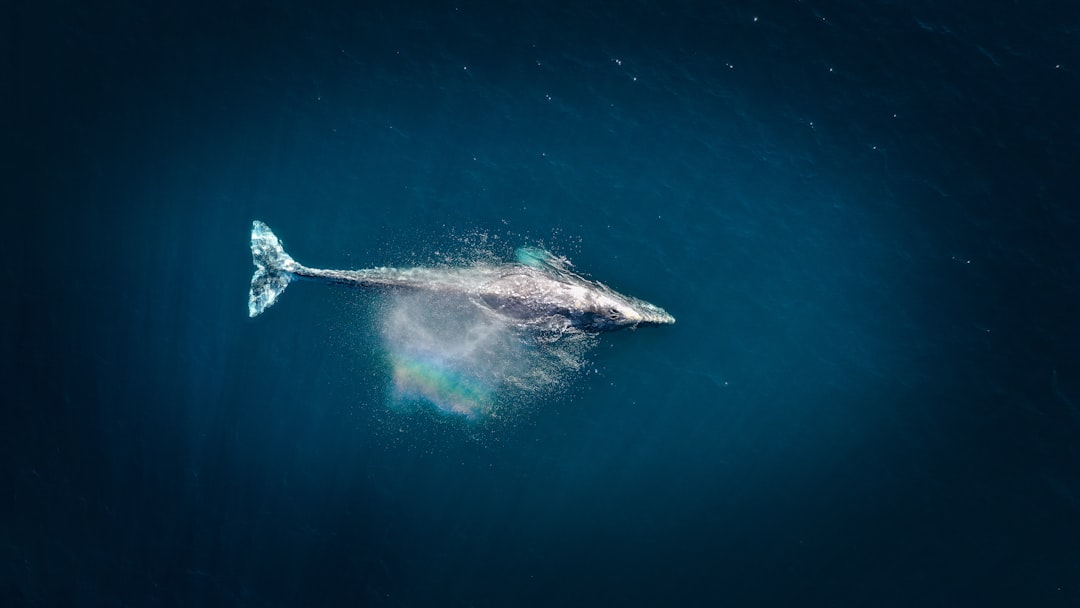
Researchers at the University of New South Wales in Sydney achieved a striking breakthrough in marine research. They built a deep learning model using only one blue whale song for training. That model now spots blue whale calls in ocean audio files with close to 100 percent accuracy, even across recordings that stretch back decades. The advance opens doors to analyzing massive archives that have sat largely untouched.
Training on the Bare Minimum
The core innovation lies in the model’s ability to generalize from minimal input. Deep learning systems usually demand thousands of examples to learn patterns reliably. Here, scientists fed the AI just a solitary blue whale song. Despite the sparse data, it delivered exceptional performance on diverse, long-term ocean recordings.
This success highlights shifts in artificial intelligence techniques. Traditional approaches falter with small datasets, often leading to overfitting or poor real-world results. The UNSW team’s method sidesteps those pitfalls. It suggests new possibilities for fields where samples prove scarce, like rare species monitoring.
Decades of Data Come Alive
Ocean recordings accumulate vast libraries of underwater soundscapes. These files capture whale calls amid noise from ships, waves, and marine life. Manually sifting through them takes years. The new detector automates the process with high precision, unlocking insights hidden in archives spanning multiple decades.
Accuracy nearing 100 percent means fewer false positives or misses. Researchers can now scan hours of audio in moments. This efficiency transforms how scientists handle bioacoustic data. Patterns emerge that manual review might overlook entirely.
Eyes on the Central Indian Ocean
The team set its sights on a specific trove: a 25-year dataset from the central Indian Ocean. Blue whales frequent these waters, their songs echoing across deep channels. Applying the detector there will chart how those calls have evolved over a quarter-century.
Such analysis reveals more than melody shifts. Song variations often signal cultural transmission among whale groups or responses to environmental pressures. The project promises detailed timelines of these acoustic behaviors. Findings could inform broader understandings of whale populations in the region.
A Model for Future Marine Studies
This work sets a precedent for low-data AI in ecology. Other elusive species might benefit from similar detectors. Scarce vocalizations no longer pose barriers to study. Researchers gain tools to probe remote oceans without endless fieldwork.
Plans extend beyond initial tests. The UNSW group eyes wider applications for the technology. As datasets grow, so does potential for discovery. One song proved enough to start; scaled up, it could redefine ocean listening.
Key Advance: Near-100% accuracy from single-sample training.
Target Dataset: 25 years of central Indian Ocean recordings.
Goal: Track evolution in blue whale songs over time.

- Urban Coyotes Show Remarkable Adaptability, Learning to Thrive in City Environments - July 22, 2026
- Beavers Are Nature’s Engineers, Creating Vital Habitats for Other Wildlife Species - July 21, 2026
- The Recovery of the California Condor Offers Hope for Other Critically Endangered Birds - July 21, 2026