

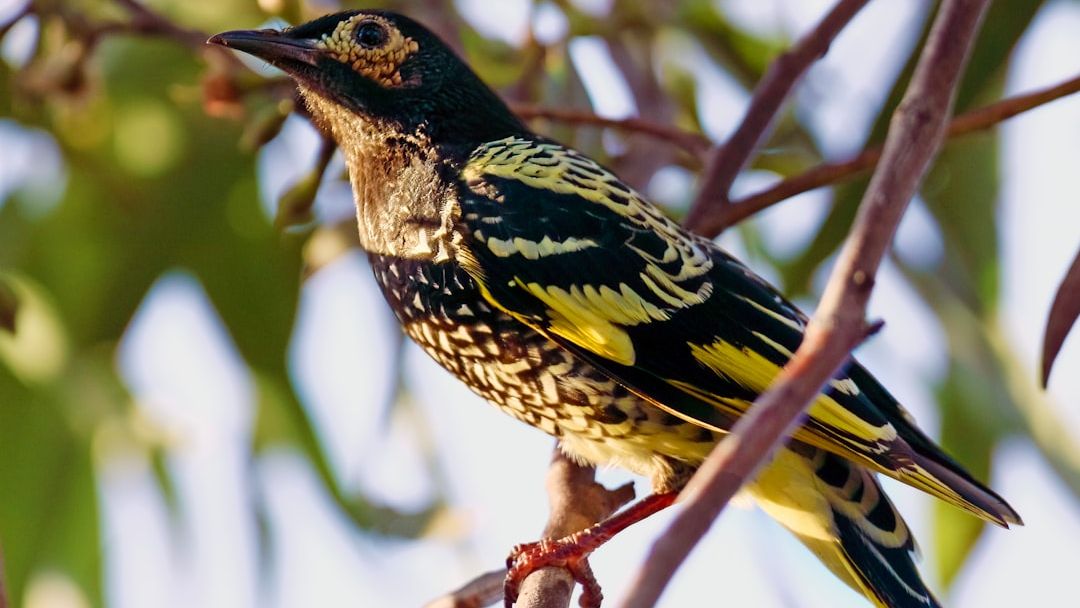
Australia’s woodlands harbor striking wildlife, yet internal pressures now endanger one of its rarest birds. The regent honeyeater, a black-and-yellow gem with fewer than 300 individuals remaining in the wild, faces heightened extinction risks from predation by native possums and gliders. Researchers recently demonstrated that even infrequent nest raids by these mammals could accelerate the bird’s decline by 35% over the next two decades.
A Once-Abundant Bird on the Brink
The regent honeyeater once dominated southeastern Australia’s flowering woodlands in massive flocks. These birds, known for their vibrant plumage and role in pollination, thrived amid eucalypt blooms. European settlement changed that trajectory dramatically.
Land clearing for agriculture and urban expansion wiped out roughly 80% of temperate woodlands, the bird’s primary habitat. Competition from more aggressive honeyeaters compounded the losses. Today, conservation efforts track a population hovering near collapse, classified as critically endangered.
Surprising Predators in the Canopy
Possums and gliders, beloved native mammals, typically pose little threat to bird populations. These arboreal creatures coexist with prey through long-evolved balances. Sugar gliders and squirrel gliders glide through nights, while possums forage broadly.
Diminished habitat disrupts this equilibrium. With regent honeyeater numbers so low, sporadic predation on eggs and nestlings delivers outsized impacts. Camera traps and field observations confirmed these mammals occasionally raid nests, a behavior not previously seen as extinction-driving.
Modeling the Dire Impact
A new study modeled predation scenarios to quantify the danger. Researchers examined how possum and glider attacks affect population viability. Without such predation, the regent honeyeater’s trajectory remained precarious but stable over 20 years.
Even occasional incidents shifted projections sharply. The analysis showed a 35% higher extinction probability within two decades. This threshold effect underscores vulnerability when numbers dip below critical levels, such as the current fewer than 300 birds. Earlier in the 1990s, around 1,000 individuals buffered against similar pressures.
Conservation’s Ethical Tightrope
Managing native-on-native conflicts presents profound challenges. Squirrel gliders themselves face threats in several states, creating competing priorities. Culling invasive species like cats and foxes draws broad support, but targeting natives sparks debate.
Lethal control remains the primary tool against nest predators, yet public resistance looms large for charismatic species. Doing nothing risks permanent loss of the regent honeyeater. Balanced approaches must weigh short-term interventions against ecosystem health.
Restoring Balance Through Habitat Recovery
Woodland restoration offers a foundational solution. Governments and organizations already plant native trees and shrubs to revive breeding sites. These efforts aim to bolster food sources and nesting options for the honeyeater while supporting broader wildlife.
Success demands patience, as mature woodlands take years to develop. Supplementary measures, like captive breeding and releases, pair with predator management in targeted areas. Ongoing monitoring refines strategies amid climate pressures and ongoing land use changes.
- Prioritize large-scale revegetation in key southeastern regions.
- Deploy non-lethal deterrents, such as nest guards, where feasible.
- Enhance genetic diversity through careful reintroductions.
- Integrate community involvement to build support for tough decisions.
Australia’s unique biodiversity hangs in the balance. The regent honeyeater’s plight reveals how habitat loss amplifies unforeseen threats. Coordinated action now could avert tragedy and preserve this woodland icon for future generations.
