

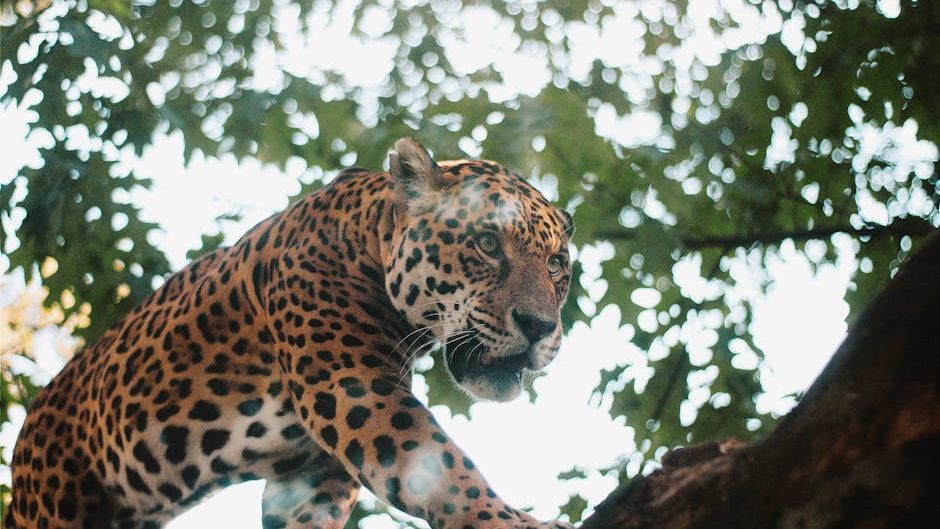
Brazil’s Atlantic Forest, one of the world’s most threatened biomes, harbors fewer than 300 jaguars, its apex predators.[1]
A recent study by Brazilian researchers exposed a critical vulnerability: prey populations have dwindled to unsustainable levels even within protected areas that cover about 15 percent of the region spanning Brazil’s South, Southeast, and Northeast, along with parts of Argentina and Paraguay.[1]
This hidden collapse underscores why conservation strategies must evolve beyond mere habitat designation, as food scarcity now rivals habitat loss and poaching as a primary threat to the species’ survival.[1]
Revealing the Prey Shortfall Through Camera Traps
Researchers conducted camera trap surveys across nine protected areas to measure prey abundance and biomass, focusing on species essential to jaguar diets.[1]
They identified 14 prey species, including peccaries, agoutis, wild pigs, and deer, many of which showed alarming declines.[1]
The findings, published in Global Ecology and Conservation, indicated that large and medium-sized prey – vital for sustaining jaguars – had biomass levels too low in many zones to support viable predator populations.[1]
“We found an alarming situation of low abundance of key prey species for the jaguar even in protected areas of the Atlantic Forest,” stated Katia Ferraz, one of the lead researchers.[1]
Stark Contrasts Between Regions
Prey availability varied dramatically across the biome, with the Green Corridor standing out as a relative stronghold.[1]
In this connected network of protected areas, prey biomass reached 638 kilograms, sufficient to maintain persistent jaguar groups.[1]
Coastal regions like Serra do Mar told a different story, where biomass plummeted to just 8.2 kilograms and jaguars appeared absent or exceedingly rare.[1]
| Region | Prey Biomass (kg) | Jaguar Presence |
|---|---|---|
| Green Corridor | 638 | Persistent populations |
| Serra do Mar (coastal) | 8.2 | Absent or rare |
Lower altitudes in areas like Iguaçu National Park also correlated with higher prey numbers, highlighting how geography influences outcomes.[1]
Human Access Fuels the Decline
Illegal hunting emerged as a dominant factor, with humans targeting both jaguars and their prey.[1]
Protected areas nearer to urban centers, villages, or accessible terrain suffered the most, as increased human presence depleted peccaries, wild pigs, and deer.[1]
“Areas with greater prey availability… are also those where jaguars persist. Where the prey base is very limited, jaguar populations tend to be absent or extremely small,” Ferraz explained.[1]
This pattern linked directly to hunting pressure, compounding traditional threats like habitat fragmentation.[1]
Success Stories Offer a Blueprint
Not all news proved dire. In Iguaçu National Park, targeted interventions reversed a near-extinction trajectory.[1]
The jaguar count there rose from nine to 11 individuals in 2009 to nearly double over the ensuing 15 years, thanks to the Iguaçu Jaguar Project’s focus on research, anti-poaching measures, reduced human access, and community outreach.[1]
“Jaguars here… were nearly extinct,” recalled Yara Barros of the project. “Hunting poses a major threat because people often enter the forest to hunt the animal’s prey and end up killing it as well.”[1]
These efforts demonstrated that controlling access and fostering coexistence could rebuild prey bases and stabilize predator numbers.[1]
What Matters Now
- Protected areas alone cannot stem prey loss without strict hunting controls.
- Connected landscapes like the Green Corridor provide models for persistence.
- Replicating projects such as Iguaçu’s across borders with Argentina and Paraguay holds promise.
The Atlantic Forest risks becoming the first biome to lose its top predator entirely unless managers prioritize prey recovery alongside habitat protection.[1]
With fewer than 300 jaguars remaining, sustained action on human-wildlife interfaces offers the best chance to avert this outcome and preserve ecosystem balance for future generations.[1]

- Urban Coyotes Show Remarkable Adaptability, Learning to Thrive in City Environments - July 22, 2026
- Beavers Are Nature’s Engineers, Creating Vital Habitats for Other Wildlife Species - July 21, 2026
- The Recovery of the California Condor Offers Hope for Other Critically Endangered Birds - July 21, 2026