

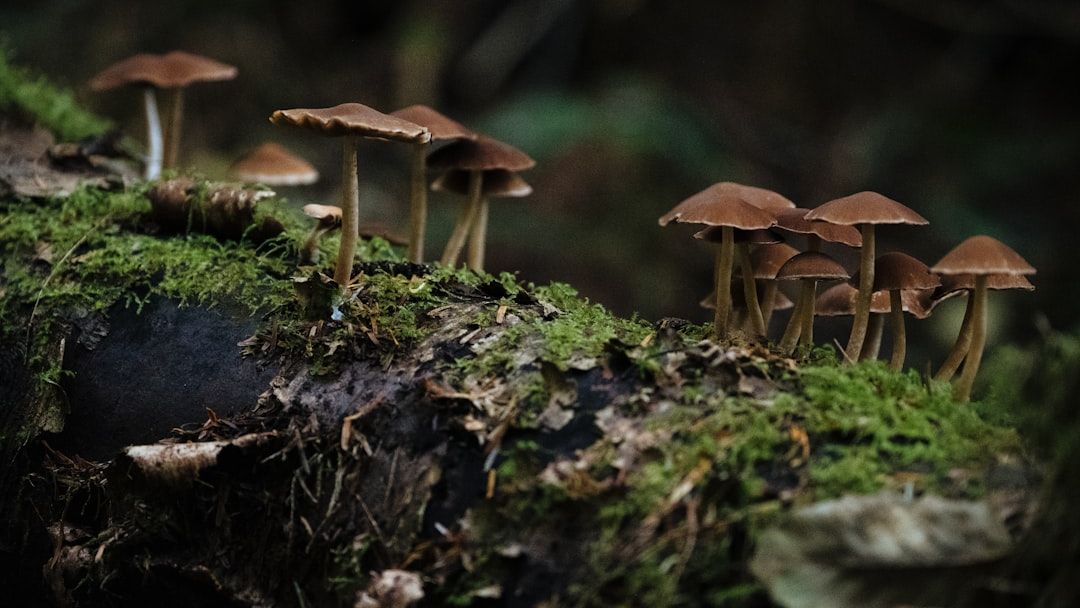
Deep in the soil, certain fungi quietly secrete proteins that defy water’s reluctance to freeze. These microscopic agents can trigger ice formation at temperatures far warmer than expected, hitching rides on wind currents into the atmosphere where they may help form raindrops and snowflakes. A recent study uncovered the surprising origin of this power: a gene lifted from bacteria through an ancient exchange of genetic material.[1][2]
A Surprising Discovery in Fungal Genomes
Scientists examining the genomes of two fungal strains from the Mortierellaceae family stumbled upon genes encoding ice-nucleating proteins, or INPs. One strain came from a lichen, the symbiotic partnership between fungi and algae that clings to rocks and trees. These proteins enable water to freeze at around 23 degrees Fahrenheit, or minus 5 degrees Celsius – much higher than the typical threshold for pure water.
Lead researcher Boris Vinatzer and his team pinpointed a candidate gene by searching for sequences that matched the size and secretion signals of known bacterial INPs. To test it, they inserted the fungal DNA into yeast cells. The yeast promptly gained the ability to nucleate ice, confirming the gene’s function. “We confirmed that that particular [DNA] fragment actually makes ice nucleation proteins,” Vinatzer told reporters.[1]
Horizontal Gene Transfer: The Bacterial Connection
The fungal gene proved nearly identical to InaZ, a sequence from the plant-pathogenic bacterium Pseudomonas syringae. This bacterium deploys INPs on its cell surface to damage plant tissues by prompting frost formation. Researchers concluded that an ancestral fungus acquired the gene via horizontal gene transfer, or HGT – a process where DNA moves directly between unrelated organisms, bypassing reproduction.
Such transfers occurred millions of years ago, likely when fungi and bacteria shared soil habitats. The fungi integrated and adapted the gene for their own use, secreting the proteins freely into the environment rather than anchoring them to cells. This evolutionary borrow remains puzzling, however. “We really have no idea so far,” Vinatzer admitted regarding any survival advantage for the fungi.[1]
From Microbes to Meteorological Force
INPs kickstart ice nucleation, the initial step where supercooled water droplets in clouds transform into crystals. These crystals grow by attracting more moisture, eventually falling as precipitation. Fungi release vast numbers of these proteins – one individual can generate many nuclei – potentially outnumbering bacterial contributions in the atmosphere.
Wind and evaporation lift the proteins skyward, where they join the water cycle. In lichens, for instance, the proteins might create morning frost that melts to supply daytime hydration. “On mornings when there is high humidity and low temperatures, the fungal proteins can trigger a frost on the lichen that then melts and provides water later in the day,” Vinatzer explained. This mechanism hints at fungi’s outsized role in cloud seeding, possibly surpassing bacteria that have long dominated such discussions.[1]
Unlike bacterial INPs, which stay membrane-bound, fungal versions disperse widely, enhancing their reach. Studies already detect bacteria like P. syringae in rainwater, underscoring microbes’ weather influence. Fungal INPs could amplify this effect across ecosystems, from forests to farmlands.
Implications for Climate and Human Applications
The findings, detailed in Science Advances, elevate fungi as key players in precipitation processes.[2] Their proteins might help explain rainfall patterns and ecosystem water dynamics. Vinatzer suggested fungi could prove “more important than bacteria in influencing the weather.”[1]
Key Implications:
- Fungal INPs freeze water at warmer temperatures, aiding cloud formation.
- Potentially greater atmospheric abundance than bacterial versions.
- Possible evolutionary role in lichen hydration, though benefits unclear.
- Prospects for eco-friendly cloud seeding over silver iodide.
Cloud-seeding operations currently rely on silver iodide, a compound with toxicity concerns. Fungal proteins offer a biological alternative. “These proteins could be an alternative to toxic silver iodide. If we can figure out how to produce them, why not use them instead?” Vinatzer proposed. Scaling production remains a challenge, but the discovery sparks interest in microbial weather modifiers.
This revelation bridges microbiology and meteorology, reminding us that life’s smallest actors shape the skies. As research progresses, scientists may unravel not just how fungi nudge the weather, but why they evolved to do so.

- Urban Coyotes Show Remarkable Adaptability, Learning to Thrive in City Environments - July 22, 2026
- Beavers Are Nature’s Engineers, Creating Vital Habitats for Other Wildlife Species - July 21, 2026
- The Recovery of the California Condor Offers Hope for Other Critically Endangered Birds - July 21, 2026