

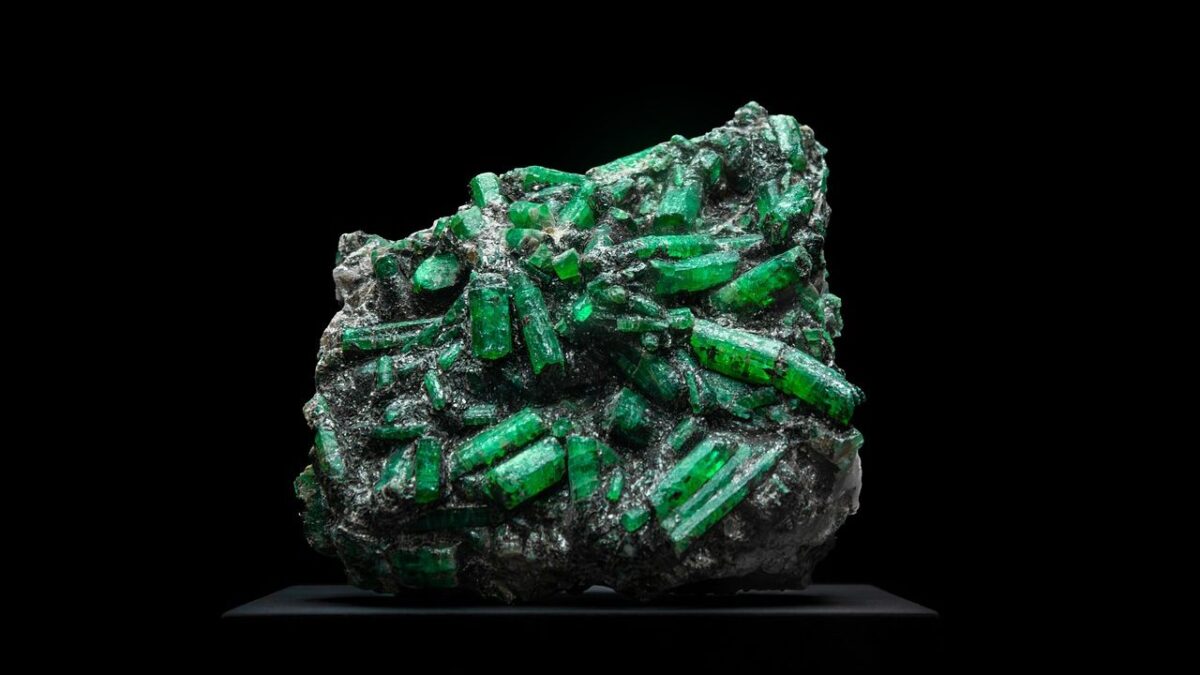
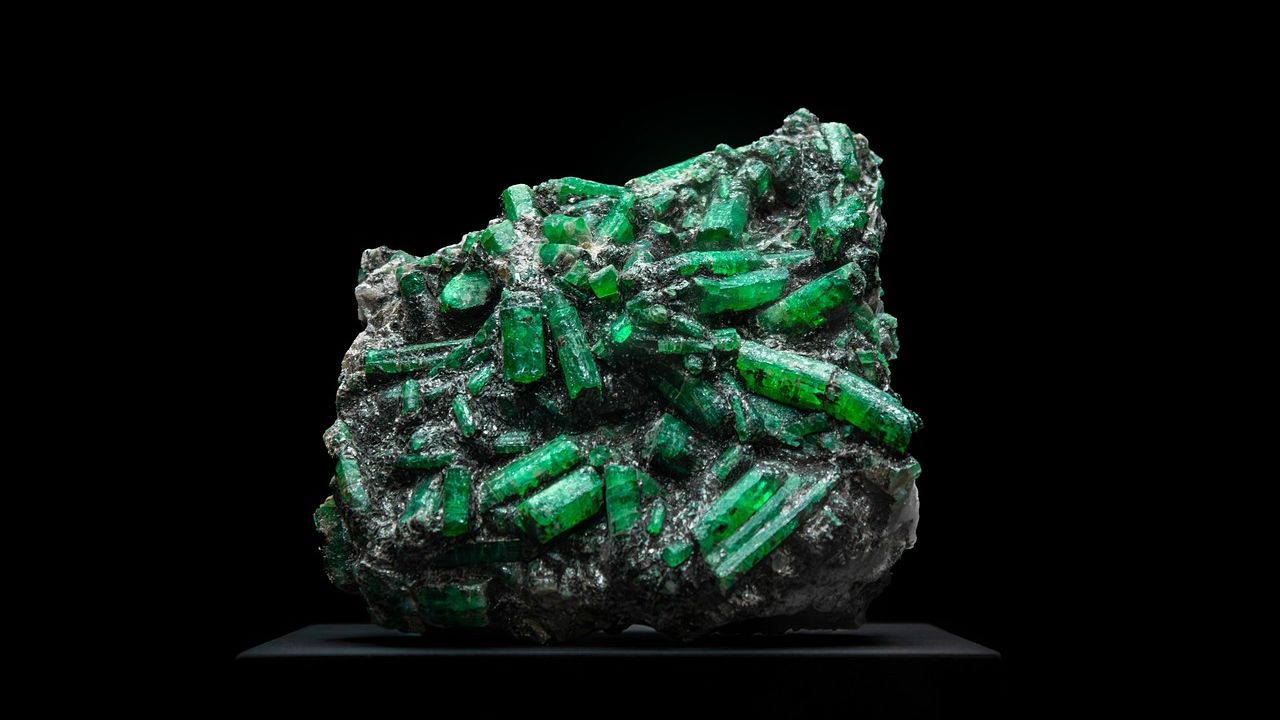
May birthstone: The magnificent green emerald – Image for illustrative purposes only (Image credits: Pixabay)
For May birthdays, the emerald emerges as a striking emblem of renewal and prestige. This lush green stone, prized for its vivid hue, traces its allure back thousands of years across continents. Celebrated in jewelry and lore alike, emeralds continue to enchant with their natural imperfections and storied past.
The Mineral Magic Behind the Color
Emeralds form part of the beryl mineral group, sharing lineage with gems like aquamarine, heliodor, and morganite. These crystals exhibit a distinctive six-sided symmetry, composed primarily of beryllium, aluminum, silicon, and oxygen. The signature green shade arises from traces of chromium or vanadium substituting for aluminum within the structure.
Natural emeralds often appear in shale formations that have endured intense pressure and heat, leading to recrystallization. Their color fades under extreme heat, a trait that underscores their delicate nature. Collectors value stones around five carats or larger for their rarity and clarity, though inclusions are commonplace and even celebrated as hallmarks of authenticity.
Ancient Empires and Emerald Obsession
Records of emeralds stretch to antiquity, with the Greek term smaragdos encompassing various green gems. Rulers in Babylon and Egypt adorned themselves with these treasures. Cleopatra, during her rule from 51 to 30 BCE, reportedly favored emeralds sourced from mines near Egypt’s Red Sea.
Those Egyptian sites yielded tools from even earlier eras, including the time of Ramesses II, who governed for 66 years starting in 1279 BCE. Such longevity in mining highlights the gem’s enduring appeal. European nobility later embraced emeralds, weaving them into crowns and regalia that symbolized power and prosperity.
- Aquamarine: March birthstone, pale blue.
- Heliodor: Golden yellow beryl.
- Morganite: Soft orange-pink tones.
South America’s Hidden Emerald Empires
Spanish conquistadors encountered emeralds in South America during the late 1400s, marveling at indigenous leaders’ ornate displays. One iconic piece, the Crown of the Andes, features roughly 450 emeralds totaling 1,523 carats from the collection of Atahualpa, Peru’s final Inca ruler. Conquerors seized vast quantities, yet pinpointing the origins proved challenging.
Discovery came in 1537 at Colombia’s Chivor mine, followed by the takeover of Muzo after battles with local Muzo people. Muzo operations persist today, renowned for yielding superior quality stones. These sites transformed global gem trade, funneling emeralds to Europe and beyond.
Global Hunts and Modern Mimics
Russia entered the emerald saga in 1830 when a peasant unearthed crystals along the Ural Mountains’ Tokovaya River. The discovery prompted a rush and state mining by 1831. In the United States, North Carolina produces emeralds commercially.
Other deposits span Zambia, Brazil, Pakistan, Norway, Austria, India, Madagascar, and Australia. German scientists pioneered synthetic emeralds before World War II, with U.S. advancements in 1946 yielding high-quality replicas. Glass imitations also flood markets, challenging buyers to discern genuine from crafted.
Perfect emeralds rank among the scarcest gems, their flaws telling tales of geological drama. May celebrants embrace this birthstone not just for its beauty, but for the rich human history embedded in every facet.

As a little kid, I fell in love with nature, wildlife, and animals. Living in the USA, South Africa, Italy, China and Germany gave me the opportunity to discover the world's Wildlife. My favorite animals are Mountain Gorillas, Siberian Tigers, and Great White Sharks.
I'm a certified PADI Open Water Diver, went to Everest Base Camp and Trekked Gorillas in Uganda. I hold a Master of Science in Economics and Finance.
Please send any feedback to feedback@animalsaroundtheglobe.com
- 15 Sharks That Do Not Deserve Their Bad Reputation - July 21, 2026
- 11 Creatures That Can Survive a Nuclear Blast - July 21, 2026
- 10 Animals That Embody the Zodiac Sign of Capricorn - July 21, 2026