

There’s a moment that happens to a lot of dog owners. They’re sitting in a vet’s waiting room, holding an estimate sheet, and their heart kind of sinks. The number on the page looks nothing like what they’d budgeted for when they picked out that adorable puppy months ago. Nobody at the pet store mentioned this part.
From extensive training in the puppy stages to hereditary health issues that could drain your savings, the true cost of owning certain dogs is more complicated than just looking at the price to bring them home. The sticker price on a puppy is honestly the least of your financial worries with some breeds. What follows is what the sales pitch tends to leave out entirely.
#1. French Bulldog

French Bulldogs have spent years near the top of the popularity charts, but their cuteness comes packaged with a surprisingly long list of medical vulnerabilities. They are prone to several health issues, including brachycephalic airway syndrome, hip dysplasia, allergies, cherry eye, and spinal disorders. These aren’t rare occurrences that only affect unlucky dogs. For many Frenchies, they’re practically a given.
Owners should plan for roughly $600 to $1,000 per year in pet insurance, with potential surgeries or treatments costing several thousand dollars over the dog’s lifetime. Because they have a hard time breeding, you’ll probably need a veterinarian’s help for your Frenchie to get pregnant and deliver a puppy. That means the bills start long before you even bring a puppy home.
#2. English Bulldog

The English Bulldog is a breed beloved for its distinctive wrinkled face and stocky build, but these same characteristics can lead to a host of health problems. Respiratory issues, skin infections within the folds, hip dysplasia, and heart conditions are prevalent among Bulldogs. Due to their brachycephalic flat-faced nature, they often require special attention to their breathing and may need surgical interventions to improve airway function.
They can only be bred through artificial insemination and must be delivered by cesarean section. These additional vet costs are what make these puppies so expensive even before the chronic health management begins. The combination of these health problems, along with their relatively short lifespan of around 8 to 10 years, means that owning an English Bulldog can be costly in terms of veterinary care.
#3. Rottweiler

The breed is extremely susceptible to almost every single disease and/or cancer for dogs, especially hip and joint issues, which is why their pet insurance claims are the highest among any other breed. That’s a striking reality for what many people assume is a simply robust, tough dog. The image doesn’t always match the medical reality.
Rottweilers are prone to several health concerns, including hip and elbow dysplasia, heart disease, cruciate ligament injuries, and certain cancers. Responsible owners should plan for $500 to $800 per year in pet insurance, along with the possibility of orthopedic or cardiac treatments that may reach several thousand dollars over the dog’s lifetime. On a detailed short list of dogs with the highest average insurance claims, Rottweilers placed first with an average claim amount of $567.53.
#4. Great Dane

One of the most serious conditions affecting Great Danes is gastric dilatation-volvulus, commonly known as bloat, which is a life-threatening condition requiring emergency surgery. Great Danes are also prone to hip dysplasia and osteosarcoma, a type of bone cancer that is particularly aggressive in large breeds. Additionally, heart issues like dilated cardiomyopathy are common in Great Danes and require ongoing treatment. These health concerns can lead to substantial veterinary bills, making Great Danes one of the breeds with the highest healthcare expenses.
The cost to treat bloat could be $8,000 or more. Sometimes, vets may perform preventive gastropexies on at-risk dogs when they spay or neuter them, which can cost less than an emergency GDV surgery. Their short lifespan, averaging 7 to 10 years, also means that Great Danes often require more frequent veterinary care as they age. You get a shorter time with them and a longer list of potential expenses along the way.
#5. Cavalier King Charles Spaniel

The Cavalier King Charles Spaniel is renowned for its affectionate nature and beautiful, expressive eyes. However, this breed is prone to several costly health issues. Chief among these is Mitral Valve Disease, a heart condition that often requires ongoing treatment and can lead to expensive surgeries. Additionally, Cavaliers are susceptible to syringomyelia, a severe condition where cavities or cysts form within the spinal cord near the brain. Managing syringomyelia can involve medication, surgery, and regular veterinary visits, contributing to higher overall healthcare costs.
Management of Mitral Valve Disease is not a one-off veterinary visit. It is a lifelong commitment to monitoring. Owners must budget for repeat heart checks for their dog, which include echocardiograms and Doppler studies performed by cardiology specialists. These medications are not cheap, and they are required daily, often increasing in dosage as the disease progresses. When you calculate these costs over five to seven years, the cumulative figure can be staggering.
#6. Bernese Mountain Dog

Bernese Mountain Dogs have the highest annual cost on many breed-cost lists, driven by an unusually high cancer rate. Histiocytic sarcoma, rare in most breeds, is distressingly common in Berners. Combined with large size and a short 7 to 10 year lifespan, owners who don’t budget for cancer treatment often get blindsided.
Bernese Mountain Dogs are large, fluffy companions known for their gentle demeanor. However, they have a relatively short lifespan, partly due to their susceptibility to cancer, hip and elbow dysplasia, and autoimmune diseases. These health issues require extensive medical care, including surgery, chemotherapy, and ongoing treatments, which contribute to the breed’s high healthcare expenses. Bernese Mountain Dogs had the second-highest average insurance claims at $412.85, trailing only Rottweilers in pet insurance claim data.
#7. Mastiff (English Mastiff)
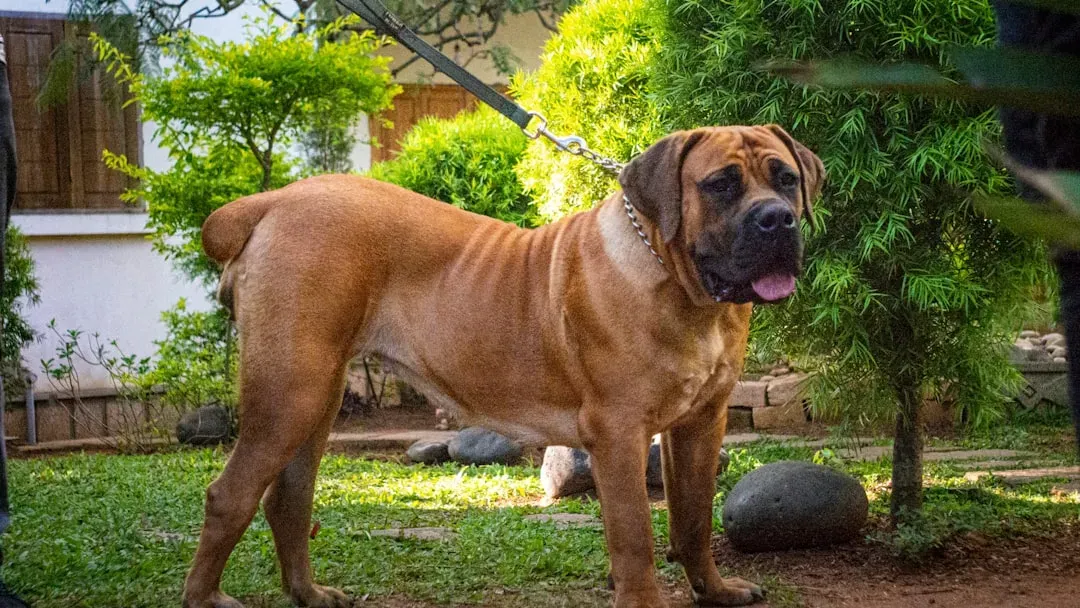
Mastiffs have the most expensive pet insurance of any breed, averaging $2,546 annually. This is 264% higher than the national average premium of $700 per year. That statistic alone tells you something important. When insurers price something that far above average, they’re responding to real claims data.
While Mastiffs are large, gentle dogs known for their protective nature and make good pets for families, they’re prone to numerous health issues that make them more expensive to insure, including hip dysplasia, eye issues such as cataracts, and even cancer. Their enormous size means everything costs more – from medication dosages to surgery complications. Mastiffs are prone to bloat, hip dysplasia, heart problems, and a condition called wobbler syndrome that affects their spine. Recovery times are longer, medication doses are higher, and surgical risks are greater.
#8. Bernese Mountain Dog’s Close Cousin: The Newfoundland

Newfoundlands are large, gentle giants known for their sweet nature, but their size and breeding predispose them to several costly health problems. One of the most common issues is hip dysplasia, which can lead to arthritis and mobility problems, often requiring surgery. Additionally, Newfoundlands are prone to heart conditions like subvalvular aortic stenosis, a genetic disorder that can lead to heart failure. Their large size also puts them at risk for bloat, which requires immediate emergency surgery. The combination of these health issues means that Newfoundlands often incur high veterinary expenses throughout their lives.
Known for their gentle disposition, Newfoundland puppies come with costly health risks: their large, heavy build often leads to increased treatment costs for injuries and chronic conditions, they are commonly affected by hip and elbow dysplasia and congenital heart murmurs, and their lifespan rarely exceeds 10 years. Based on claims filed by Embrace Pet Insurance, Newfoundlands ranked among the five breeds with the highest vet bills overall.
#9. German Shepherd

German Shepherds are renowned for their intelligence, loyalty, and versatility but are also predisposed to various health issues that can lead to high veterinary costs. This breed is particularly susceptible to hip and elbow dysplasia, a genetic condition that affects the joints and can lead to arthritis or mobility issues, often requiring expensive surgeries. German Shepherds can also suffer from degenerative myelopathy, a progressive disease of the spinal cord, and bloat, a life-threatening condition that requires emergency veterinary care.
If a German Shepherd goes untreated for knee and hip dysplasia, these conditions could cost between $1,500 and $6,000. German Shepherds are more likely to develop degenerative myelopathy, a progressive neurological disease that impacts the hind legs. If you notice your dog is limping, losing muscle in their hind legs, or struggling to stand, contact your veterinarian to get them checked out. While there is no cure, some cases can be monitored with supplements. The breed’s stoic nature often means problems go undetected until they’ve progressed significantly.
#10. Irish Wolfhound

The majestic Irish Wolfhound, known for its towering height and gentle nature, has a predisposition for heart disease, particularly dilated cardiomyopathy, which can result in costly treatments and monitoring. Their large size also makes them susceptible to bone cancer, hip dysplasia, and bloat, a life-threatening emergency that requires immediate surgery. Despite their noble demeanor and loving companionship, the breed’s health issues can lead to significant veterinary bills over their unfortunately short lifespan.
Irish Wolfhounds are large dog breeds and their upkeep costs are substantial. If not properly managed, most of their short lifespan can be spent battling heart diseases and osteosarcoma. Feeding and grooming an Irish Wolfhound is also expensive due to their massive size, dietary needs, and wiry coat. They’re one of those breeds where the love is enormous and, regrettably, so are the bills.
#11. Chow Chow

Known for its distinctive lion-like looks and thick fur, the Chow Chow often encounters chronic health issues such as autoimmune diseases and eye conditions. Their maintenance costs are significant due to medical and grooming needs associated with this uniquely temperamental breed. Their predisposition to hip dysplasia, elbow dysplasia, and bloat come with expensive veterinary bills.
You’ll rack up the bills for food, treats, vet bills, grooming, and health issues, which can total around $11,000 for their life. They require a decent amount of regular exercise, such as four or more walks per day. Without regular daily exercise, health issues can increase, as well as the vet costs. The Chow Chow is a visually striking dog, but striking doesn’t come cheap when health problems enter the picture.
#12. Boxer

Boxers are known for their playful and energetic nature, but they are also prone to a range of health problems that can lead to high veterinary bills. One of the most common issues is cancer, particularly mast cell tumors and lymphoma. Boxers are also at risk for heart conditions such as cardiomyopathy, which requires regular monitoring and treatment. Additionally, Boxers can suffer from hip dysplasia and degenerative myelopathy, a progressive neurological disease that leads to paralysis. These health concerns mean that Boxers often require specialized care and treatment, contributing to their high healthcare expenses.
Boxers are a popular breed known for their playful and energetic nature, but they are also prone to a range of health issues that can result in high veterinary costs. Boxers are particularly susceptible to various types of cancer, including mast cell tumors and lymphoma, which often require expensive treatments such as surgery, chemotherapy, and radiation. They are also prone to heart conditions, such as aortic stenosis and cardiomyopathy, which may require ongoing treatment and monitoring. Many Boxer owners discover these realities only after they’re already deeply attached.
#13. Saint Bernard

Saint Bernards are large, gentle giants known for their friendly nature and history as rescue dogs in the Swiss Alps. However, their large size and specific genetic predispositions make them prone to several health issues that can lead to significant veterinary bills. Saint Bernards are particularly susceptible to hip and elbow dysplasia, which may require costly surgeries or long-term management with medications and physical therapy. They are also at risk for bloat, a condition that requires emergency surgery and can be fatal if not treated promptly.
Additionally, Saint Bernards are prone to eye problems, such as entropion and ectropion, which may require surgical correction. The combination of these health issues, along with their large size and short lifespan, makes Saint Bernards a breed with potentially high medical expenses. Larger breeds usually cost more to insure for a few reasons: higher vet bills, since bigger dogs mean bigger doses and more expensive equipment, and increased joint issues, to name a few. Saint Bernards check every one of those boxes.
#14. Dachshund

Dachshunds, with their long backs and small legs, can be prone to intervertebral disc disease. They may also be at a higher risk for seizures, dental problems, and obesity. The Dachshund is living proof that small dogs can carry surprisingly large vet bills. Their unique body shape is charming until the spine starts causing problems, which it frequently does.
Intervertebral disc disease is a dog health condition that results from ruptured, herniated, bulging, or slipped discs in your dog’s spine. Surgical procedures for severe IVDD cases remove the diseased disc material, alleviating the pressure and pain of this condition. Depending on the surgery, average costs range between $2,000 and $4,000. Some dogs could need extended hospital stays or rehabilitation after surgery, increasing the cost to upwards of $12,000. For what appears to be an affordable little dog, the bill that lands after a disc event is anything but small.
What Every Dog Owner Should Understand Before Choosing a Breed

The breeds on this list aren’t bad dogs. Not even close. They’re beloved, loyal, and deeply rewarding companions. The point isn’t to steer anyone away from them but to go in with eyes wide open about what genuine ownership involves financially.
Dog owners are increasingly choosing to treat chronic health conditions like cancer and cataracts as veterinary technology advances. At the same time, corporations and private equity funds have absorbed independent veterinary practices into large national brands. This is contributing to rising vet care costs, which are up roughly 7% year over year. The financial landscape of pet ownership is shifting, and the average annual cost of owning a dog in the United States is approximately $1,675, but for the most expensive dog breeds, this number triples. Ongoing expenses are often driven by breed-specific health conditions, such as hip dysplasia and gastric torsion. These may result in sudden vet bills totaling thousands of dollars.
No amount of research can predict the health outcomes of an individual dog you acquire. Doing research to determine common health problems prevalent in a particular breed will help you understand the risks associated with owning a dog of that breed, but there are no guarantees that any individual dog will or will not experience a genetic disorder during its lifetime. That uncertainty is worth sitting with before committing.
The Honest Conclusion

Pet stores and breeders are in the business of placing puppies, and there’s nothing inherently wrong with that. What is wrong is walking out the door without a realistic picture of the decade or more of medical costs waiting on the other side of that adorable face. These 14 breeds, in particular, deserve more honesty than the industry usually offers.
Loving a dog should never mean choosing between your finances and their wellbeing. That’s a heartbreaking position to be put in, and it’s one that’s largely avoidable with proper information upfront. The research, the insurance policy, the emergency fund – those aren’t optional extras for high-risk breeds. They’re the cost of doing right by the animal.
A dog will never judge you for your bank balance. They just need you to be ready for them. The least we can do is show up prepared.
