
Stand anywhere on the North American continent today and you’re likely surrounded by highways, subdivisions, or quiet forests. What most people don’t stop to consider is what was standing in that same spot thousands, or even millions, of years ago. The answer is something stranger and more spectacular than almost any modern wildlife could prepare you for.
When the glaciers receded in the late Pleistocene, North America was home to dozens of thriving species of extra-large mammals known as megafauna. These were creatures that make today’s grizzly bears and mountain lions look almost modest by comparison. Some swam in ancient inland seas that no longer exist. Others thundered across grasslands that stretched for hundreds of miles. Their stories are written in fossilized bones, and what those bones reveal is genuinely astonishing.
#1 – The Woolly Mammoth
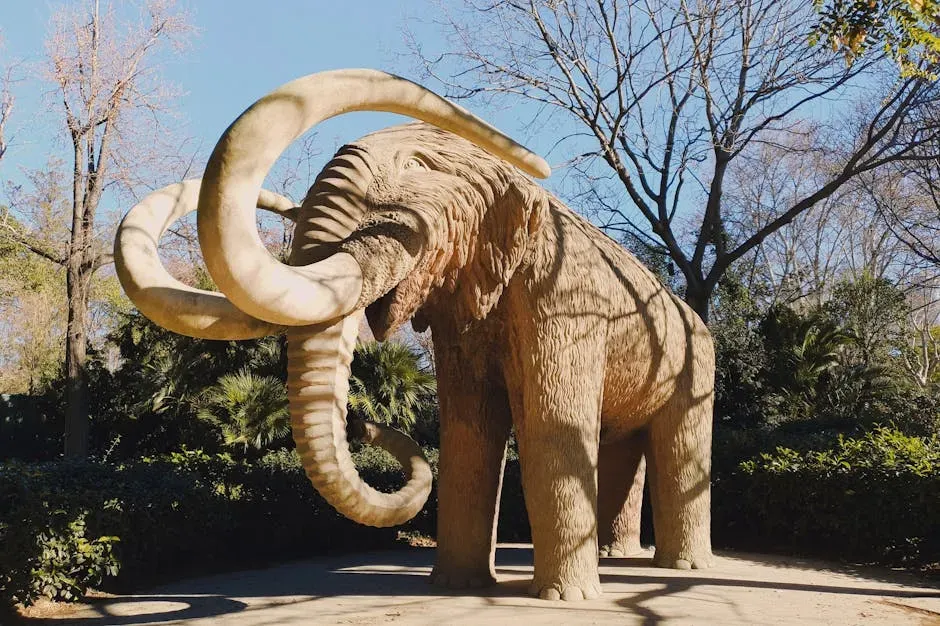
Woolly mammoths stood about ten to twelve feet tall at the shoulder and weighed between six and eight tons. These elephant relatives were well-suited to cold environments, with a thick coat of dark brown hair, an insulating fat layer up to three inches thick, and small ears to minimize heat loss. They were, in almost every sense, engineered by evolution to survive the harshest Ice Age conditions North America could throw at them.
As recently as five hundred thousand years ago, the woolly mammoth arrived and spread everywhere in Ice Age North America, ranging from Canada down to Honduras. What makes their story feel especially surreal is the timeline. It’s a staggering thought, realizing that woolly mammoths were still alive in isolated Arctic pockets when the ancient Egyptians were already building their civilization. They weren’t some impossibly distant myth. They were practically our neighbors in geological time.
#2 – The Saber-Toothed Cat (Smilodon fatalis)
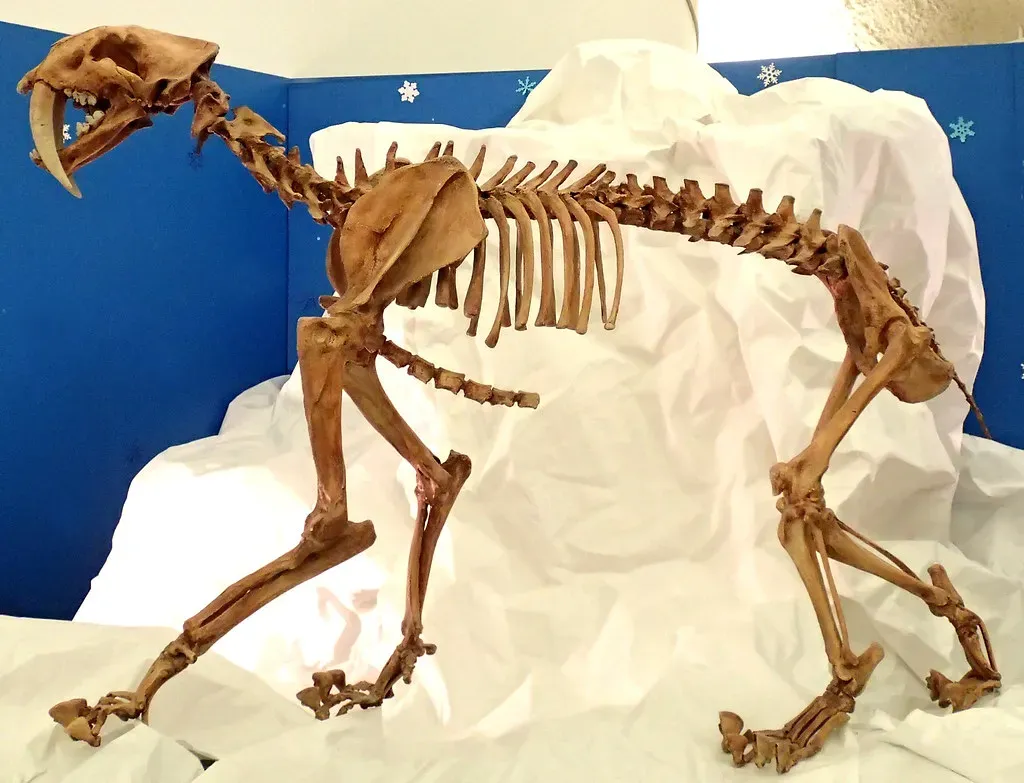
The saber-toothed tiger is one of the most iconic animals of Ice Age North America. Saber-tooth skeletons pulled from sites like the La Brea tar pits in Los Angeles were armed with upper canines averaging seven inches long and a jaw that could open an astonishing 130 degrees. It wasn’t subtle. This animal was built entirely around the business of killing large prey.
It had teeth seven inches long and jagged like a steak knife. It weighed as much as 800 pounds – more than double the weight of a female African lion. The second most common mammal found in the La Brea Tar Pits is the Smilodon, with more than two thousand saber-toothed cats recovered. The saber-toothed cats got stuck in the pits trying to attack other animals. There’s something grimly poetic about the way they met their end, still hunting right up to the last moment.
#3 – The Dire Wolf
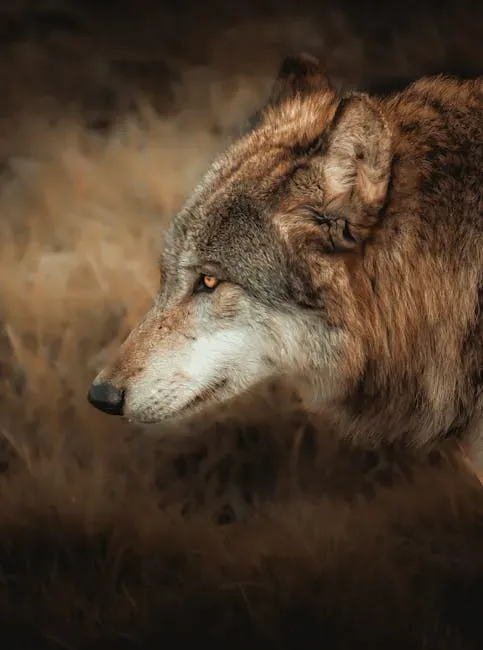
Recently reclassified into its own genus based on genetic evidence, the dire wolf was not a true wolf but rather the last member of an ancient lineage that evolved in the Americas. For over 200,000 years, dire wolves roamed across North America, from southern Alberta, Canada, to Florida, and even down into Chile. Pop culture has made the dire wolf famous, but the real animal was far more nuanced than any fictional depiction.
Dire wolves competed with a broad variety of other large carnivores, including saber-toothed cats like Smilodon, the American lion, and larger individuals of familiar species such as grizzly bears and jaguars. Dire wolves were not necessarily the apex predator in their environments, and in addition to taking down ancient horses they could have bullied cougars, coyotes, and even gray wolves off their kills. They were opportunists in the truest sense, surviving in one of the most fiercely competitive ecosystems the continent has ever seen.
#4 – The Short-Faced Bear (Arctodus simus)
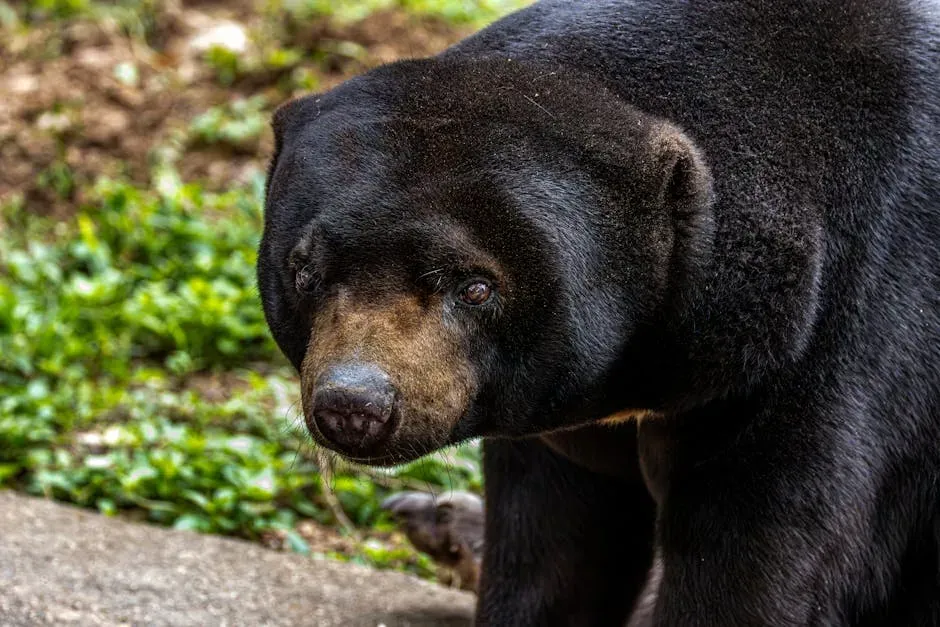
Short-faced bears were among the largest terrestrial mammalian carnivores to ever live in North America, with males potentially weighing up to 2,110 pounds and standing 5.5 feet at the shoulder on all fours, or up to 12 feet tall on their hind legs. Their lean, long-legged build suggested they were capable runners, possibly reaching speeds over 40 miles per hour. These bears, with their powerful jaws and shearing teeth, were carnivorous, preying on large herbivores like bison, muskoxen, and ground sloths across western North America.
In prehistoric North America, the short-faced bear ruled the land. Despite its name, this enormous bear didn’t actually have a short face. In comparison to its long arms and legs, it looked like it did. One researcher described it as similar to a grizzly bear on stilts, as its limbs were at least one-third longer than those of a modern grizzly. The image of something that enormous sprinting across an open plain is difficult to shake once you’ve considered it.
#5 – The American Mastodon
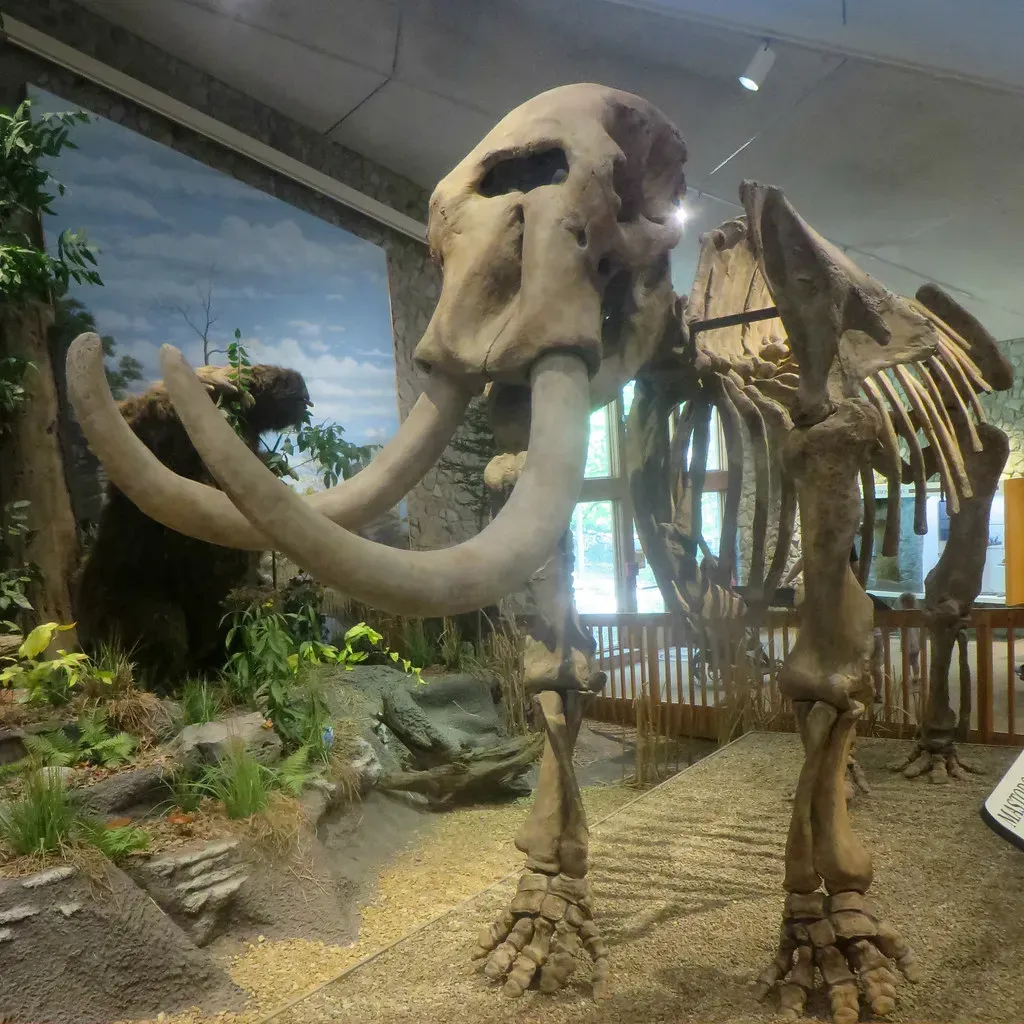
The American mastodon is the most ancient of the North American “elephants.” Its ancestors crossed the Bering Strait from Asia roughly 15 million years ago and evolved into the American mastodon 3.5 million years ago. The mastodon was shorter and stockier than the later mammoths, and the shape of its teeth indicate that mastodons didn’t graze on grass like mammoths, but ripped off leaves and entire tree branches for food.
Unlike mammoths, mastodons preferred wooded areas and were more widespread across the continent. They had straighter tusks and a stockier build, allowing them to navigate dense forests. Evidence of mastodon habitation has been found in various states, including Michigan and New York. Like many of their contemporaries, mastodons faced extinction around 10,000 years ago, a victim of the changing climate and possibly human hunting. They were, in a sense, the forest elephants of an ancient America nobody alive today would recognize.
#6 – Megalodon
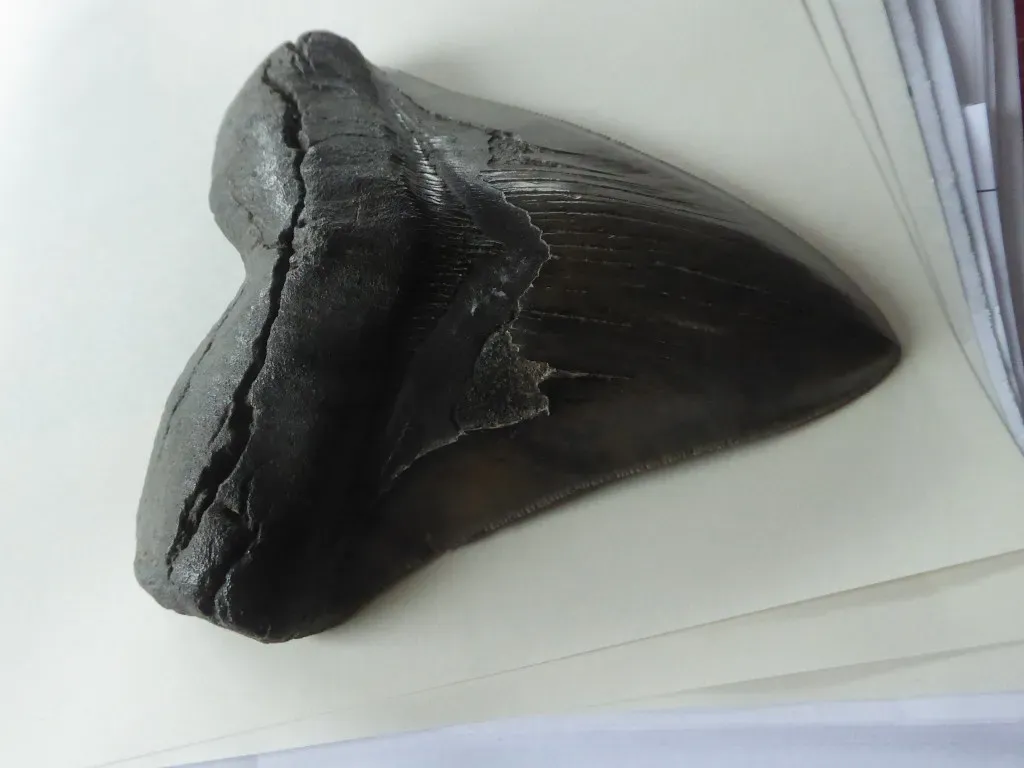
Otodus megalodon, meaning “big tooth,” is an extinct species of giant mackerel shark that lived approximately 23 to 3.58 million years ago, from the Early Miocene to the Early Pliocene epochs. Large numbers of their teeth can be found off the east coast of North America, along the coasts and at the bottom of saltwater creeks and rivers of North Carolina, South Carolina, and Florida. It’s a strange thought that you can still stumble upon a tooth from the ocean’s greatest predator while wading through a Carolina creek.
It’s estimated that its jaw would span 2.7 by 3.4 metres wide – easily big enough to swallow two adult people side-by-side. These jaws were lined with 276 teeth, and studies reconstructing the shark’s bite force suggest that it may have been one of the most powerful predators ever to have existed. Around 2.6 million years ago, around the time when the megalodon disappears from the fossil record, large mammals in the ocean were undergoing significant changes. At the beginning of the Miocene, marine mammals were at the height of their diversity, especially the megalodon’s favorite prey – small whales. A drop in ocean temperatures during the Pliocene likely contributed to megalodon’s eventual demise.
#7 – The Giant Ground Sloth (Megalonyx)

Megalonyx jeffersonii had a wide distribution across the contiguous United States, extending into parts of southern Canada and Alaska during warmer interglacial periods. Their diet consisted primarily of leaves and twigs from trees found in moist habitats, such as willows. These weren’t the slow, sleepy tree-hangers we associate with modern sloths. On the ground, they were something else entirely.
Approximately four feet across and weighing an estimated 80 pounds for just the pelvis alone, the giant ground sloth was an elephant-sized animal that roamed the ancient Americas alongside the saber-tooth cat and the woolly mammoth. Around 11,000 years ago, saber-tooth cats, woolly mammoths, giant ground sloths, and almost every other large mammal in North America went extinct. Scientists are still working to understand precisely which combination of climate shift and human pressure finally pushed them over the edge.
#8 – Glyptodon
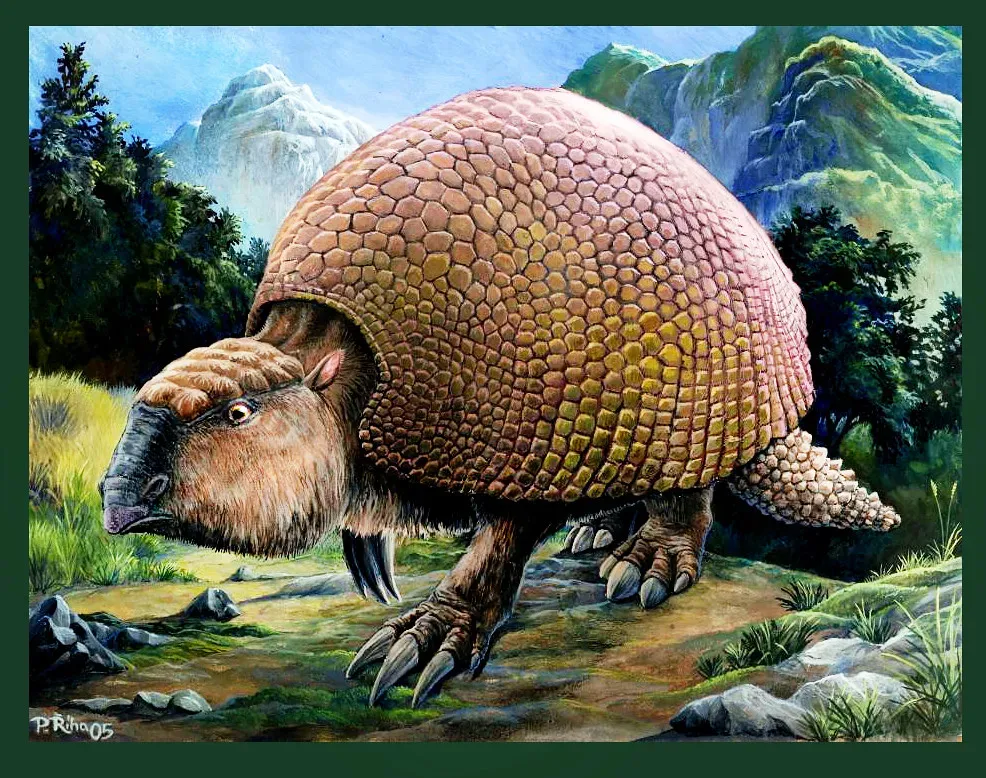
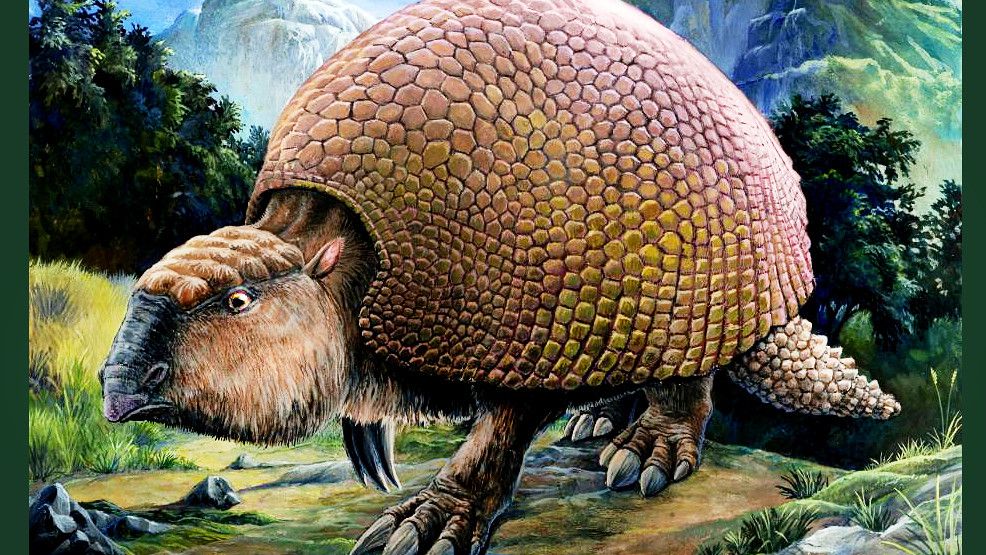
The armored, one-ton creature likely traveled to North America from South America via the Isthmus of Panama, a land bridge that connects the two Americas. After reaching North America about 2 million years ago, Glyptodon prospered in what is now coastal Texas and Florida. Try to picture a creature roughly the size and shape of a compact car, fully encased in bony armor, grazing peacefully along what is now the Gulf Coast.
Its most distinguishing feature was a large shell composed of over 1,000 scutes, each 2.5 centimetres thick. Like human fingerprints, each Glyptodon’s scute pattern was different. Scientists believe that glyptodonts would engage in inter-species fights, especially male to male. The tail of Glyptodon, made of bony plates, was flexible enough as a weapon during such fighting. It was essentially a walking fortress that could also swing a club. The fact that it was an herbivore only adds to the strangeness.
#9 – The American Cave Lion (Panthera atrox)
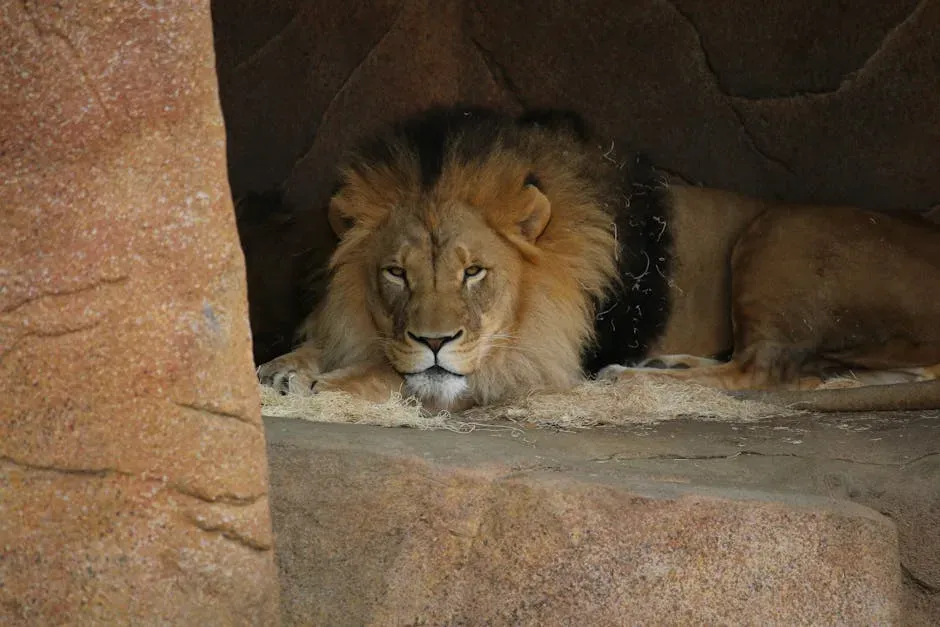
The American cave lion called this continent home and was one of the largest known cats, almost 25 per cent bigger than the lions we see in Africa and India today. It stood 1.2 metres at the shoulder and weighed up to 420 kilograms. That’s not a slight upgrade from a modern African lion. That’s a fundamentally different class of predator entirely.
Paleolithic art of similar lions found on cave walls in France and Russia shows that the prehistoric cats had a faintly striped coat and no mane, unlike modern lions. Scientists think they could have lived in prides, working together to hunt and raise young. These large herbivores had their numbers reduced by a range of significant carnivorous predators, not the least of which were lions, dire wolves, and two species of saber-toothed cats. The North American plains during the Pleistocene were not a place for the faint of heart.
#10 – Camelops (Yesterday’s Camel)
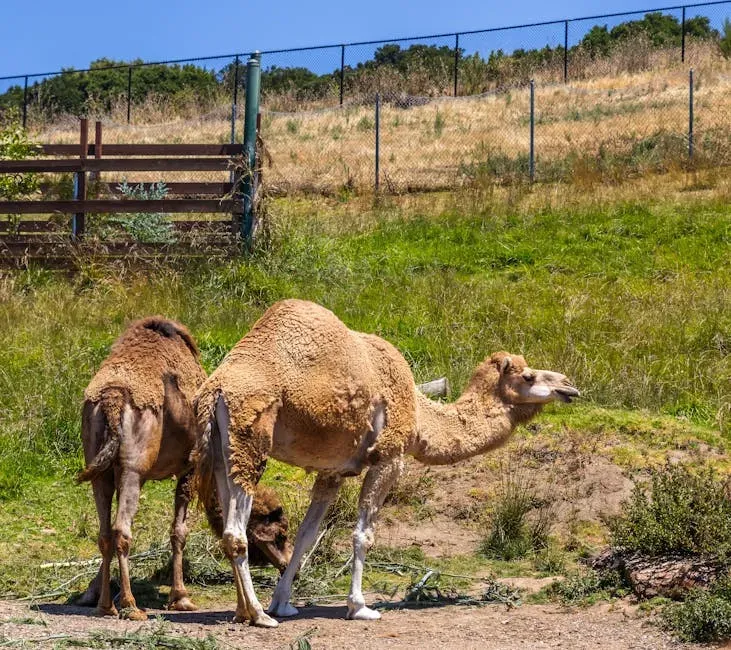
One of the most widespread camel species in Ice Age North America was the Camelops hesternus, or “yesterday’s camel.” This two-toed, furry camel stood seven feet tall at its shoulders, weighed 1,800 pounds, and had no hump at all. The Camelops could travel long distances on its long and lean legs, but it’s not clear if they could survive long periods without water like modern camels.
It might surprise many to know that camels once roamed the prehistoric plains of North America. These ancient camels were well adapted to a variety of environments, from deserts to grasslands. They were larger than their modern descendants and played a crucial role in the ecosystem as grazers. Fossils of these ancient camels have been found across the continent, painting a picture of their widespread presence. Other ancient species of North American camels migrated south and became the llamas and alpacas of South America. The modern camel exists today partly because of migrations that began right here on this continent – a fact that tends to stop people cold when they first hear it.
A Continent Unrecognizable
What’s most striking about North America’s prehistoric roster isn’t just the scale of these creatures. It’s how completely the continent transformed after they vanished. For most of Earth’s history through the Pleistocene, there were big mammals all over the place. Around 10,000 years ago, nearly all of those giant creatures were wiped out. The loss happened fast, in geological terms, and the debate about why it happened has never fully settled.
Rapid warming periods and, to a lesser degree, ice-age people who hunted animals are responsible for the disappearance of the continent’s megafauna, according to a study published in the journal Science. Other studies have placed more blame on humans, and some researchers say many factors are to blame. Both research and the debate surrounding the reasons for the extinction of these animals will undeniably continue. In other words, we may never have a clean, single answer.
In my view, that uncertainty is part of what makes this history so compelling. These creatures aren’t just curiosities from a museum display case. They shaped the land, the ecosystems, and in some ways the trajectory of life on this continent in ways we’re still piecing together. The next time you drive through the American Southwest or hike through a quiet Appalachian valley, it’s worth pausing to consider what was there before. The ground under our feet is layered with vanished worlds, stacked one on top of another like chapters in a book written in stone. Those chapters deserve to be read.
