
Most people think of trees as scenery. Something to glance at, maybe sit beneath on a hot afternoon. But for the hundreds of species sharing our landscapes, a single native tree can mean the difference between survival and death during an extreme heat event. It’s not dramatic to say that – it’s just ecology.
Heatwaves are becoming more intense and frequent due to climate change, and extreme heat can disrupt breeding and foraging, dry up temporary water sources, and increase the risk of dehydration or heat stress. Species already stressed by habitat loss are especially vulnerable. What’s less discussed is the quiet, structural role that native trees play in absorbing the worst of it – not just providing shade, but actively creating microclimates, feeding food chains, and offering physical refuge that no amount of garden birdbath can replicate.
Layered native plant habitat that replaces heat-absorbing materials with trees, shrubs, and other plants reduces the heat island effect in highly populated areas. These plants help lower air temperatures by providing shade and cooling through evaporation and transpiration. Ten trees in particular have earned a closer look. Some are famous. Others are overlooked. All of them are doing far more than you’d expect.
#1. White Oak (Quercus alba)
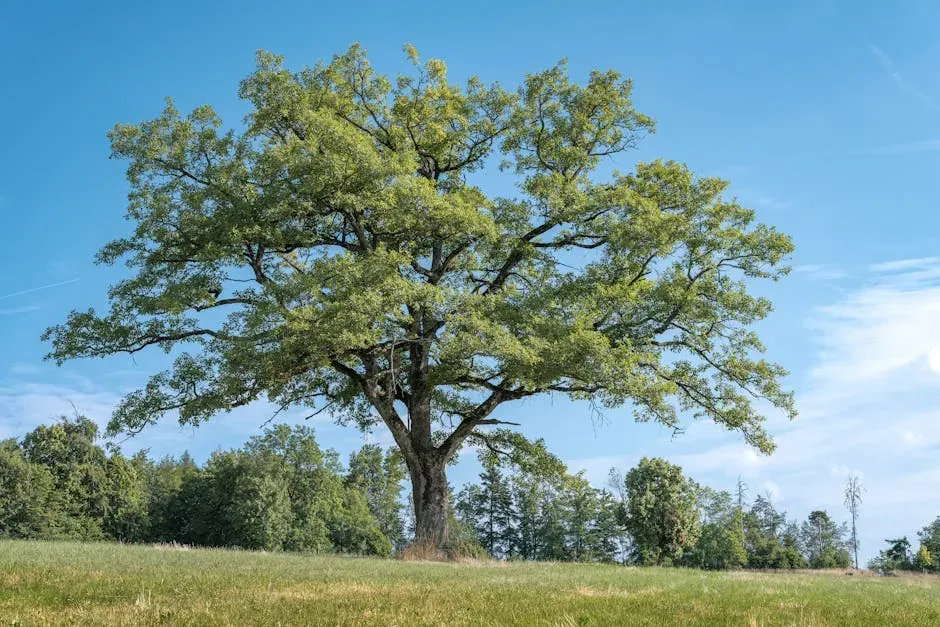
Of all the trees doing heavy lifting for wildlife in summer, the white oak may be the most quietly extraordinary. Trees such as white oak and basswood offer expansive canopies, helping to moderate temperatures on the forest floor and protect delicate wildlife from overheating. That cooling effect isn’t incidental – it’s structural, and it scales across dozens of species simultaneously.
One of oak’s most important benefits is that they are the host plants for more than 1,000 kinds of moth and butterfly caterpillars, which in turn are the most important protein that virtually all parent songbirds need to successfully raise their offspring – from cardinals and chickadees to wrens, vireos and thrushes. During a heatwave, when other food sources dry up and insects retreat, the abundance of life concentrated in a single white oak canopy becomes a genuine lifeline. White oak is a strong-limbed native shade tree and a heavy acorn producer, which makes it a good choice for benefiting wildlife.
#2. Bur Oak (Quercus macrocarpa)
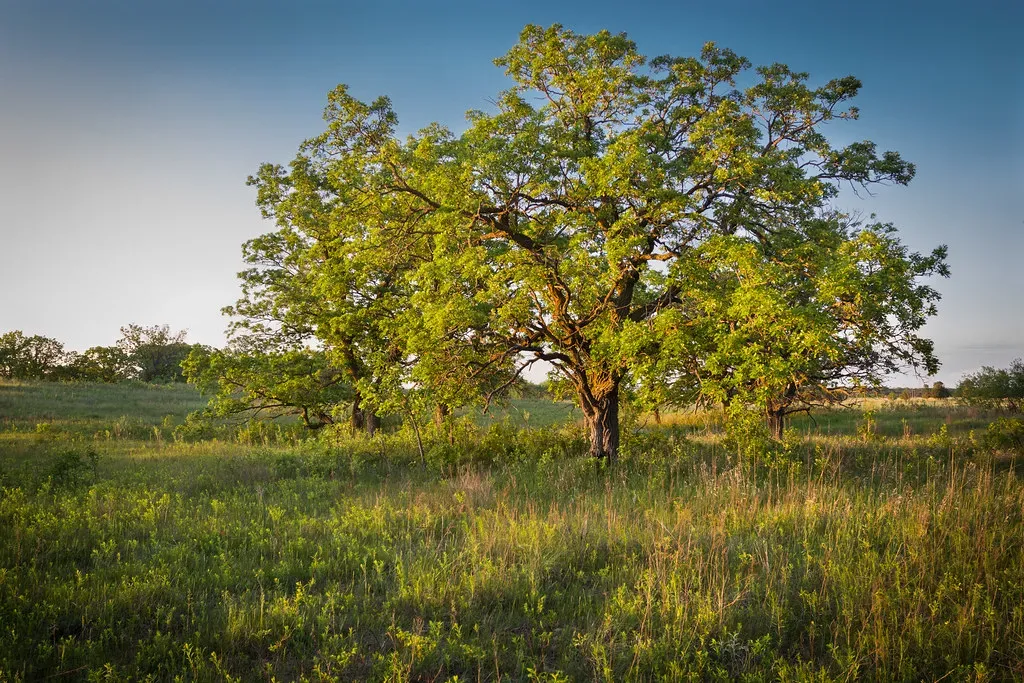
Bur oak trees span between Ohio and Nebraska, grow up to 100 feet high, and can live for 1,000 years. These hearty trees are tolerant to both drought and fire, allowing them to live on the edge of woodlands and grasslands. That drought tolerance is no small thing during an extended summer heatwave – the bur oak doesn’t buckle when conditions get severe, which means the wildlife depending on it doesn’t have to scatter in search of something else.
Bur oaks are a keystone species, a plant that many animals rely on for food. Their canopy is dense enough to meaningfully drop the ground temperature beneath them, and their acorns feed an extraordinary range of animals. The presence of oaks in a restored habitat reduces the need for animals to roam in search of food, increasing their chances of survival and keeping them safe within protected areas. In a heat event, staying put in a shaded corridor can literally save a small mammal’s life.
#3. American Basswood (Tilia americana)
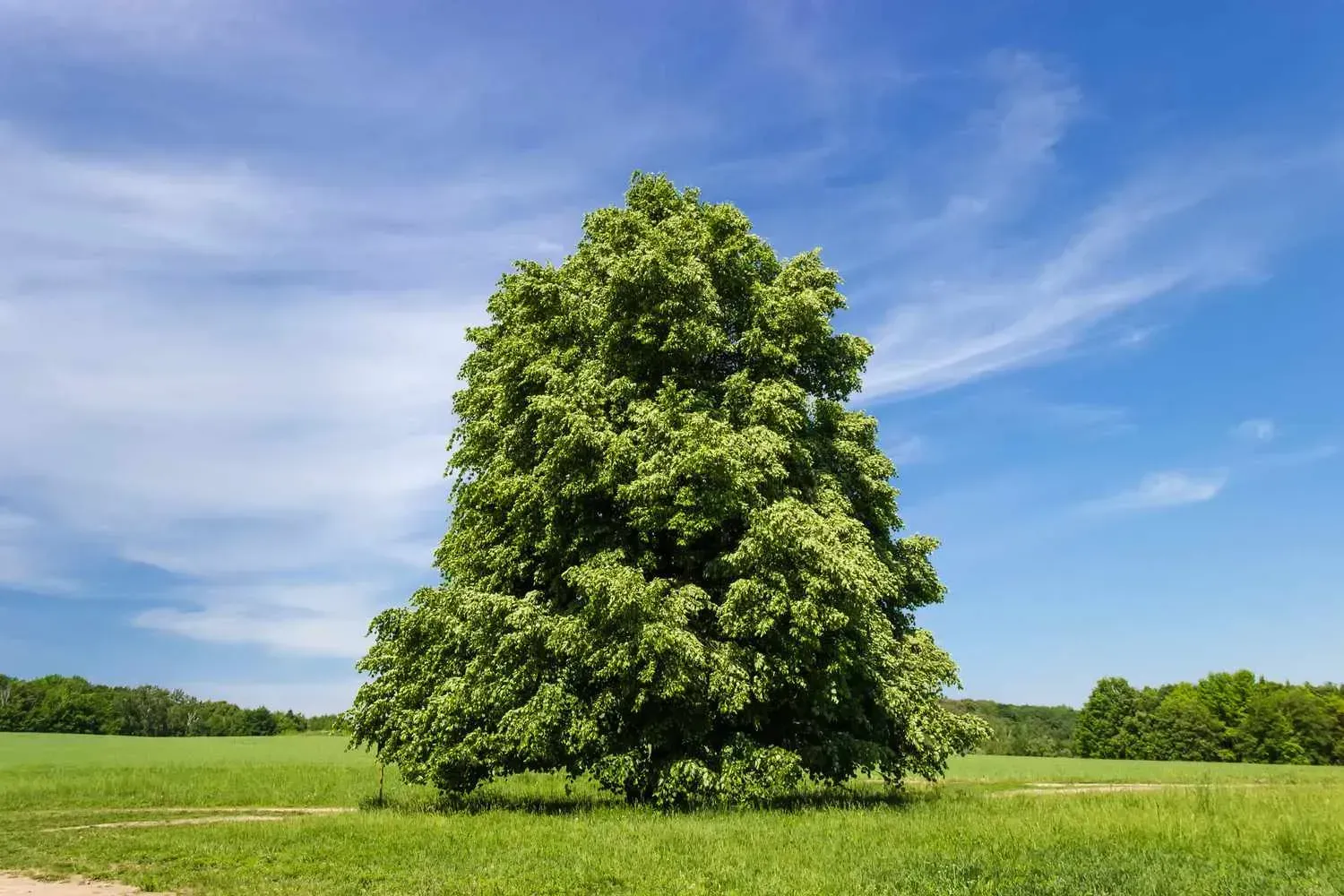
The American basswood doesn’t attract the same reverence as the great oaks, but ecologically, it punches well above its weight class. Its broad, heart-shaped leaves create one of the densest shade canopies of any native hardwood, making it a remarkably effective thermal buffer for the animals living beneath it. The most valuable species provide several resources, including spring flowers for pollinators, summer shade to prevent overheating of plants, fall seeds for migrating birds, and winter structure for roosters.
Basswood flowers are among the most nectar-rich of any native North American tree, drawing huge numbers of native bees during summer. Native bees and other insects and birds have evolved with native plants, which provide the specific food and habitats they need for survival. For pollinators already heat-stressed and dehydrated during a prolonged hot spell, the dense shade beneath a mature basswood combined with a reliable nectar source represents a genuine dual refuge – food and shelter in a single location.
#4. Red Maple (Acer rubrum)
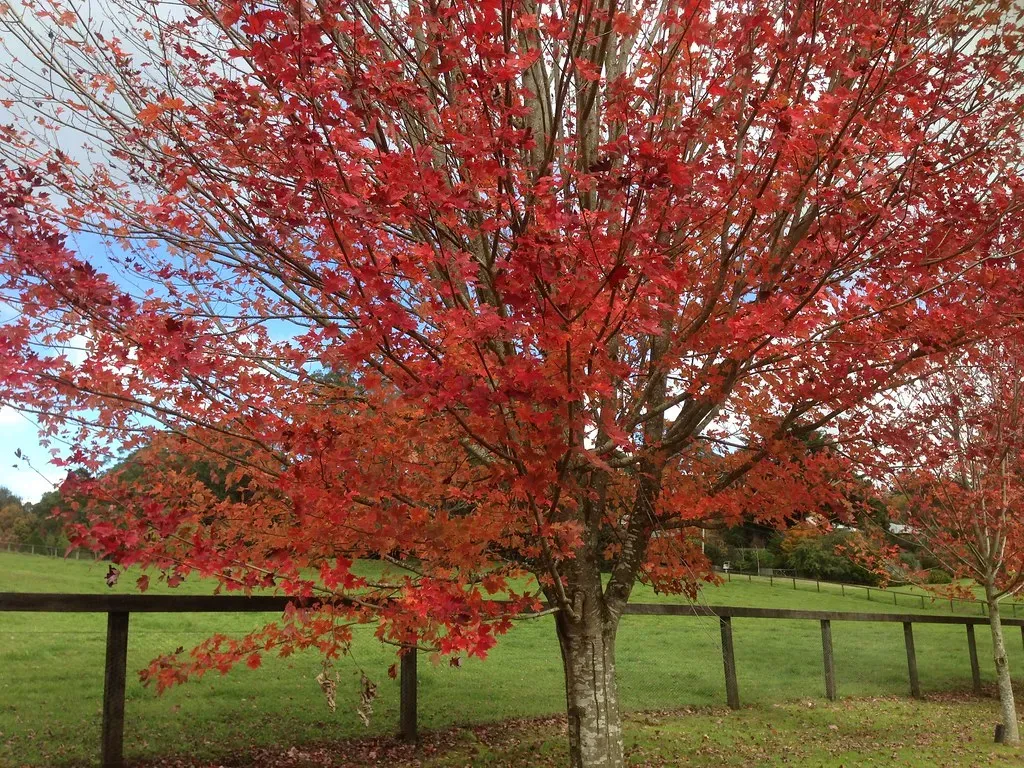
Red maple is one of the most adaptable native trees in North America, and that flexibility extends to the wildlife it supports across seasons. The red maple thrives across North Carolina, especially in wetter forested areas. Its ability to root in moist, lower-lying ground means it often establishes near streams and seasonal wetlands – exactly the microhabitats that wildlife seek out during heat events when cooler, damper conditions become critical for survival.
Red maples are prized for their fall color. They bloom really early in the spring, sometimes in late January or early February, so they’re one of the first nectar sources for pollinators. That early seasonal role matters in context – a tree that fuels pollinators and insects in spring generates a thriving invertebrate community by summer, giving insectivorous birds and bats more food options precisely when they need to stay cool and conserve energy during hot days. The red maple gives all year, quietly and consistently.
#5. Quaking Aspen (Populus tremuloides)
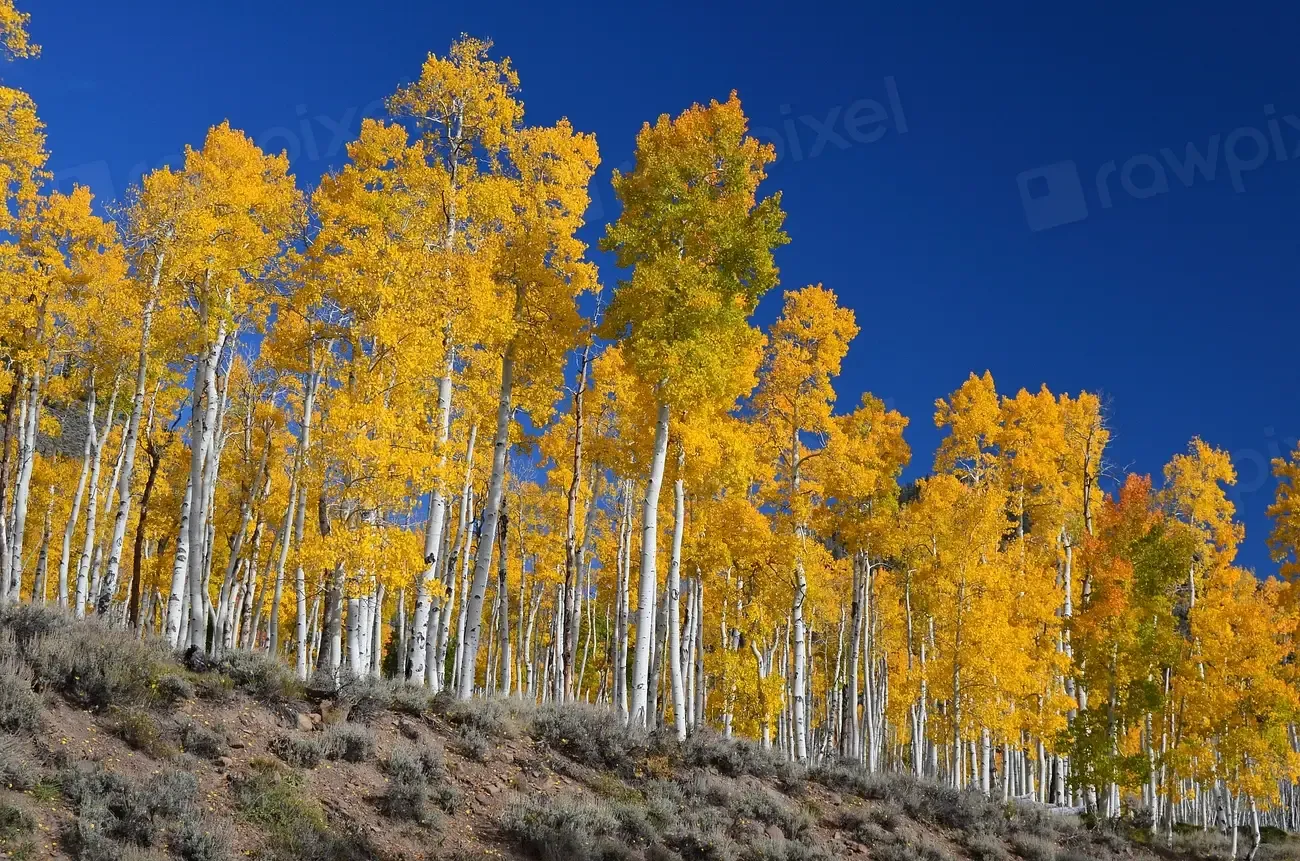
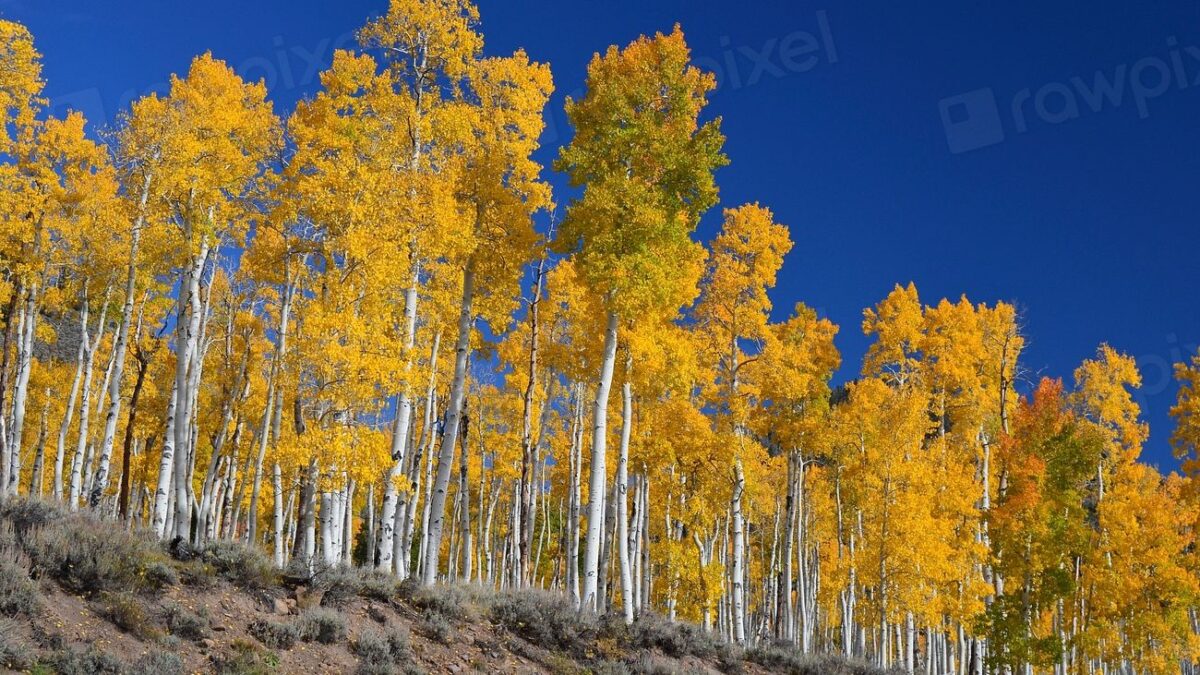
Quaking aspen is the most widely distributed tree species in North America, ranging from Alaska to Colorado, and east across Canada to New England. That breadth of range means it creates reliable shade habitat across radically different ecosystems. Deer, moose, and elk seek shade from aspen groves in summer. These same animals consume bark, leaves, buds, and twigs of quaking aspens throughout the year. Ruffed grouse are especially dependent on quaking aspens for food and nesting habitat.
Quaking aspen is tremendously valuable to birds, insects, mammals, and more. It supports the larvae of the Great Ash Sphinx, Eastern Tiger Swallowtail, and Viceroy butterflies, as well as a whole host of other insects. The grove structure of aspen – where multiple stems share one root system – creates dense interlocking canopy that holds heat out and moisture in at ground level. In western states, the young sprouts are a food source for elk and moose. Prior to the reintroduction of wolves to Yellowstone, there was a severe decline in aspen regeneration as all the young seedlings were being eaten by elk. That story is a remarkable reminder of how interconnected the fate of a single tree species is with the broader ecosystem around it.
#6. Eastern Red Cedar (Juniperus virginiana)
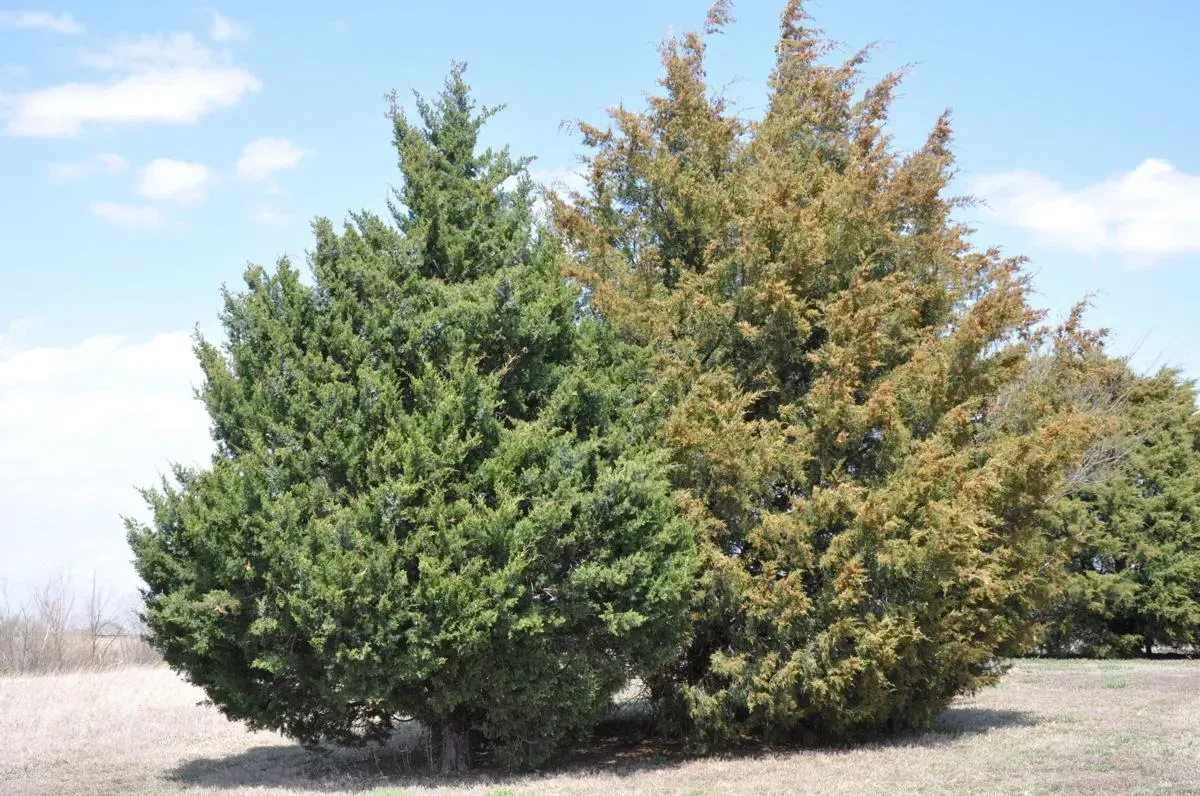
The eastern red cedar is native, tenacious, and wildly underappreciated. It is resistant to extremes of drought, heat, and cold – a plant that can take such conditions with aplomb – and is tolerant of a wide range of soils, including poor dry soil, alkaline soil, and dry rocky outcrops, as well as wet swampy land. That range of tolerance makes it one of the most reliable trees to remain standing and structurally intact through prolonged heat events when other species may shed leaves or go into stress-induced dormancy.
The dense branches of the eastern red cedar provide important refuge and shelter for songbirds and game birds such as quails, bobwhites, ruffed grouse, pheasants, and turkeys. Butterflies and small mammals also benefit from the cover this tree provides. The bluish-black, berry-like cones are a key food source for cedar waxwings, bobwhite quail, ruffed grouse, sharp-tailed grouse, ring-necked pheasant, wild turkeys, rabbits, foxes, raccoons, skunks, opossums, and coyotes. For a tree that often grows in exposed, open terrain, its wildlife value during summer heat is genuinely remarkable.
#7. River Birch (Betula nigra)
River birch is best known for its peeling cinnamon-colored bark and yellow-gold fall foliage. It prefers damp, acidic soil and grows fairly fast to 40 or more feet tall with a spread of 25 to 30 feet in sun to light shade. Its preference for moist, streamside environments is exactly what makes it such a critical heat-refuge tree – it colonizes the riparian zones and shaded stream banks that wildlife instinctively retreat to when temperatures spike.
Tree roots stabilize stream banks, reduce erosion, and keep water clear; their canopies provide shade to regulate water temperature and dissolved oxygen – all important conditions for healthy populations of fish and other aquatic wildlife. This is where river birch excels in ways that upland trees simply can’t. By keeping stream water cooler during a heatwave, it extends the survival window for fish, amphibians, and aquatic invertebrates that would otherwise perish in warming water. Few trees in the native palette deliver that level of aquatic protection.
#8. American Sycamore (Platanus occidentalis)
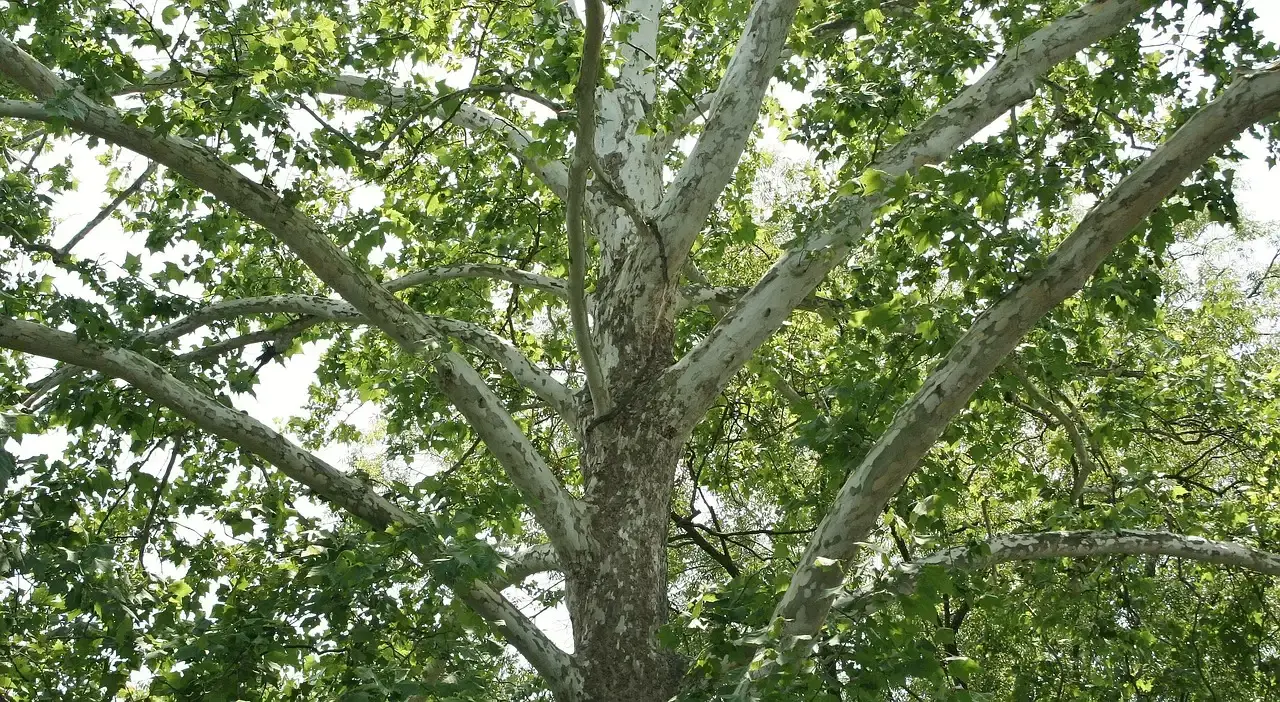
The American sycamore is one of those trees that commands a landscape simply by being present. American sycamores are large, stately trees that can reach up to 100 feet tall when mature. They are known for their patchy bark, broad leaves, and dense foliage. American sycamore has an extremely fast growth rate, gaining up to 6 feet in one year, meaning it builds a meaningful canopy faster than almost any other native hardwood. During a multi-day heatwave, a mature sycamore creates a temperature differential beneath its canopy that is measurably cooler than open ground nearby.
Sycamores are especially important for cavity-nesting species. Their large trunks and naturally occurring hollow sections provide cool, insulated nesting chambers where birds like wood ducks, screech owls, and chimney swifts can shelter offspring from direct heat. The decaying trunk wood also supports a remarkable diversity of beetles and wood-boring insects, which in turn fuel the insect-eating birds and mammals that depend on them all summer. It’s a whole food system housed in a single tree.
#9. Flowering Dogwood (Cornus florida)
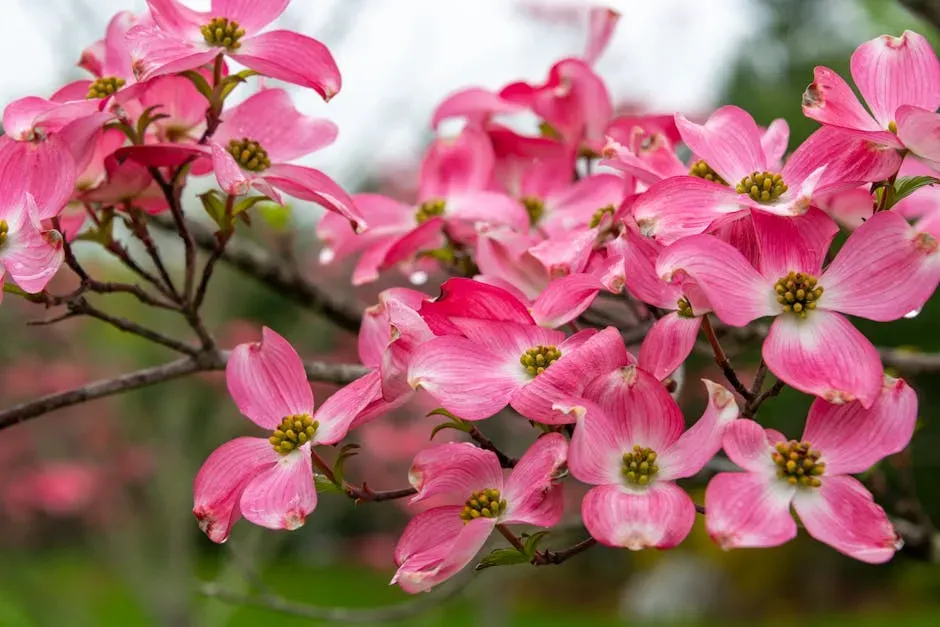
The flowering dogwood earns its reputation as an ornamental tree, but its wildlife credentials are just as strong. The dogwood is a year-round wildlife magnet. In the spring, its flowers attract bees and butterflies. In the fall, its red fruits feed migrating birds and squirrels. Its understory position in the forest canopy layer is also strategically important – it creates a secondary shade zone between the forest floor and the upper canopy, which traps cooler, moister air close to the ground.
Popular trees that provide shade to humans can provide shade to animals too. The pagoda dogwood is a good example – not only do they have fruit that attracts local wildlife, but the great shade that they provide is also enjoyed by birds and mammals. The same principle applies to flowering dogwood in the eastern US. Small mammals, reptiles, and ground-nesting birds specifically use the dense lower shade of dogwood thickets as thermal cover on hot afternoons, resting quietly until temperatures drop enough to resume foraging.
#10. Shagbark Hickory (Carya ovata)
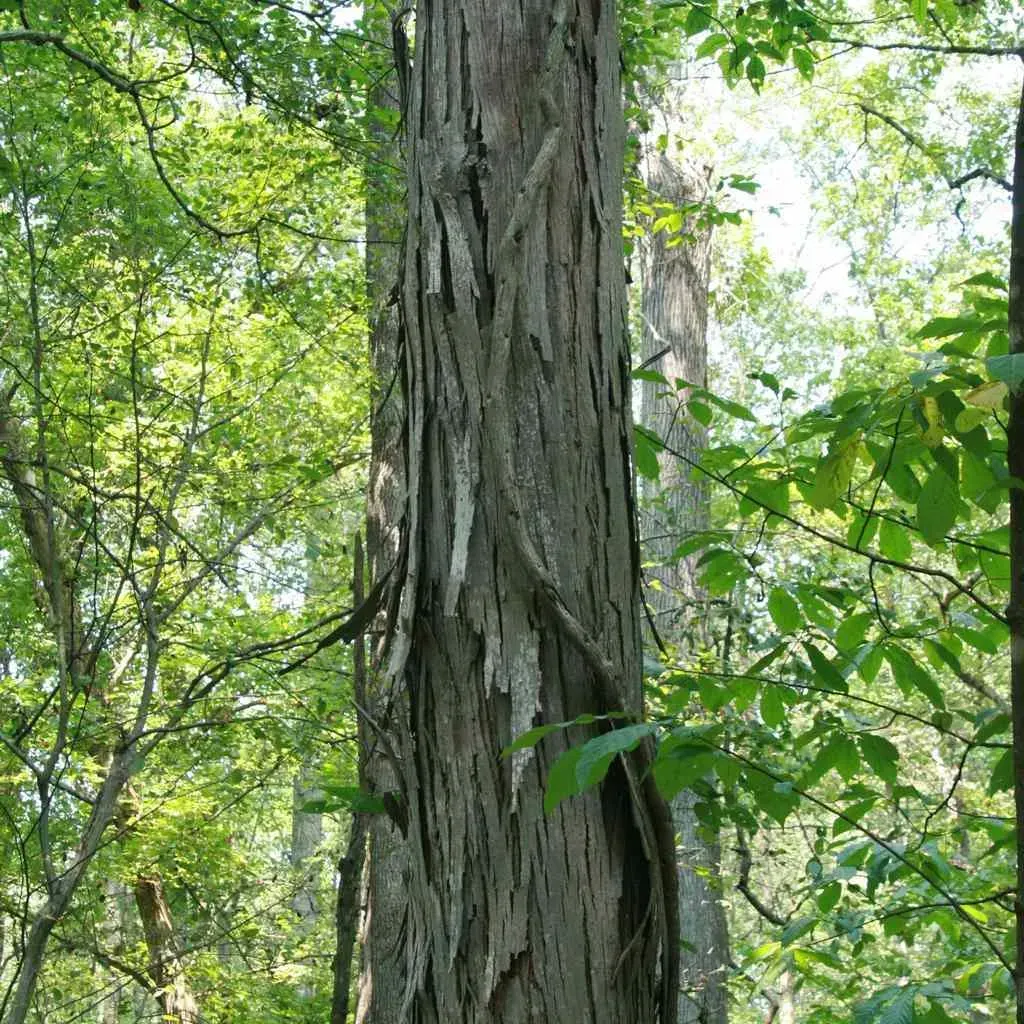
Shagbark hickory isn’t the flashiest tree on this list, but it may be the most structurally generous. Its broad, dense canopy creates deep, persistent shade across a significant ground footprint, and its distinctive shaggy bark is more than just visually interesting – it provides physical habitat for roosting bats, sheltering insects, and small tree-climbing mammals. Trees like oaks, hickories, and beech drop large quantities of high-fat, energy-dense nuts in the fall – known collectively as “mast” – which is essential for animals such as squirrels, deer, blue jays, chipmunks, and even black bears, who must build fat reserves or store food ahead of winter.
During summer heatwaves, that mast cycle matters more than people realize. Animals preparing for autumn’s fat-storage season depend on summer foraging success – but heat stress suppresses foraging. A shagbark hickory provides cool, shaded foraging ground beneath its canopy, giving squirrels and other small mammals a protected zone where they can continue feeding without dangerous thermal exposure. Trees for wildlife serve as food, shelter, and nesting areas all year round. The most valuable species provide several resources, including spring flowers for pollinators, summer shade to prevent overheating of plants, fall seeds to serve migrating birds, and winter structure.
Why This Matters More Than Ever
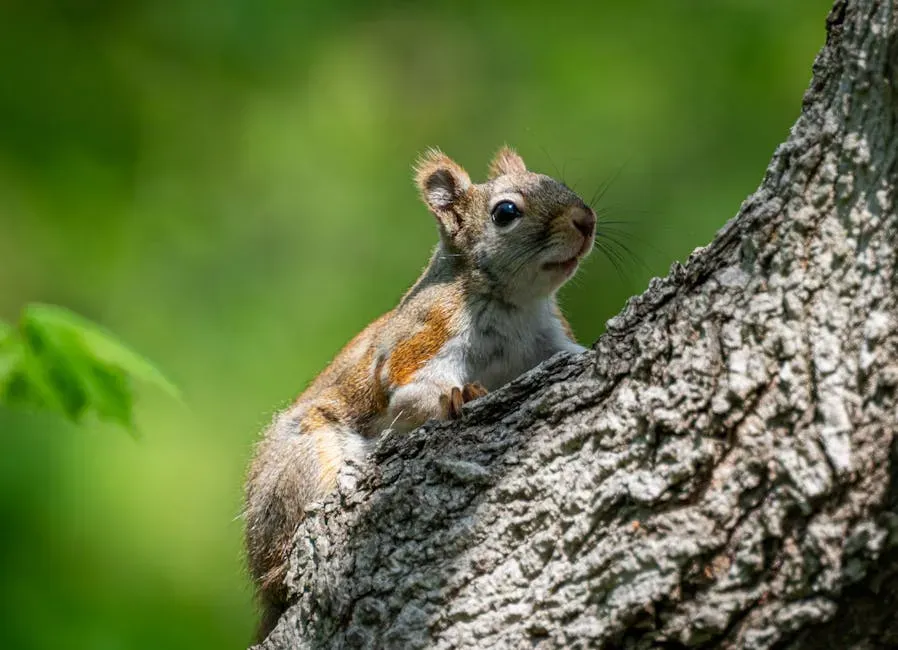
The pattern across all ten of these trees is the same: they don’t do just one thing. They cool, they feed, they shelter, and they anchor the food chains that wildlife depend on when heat makes survival genuinely difficult. Heatwaves are becoming more intense and frequent due to climate change, and wildlife doesn’t just “adapt on the fly.” They need physical infrastructure – real, rooted, living infrastructure – to survive events that are becoming more common every year.
The USDA Plants Database indicates that native trees are known to sustain many more wildlife species than ornamental species introduced, usually 10 to 50 times the number of insect species alone. That difference is not trivial. It’s the entire food web. Throughout our community landscapes, we can create spaces that not only support local wildlife now, but that will also help wildlife as they face increasing challenges from the impacts of climate change over the next several decades.
Every one of these ten trees is available, plantable, and appropriate for some region of the United States. The urgency of protecting wildlife during extreme heat shouldn’t fall entirely on conservation organizations and policy makers. Sometimes the most consequential thing is simply planting the right tree in the right place – and then letting it do what it has been doing for thousands of years before we started removing them.

- 14 Quiet Signs Your Dog Knows Its Time Is Near and Wants You Close - July 22, 2026
- 10 Falcon Facts That Will Blow Your Mind - July 22, 2026
- 5 Incredible Migratory Journeys Animals Make Every Year - July 22, 2026