
Something odd has been happening in Midwestern lakes. Anglers who’ve fished the same spots for decades are pulling up creatures they’ve never seen before. Some have snake-like heads. Others look almost prehistoric. A few can literally breathe air and drag themselves across dry land to find new water. These aren’t tall tales from a bait shop. They’re documented species showing up with increasing regularity, and the people who study freshwater ecosystems are paying close attention.
The story of what’s happening beneath the surface of Midwest lakes is, frankly, more unsettling than most people realize. At least 188 nonnative aquatic species have been introduced to the Great Lakes, and over a third have become invasive, meaning they can have negative health, ecological, and socioeconomic impacts when introduced to new ecosystems. That number keeps growing, and the creatures driving concern today are varied, resourceful, and, in some cases, genuinely hard to believe.
#1. The Northern Snakehead: The Fish That Walks
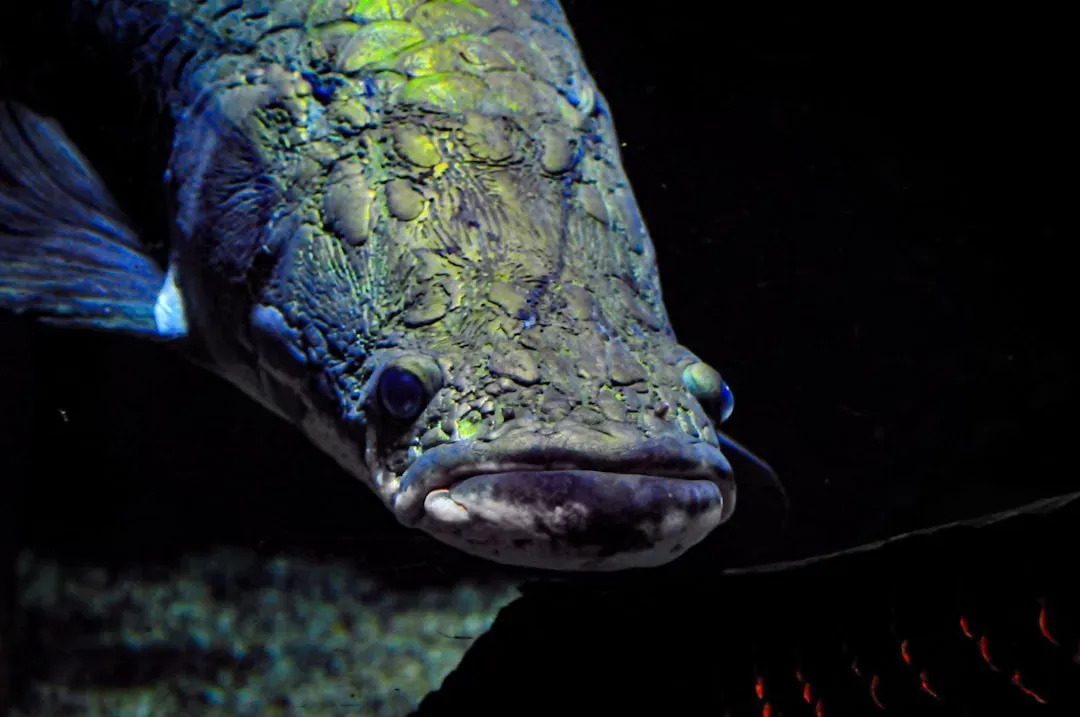
Few invasive species have earned their reputation quite as dramatically as the northern snakehead. The northern snakehead is a species of snakehead fish native to temperate East Asia, in China, Russia, North Korea, and South Korea. Its appearance alone tends to stop people cold: the northern snakehead is an invasive fish species with a fitting name. Its head resembles a snake, and its body pattern and color resemble those of a python.
What makes it especially alarming in a Midwestern context isn’t just how it looks. The snakehead is what’s called a facultative air breather, meaning the fish uses a special organ and a unique ventral aorta that allows it to breathe in water and also breathe air on land. This means the snakehead can wriggle its way from one body of water to another across dry land. It’s a genuinely strange capability for a fish, and it makes containment efforts considerably harder.
The invasive northern snakehead fish is spreading through Missouri. A fourth snakehead was caught late last month by an angler in Wayne County, according to the state’s Department of Conservation. The snakeheads are coming from Arkansas, which has been battling them since 2008, and experts expect them to travel to other states in the Midwest through the Mississippi River.
Few species are more efficient reproducers: northern snakeheads can breed up to five times a year and lay as many as 50,000 eggs at a time. When you combine that reproductive rate with the ability to breathe air and crawl between water bodies, you start to understand why fisheries biologists treat this species with particular urgency. Aquatic specialists have a big concern that the snakehead could get into the Great Lakes, which have already had their own issues with invasive species.
#2. Invasive Carp: The Species Rewriting Midwestern Waterways
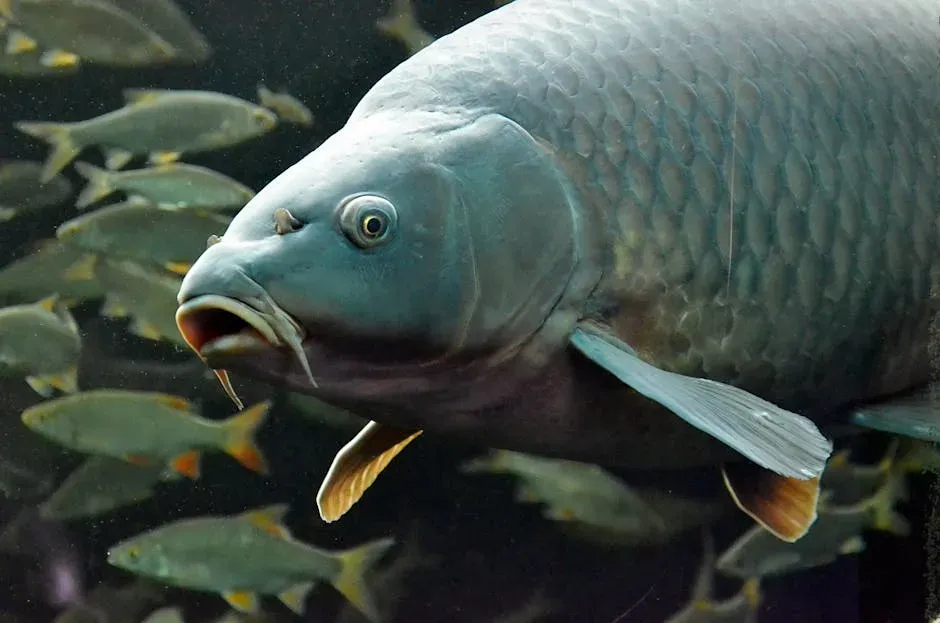
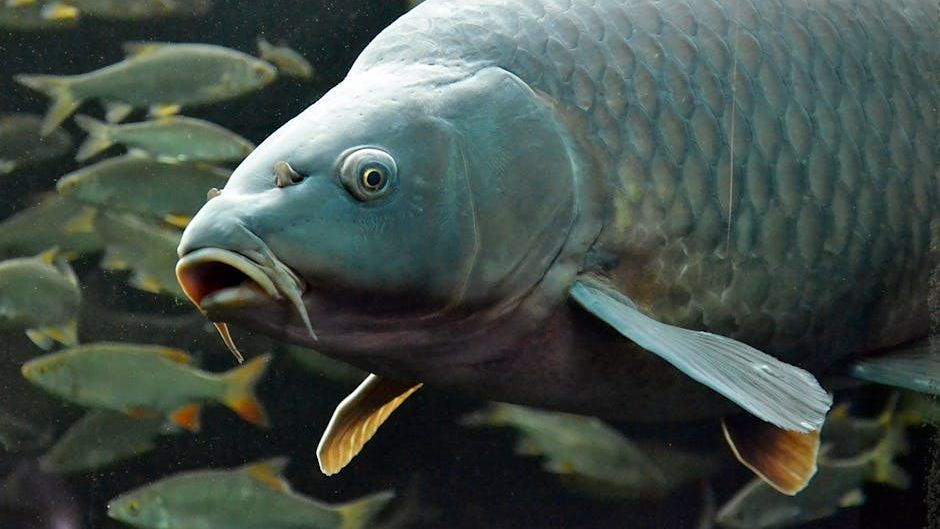
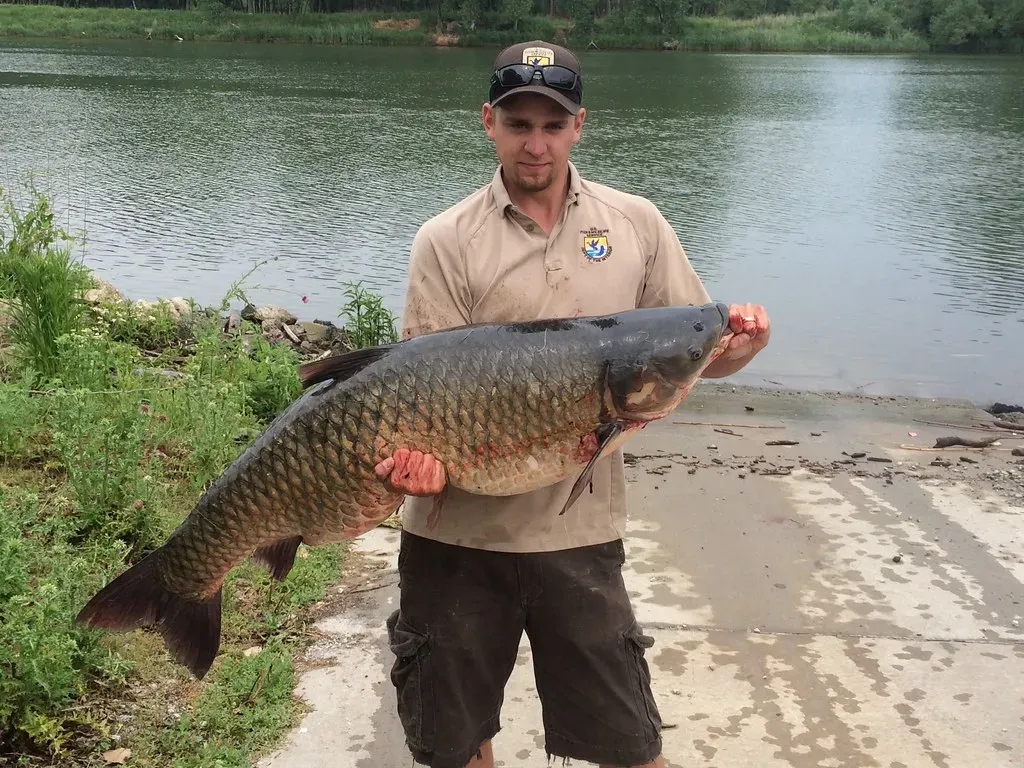
Of all the strange fish showing up in Midwest lakes and rivers, invasive carp may be the ones with the most dramatic ecological footprint. Bighead, silver, and black carp are spreading throughout streams, rivers, and lakes in the Mississippi River and Midwest region, with the fastest expansions occurring in the Missouri and Illinois rivers. These aren’t small fish slipping quietly into ecosystems. Bighead carp have a large head with a toothless mouth and eyes that sit below the mouth, and they can grow to 5 feet long and weigh up to 90 lbs.
Silver carp have a particularly unsettling behavior that goes well beyond ecology. Silver carp jumping behavior isn’t just a curiosity – it represents a significant safety hazard for boaters and water sports enthusiasts, with documented cases of serious injuries from high-speed collisions with airborne fish. In terms of population dominance, the situation in some waterways is already extreme. In the Chicago Area Waterway System, more than 85% of the fish population is made up of invasive carp.
These fast-growing fish are native to the Pacific coast of eastern Asia and were brought to the U.S. for aquatic vegetation control in the 1960s. By at least 1971, feral carp had ventured to the upper Mississippi River. That initial decision, made decades ago with practical intentions, set off a chain of ecological consequences still unfolding today. While bighead and silver carps are not established in any of the Great Lakes, invasive carp are well-suited to the climate of the Great Lakes region. According to a U.S. Geological Survey study, if introduced to the Great Lakes, these fish are expected to flourish in the near shore areas and large river tributaries.
The proximity of these fish to the Great Lakes is not a distant concern. The most recent data indicate invasive carp are just 10 miles from the three electric barriers installed in the Chicago Area Waterway System to prevent invasive species movement. The margin of safety is, by any honest assessment, uncomfortably thin.
#3. The Round Goby: Small Fish, Big Consequences
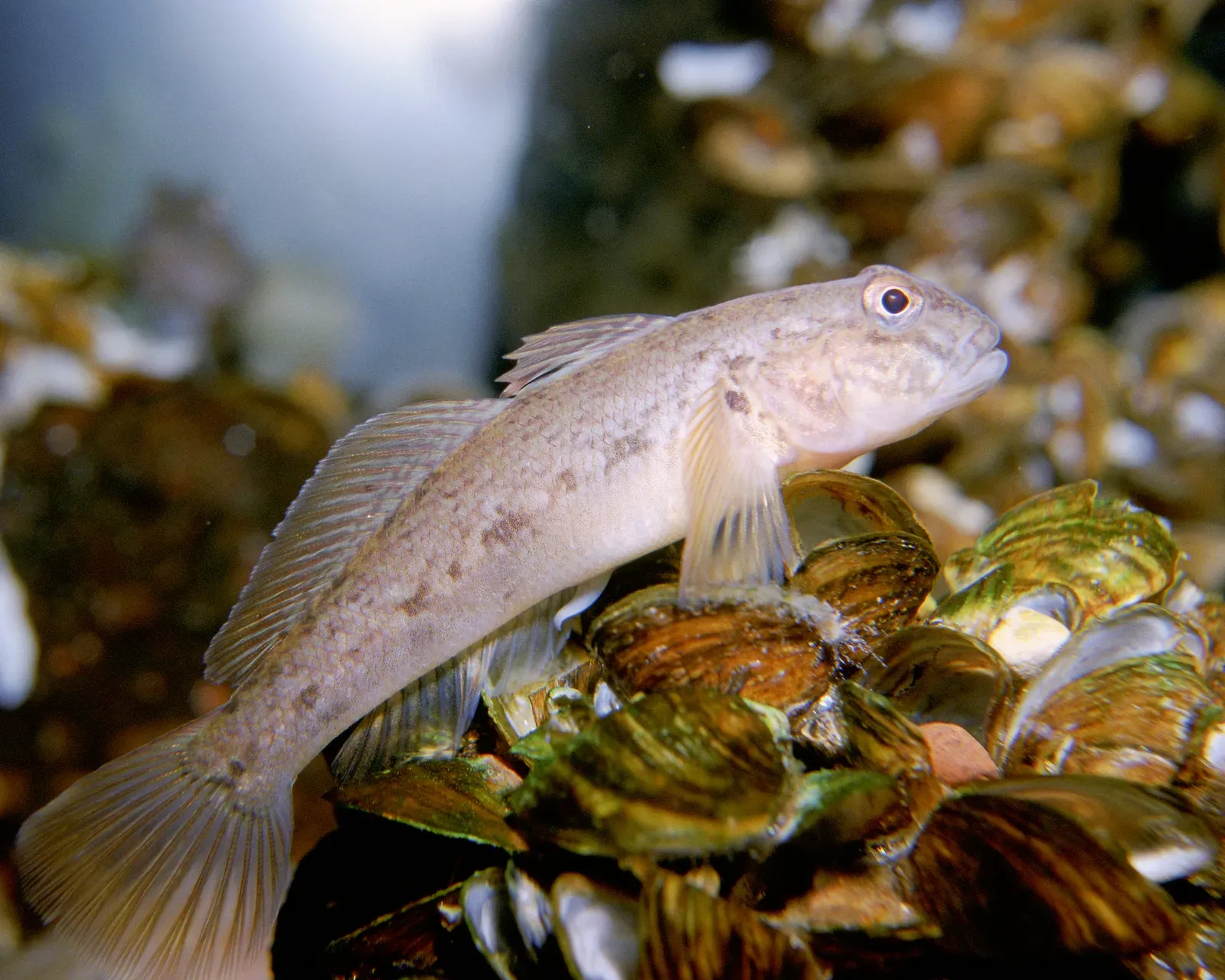
The round goby doesn’t look threatening. It’s small, bottom-dwelling, and easy to overlook. But its ecological impact across Midwest waters has been anything but minor. The species was accidentally introduced into the North American Great Lakes by way of ballast water transfer in cargo ships. First discovered in North America in the St. Clair River in 1990, the round goby is considered an invasive species with significant ecological and economic impact.
Within five years of their arrival in the St. Clair River, freighters had delivered round gobies to all five of the Great Lakes. That speed of spread speaks to both the goby’s adaptability and the way industrial shipping unintentionally functions as a biological transport system. An aggressive fish, the round goby outcompetes native species such as the sculpin and logperch for food, shelter, and nesting sites, substantially reducing their numbers. Round gobies are also voracious predators of eggs of native fish, many of them important to the angling industry.
Researchers believe the round goby is linked to outbreaks of botulism type-E in Great Lakes fish and fish-eating birds. The disease is caused by a toxin passed from zebra mussels to goby, to birds, resulting in large die-offs of fish and birds. The story isn’t entirely negative, though. The impact of round gobies is not always clear cut. On the positive side, round gobies eat invasive zebra and quagga mussels and are now an important food source for some Great Lakes fishes, native water snakes, and water birds.
Still, the round goby’s continued spread inland is a real management challenge. Upstream expansion will be mostly limited by dams, but accidental introduction of round gobies to inland lakes and streams has been observed and could factor into future spread. The round goby’s range is expected to increase, as it is estimated that only a fraction of suitable habitat is currently occupied.
#4. The Sea Lamprey: An Ancient Predator in the Wrong Place
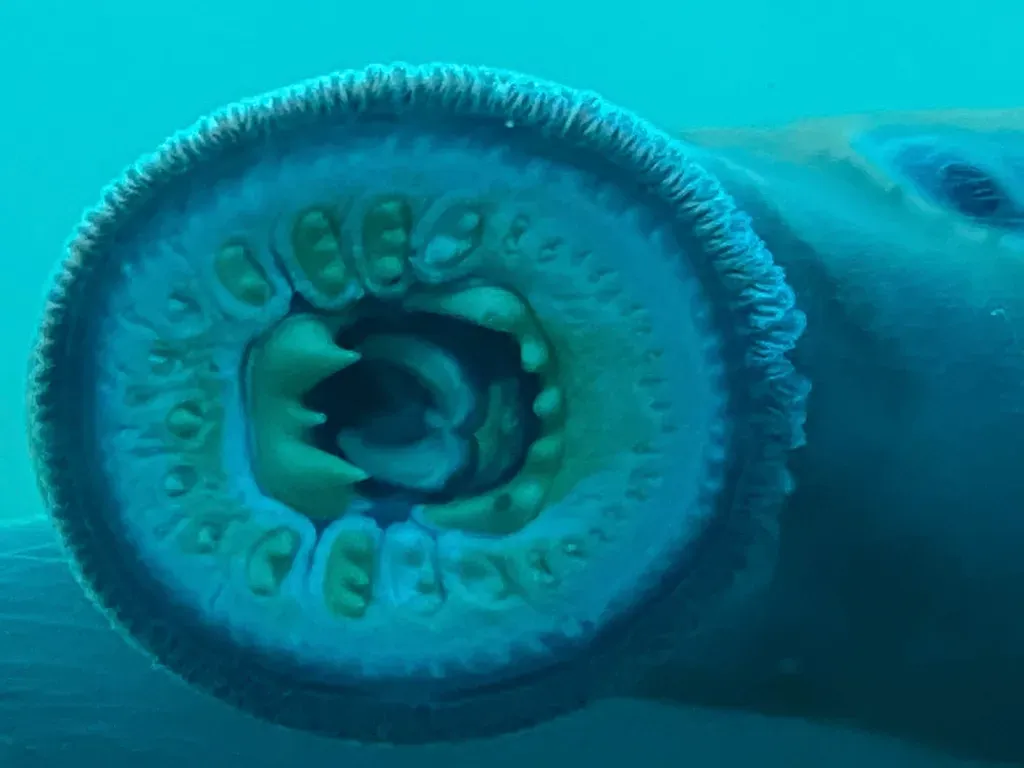
There’s something almost prehistoric about the sea lamprey. These eel-like parasites entered the Great Lakes system through man-made shipping canals in the 1800s, first appearing in Lake Ontario in 1835. What makes them particularly destructive is their vampire-like feeding behavior – they attach to host fish with suction-cup mouths lined with rows of razor-sharp teeth, literally draining their victims’ blood and bodily fluids.
A single sea lamprey can kill over 40 pounds of fish during its parasitic life stage, making it one of the most individually destructive invasive species in the Great Lakes. The scale of historical damage was severe enough to trigger a binational response. Sea lampreys are so damaging that a 1954 U.S.-Canada treaty formed the Great Lakes Fishery Commission largely to control the primitive fish, which were killing over 100 million pounds of ecologically and commercially important fish per year.
Now, sea lamprey control is something of a success story. The GLFC estimates that the sea lamprey population has plummeted 90% thanks to special pesticides and traps, though their control costs over $20 million annually. That cost is worth noting. Managing a single invasive species in one region requires sustained, expensive, and coordinated effort year after year – with no finish line in sight. Along with overfishing and pollution, invasive species are responsible for the loss of 18 fish species in at least one Great Lake.
The lamprey story also illustrates something that gets lost in the broader conversation about strange fish: the problem isn’t always new arrivals. Sometimes it’s old arrivals whose damage is still being reckoned with generations later, their effects rippling through food webs in ways that continue to surprise researchers.
#5. The “Zombie Fish” of Lake Superior: A New Mystery
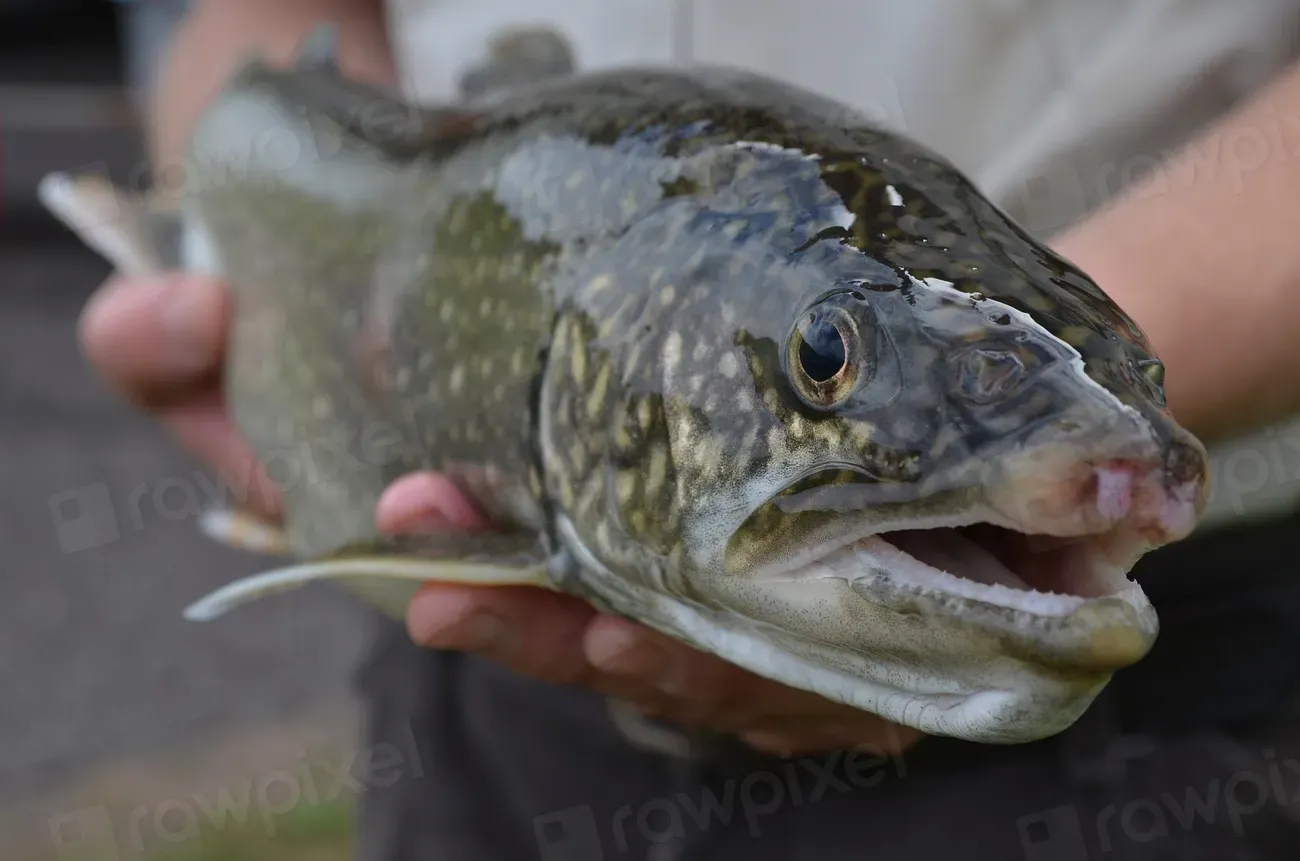
Perhaps the strangest fish story currently unfolding in Midwest waters isn’t about an invasive species at all. It’s about a native one behaving in deeply puzzling ways. Something unusual is turning up in the icy depths of Lake Superior: extremely skinny lake trout that scientists say look almost starved. Researchers have started calling them “zombie fish,” and they still do not know what is causing the condition.
In the deepest parts of Lake Superior, about a quarter mile below the surface, researchers are finding more and more emaciated lake trout that weigh roughly half as much as healthy fish of the same size. The fish belong to a fatty deep-water subspecies called siscowets, which are normally built to survive harsh conditions more than 1,000 feet down. In Lake Superior, almost half of the catches in the deep-water areas are these zombie fish.
Researchers are actively testing several possible explanations. One theory is that the fish are starving because something in the deep-water food web has changed, leaving siscowets without enough calories in an already extreme environment with limited food sources. Scientists are also looking into the possibility of a disease. The lake trout’s recovery had been considered a genuine conservation success story. Lake trout are a major part of Lake Superior’s ecological balance and a long-running conservation success story. After invasive sea lampreys nearly wiped them out decades ago, control efforts helped the species recover across most of the lake.
Now, scientists are trying to figure out whether these “zombie” trout are an isolated deep-water mystery or an early warning sign. Researchers are working to understand the cause, the long-term implications, and whether action is needed before the problem spreads or worsens. It’s a reminder that ecosystems don’t simply stabilize once one threat is removed. New puzzles emerge, and the water keeps its secrets longer than we’d like.
What This All Means for Midwest Lakes
The fish showing up in Midwest lakes aren’t just curiosities for anglers. They represent something larger: the cumulative pressure on freshwater ecosystems that took millions of years to form. A 2017 report estimated that invasive species cost the Great Lakes states well over $100 million each year. That’s before accounting for losses to sport fishing, tourism, and the broader ecological services these lakes provide to tens of millions of people.
The pathways that brought these fish here are surprisingly mundane. Vectors of introduction include illegal transport of invasive species, discharge of ballast water through shipping, inadvertent introduction by boats, and release of live bait. Most of these entrances weren’t dramatic. They were quiet, incremental, and often the result of decisions that seemed harmless at the time. Many aquatic invasive species were introduced intentionally for sport, aquaculture, or as part of management strategies, often without achieving the intended outcome.
What’s genuinely encouraging is that public awareness has grown significantly. Anglers are reporting unusual catches. State agencies are tracking sightings in real time. Important strides have been made in recent decades to address the invasive species challenge in the Great Lakes. Successful partnerships involving federal, state, provincial, and tribal agencies, as well as nonprofits, have been key to progress. These aren’t small wins.
The bigger challenge is that ecological change doesn’t wait for funding cycles or policy debates. The fish keep moving, keep reproducing, and keep reshaping the environments we’ve long taken for granted. Whether the Midwest’s lakes hold the line against further disruption depends largely on decisions being made right now – by agencies, by lawmakers, and honestly, by anyone who launches a boat, empties a bait bucket, or releases a pet fish into the wrong water.
The Midwest has always had a complicated relationship with its lakes, treating them as both resources and backdrops to daily life. What the strange fish appearing in those lakes are telling us, if we’re willing to listen, is that these ecosystems are more fragile and more dynamic than they appear from the shoreline. Some of those creatures slipping beneath the surface right now are already changing what those waters will look like for the next generation – and the one after that.
