
Most of us have seen the same travel bucket lists recycled for years. The Grand Canyon. Niagara Falls. Mount Everest. They’re extraordinary, sure, but the planet is quietly hiding places so surreal, so impossibly beautiful, that even seasoned travelers stop mid-step and question whether what they’re seeing is actually real.
The world’s true hidden wonders tend not to show up on mainstream travel posters. They exist in quiet corners, tucked behind language barriers, unmarked roads, and the kind of remoteness that most tourists politely avoid. That’s exactly what makes them worth seeking. Here are fifteen lesser-known natural wonders that honestly deserve more of the world’s attention – and once you see them, you’ll wonder why nobody told you sooner.
#1. Salar de Uyuni, Bolivia – The World’s Largest Mirror
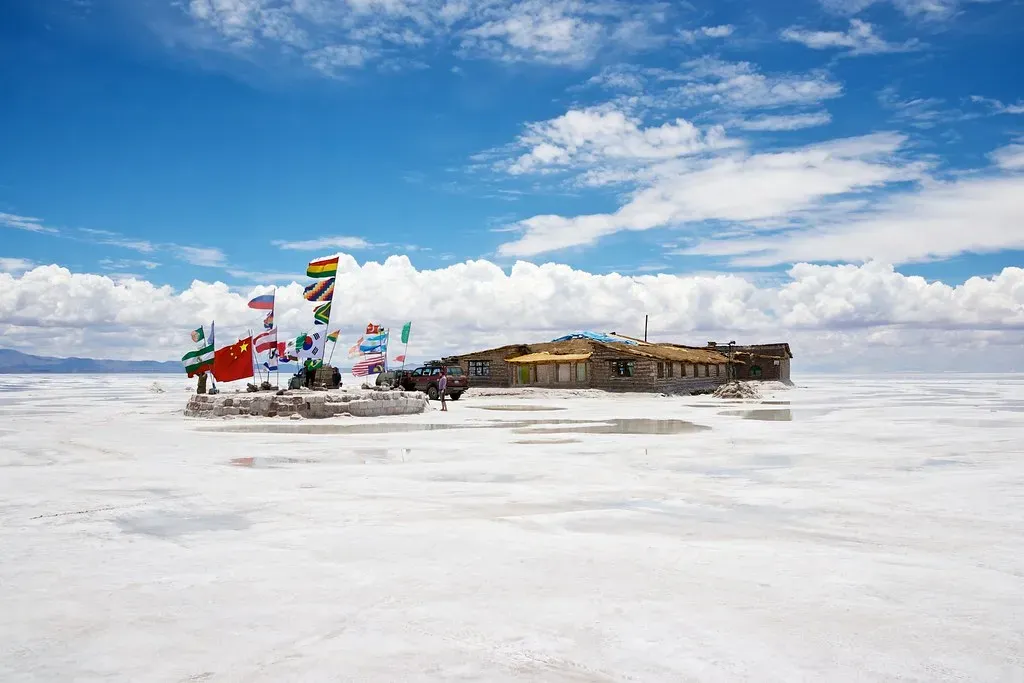
Salar de Uyuni is the largest salt flat in the world, covering an area of approximately 10,582 square kilometres, situated in southwestern Bolivia near the crest of the Andes Mountains at an elevation of 3,656 meters. That’s not a typo. You’re essentially standing on a crust of ancient salt so vast and so flat that astronauts can see it from orbit.
After rainfall, the Salar de Uyuni transforms into a giant mirror that reflects the sky above it, creating an optical illusion that you are walking in the clouds. This natural wonder formed when prehistoric lakes evaporated between 10,000 to 30,000 years ago, leaving behind a thick mineral crust of sodium chloride, and from November to April each year, a few inches of rain transform the salt desert into an enormous mirror. Few landscapes on Earth feel quite this cinematic without any filter.
#2. Socotra Island, Yemen – Earth’s Most Alien Landscape
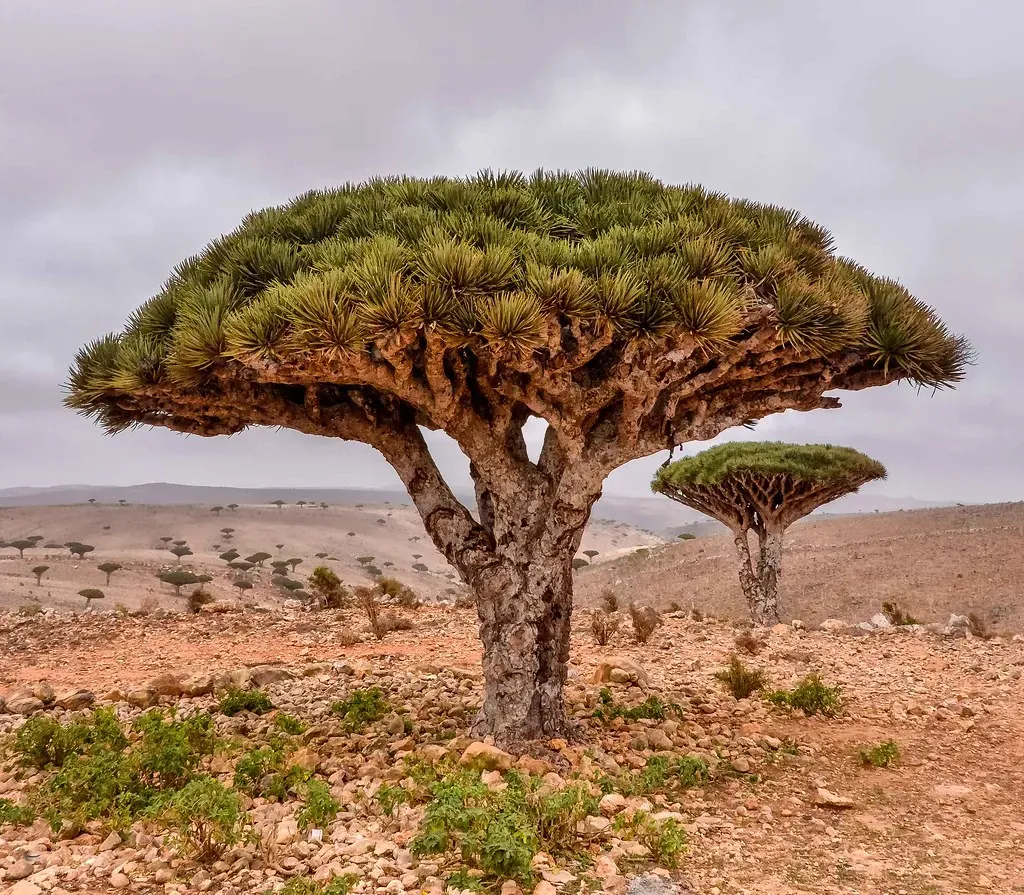
Described as “the most alien-looking place on earth,” Socotra Island is part of a remote archipelago in the Indian Ocean, so isolated that one-third of its plant life is found nowhere else in the world. It’s the kind of biodiversity that takes millions of years of isolation to produce – and it shows in every strange, beautiful corner of the island.
Most notable are its dragon’s blood trees, which look like flying saucers sitting atop trunks, named due to their red sap traditionally used as a dye, alongside the Dr. Seuss-like adenium socotranum trees that look like elephants’ legs with pink flowers perched on them. With over 700 endemic species and an ecosystem that remains untouched by time, it’s a dream destination for nature lovers and adventure seekers. Socotra doesn’t just impress you; it genuinely unsettles you in the best possible way.
#3. Caño Cristales, Colombia – The River That Ran Away from Paradise
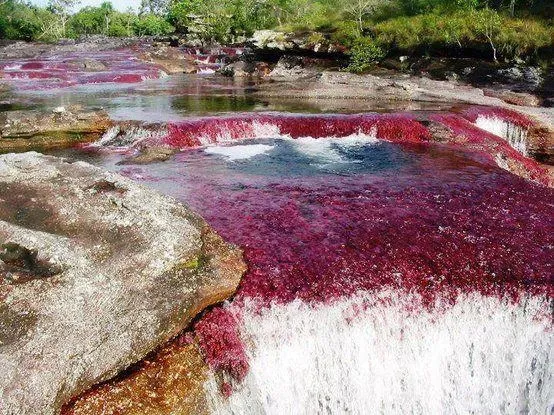
Caño Cristales goes by many identities such as “river of five colors,” “the river that ran away from paradise” and “the most beautiful river in the world.” Most rivers earn their reputation through volume or power. Caño Cristales earns it through color – something entirely different and entirely unforgettable.
The Caño Cristales river bursts into a vibrant natural palette from June to November, thanks to a unique aquatic plant called Macarenia clavigera, known as the “River of Five Colors,” displaying striking reds, blues, yellows, and greens as it flows through the Serrania de la Macarena National Park. The Macarenia clavigera is native only to Colombia, so the river simply cannot be recreated anywhere else on the planet. Timing your visit between July and November is everything.
#4. Waitomo Glowworm Caves, New Zealand – A Galaxy Underground
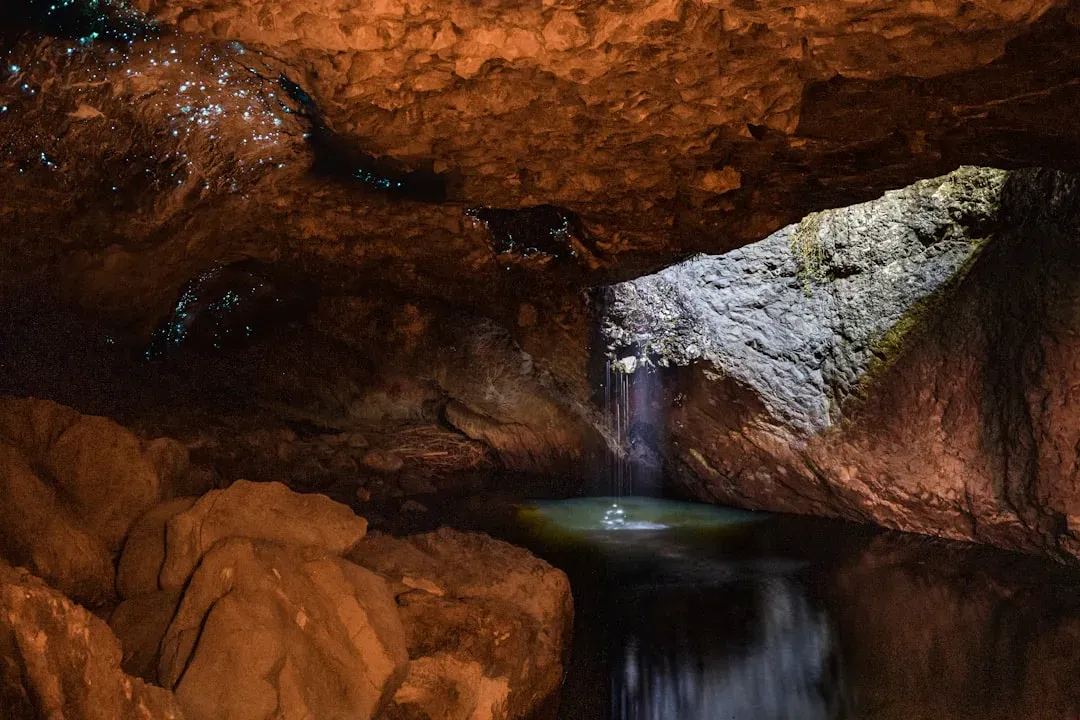
Hidden beneath the rolling hills of New Zealand’s North Island are the Waitomo Glowworm Caves, caverns illuminated by the bioluminescent light of thousands of glowworms, creating a starry-night effect that mesmerizes visitors, with serene boat tours through these illuminated waters adding to the ethereal experience. It’s one of those places where no photograph ever quite captures what you actually felt standing inside it.
These truly magical caves formed more than 30 million years ago, beginning with the creation of limestone at the bottom of the ocean, standing today as one of the nation’s most inspiring natural wonders. The caves have been open to the public since 1889, but known to the indigenous Maori people for much longer – in fact, Waitomo comes from the Maori words wai, for water, and tomo, for hole or entrance. The cultural layer here runs just as deep as the geological one.
#5. Lençóis Maranhenses, Brazil – The Desert That Drowns
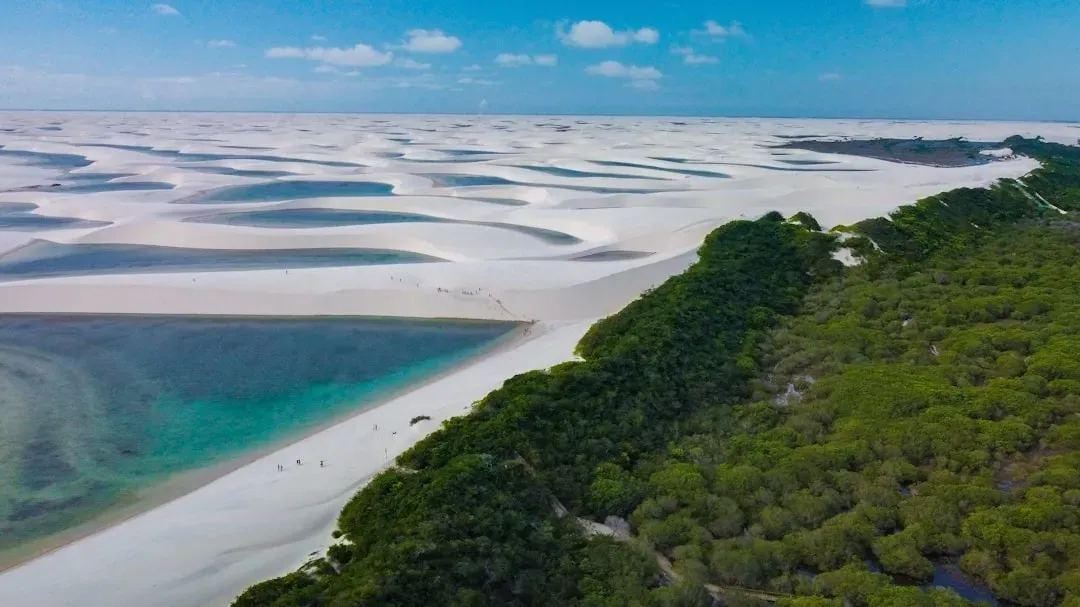
In northeastern Brazil, Lençóis Maranhenses National Park features sweeping white sand dunes interspersed with turquoise freshwater lagoons, and during the rainy season these transient pools fill with rainwater, creating a landscape that defies traditional desert expectations and offers a surreal oasis. It looks exactly like what would happen if someone accidentally spilled an ocean into the Sahara.
Located in the state of Maranhão, this 1,500-square-kilometre expanse of blindingly white sand dunes defies every logic of nature: it looks like a desert and feels like a desert, but receives over 1,200mm of rain a year, nearly five times the limit for an actual desert. Every year the wind reshapes the dunes, moving them by up to 20 meters, and every year the lagoons evaporate in the October heat, only to be reborn months later – to visit is to witness a landscape that is constantly being erased and redrawn. That impermanence is what makes it so worth seeing now.
#6. Zhangjiajie National Forest Park, China – The Avatar Mountains
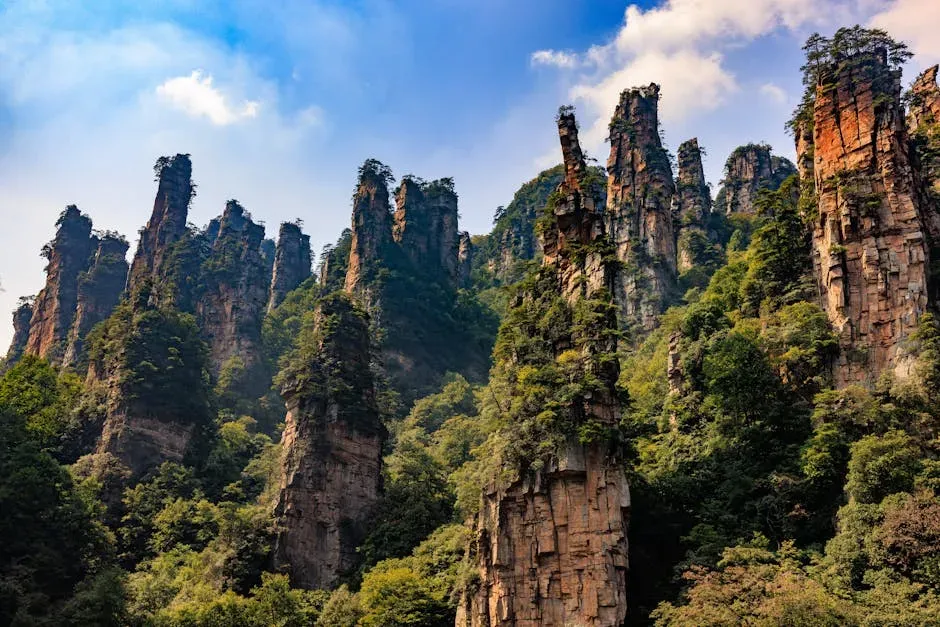
The Zhangjiajie National Park is a national forest park located in Hunan Province of China – a mesmerizing world of towering sandstone pillars and awe-inspiring landscapes that look like something from a science-fiction movie, with deep ravines, deep canyons, and unusual peaks, the pillar-rock formations being the park’s most popular and world-renowned features. The comparison to cinema isn’t a stretch; it’s practically official.
Some of these pillar-rock formations rise up to 1,970 feet, and Zhangjiajie National Park is a UNESCO World Heritage Site that also inspired the floating mountains in James Cameron’s Avatar. There are three ways to explore the site as a tourist: traverse the park’s extensive network of trails, use the Bailong Elevator (the tallest outdoor elevator in the world), or take the glass bridge that stretches across a vertiginous drop. One visit here dismantles every idea you had about what a forest could look like.
#7. Pamukkale, Turkey – The Cotton Castle
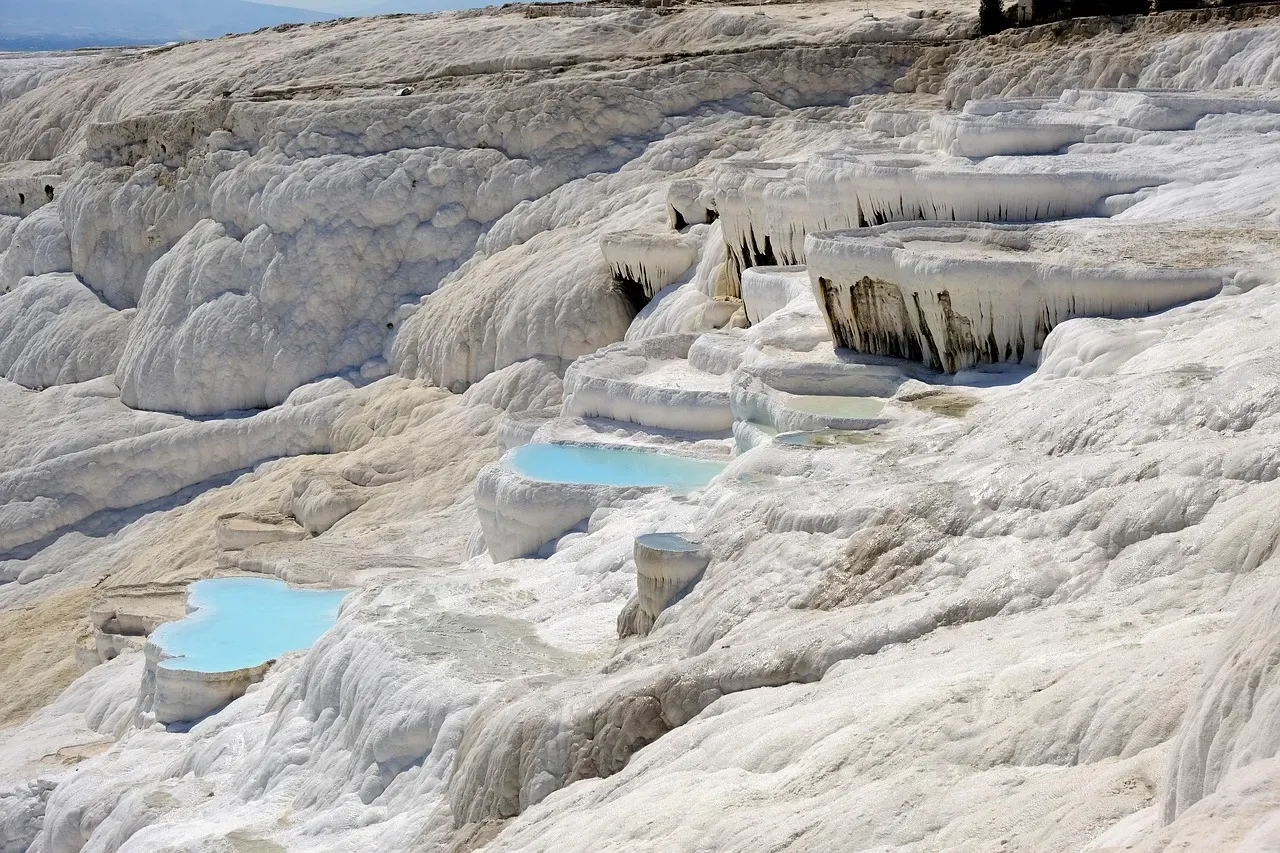
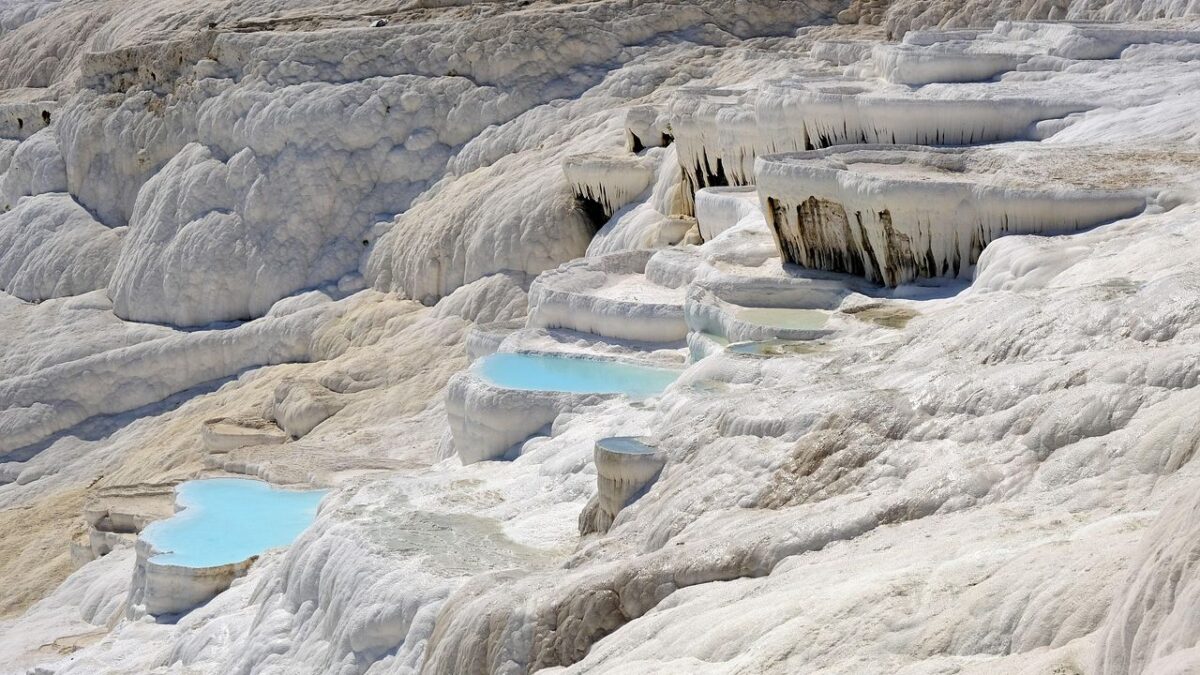
Pamukkale is a natural site in Denizli Province in southwestern Turkey, whose name means “Cotton Castle” in English, located in the River Menderes valley, featuring white travertine terraces and natural hot springs in a breathtaking arrangement. From a distance, the hillside looks permanently snowcapped. Up close, it’s something warmer and stranger than that.
The terraces of gleaming white mineral-rich hot springs cascade down the hillside like a frozen waterfall, and visiting is similar to an extravagant spa day, except the water is heated by subterranean lava. These terraces have been soaking spa-goers for over two millennia – the ancient Romans clearly knew how to unwind in style. Two thousand years of human appreciation is a fairly solid endorsement for any natural attraction.
#8. Marble Caves of Patagonia, Chile – Sculpted by the Sea
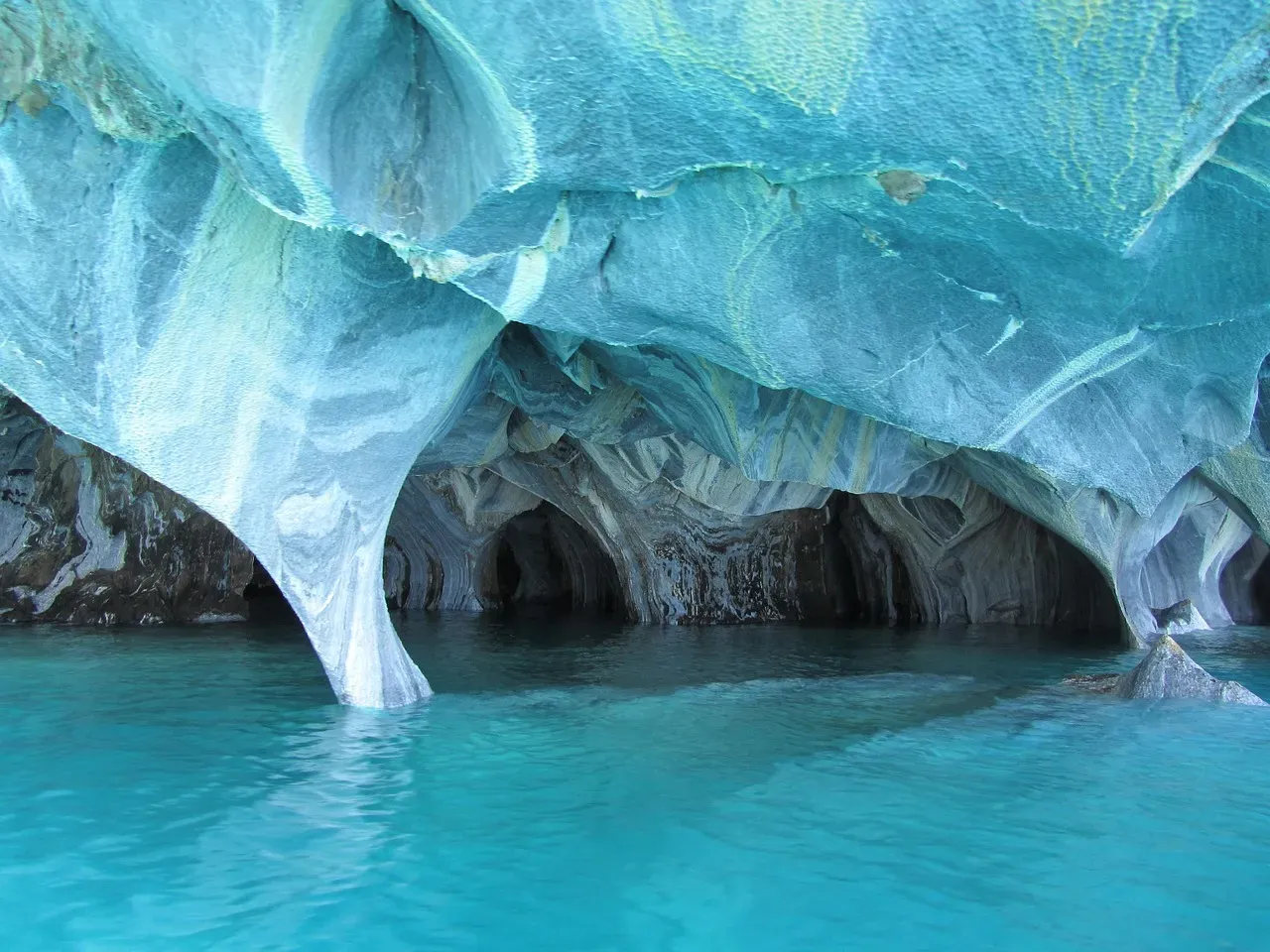
Located in Patagonia on Lake General Carrera, Chile’s Marble Caves, also known as the “Marble Cathedral,” were created more than 6,000 years ago by waves that eroded the rocks. The result is a labyrinth of swirling caverns carved into solid marble at the water’s edge, and the colors inside change with the seasons as water levels rise and fall.
The Marble Caves in Chile’s Patagonia region are a series of stunning caverns carved by waves over thousands of years, located on General Carrera Lake, with swirling blue and white walls that change color depending on the water level and light, creating a mesmerizing effect. The turquoise colors and splendid shapes of the Marble Caves create imagery of unearthly beauty carved out by nature. Visiting by small boat in morning light is one of the more quietly perfect travel experiences you can have in South America.
#9. Zhangye Danxia Landform, China – Nature’s Painted Mountains
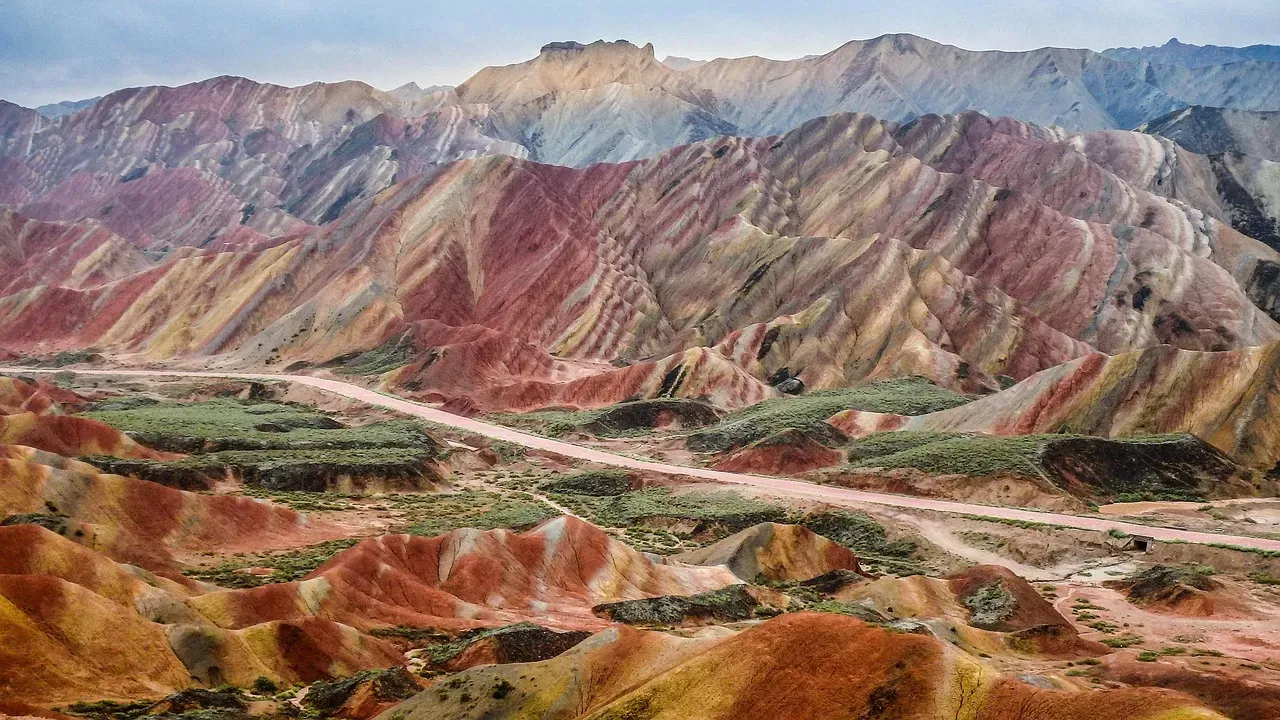
The Zhangye Danxia Landform in Gansu, China is known for its colorful, striped mountains – rainbow-like formations created by layers of mineral deposits and tectonic movement over millions of years, making this one of the most visually striking landscapes in the world. When you first see photographs, the instinct is to assume they’ve been edited. They haven’t.
Danxia refers to a special type of landscape found in southwestern China, and the colorful mountains are made up of layers of minerals and rock disrupted when tectonic plates caused the landmass that is now India to collide with the rest of the Eurasian continent. The whole thing is essentially a geological timeline you can read with your eyes, painted in reds, yellows, greens, and deep purples across an enormous canvas. Sunrise and sunset are the hours when the colors do something that no photograph can properly hold.
#10. Vaadhoo Island, Maldives – The Sea of Stars
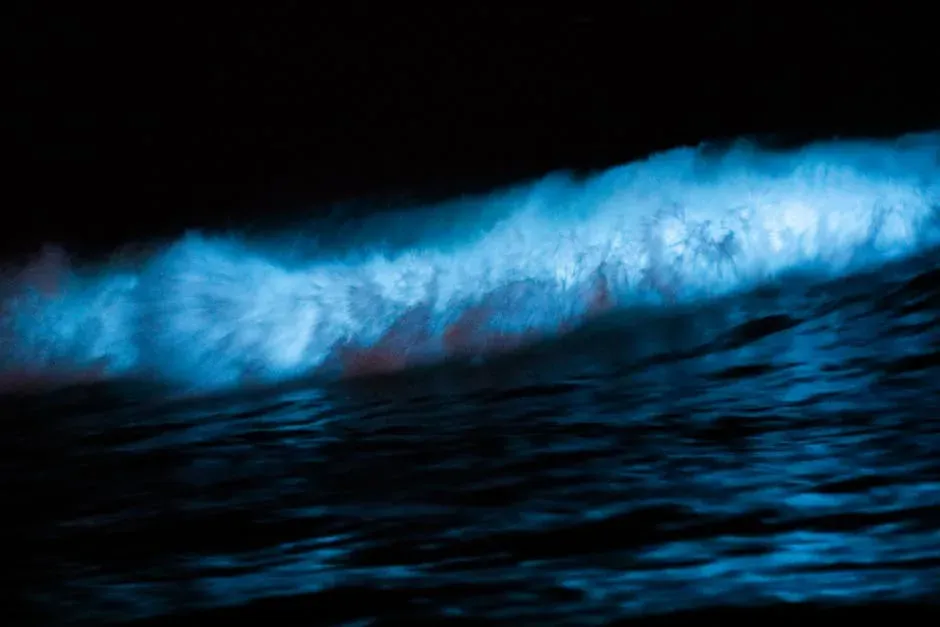
Vaadhoo Island, part of the Maldives, offers a natural spectacle known as the “Sea of Stars” – a phenomenon that occurs when bioluminescent phytoplankton light up the waves at night. The shoreline glows blue in the dark, and every footstep or wave disturbs the water into a brief, brilliant flicker. It sounds like something from folklore. It isn’t.
The bioluminescence is caused by microscopic marine organisms that produce light as a chemical response to movement or disturbance. The effect is most dramatic on moonless nights, when the contrast between the dark sky and the glowing surf is at its most vivid. Vaadhoo is a small, relatively quiet island compared to the Maldives’ more celebrated resort destinations, which only adds to the intimacy of the experience. Seeing the ocean glow beneath your feet has a way of making the rest of the world feel very small and very manageable.
#11. Lake Hillier, Australia – The Pink Lake
Lake Hillier, located on Middle Island in Australia, is known for its vibrant bubble-gum pink color, an unusual hue still not fully understood though believed to be due to the presence of certain algae and bacteria, surrounded by lush greenery that contrasts sharply with the deep blue of the nearby ocean. The combination of colors from the air is genuinely otherworldly.
The bubble-gum pink lake defies science in that no one knows precisely why the color is stronger the further from the lake you are, though most believe it is caused by a specific algae drawn to its high salinity, as well as a pink bacteria known as halobacteria. The island itself is primarily used for research purposes, making visitor access limited and the lake that much more intriguing for it. Some places are more powerful precisely because you can’t simply walk up to them whenever you please.
#12. The Chocolate Hills, Bohol Island, Philippines
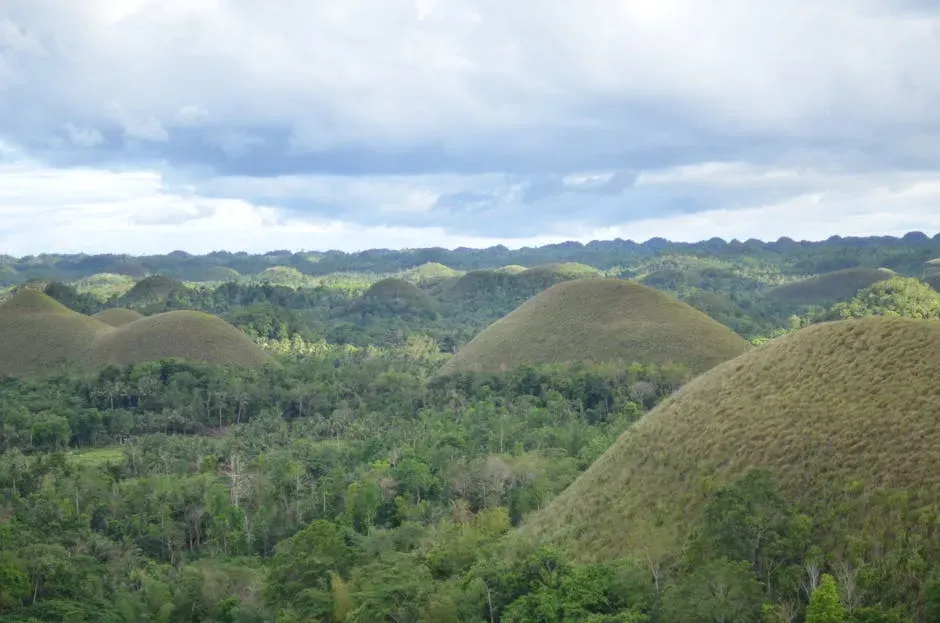
The Chocolate Hills on Bohol Island in the Philippines are a series of more than 1,200 cone-shaped hills that turn brown during the dry season, resembling giant chocolate mounds – geological formations ranging in height from 98 to 393 feet, believed to be the result of the uplift of coral deposits followed by rainwater erosion. Even the explanation sounds implausible, which is part of the appeal.
The Chocolate Hills vary in height from 98 feet to 393 feet, and during dry season, the grass turns a distinct brown color reminiscent of chocolate, with more than 1,268 cone-shaped hills covering an area of 31 miles. During the rainy season the hills turn vivid green, which offers an entirely different visual drama. The sheer geometric regularity of the landscape, repeated across such a wide area, makes it feel less like geology and more like something a very patient artist arranged by hand over centuries.
#13. Richat Structure, Mauritania – The Eye of the Sahara
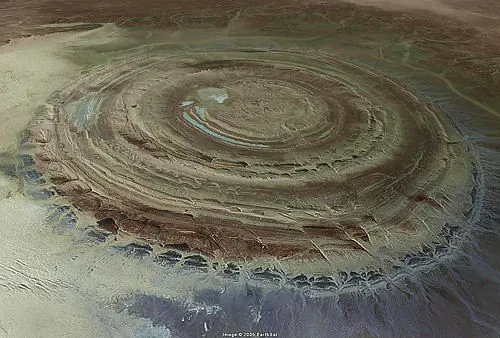
If you’re looking for a natural wonder that looks like it’s straight out of a fantasy film, look no further than the Eye of the Sahara, officially referred to as the Richat Structure, a massive geological landmark consisting of a collection of rings that give it the appearance of a detailed eyeball. It spans roughly 30 miles in diameter and sits in the heart of the Saharan desert in Mauritania, largely invisible at ground level but extraordinary from the air.
For decades, geologists puzzled over the structure’s origins, with early theories pointing to a meteorite impact before closer study revealed it to be the result of geological uplift and erosion over millions of years. It’s now considered one of the most striking geological formations on Earth and a landmark frequently used by astronauts to orient themselves while looking down from orbit. The fact that something this dramatic existed largely undiscussed outside scientific circles for so long says something interesting about how much of the planet we still haven’t properly looked at.
#14. Badab-e Surt, Iran – The Rust-Colored Terraces
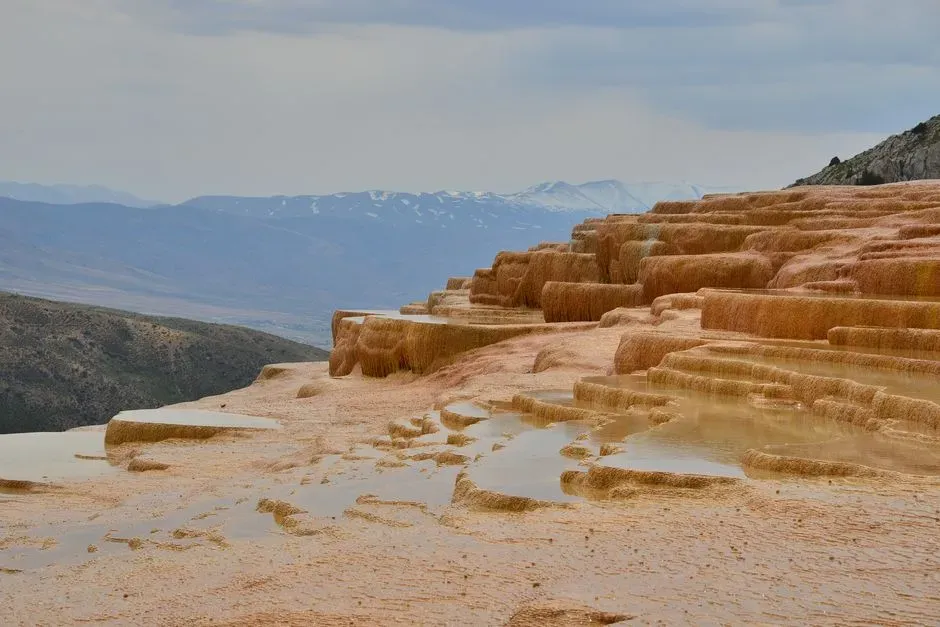
Badab-e Surt in Iran is a stunning natural terrace formation created by the flow of two mineral hot springs, with the terraces filled with vibrant, rust-colored water which turns a brilliant shade of red at sunset. The formation is a close geological cousin to Turkey’s Pamukkale, though far less visited and perhaps more visually striking at certain hours of the day.
The terraces at Badab-e Surt were created after two mineral hot springs eroded away rock over thousands of years, leaving behind deposits that give the site its unique shape, with water regularly gathering in the terraces of rust-colored minerals that turn a fiery red at sunset. Iran’s relative obscurity on the adventure travel circuit means this site receives a fraction of the attention it deserves. For those who make it, the terraces at dusk produce some of the most genuinely striking photographs of any natural formation on Earth.
#15. Spotted Lake, British Columbia, Canada – Nature’s Polka Dots
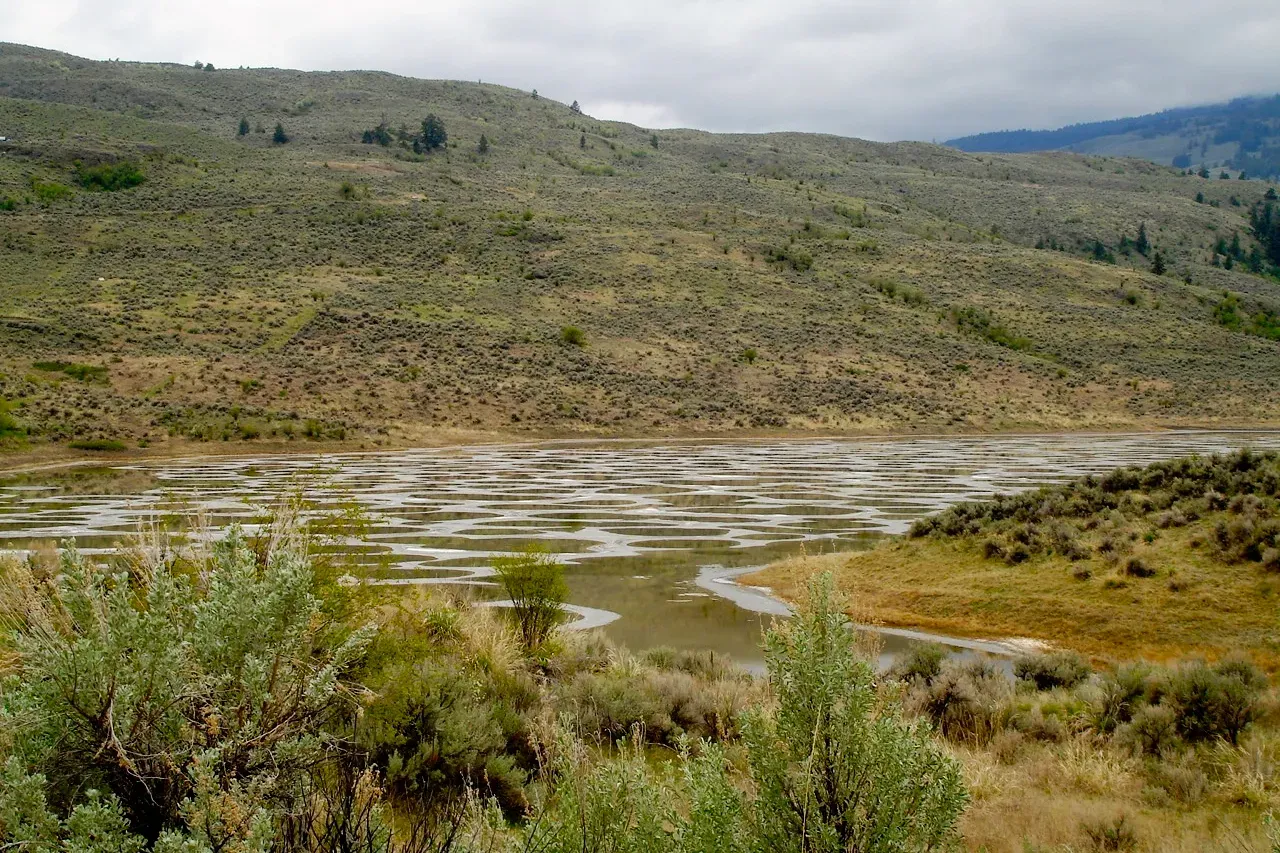
Spotted Lake in British Columbia is a unique saline lake known for the colorful spots that appear on its surface during the summer months, caused by the concentration of minerals such as magnesium sulfate, calcium, and sodium sulfates. As summer progresses and the water evaporates, these concentrated mineral patches solidify into distinct circular pools, each tinted a different shade of white, green, blue, or yellow depending on its mineral content.
The lake, known as Kliluk to the indigenous Okanagan Nation, has been considered sacred for generations, with the minerals historically used for medicinal purposes. It sits along Highway 3 near Osoyoos and is visible from the road, though visitors are asked to respect the land and view from the roadside rather than accessing the lake directly. That quiet request says something about the difference between a tourist attraction and a place that genuinely means something. There are places in this world where the appropriate response is simply to stop, look, and let it register.
Conclusion: The Planet Is Still Full of Surprises
Here’s the honest truth about the world’s best-kept natural secrets: most of them aren’t secrets at all. They’re simply overlooked because the tourism industry gravitates toward what’s already popular, and social media tends to amplify the same handful of landmarks until they feel like the only options worth considering. The fifteen places on this list prove otherwise.
What makes places like Caño Cristales or Badab-e Surt or Spotted Lake genuinely special isn’t just their visual drama. It’s the fact that encountering them requires a little more intention. “Underrated” doesn’t mean “unworthy.” It means unspoiled, undiscovered, and unforgettable – and hidden-gem destinations often deliver richer experiences.
The planet is not running out of wonder. If anything, most of us are simply running the same short loop of famous destinations and calling it exploration. The world is filled with natural wonders that seem permanent, but history proves even the most spectacular landscapes can disappear. Some of these places face very real pressures from climate change, overtourism, and political instability. The window to see them in their current form is not guaranteed to stay open forever. That’s not a reason for panic – it’s a reason to start planning with a little more curiosity and a lot less hesitation.
