
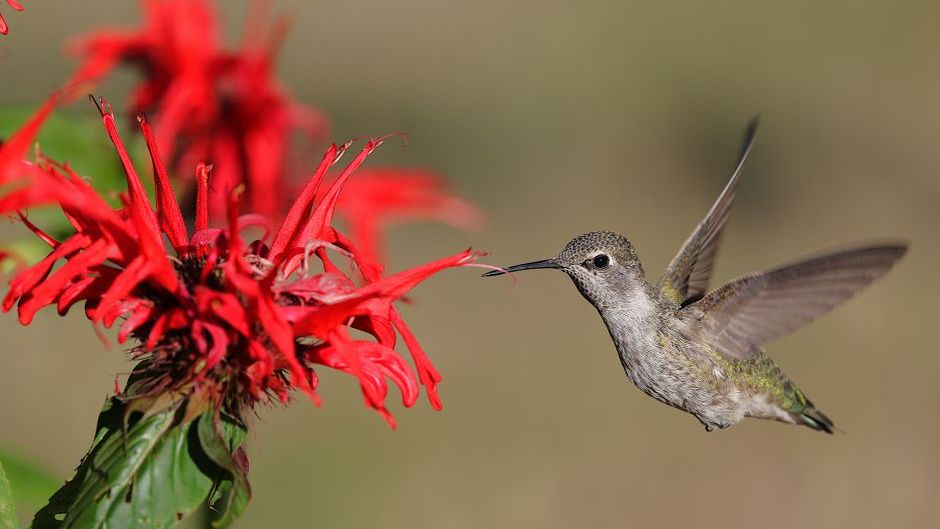
Most people think hummingbirds are delicate, peaceful little jewels that drift through the garden, sip some nectar, and mind their own business. Experienced gardeners know better – and some of them spent years confused, frustrated, and watching their carefully planted feeders turn into chaos before they finally understood what was actually going on. These birds are aggressive, strategic, and wired in ways that defy every gentle assumption you might carry into the hobby.
What follows are 14 behaviours that seasoned observers say genuinely changed how they garden – not the basics you find on a seed packet insert, but the weird, specific, sometimes unsettling truths that only reveal themselves after real time in the yard. A few of them will make you rethink your entire setup. At least one will make you feel like you owe these tiny birds an apology.
#1 – They Enter a Death-Like Torpor Every Single Night
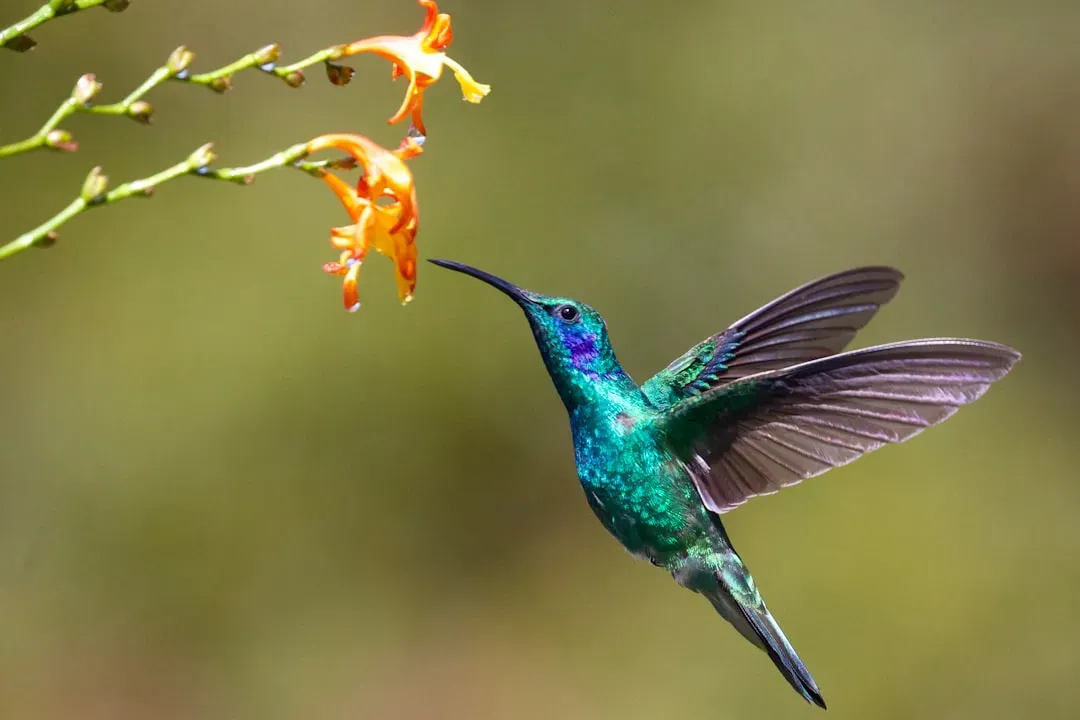
Most gardeners assume hummingbirds simply perch and rest after sunset, the way robins or sparrows do. What actually happens is far more dramatic. Every night, a hummingbird drops into torpor – a near-hibernation state where its heart rate plummets, its body temperature crashes toward ambient air temperature, and its metabolism slows to roughly one-fifteenth of its daytime pace. To anyone who stumbles across one in this state, the bird looks genuinely dead: cold, unresponsive, barely breathing.
This nightly reset isn’t optional. It’s survival. A hummingbird’s energy demands are so extreme that without torpor, it would burn through every calorie it consumed during the day and starve before sunrise. Gardeners who understand this stop worrying when they find a motionless bird on a cold morning branch – and they start appreciating just how close to the metabolic edge these creatures operate every single day.
Fast Facts
- During torpor, a hummingbird’s heart rate drops from over 1,000 beats per minute to as low as 50 bpm
- Body temperature can fall by more than 30°C (54°F) in a single night
- Breathing rate plunges from around 245 breaths per minute down to just 6 breaths per minute
- Metabolism slows by up to 95%, making torpor essential for overnight survival
- Some species briefly stop breathing altogether during the deepest phase
#2 – One Bully Bird Can Shut Down Your Entire Feeder Setup
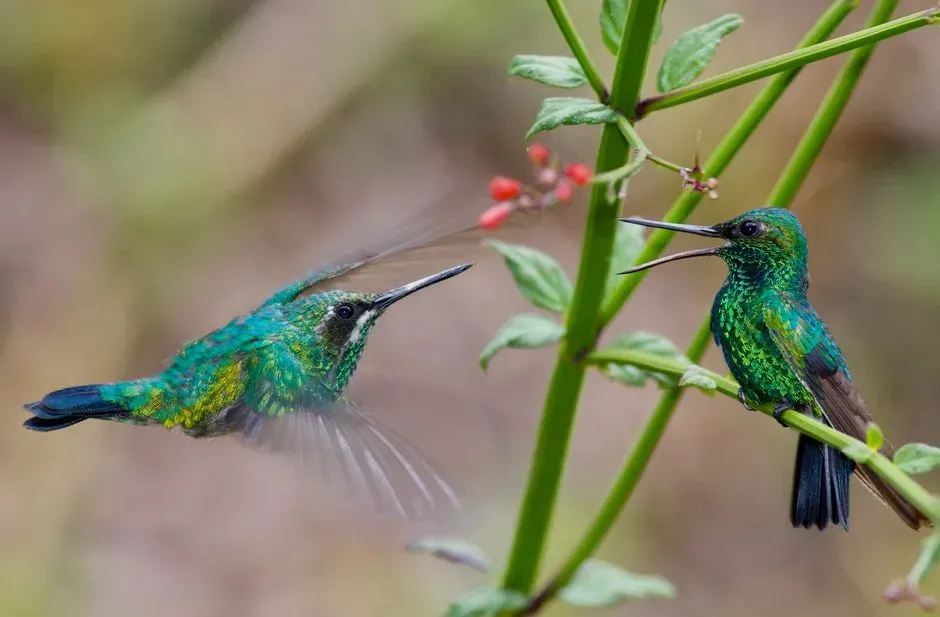
You hang a feeder, maybe two, and wait for the charming scene of multiple hummingbirds hovering peacefully together. What you often get instead is a single aggressive male who has decided that everything within eyeshot belongs to him. He’ll spend more energy chasing rivals away than he will actually feeding – dive-bombing intruders relentlessly, perching on a high branch to survey his kingdom, and running off every other bird that dares approach.
Experienced gardeners call this the bully problem, and it’s the single most common reason people think their yard “doesn’t attract hummingbirds” when in reality it attracts exactly one hummingbird with a serious attitude. The fix – placing multiple feeders far apart, ideally with visual barriers between them – is something most people discover only after a full frustrated season of watching one bird hoard everything. Females defending nests can be just as vicious when resources are nearby, so don’t assume the aggression is always coming from a male.
#3 – They Have a Perfect Memory for Every Flower and Its Refill Schedule
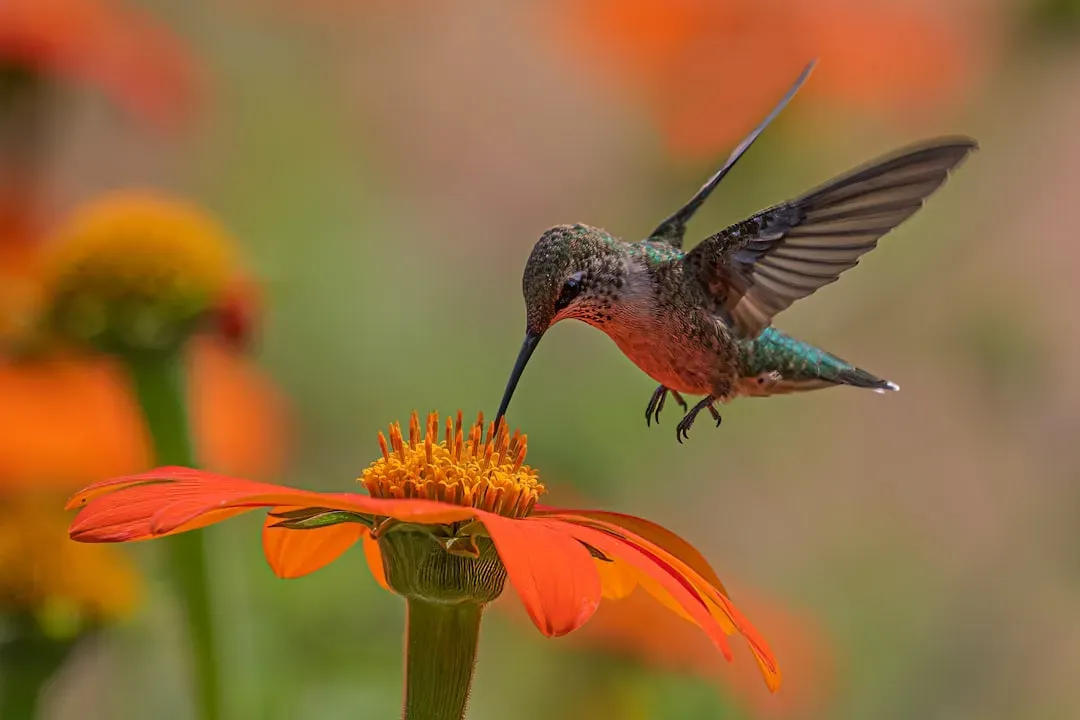
Hummingbirds don’t visit flowers randomly. They maintain a mental map of every nectar source in their territory and track – with what looks like genuine precision – how long each source takes to replenish. They’ll drain a flower, move on through a rotation of other sources, and return at almost exactly the right window for the nectar to have refilled. Watch one for long enough and the pattern becomes undeniable.
This spatial memory operates across dozens of sources daily, which means the bird visiting your garden has essentially built a timed harvest route. It also means that if you plant low-yield varieties or flowers that refill slowly, you may get dropped from the rotation entirely. The plants that make the cut are the ones that deliver reliably, on a schedule the bird has already clocked. That’s not charm – that’s optimization.
#4 – Their Tongues Are Tiny Hydraulic Pumps, Not Straws
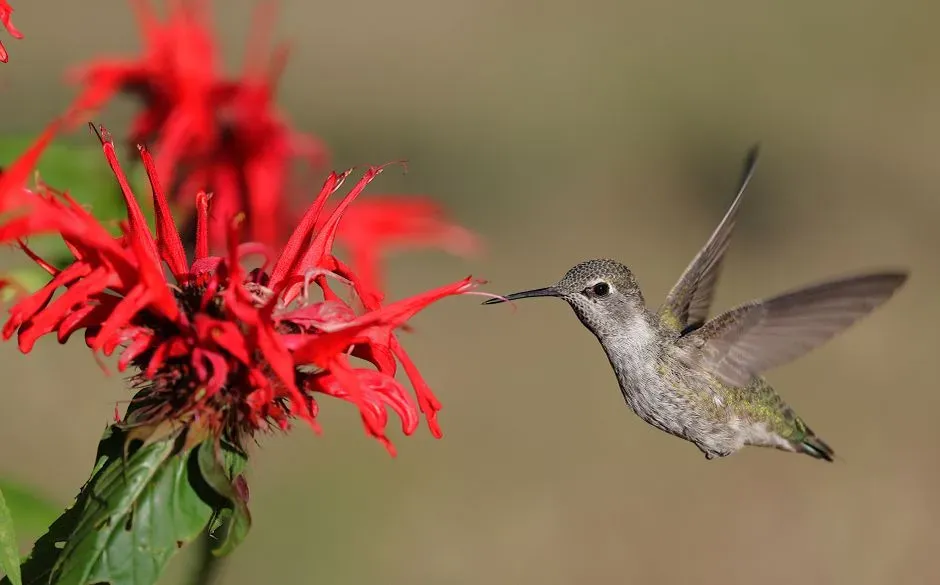
The image of a hummingbird delicately sipping nectar like it’s drinking through a cocktail straw is one of the most persistent misconceptions in backyard birding. The reality is faster, weirder, and more mechanical. Their tongues are lined with tiny hair-like structures that trap nectar through rapid lapping and pumping – flicking in and out up to 15 times per second in a motion that’s less “sipping” and more “high-speed extraction.”
This mechanism is efficient enough to let a hummingbird consume up to twice its own body weight in nectar on a single active day. Understanding how the tongue actually works changes how you think about feeder design and flower depth. Blooms that are too deep or too narrow aren’t just inconvenient – they slow the extraction rate enough that a bird doing the math on caloric return may simply move on to something easier.
At a Glance
- Tongue flicks up to 15 times per second during active feeding
- Tiny hair-like structures on the tongue trap and pump nectar – not suction
- Flowers too deep or too narrow reduce extraction speed, pushing birds to easier sources
- A hummingbird can consume close to its entire body weight in nectar in a single day
#5 – They Actively Hunt Insects Mid-Air and Actually Need Them
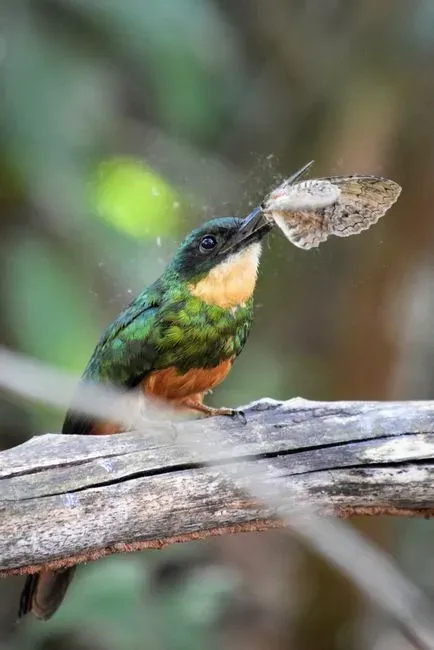
The nectar-only image is flattering but incomplete. Hummingbirds are also hunters. They snatch gnats, fruit flies, tiny spiders, and other insects right out of the air or directly from webs, and this protein-hunting ramps up hard during nesting season when females need nutrients that nectar simply cannot provide. A diet of pure sugar won’t raise healthy chicks – not even close.
This is the behaviour that catches most gardeners off guard, because it changes the whole calculus of what a “hummingbird-friendly garden” actually means. Pesticide use, obsessive web-clearing, and ultra-tidy landscaping can strip out the insect layer that hummingbirds quietly depend on. Gardeners who spray for gnats and wonder why hummingbird visits drop off in early summer are often looking at exactly this problem without realising it.
#6 – The Red Flower Rule Is Real, But They’ll Break It Whenever They Need To
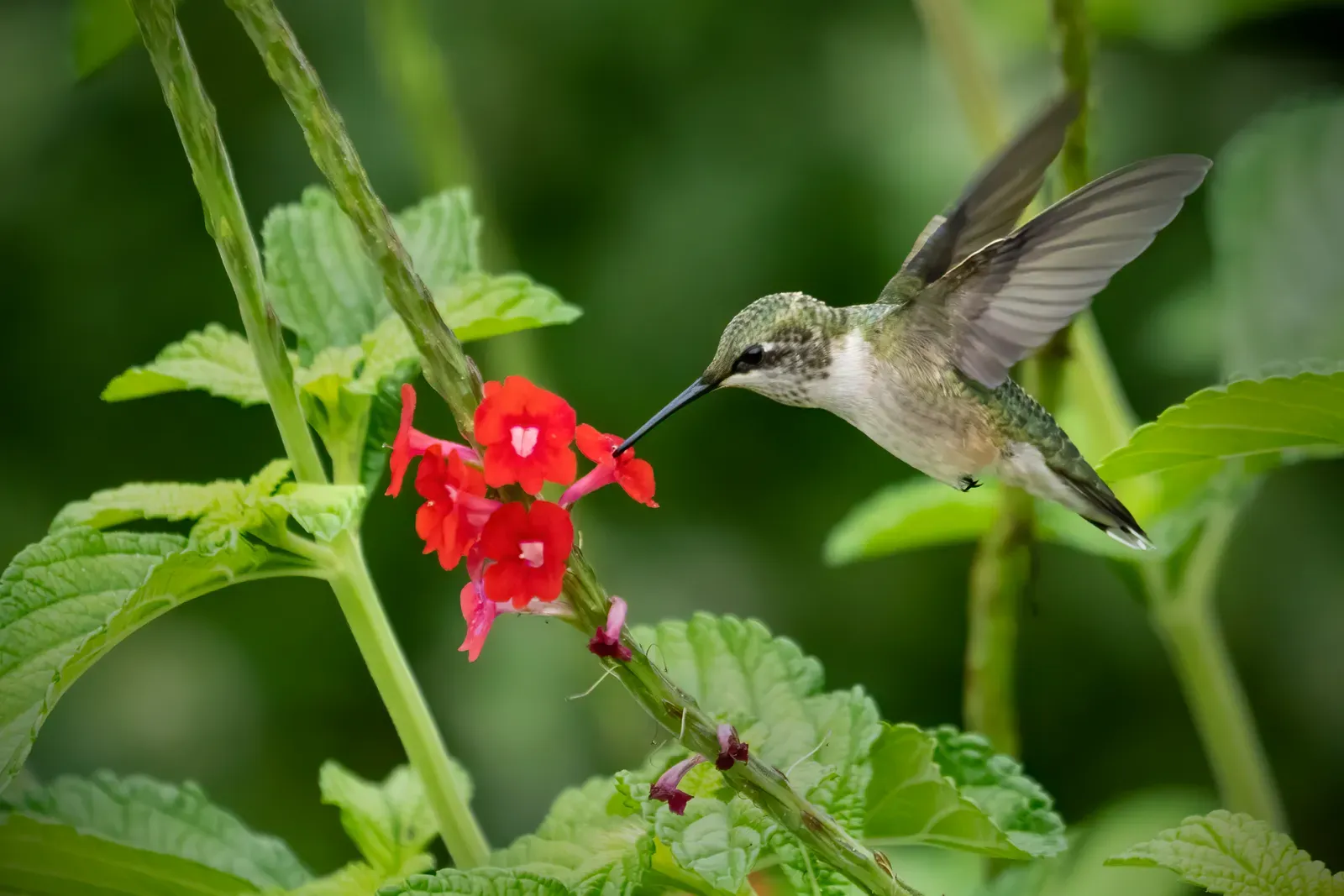
Red flowers get the most hummingbird attention for a genuinely clever ecological reason: bees and most insects see red poorly, which means red blooms tend to have more nectar left in them when a hummingbird arrives. The birds have learned this, and over generations the preference has hardened into something that looks like a rule. But it isn’t a hard rule – it’s a default that gets overridden whenever red sources run low.
Hummingbirds will visit purple, orange, pink, and even white flowers when the payoff is right. What they almost never use is their sense of smell – they have virtually none, which means scent-heavy blooms designed to attract pollinators by fragrance are essentially invisible to them as a signal. Sight and memory drive every choice. Gardeners who plant exclusively red sometimes create a feast-or-famine dynamic that a more varied palette would easily avoid.
Quick Compare
- Red blooms: First preference – bees avoid them, leaving more nectar behind
- Orange & pink blooms: Regularly visited when red sources are depleted
- Purple & white blooms: Used opportunistically – yield and accessibility matter most
- Heavily scented blooms: Largely ignored – hummingbirds navigate by sight, not smell
- Varied palettes: Outperform single-colour plantings by smoothing out nectar availability gaps
#7 – Nests Are Built to Stretch, Using Spider Silk as the Secret Ingredient
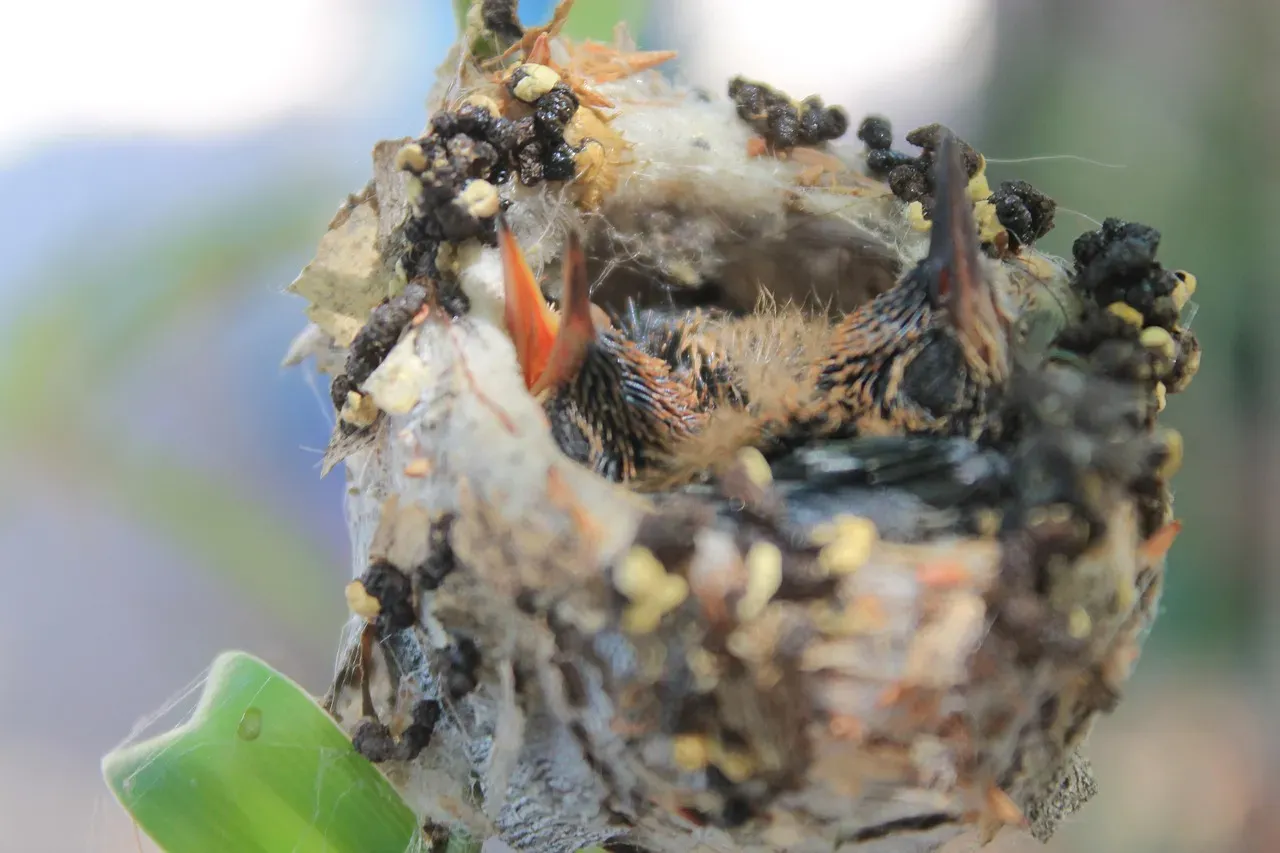
A hummingbird nest looks, at first glance, like a tiny perfect cup – compact, neat, and impossibly small. What most people don’t realise is that the structure is engineered to grow. Females weave spider silk directly into the nest walls, which gives the finished home an elastic quality. As the chicks develop and grow, the nest expands around them rather than cracking apart or dropping them onto the ground.
The same silk threads anchor the nest to its branch with surprising strength, keeping it stable through wind and weather. This is why clearing spider webs from your garden isn’t as harmless as it seems – you may be removing critical construction material from a female that’s actively building or repairing a nest nearby. The next time a web appears on your garden furniture and your instinct is to sweep it away, it’s worth pausing for a moment.
Worth Knowing
- Spider silk is pound-for-pound 5 times stronger than steel and can stretch up to 40% before breaking
- A typical ruby-throated hummingbird nest measures just 1.5 inches across – roughly the size of a golf ball
- The female builds alone over 5–10 days, collecting silk by flying through webs and pressing it onto her beak and breast
- The nest starts small enough for two pea-sized eggs and expands to fit two fully feathered chicks
- Lichens and moss are layered on the outside for camouflage – from above, the nest disappears entirely
#8 – Every Migration Is a Solo Journey of Thousands of Miles
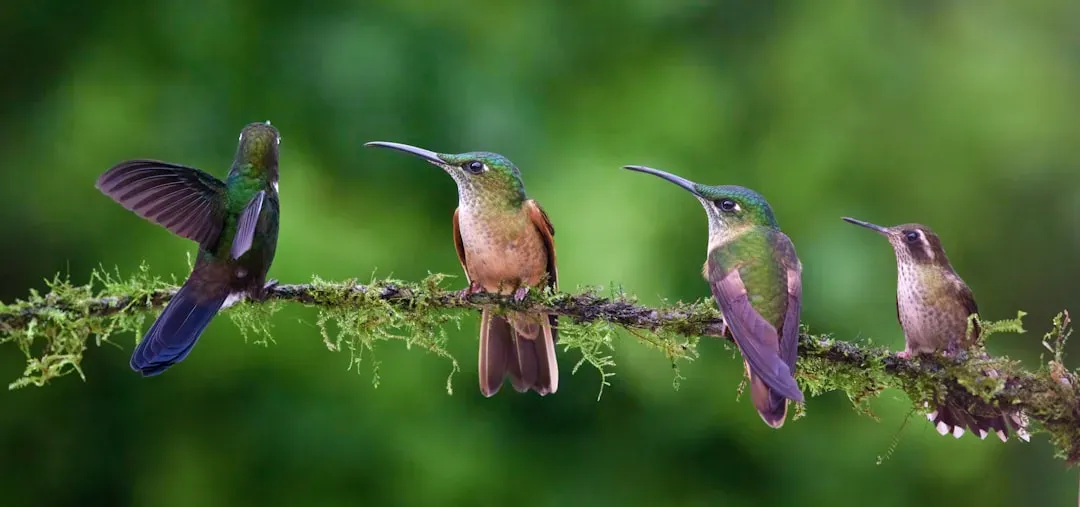
The idea of hummingbirds migrating in cheerful little flocks is appealing and completely wrong. Each bird makes the journey alone, navigating by memory, star patterns, and fat reserves built up over weeks of intensive feeding. The Rufous hummingbird covers a route of roughly 3,900 miles from Alaska to Mexico – making it one of the longest migrations relative to body size of any bird on earth.
There’s no group to follow, no experienced elder leading the way. A bird making its first migration does so entirely on instinct and individual preparation. This is why late-season feeders matter more than most gardeners realise – a bird fuelling up for a solo transcontinental flight in October needs every calorie it can get. Pulling feeders too early doesn’t push birds to leave sooner; it just sends them away underfuelled.
#9 – Their Hearts Beat Up to 1,200 Times Per Minute
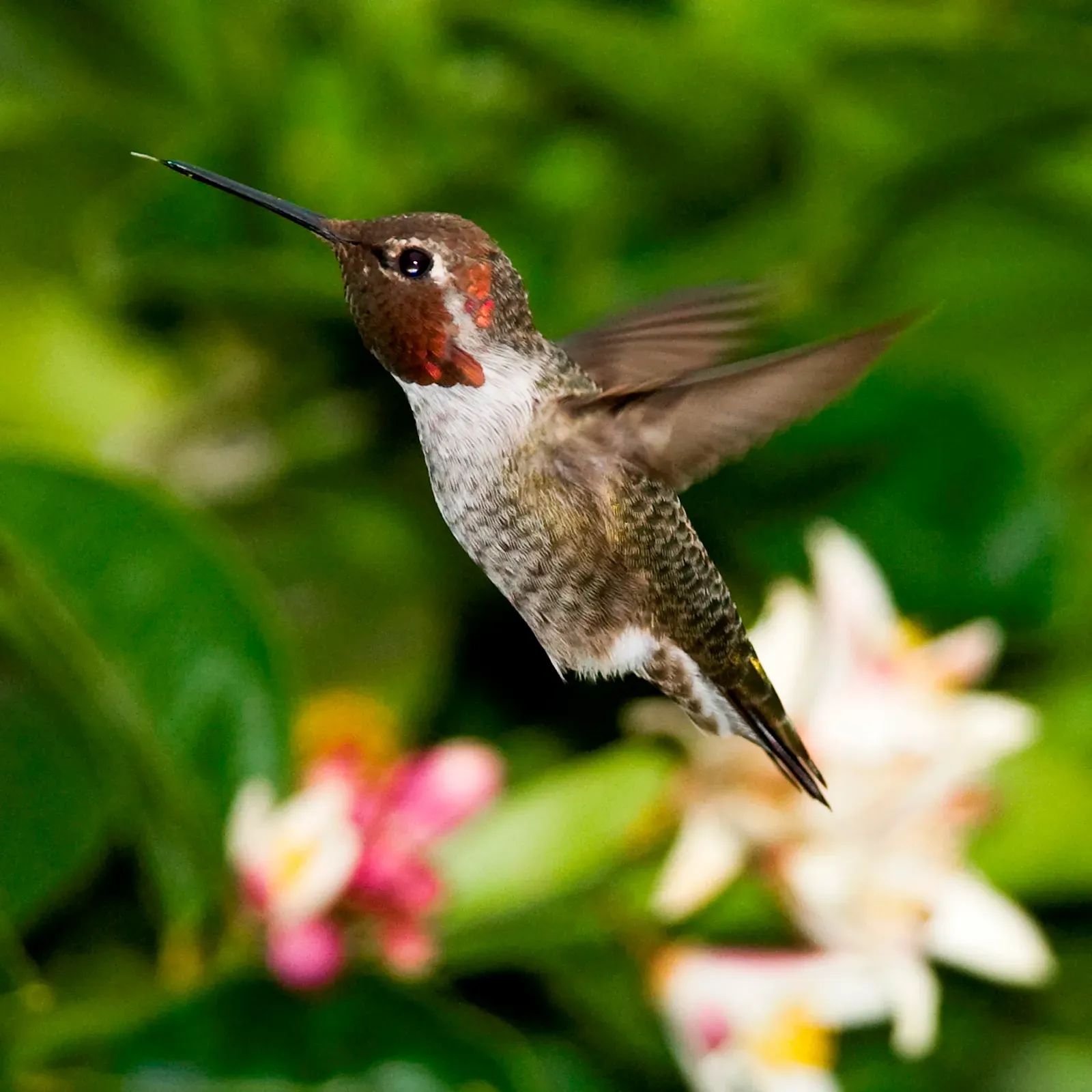
Saying hummingbirds have a fast metabolism sounds like a fun fact. Sitting with the actual number changes the feeling entirely. During active flight, a hummingbird’s heart can beat up to 1,200 times per minute – with some recordings reaching 1,260 bpm. For reference, a resting human heart beats around 60 to 100 times per minute. The hummingbird’s entire cardiovascular system is running at a pace that would be catastrophic in any larger animal.
Breathing rates scale to match, and the whole system demands near-constant caloric input to keep running. This is the physical reality behind every behaviour on this list – the territorial aggression, the memory-mapped feeding routes, the nightly torpor, the insect hunting. It’s all downstream from a body that operates at an intensity most organisms can’t sustain for more than seconds. These birds sustain it for their entire waking lives.
Fast Facts
- Flight heart rate: up to 1,200–1,260 beats per minute
- Resting heart rate (not in flight): approximately 250–400 bpm
- Torpor heart rate: drops to as low as 50 bpm
- The hummingbird’s heart makes up roughly 2.5% of its total body weight – vs. 0.3% in humans
- Breathing rate at rest: around 250 breaths per minute
#10 – Courtship Looks Like a Fighter Jet Losing Control
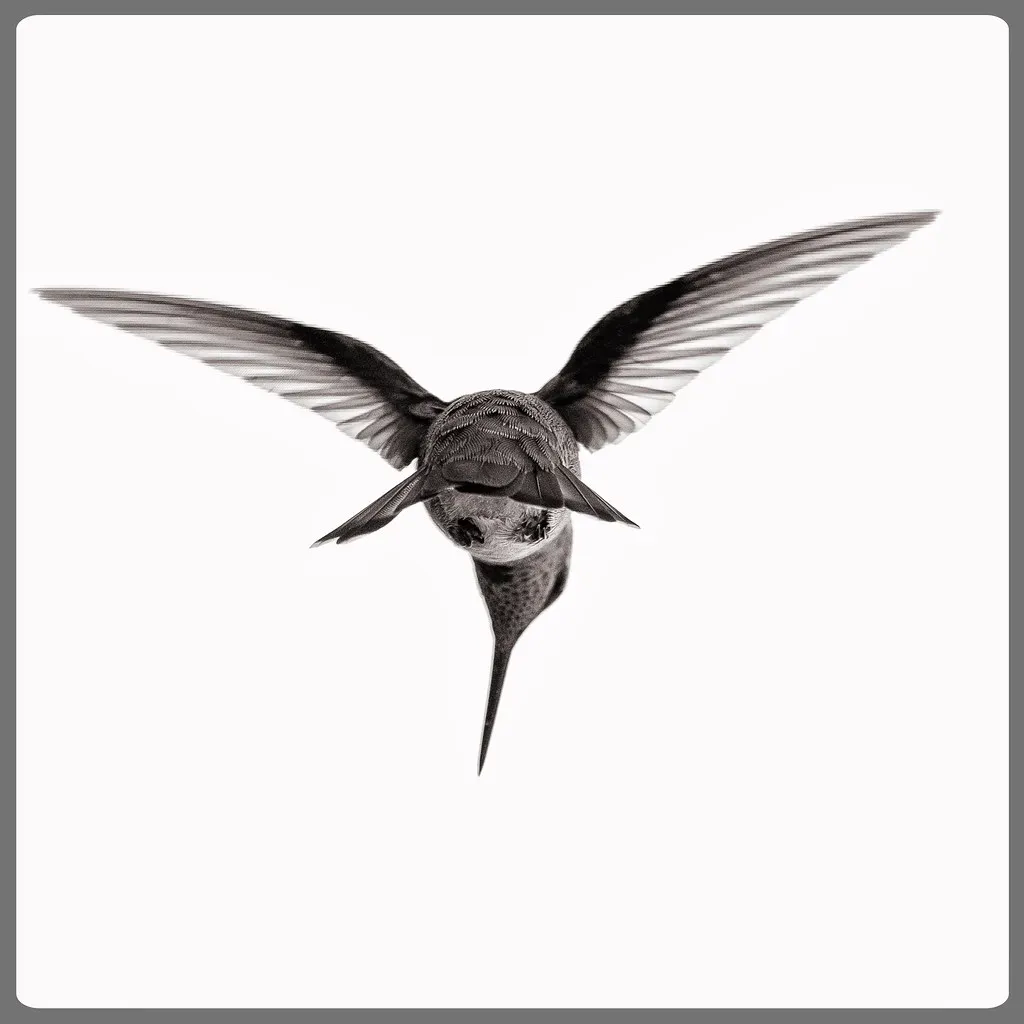
If you’ve ever seen a hummingbird perform a courtship display and not immediately stopped what you were doing to stare, you’ve either never actually seen one or you have extraordinary self-control. Males climb to heights of 100 feet or more, then dive in a steep, precise arc toward a perched female at speeds that can exceed 60 miles per hour. At the bottom of the dive, specialized tail feathers create a sharp chirping or booming sound – a sonic punctuation mark designed entirely to impress.
The iridescent gorget – that brilliant throat patch – flashes in the light as the bird pulls up, which is why the angle of the sun matters during displays. Females watch from a perch and make their choice based on the performance. It’s pure aerial theater, and it happens right in the middle of ordinary gardens without most people ever noticing. Once you know what you’re looking at, it’s impossible to watch one of these dives and still think of hummingbirds as gentle background decoration.
#11 – They Can Fly Backward, Sideways, and Briefly Upside Down
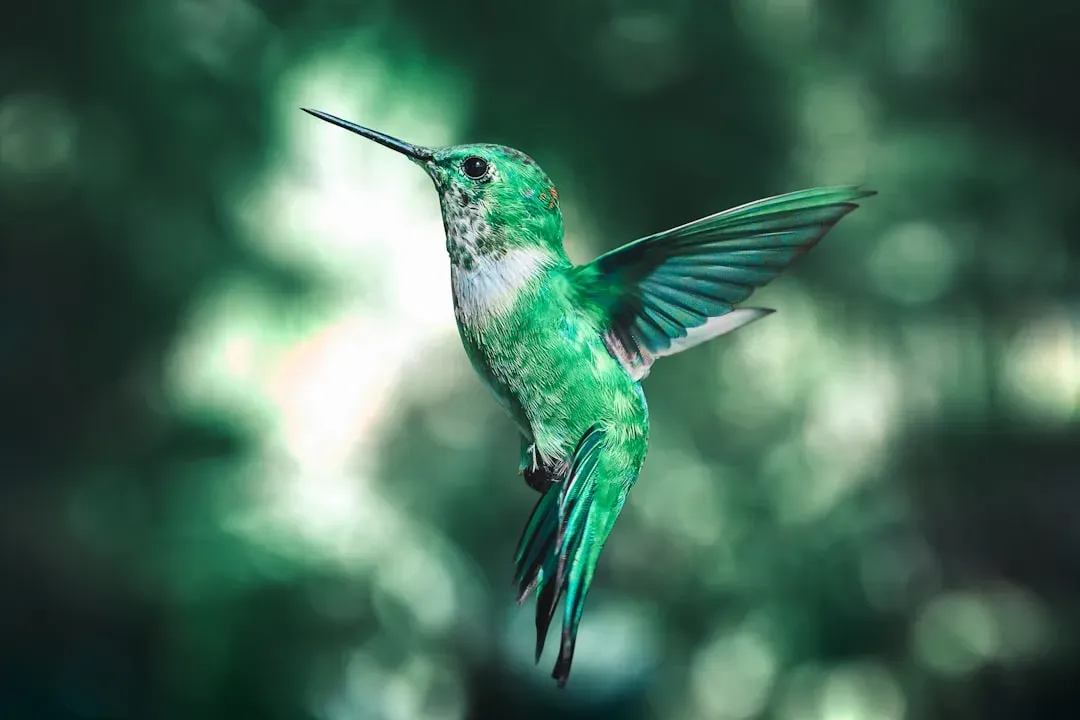
Hovering gets all the attention, but it’s actually the least unusual thing a hummingbird does in the air. Their wings rotate in a figure-eight pattern rather than the simple up-down stroke of most birds, which generates lift on both the forward and backward stroke. This is what enables true backward flight – not just drifting rearward, but controlled, intentional reverse movement. They can also fly sideways and briefly invert during feeding maneuvers at awkward angles.
Wing beats range from around 50 times per second in larger species up to over 200 times per second during fast maneuvers, which is why the wings appear as a blur and produce that distinctive humming sound the birds are named for. Understanding the mechanics reframes a lot of what looks like chaotic darting in the garden – every movement is controlled, purposeful, and metabolically expensive. Nothing a hummingbird does in the air is accidental.
Why It Stands Out
- Figure-eight wing stroke generates lift on both the forward and backward phase – unique among birds
- True reverse flight: controlled and intentional, not just wind drift
- Wing beats: 50+ per second in larger species, over 200 per second in rapid bursts
- Courtship dive speeds can exceed 60 mph – roughly three times their cruising pace
- Every mid-air adjustment burns calories at a rate that would exhaust most other vertebrates in seconds
#12 – Females Defend Territory Just as Fiercely as Males
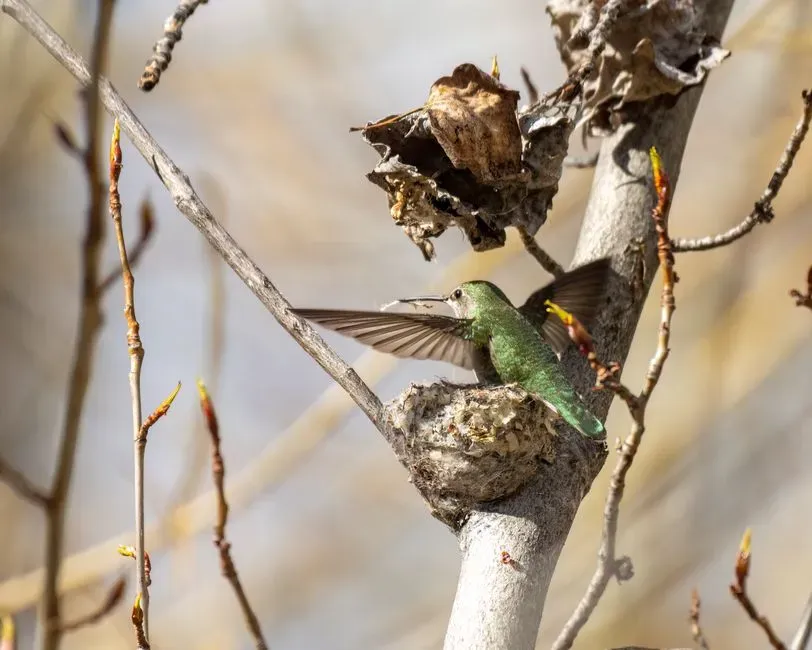
The aggression stereotype belongs almost entirely to males in most people’s mental image of hummingbirds. The reality is that females defending nesting territories are every bit as relentless – and in some ways more so, because the stakes are higher. A female protecting a nest and nearby feeding sources will chase off rivals of both sexes, extending her defense zone up to several hundred feet in all directions.
This explains something that puzzles a lot of gardeners: a visiting bird that was regular for weeks suddenly vanishes, or a whole section of the garden goes quiet despite abundant flowers. A nesting female nearby may have simply absorbed that territory into her own. Spreading feeders and planting across a wider area reduces these conflicts significantly – but the first step is accepting that the aggression isn’t aberrant behaviour. For a hummingbird raising young, it’s rational, necessary, and completely non-negotiable.
#13 – They Bathe in Dew, Mist, and Wet Leaves – Fast Enough to Miss It Entirely
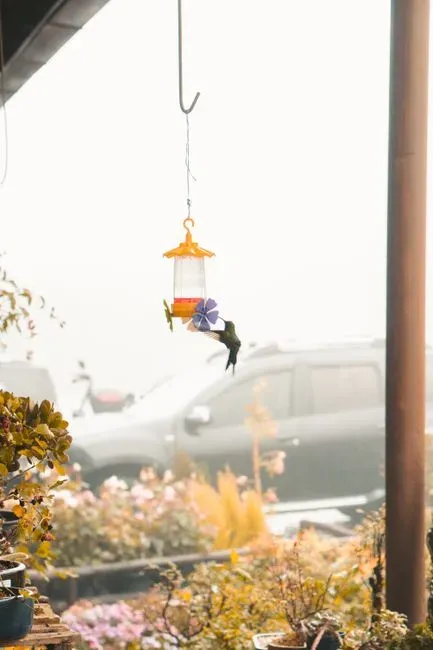
Hummingbirds do bathe, but the routine happens so quickly and inconspicuously that most gardeners never witness it. They’ll dip into dewdrops on leaves, hover through the spray from a sprinkler, or rub against wet foliage to clean and condition their feathers. Clean plumage matters enormously for flight efficiency – a bird with compromised feathers loses aerodynamic performance in ways that directly affect its ability to feed and survive.
The behaviour often happens immediately after a feeding session, which is one reason adding a fine misting fountain or a gentle water feature near feeders can attract noticeably more hummingbird activity than the feeder alone. Gardeners who’ve installed misters consistently report that it’s one of the highest-impact changes they’ve made – not because the birds were thirsty, but because a good bathing spot is genuinely hard to find and fiercely valued once discovered.
At a Glance
- Bathing happens fast and often goes unnoticed – blink and it’s done
- Common bathing spots: leaf dew, sprinkler spray, wet foliage, and fine misting fountains
- Clean feathers directly affect hovering efficiency and caloric cost of flight
- Adding a misting fountain near feeders is one of the most-recommended yard upgrades by experienced gardeners
- Moving or dripping water is significantly more attractive than a still birdbath
#14 – They Are Solitary Competitors, Even During Migration
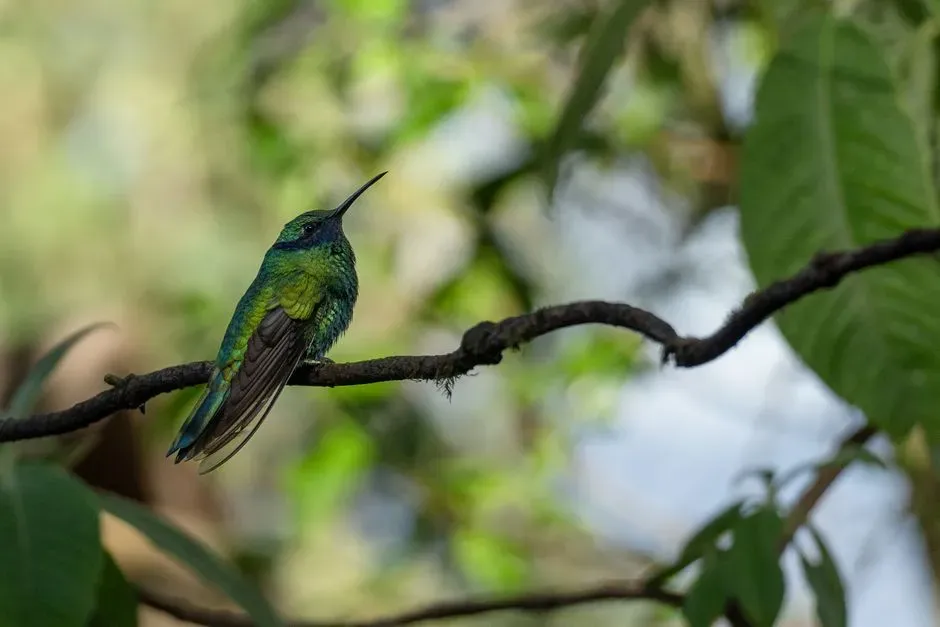
This is the one that reframes everything else. Hummingbirds have no flock instinct, no cooperative behaviour, no social structure of any kind. They are solitary from birth to death, and the only times they tolerate proximity to other hummingbirds is when the density of resources makes driving everyone off impractical. Even then, the tolerance is visibly reluctant – you can watch the tension in every interaction at a crowded migration stopover.
This means the hummingbird visiting your garden isn’t looking for community. It’s looking for fuel, security, and the absence of competition. The gardeners who finally accept this and stop trying to create a cooperative feeding scene – and instead design for resource abundance and strategic separation – are the ones who end up with thriving, active yards. Stop fighting the birds’ nature and start building around it. That shift in thinking, more than any plant or feeder choice, is what experienced gardeners say they wish had come sooner.
These birds are not the gentle fairy-tale visitors their appearance suggests. They are metabolic extremists, solo survivalists, and surprisingly ruthless competitors wrapped in iridescent feathers. Every behaviour on this list exists because something in their biology demands it – and every gardener who takes the time to understand that stops being confused by what they see and starts being genuinely amazed by it instead. The garden doesn’t change. Your understanding of it does. And that makes all the difference.

- 13 Odd Hummingbird Habits Ornithologists Say Still Puzzle Them After More Than Four Decades of Study - August 2, 2026
- 18 Dog Breeds Older Vets Remember Treating Constantly That Younger Vets Have Never Once Seen - August 2, 2026
- 17 Small Things Your Old Cat Starts Doing When It Knows the End Is Coming Closer - August 2, 2026