
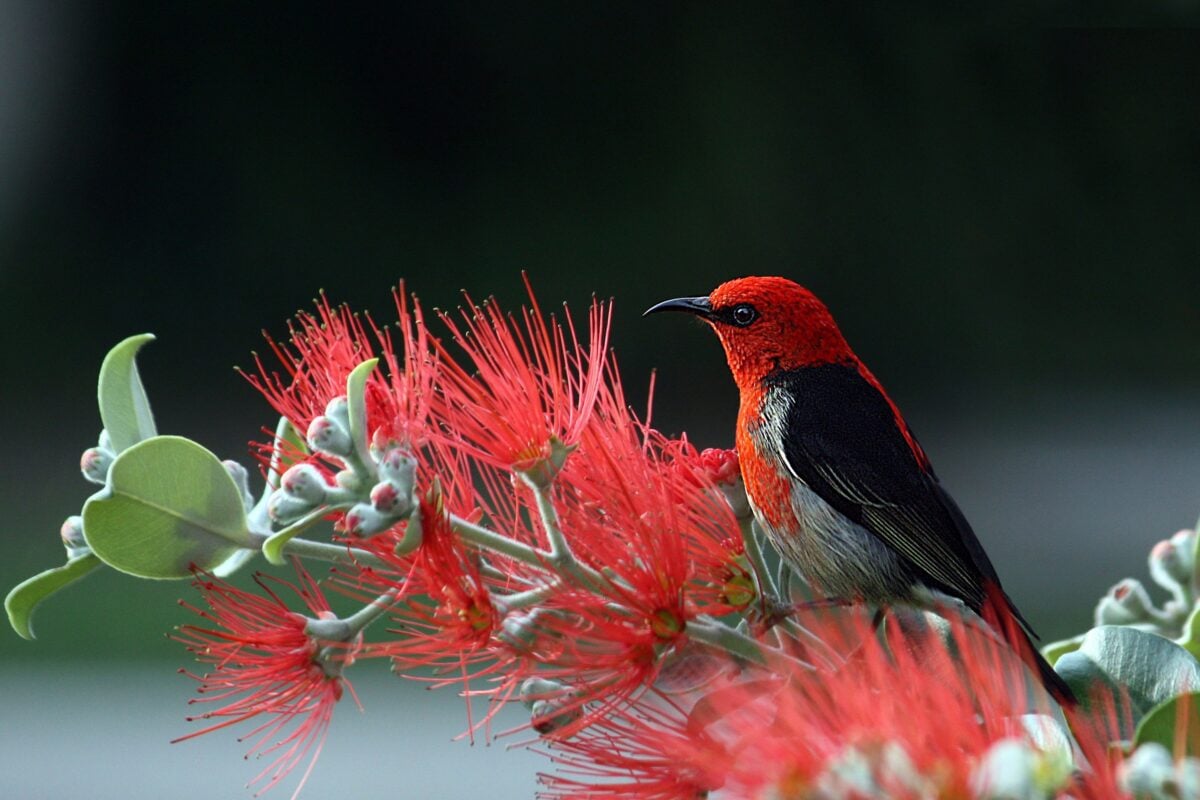
If you dropped a pin in the middle of the Pacific and zoomed in, you’d land on one of the strangest bird laboratories on the planet: Hawaii. Over millions of years, a handful of birds made it across thousands of miles of open ocean, then evolved into a whole cast of species found nowhere else on Earth. Many of them are now hanging on by a thread, living out their stories in misty rainforests, high volcano slopes, and even behind mosquito-proof fencing.
When I first learned that some Hawaiian birds exist in just a single valley or on one slope of a mountain, it felt almost unreal, like they were characters in a fantasy novel instead of real animals with GPS coordinates. In this article, we’ll meet eight of these true endemics, peek into what makes each one special, and be honest about how close some of them are to disappearing forever. You’ll notice a pattern: Hawaii’s birds are dazzling, delicate, and a blunt reminder of how fast we can break what took millions of years to create.
‘I‘iwi: The Scarlet Honeycreeper With a Curved Flame of a Bill
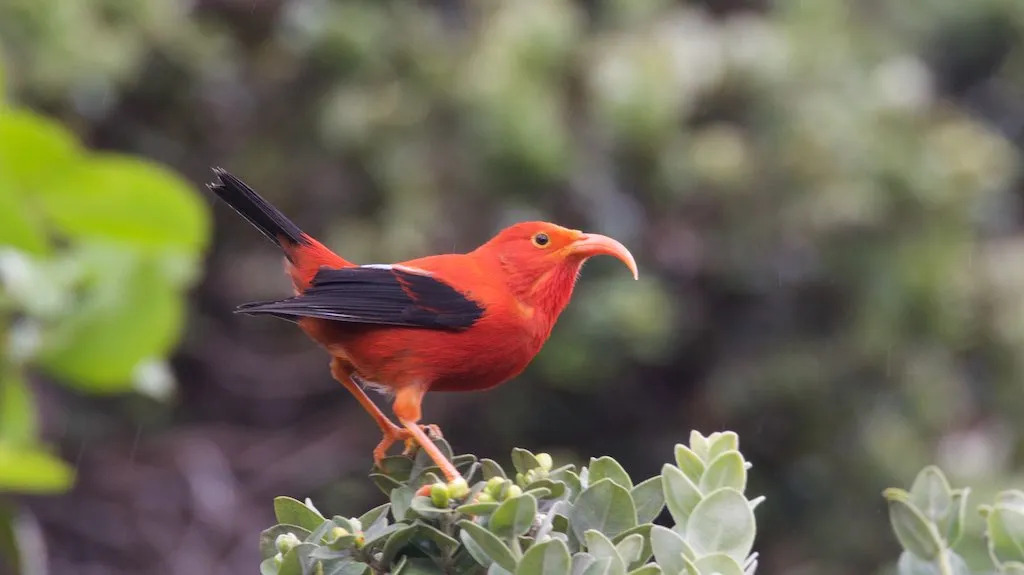
Imagine a bird that looks like a flying ember against a backdrop of deep green rainforest: that’s the ‘i‘iwi (pronounced “ee-EE-vee”). Its body is a vivid scarlet, with black wings and tail, and a long, strongly curved orange bill that seems more suited to a cartoon than a field guide. This bill is perfectly shaped to reach into curved flowers of native Hawaiian plants like the ‘ōhi‘a lehua, a partnership that took countless generations to refine.
The ‘i‘iwi once ranged across most of the main Hawaiian Islands, but today it’s mostly restricted to higher, cooler forests where mosquitoes – and the diseases they carry – are less common. Avian malaria and avian pox, spread by introduced mosquitoes, are a major reason this bird has vanished from many lowland areas. Scientists now talk about “climate squeeze,” because as temperatures rise, mosquitoes creep uphill, shrinking the ‘i‘iwi’s safe zone. Whenever I see photos of them crowding into the few remaining high-elevation refuges, it feels like watching the tide come in on an island that’s slowly sinking.
‘Apapane: The Restless Red Voice of Hawaiian Forests
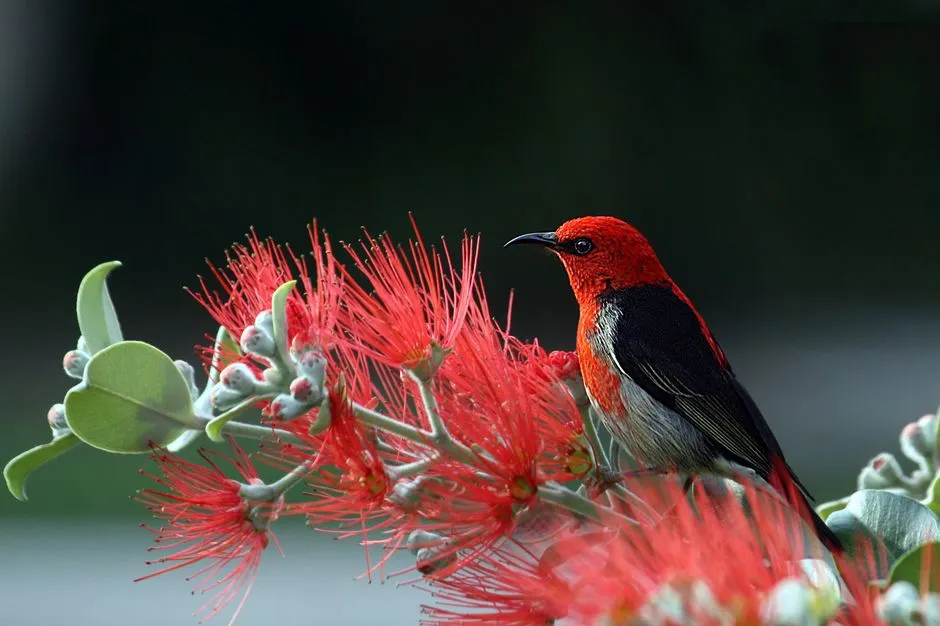
If the ‘i‘iwi is a visual showstopper, the ‘apapane is more like the background soundtrack of native forests. This small, crimson honeycreeper with dark wings is constantly on the move, flitting from tree to tree in search of nectar. Its song is an unpredictable mix of squeaks, trills, and rattles, like a kid playing with a broken radio. For many hikers in places like Hawai‘i Island’s high forests, the ‘apapane is the bird they hear long before they see.
Unlike some of its more endangered cousins, the ‘apapane is still relatively widespread across multiple islands, which can make it seem “safe.” But that can be misleading. It still depends heavily on native flowering trees like ‘ōhi‘a, and those trees are being hit hard by a disease called rapid ‘ōhi‘a death. When the tree that feeds you and your family disappears, your population can crash even if you were doing fine the year before. I find the ‘apapane oddly symbolic: it’s a reminder that even species that seem common can turn vulnerable when the ecosystem rug gets pulled out from under them.
‘Akikiki: The Ghost-Like Creeper on the Brink
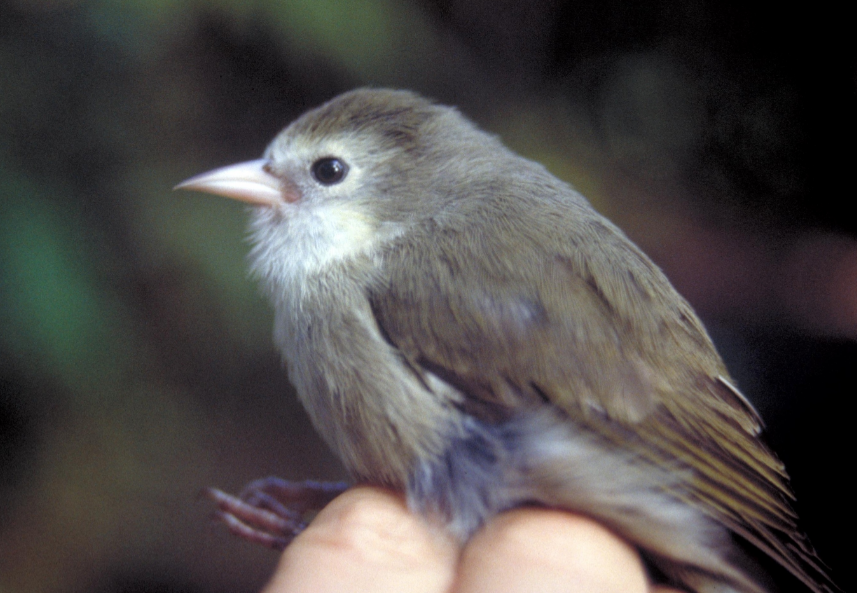
The ‘akikiki, also known as the Kaua‘i creeper, is one of those birds that feels almost mythical because so few people will ever see it in the wild. It’s small and grayish with subtle, understated plumage – no bright reds or yellows here – yet it has a quiet charm. It moves along branches and trunks like a tiny inspector, picking insects and spiders from crevices in the bark, doing the unglamorous work of forest housekeeping.
On paper, though, the story is heartbreaking. The ‘akikiki now survives only in a tiny slice of high-elevation forest on Kaua‘i and is considered one of the most critically endangered birds in Hawaii. Mosquito-borne disease, habitat loss, invasive predators, and even extreme weather have all piled on. Conservationists have resorted to captive breeding and emergency moves to mosquito-free areas just to keep the species from vanishing. To me, the ‘akikiki shows how far we’ll go to undo damage, but also how late we too often start.
‘Akeke‘e: The Split-Billed Specialist of Kaua‘i
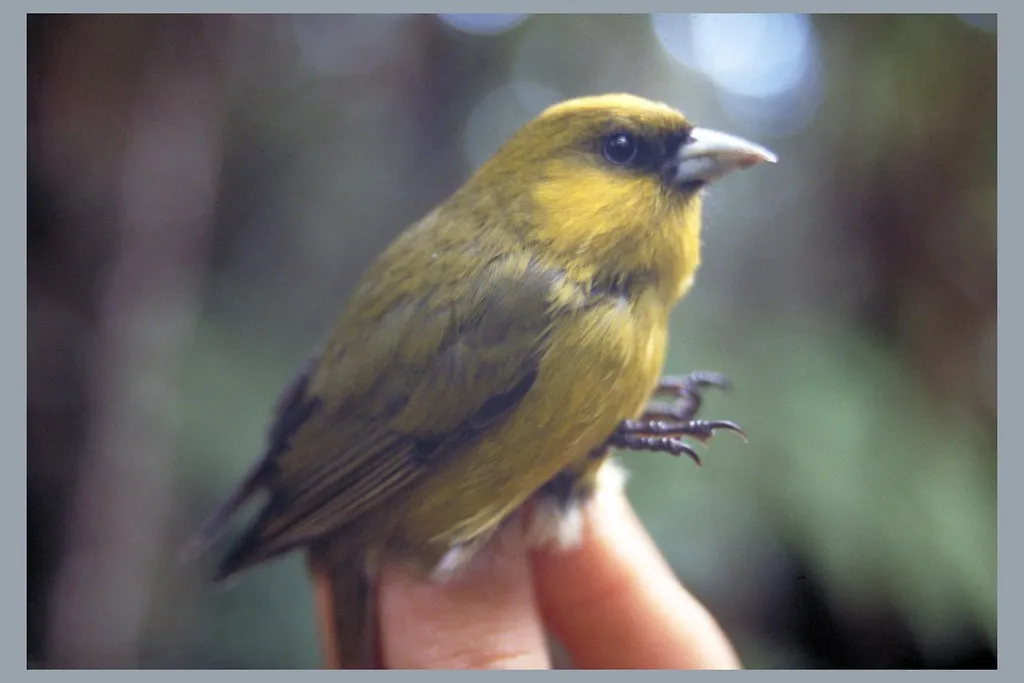
The ‘akeke‘e, another Kaua‘i endemic, looks at first like a modest greenish-brown songbird with a yellow-ish wash, but the real magic is in its bill. The tips of its upper and lower mandibles cross slightly, forming a delicate tool that lets it pry open buds and leaves to hunt for insects hidden inside. It’s a subtle design tweak, but in evolutionary terms it is a bold, specialized gamble.
That specialization comes with a cost. The ‘akeke‘e is tightly tied to particular native trees for both food and nesting, especially the same ‘ōhi‘a that so many other native birds depend on. As those forests shrink and fragment, this bird’s future gets more precarious. Like the ‘akikiki, it’s now critically endangered and confined to small areas at higher elevations. When I read field reports about how hard it’s become to find even a single pair in places where they once were common, it feels like watching a rare craft disappear from a culture – once the knowledge is gone, it doesn’t come back.
‘Akiapōlā‘au: The Hawaiian “Woodpecker” With Two Bills in One
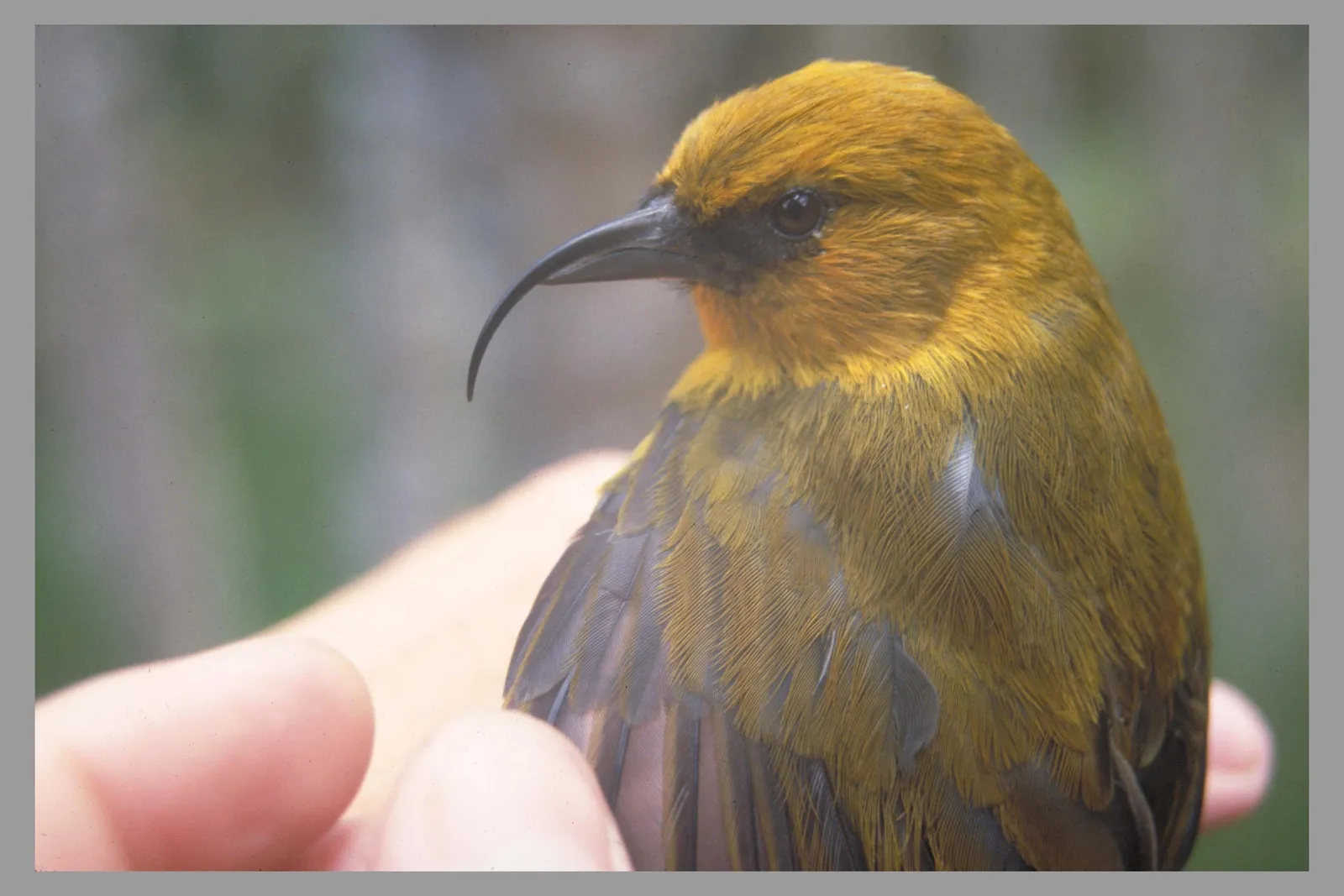
The ‘akiapōlā‘au from Hawai‘i Island might be one of the weirdest birds alive, period. Its bill looks like someone stitched two different tools together: a short, powerful lower mandible for hammering and a long, curved upper mandible for probing. It taps at branches like a woodpecker to break into bark, then uses the curved upper bill to fish out beetle larvae and other hidden prey. No other bird on Earth has quite this combination.
That uniqueness is thrilling but also terrifying, because if this species disappears, that whole evolutionary experiment goes with it. The ‘akiapōlā‘au is already rare, living only in scattered pockets of native forest on the Big Island. It needs large tracts of older trees and is very sensitive to habitat disturbance, so logging, land clearing, and invasive species have all cut deep into its range. Whenever I think about this bird, I can’t help but feel that losing it would be like burning the only existing copy of a strange, beautiful book we have not finished reading.
Palila: The Seed-Cracking Specialist of Mauna Kea
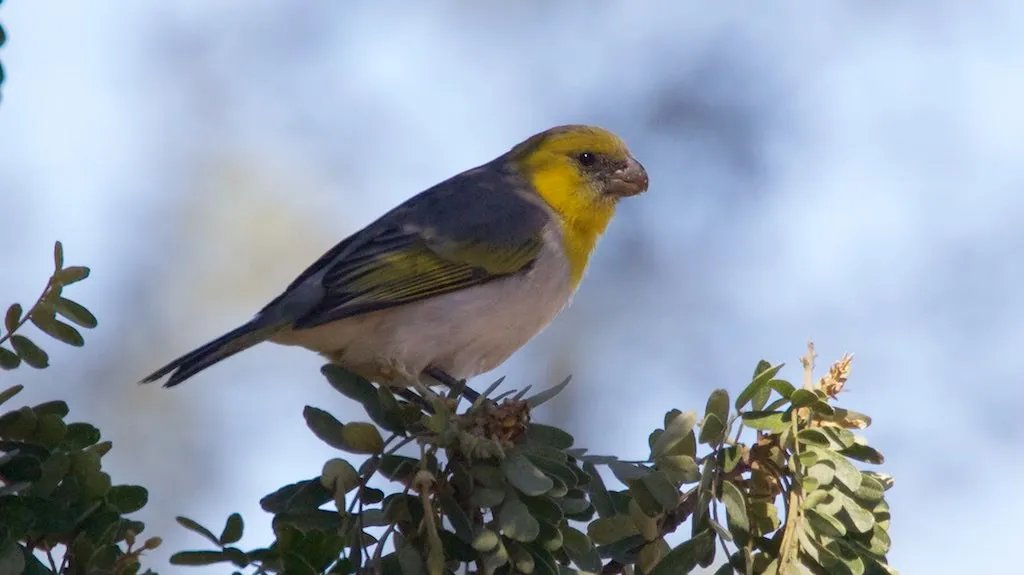
The palila, a finch-billed honeycreeper found only on the upper slopes of Mauna Kea on Hawai‘i Island, looks almost regal. It has a yellow head, gray back, and white underparts, with a thick bill built for cracking tough seeds. Its life is deeply intertwined with one tree in particular: the māmane. The palila eats the tree’s seeds, flowers, and even young leaves, tolerating certain plant toxins that many other animals cannot handle.
This bird’s range has shrunk so much that it now occupies only a fraction of its former habitat, and its survival is essentially tied to the fate of the māmane forests. Overgrazing by introduced sheep, goats, and other ungulates devastated these woodlands for decades, and even now, habitat restoration is an uphill battle. Conservation for the palila has ended up in courtrooms, with legal rulings forcing habitat protection measures on Mauna Kea. The palila’s story makes it clear that saving a species isn’t just about fences and nests – it is also about politics, land use, and hard choices.
‘Alalā: The Extinct-in-the-Wild Crow With a Cultural Soul
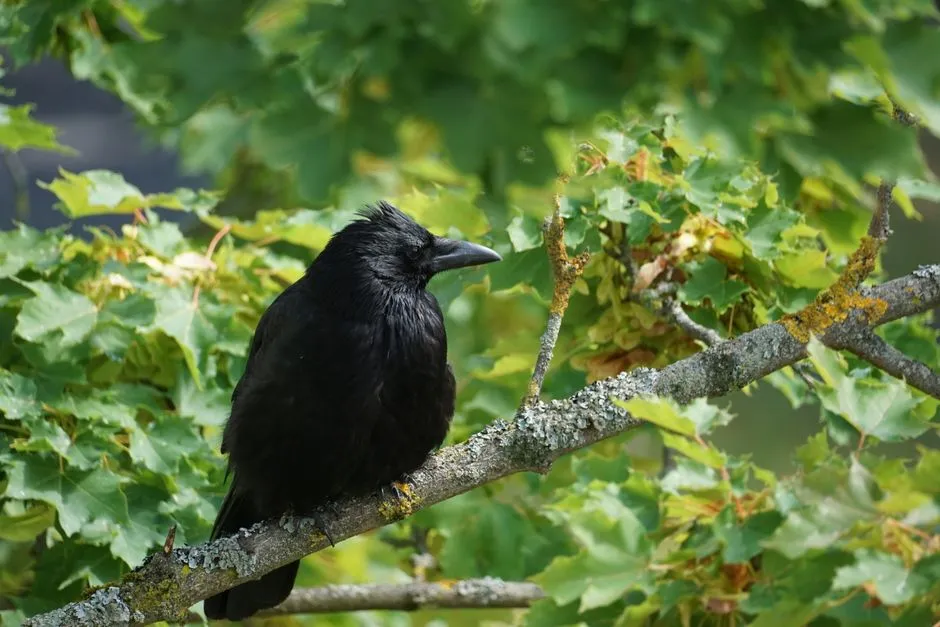
The ‘alalā, or Hawaiian crow, may not fit the cliché of a “tropical bird” with bright feathers, but it is one of the most culturally and ecologically important birds in the islands. Sleek and dark with a heavy bill, it once lived in dry and mesic forests on Hawai‘i Island, eating fruits, invertebrates, and even helping native plants by dispersing their seeds. Traditional stories and chants placed this bird in a central role, linking it to the forest in a way that feels almost spiritual.
But in the wild, the ‘alalā is gone. Predation, disease, habitat loss, and persecution combined to push it to the point where only captive birds survived, leading to the grim label “extinct in the wild” for a period. Intensive breeding and carefully managed releases back into protected forests have been attempted, but success has been mixed and fragile. Whenever I read updates about the ‘alalā, I’m torn between hope and frustration – it proves that we can keep a species alive with enormous effort, but also that we were willing to let it disappear in the first place.
Nēnē: The Volcano Goose That Came Back From the Edge
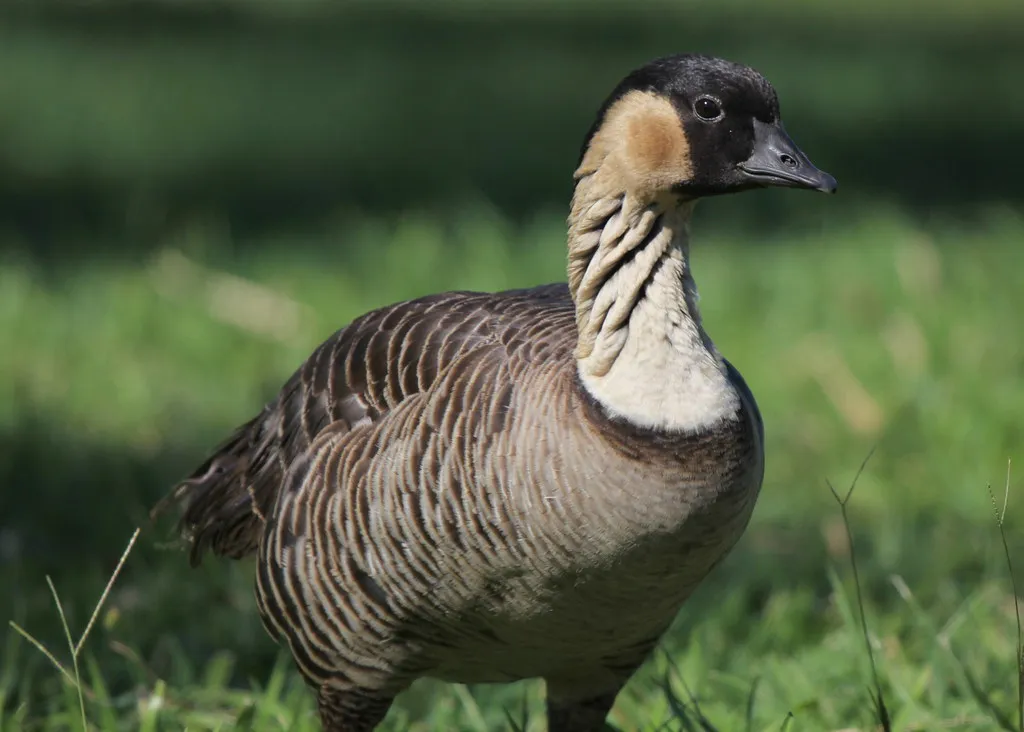
The nēnē, or Hawaiian goose, is famous partly because it almost did not make it. It is closely related to the Canada goose but has evolved into a distinct species that lives on lava fields, grasslands, and scrubby slopes on several Hawaiian Islands. With its buffy cheeks, barred neck, and softer honk, the nēnē looks like a goose that traded icy lakes for black lava and warm winds.
By the mid-twentieth century, the nēnē was teetering on the edge of extinction, with only a tiny number of birds surviving in the wild. A combination of hunting, introduced predators like mongooses and cats, and habitat changes had nearly wiped it out. Massive captive breeding and reintroduction programs turned the tide, and now the nēnē has rebounded enough that it can be seen in places like national parks and even near golf courses. I see the nēnē as proof that, when we actually commit long-term resources and care, we can pull a species back from the brink – but it also raises the uncomfortable question of why we wait until the last minute so often.
Conclusion: Hawaii’s Birds Are a Test of What We Really Value
Looking across these eight species, a pattern jumps out: Hawaii turned a few pioneering birds into an astonishing range of specialists, and then we arrived with mosquitoes, rats, habitat loss, and climate change, knocking them down like dominoes. Some, like the nēnē, show that recovery is possible; others, like the ‘akikiki and ‘akeke‘e, are clinging to survival by the thinnest of threads. It is tempting to treat them as charming side stories, but they are actually a blunt report card on how seriously we take our responsibility to the living world.
My own opinion is that we are past the point where “liking birds” is enough; if a species exists only in one small patch of forest on one island, then either we actively protect that place or we quietly accept its extinction. There is no neutral ground left. Hawaii’s rare birds should not just be trivia for birdwatchers; they should be front-page examples of what deliberate, well-funded conservation can still save. The real question is whether we’re willing to act as if their lives matter as much as our convenience. If you had to pick just one of these birds to fight for, which would it be – and what would that choice say about you?
