
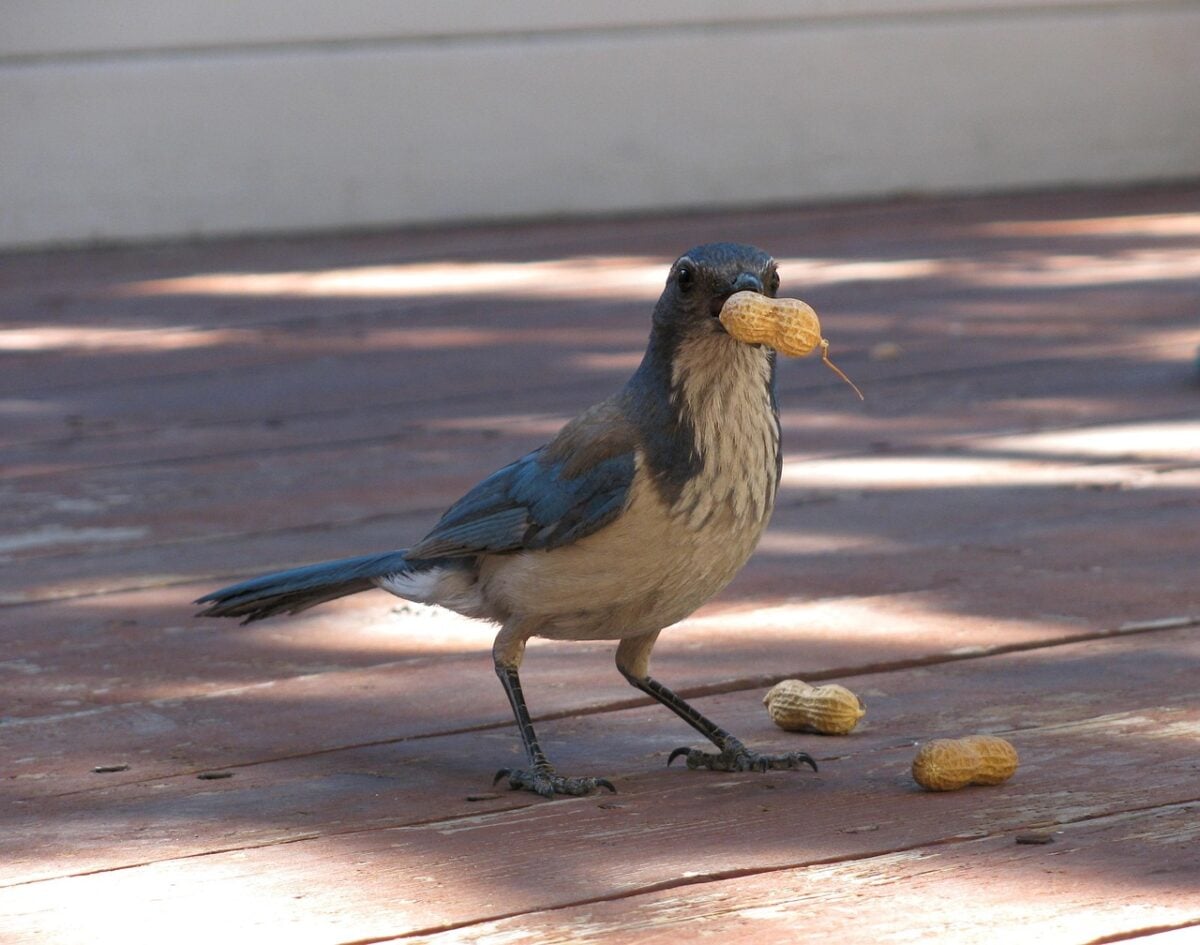
If you’ve ever watched a scrub jay tuck a peanut into your lawn, you probably thought you were witnessing something simple and instinctive. But what if that bird was actually playing mind games, running a kind of backyard espionage operation? That is essentially what a series of animal cognition studies suggest: scrub jays do not just hide food. They keep track of who was watching, change their behavior later, and even recache their stashes if they suspect another bird now knows their secret.
When I first read about this, I honestly felt a little uncomfortable. These small blue birds were doing something that sounded suspiciously like imagining what another bird knows, and then acting to outsmart it. For decades, scientists thought that kind of social cleverness belonged mostly to humans. Scrub jays are forcing us to redraw that line, one stolen peanut at a time.
The Scrub Jay’s Double Life: Hoarder And Thief
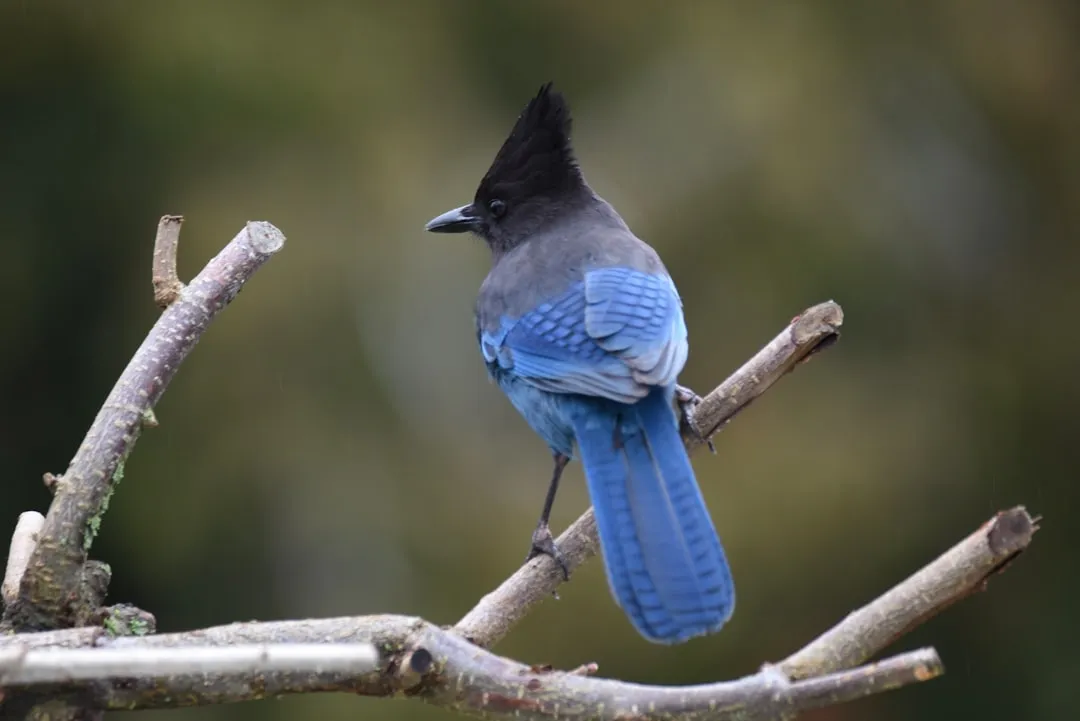
Here’s the first twist: scrub jays are not just careful hoarders, they are also opportunistic thieves. In the wild and in lab studies, these birds not only cache food for later, they also watch other jays hide food and then return to steal those caches once the original owner is gone. That two-sided lifestyle turns them into both victim and perpetrator in a constant arms race of hiding and pilfering.
That matters because it gives them a reason to think strategically. When you have personally watched another bird stash food and then successfully robbed it later, you know from experience how dangerous an audience can be. Experiments show that this experience changes how a scrub jay hides its own food afterward: birds with a history of pilfering are the ones that later go back and move their own caches if they were watched during the original hiding session. That is not random instinct; it looks like learning built on a shady past.
Re-Caching As Counter-Espionage: Moving Food Once The Coast Is Clear
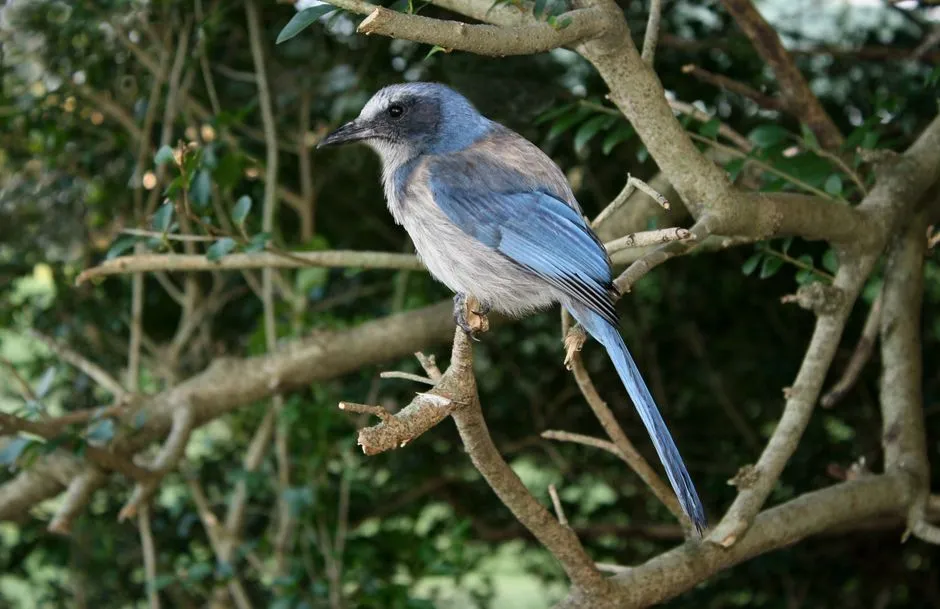
The headline behavior that blew people’s minds is surprisingly simple to describe: a scrub jay hides food while another bird watches, then later, once it is alone, it digs up that food and moves it to new, secret locations. In controlled experiments, researchers set up situations where a jay cached in front of a visible observer on some trials and in private on others. When given a chance to return later in private, the jays selectively re-hid the items that had been cached under surveillance, but left the privately cached food alone.
What’s striking is how specific this pattern is. The birds are not just nervously shuffling food around at random; they act as if they remember which particular caches are “compromised” because a competitor saw them being made. That selectivity is what pushes these findings out of the realm of simple trial-and-error and into the territory of mental bookkeeping about who knows what. It feels less like burying nuts and more like a spy swapping briefcases in a quiet train station after realizing they were followed.
Remembering Who Was Watching: Individual Minds, Not Just Generic Threats
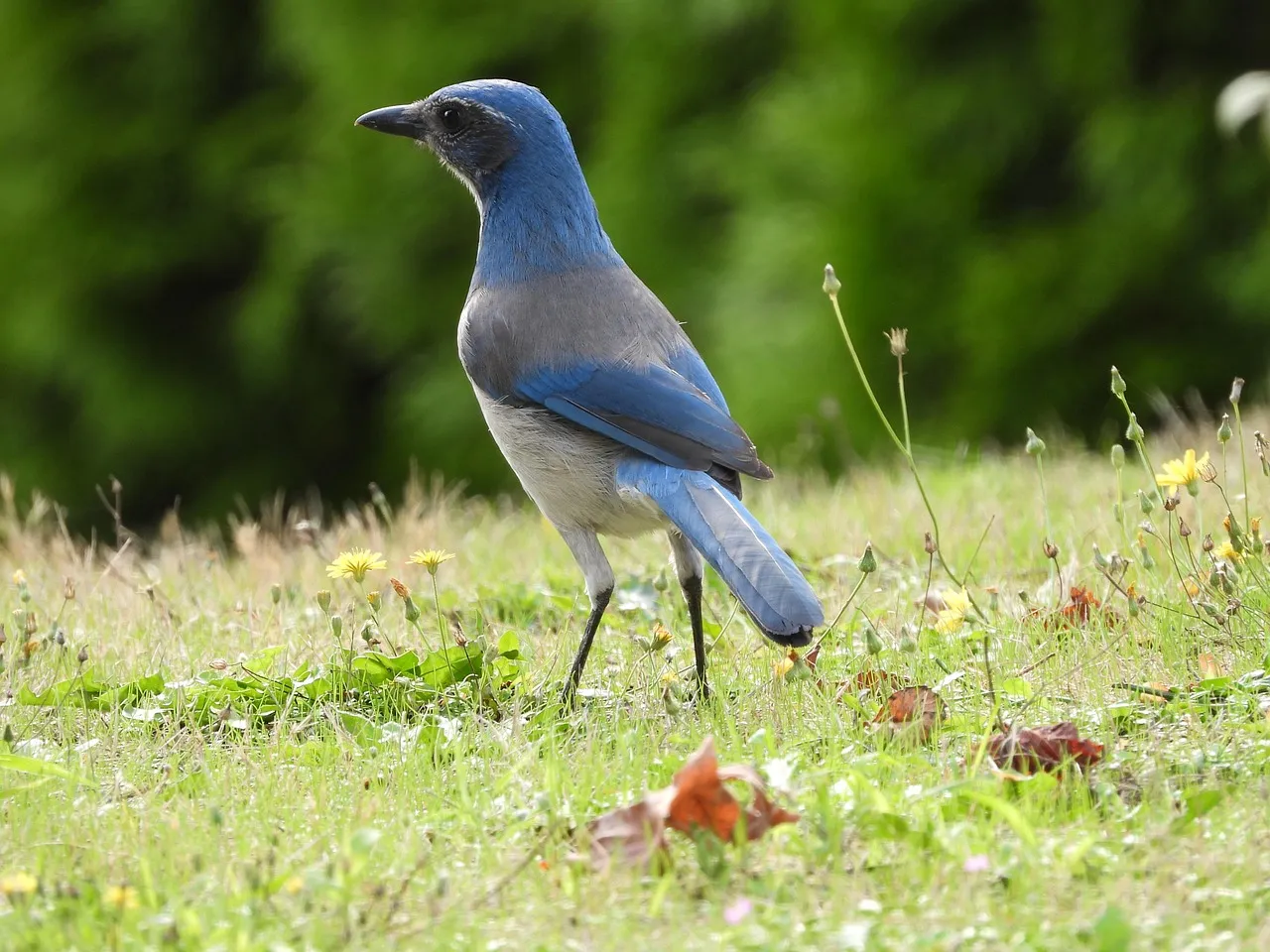
The picture gets even more eerie when you realize that scrub jays are not merely reacting to “being watched” in general. Experiments have shown that they can keep track of exactly which bird was present during specific caching events. Later, when they are recovering or re-caching their food under the gaze of an observer, they behave differently depending on whether that observer was the same individual who saw the original hide or a naïve bird that was not there.
In practice, this means a scrub jay will be more cautious and more likely to defend or move its caches if the current onlooker is the same bird that previously watched those caches being made. If a stranger who did not witness the caching is there, the jay relaxes. That kind of discrimination suggests they are matching episodes in memory: this bird, this cache, this history. It is awfully close to the kind of social accounting we pride ourselves on as humans, where we remember who knows which secret and respond accordingly.
Does This Mean Scrub Jays Have A “Theory Of Mind”?
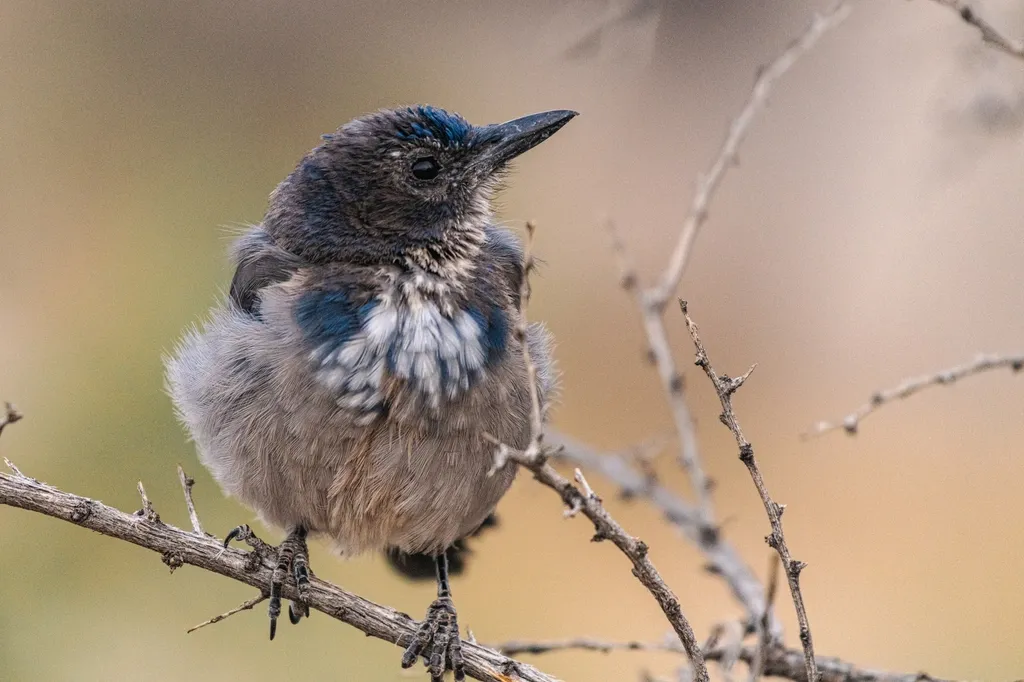
All of this naturally raises a hotly debated question: do scrub jays have some primitive version of what psychologists call a theory of mind, the ability to attribute mental states like knowledge or ignorance to others? The cautious scientific answer is: maybe in a limited, task-specific way, but we should not rush to crown them feathered philosophers. There are always alternative explanations, such as learned associations between certain birds and past theft, or sophisticated but still “mindless” rules of thumb.
That said, the pattern of evidence is hard to wave away as simple reflexes. Jays re-cache only when they have been observed, only when they themselves have pilfered in the past, and only in ways that line up neatly with who could plausibly know about the food. To me, it is reasonable to say they are at least running a mental model of other birds as agents with perspectives, even if that model is nowhere near as rich as ours. The honest stance in 2026 is that scrub jays are pushing right up against the boundaries of what we thought birds could do, and our theories are scrambling to keep up.
Beyond Sight: Hiding Sounds, Shadows, And Even Colors
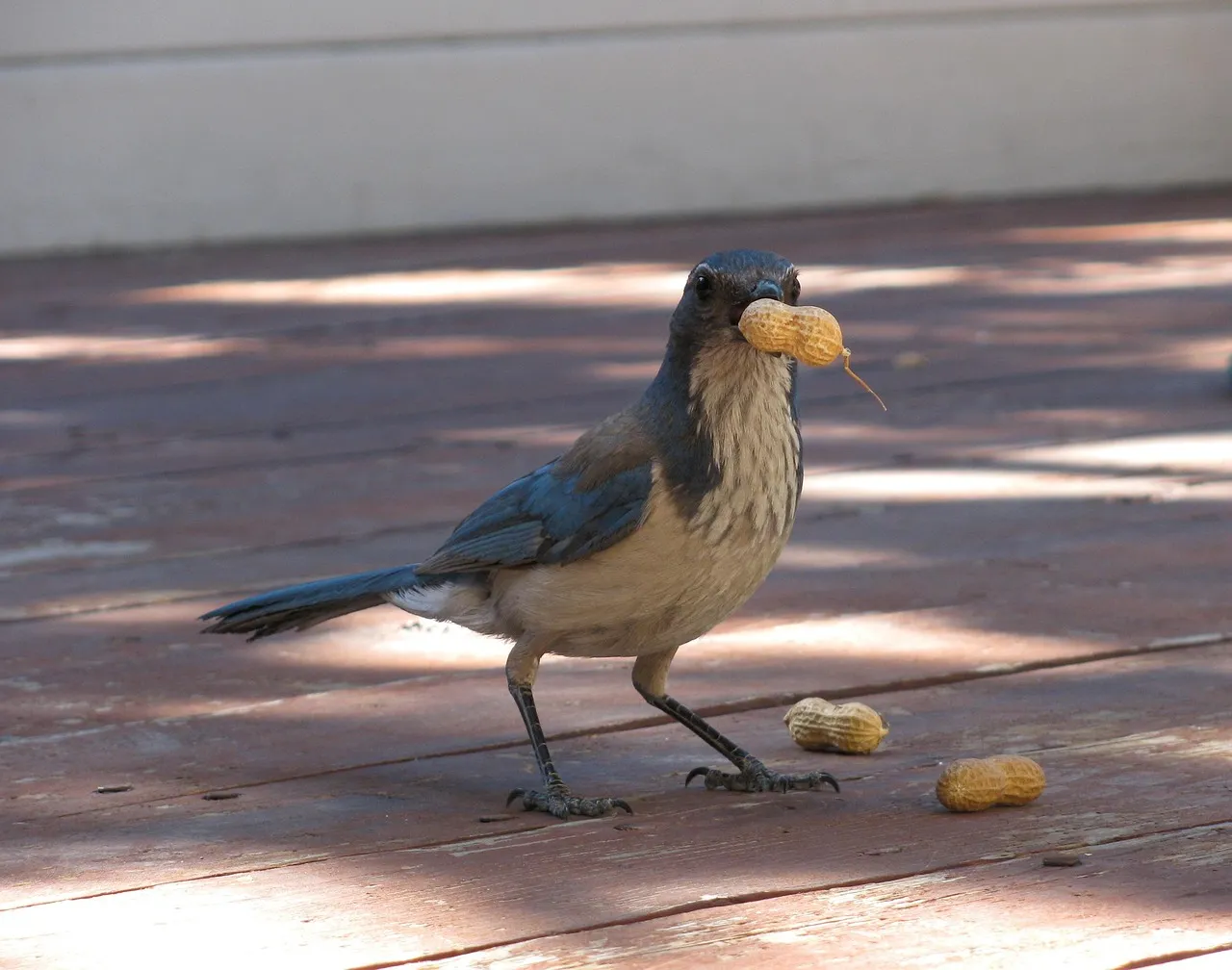
Once you start looking for cache protection tricks in scrub jays, you see them everywhere. Studies have found that these birds not only take into account what others can see, but also what they can hear. When observers can listen but not watch, jays shift their caching to quieter substrates, reducing the clinking and scraping that might give away a hiding spot. In other setups, they show preferences for caching in shaded areas or behind barriers when competitors have a visual line of sight.
More recent work has shown an almost spy-movie level of subtlety: California scrub jays can match the color of the food they hide to the color of the substrate, making caches harder for would-be thieves to spot. In social contexts where another bird might be monitoring them, they lean more heavily on these camouflage tricks. Put together, you get a portrait of an animal that flexibly adjusts multiple aspects of its behavior – location, distance, sound, color – based on an internal guess about what others might perceive. It is not just hiding food; it is closing visual and auditory “leaks” in a security system.
Watching this play out in the backyard feels weirdly familiar. I have seen scrub jays take a peanut from a feeder, fly off as if to cache it, then circle back and re-bury it in a different patch of gravel after another bird left. Once you know the science, it is hard not to see that little detour as a conscious attempt to stay one step ahead in an arms race of observation and misdirection.
Corvids, Crows, And Us: Where Scrub Jays Fit In The Intelligence Family
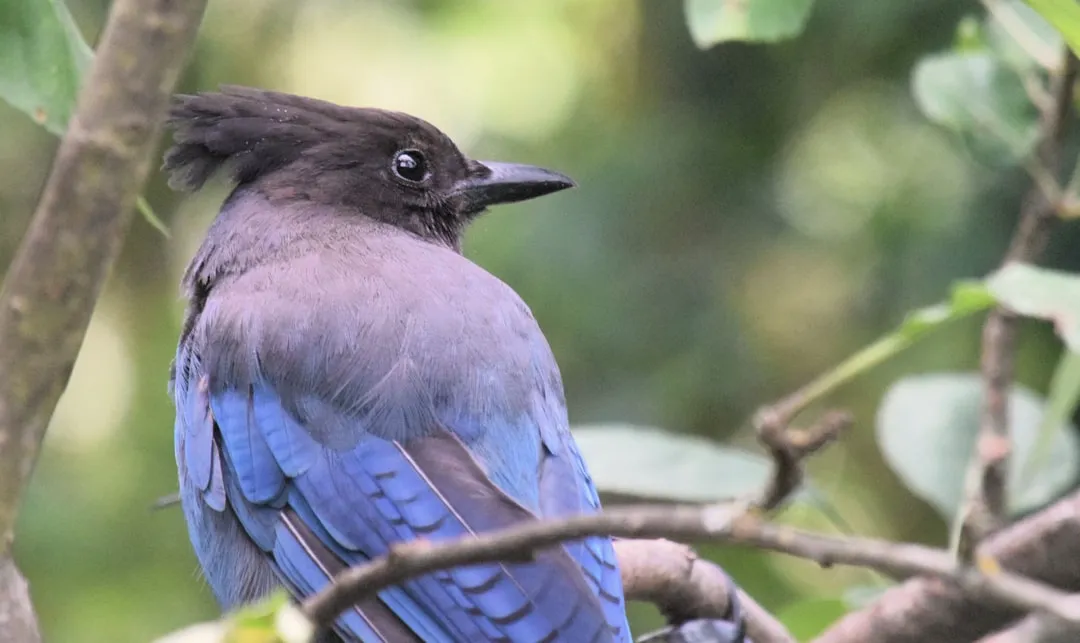
Scrub jays belong to the corvid family, alongside crows, ravens, magpies, and jackdaws – birds that keep popping up in research on animal intelligence. Across this group, you find repeated evidence of flexible problem-solving, long-term memory, social maneuvering, and even sensitivity to optical illusions and magic-like tricks designed by psychologists. Scrub jays just happen to express a lot of that cognitive muscle in the context of food caching, because caching is so central to their survival strategy.
That makes them a surprisingly powerful test case for questions we usually reserve for primates. If a bird with a brain the size of a walnut can track who was watching, plan for future theft, and adjust its tactics on the fly, maybe complex cognition does not require the kind of brain structure we long assumed it did. From that angle, scrub jays are not just quirky blue birds in Western backyards; they are data points in a growing argument that intelligence has evolved multiple times, in very different bodies, under pressure from very similar social problems.
Why This Matters: Rethinking Human Superiority And Animal Minds
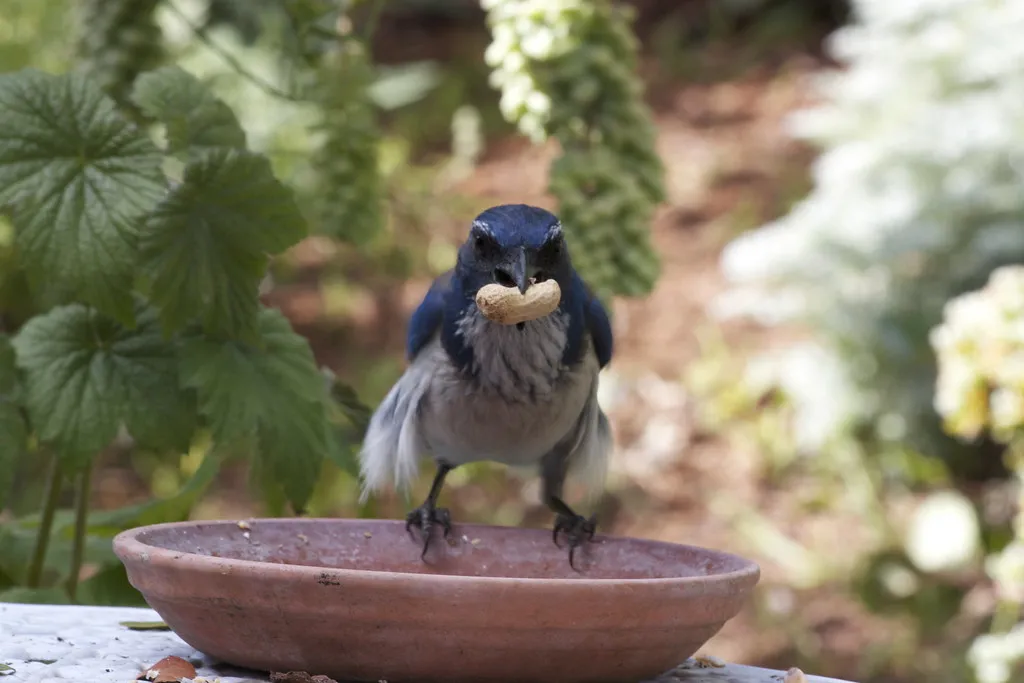
Here is the uncomfortable, and in my view exciting, conclusion: when a scrub jay re-hides food because it knows another bird watched the first cache, it chips away at the old story that humans stand on a clean cognitive pedestal above every other species. No, scrub jays are not writing novels or debating ethics, but they are doing something our grandparents would have sworn only people could do – using past experience to infer what someone else might know and acting strategically on that inference.
Personally, I think we are still underestimating them. Decades of work have already revealed a surprising mental life in these birds, and every time we refine the experiments, the jays rise to the challenge with new tricks. The safer bet now is not that animals are “dumb until proven smart,” but that many species are running rich internal models that we simply have not learned to read yet. Next time you watch a scrub jay hop around your yard with a peanut, ask yourself: who is studying whom – and which of you is doing the better job?
