
In the vast, mysterious depths of our oceans, whales have been singing their complex songs for millions of years. These marine mammals communicate through intricate vocalizations that can travel hundreds of miles underwater. Recently, marine biologists across the globe have been puzzled by the emergence of a previously undocumented whale song pattern that defies conventional understanding of cetacean communication.
This new vocalization sequence, first detected in late 2022, has rapidly spread across multiple whale populations and ocean basins, leaving researchers scrambling to decode its meaning and significance. The pattern exhibits unusual frequency modulations, temporal structures, and propagation characteristics that don’t align with known whale communication models, potentially representing a significant evolutionary development or response to changing ocean conditions.
The Mysterious Discovery in the Pacific

The story begins in November 2022, when underwater acoustic monitoring stations operated by the National Oceanic and Atmospheric Administration (NOAA) detected unusual sound patterns near the Mariana Trench in the western Pacific Ocean. Initially, technicians thought the equipment was malfunctioning due to the strange, rhythmic sequences that didn’t match any known marine mammal vocalizations in their extensive database.
After ruling out technical issues and human-made sounds, researchers confirmed they were hearing something entirely new – a complex, repeating song pattern with structural elements never before documented in any whale species. The pattern featured an unusual combination of high-frequency chirps followed by extended low-frequency pulses arranged in a mathematical sequence that some researchers have described as “almost algorithmic” in its precision.
Rapid Spread Across Ocean Basins

What particularly baffles scientists is the unprecedented rate at which this vocal pattern has spread. Within just six months of the initial detection, the same distinctive song was recorded by hydrophones in the Indian Ocean, and by August 2023, it had reached Atlantic whale populations. This rapid transmission challenges existing theories about how whale songs typically evolve and spread.
Traditionally, whale songs are known to change gradually over seasons and years, with modifications slowly moving through populations as whales learn from each other. Dr. Marta Feliciano, lead marine bioacoustics researcher at the Woods Hole Oceanographic Institution, notes, “We’ve never observed a vocal pattern transfer between ocean basins this quickly. It’s as if whales have developed some form of accelerated cultural transmission that we didn’t know was possible.” This phenomenon raises profound questions about whale cognition and the mechanisms behind their cultural exchange.
Unique Acoustic Properties Defy Explanation

The acoustic properties of the new song pattern have left specialists in marine bioacoustics bewildered. Unlike typical whale vocalizations that follow predictable patterns of frequency, amplitude, and duration, this new song contains elements that seem specifically designed to maximize transmission distances in today’s ocean conditions.
Using sophisticated spectral analysis, researchers have identified that the song includes frequencies that precisely target “acoustic channels” in the ocean where sound can travel with minimal degradation – almost as if the whales have developed an understanding of underwater acoustic physics. Even more curious is that portions of the song appear to compensate for the increased ocean noise from human activities, utilizing frequency bands that avoid overlap with shipping noise and military sonar. This level of acoustic adaptation suggests a cognitive sophistication far beyond what scientists had previously attributed to even the most intelligent whale species.
Multiple Species Adoption: An Unprecedented Phenomenon

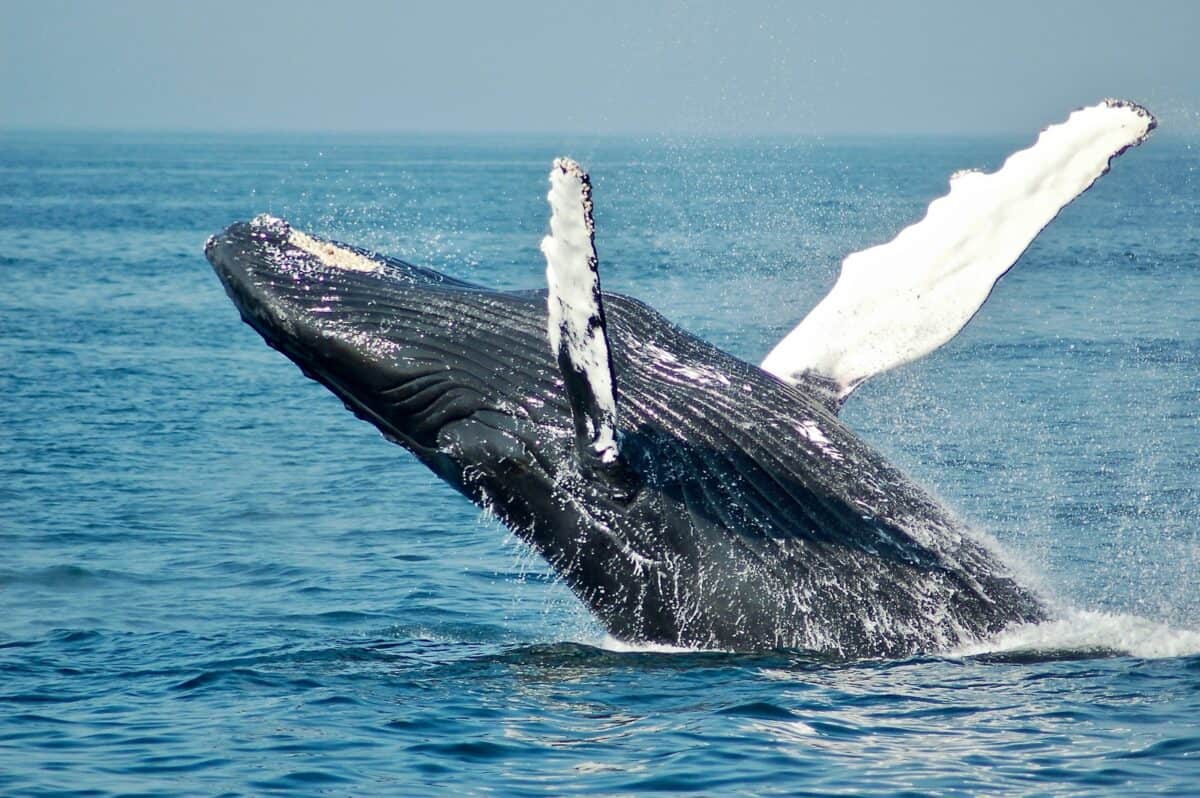
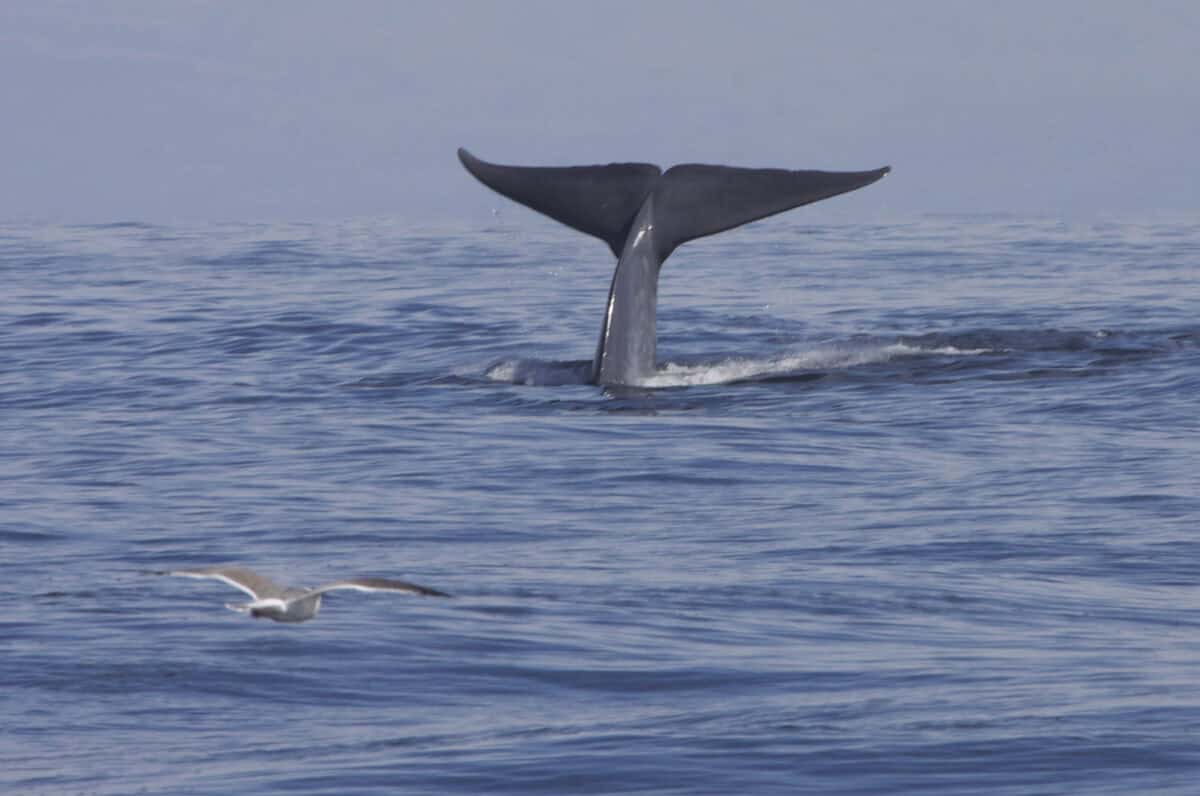
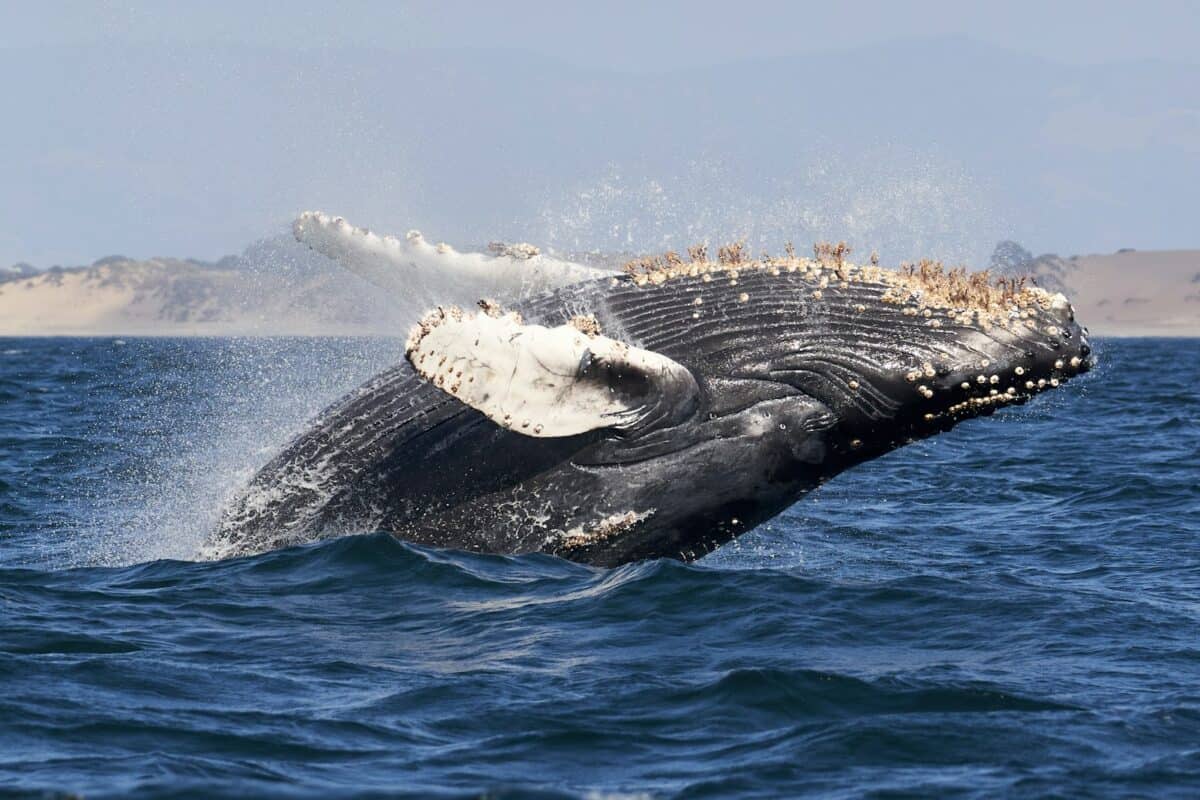
Perhaps the most surprising aspect of this discovery is that the song pattern has been adopted not just by one whale species, but has crossed species boundaries. Initially detected among humpback whales (Megaptera novaeangliae), known for their complex songs, the pattern has now been documented in fin whales (Balaenoptera physalus) and even blue whales (Balaenoptera musculus), species that typically use much simpler communication systems.
Cross-species communication is extremely rare in the animal kingdom, and this level of vocal pattern sharing between different whale species has never been documented before. “It’s equivalent to hearing speakers of completely different human languages suddenly adopting the same complex phrase or sentence structure,” explains Dr. Carlos Méndez from the Marine Mammal Research Institute. “This suggests something about this particular acoustic pattern is universally important to cetaceans right now, regardless of species.”
Potential Links to Environmental Changes
As scientists search for explanations, many are investigating connections between this new vocalization pattern and recent changes in ocean conditions. The timing of the song’s emergence coincides with significant shifts in ocean temperature, chemistry, and currents due to climate change. Dr. Sylvia Chen, oceanographer and climate scientist at Scripps Institution of Oceanography, points to data showing unprecedented changes in deep-water acoustic properties caused by ocean acidification.
“The changing chemistry of our oceans is altering how sound travels underwater. It’s possible these whales have developed new communication strategies in response to these rapidly changing conditions.” Other researchers have noted correlations with changes in prey distribution patterns and feeding grounds, suggesting the song might contain information about new food sources or migration routes necessitated by shifting ecosystems.
Advanced Technology Enabling Deeper Understanding

This scientific mystery has only been detectable thanks to significant advances in marine acoustic monitoring technology. A new generation of autonomous underwater vehicles (AUVs) equipped with high-definition hydrophones can now track whale movements and vocalizations with unprecedented precision. The international research effort studying this phenomenon employs a network of over 300 deep-ocean listening stations and dozens of AI-powered floating recording devices that can identify and isolate specific whale vocalizations from background ocean noise.
This technological revolution in marine acoustics has opened new windows into whale communication. “Twenty years ago, we simply wouldn’t have had the capability to detect these patterns,” explains acoustic engineer Dr. James Thornton. “The combination of advanced recording equipment, artificial intelligence for sound analysis, and international data sharing has created a breakthrough moment for understanding marine mammal communication.”
Mathematical Patterns That Puzzle Experts
When mathematicians were brought into the research team, they made a startling discovery about the structure of the new whale song. The sequence of notes follows patterns that bear remarkable similarities to specific mathematical concepts, including Fibonacci sequences and prime number intervals.
Dr. Elena Kovalev, a mathematical biologist at MIT, was astonished by her analysis: “The temporal spacing between certain elements of the song follows mathematical ratios that are extremely unlikely to occur by chance. There appears to be an underlying mathematical structure that suggests purposeful design rather than random evolution.” Some researchers have even identified elements in the song that resemble encryption patterns, raising profound questions about the cognitive capabilities of these marine mammals and the potential complexity of information they may be trying to communicate.
Theories About the Song’s Purpose

As scientists continue to study this phenomenon, several theories have emerged about the purpose of this new vocalization pattern. One compelling hypothesis suggests it could be a response to increasing human-generated ocean noise. With shipping traffic, offshore construction, and military activities creating unprecedented underwater noise pollution, whales may have developed this new communication strategy to cut through the acoustic fog.
Another theory proposes the song could be related to mating behavior, potentially representing a novel form of courtship display that has proven particularly successful and thus spread rapidly. A more concerning possibility is that the song relates to distress or warning communication about environmental threats. Dr. Hideo Tanaka from the Tokyo Marine Biology Center suggests, “We must consider the possibility that these animals are communicating about threats or changes to their environment that we haven’t yet fully recognized ourselves. They may be sensing something in the ocean that our instruments aren’t detecting.”
Challenging Scientific Paradigms
This acoustic phenomenon is forcing marine biologists to reconsider fundamental assumptions about cetacean communication and cognition. The speed of transmission, the cross-species adoption, and the mathematical precision of the pattern challenge the current scientific paradigm regarding animal communication capabilities.
For decades, scientists have recognized whales as intelligent, social creatures with complex communication systems, but this discovery suggests cognitive abilities that approach problem-solving and information-sharing capacities previously thought unique to humans and a few other highly intelligent species. “We may need to completely revise our understanding of cetacean intelligence,” states cognitive ethologist Dr. Rachel Simmons. “If these animals can create and rapidly disseminate such complex acoustic information across global populations and species boundaries, we’ve likely been underestimating their cognitive capabilities and social structures significantly.”
Research Challenges and Ethical Considerations

Studying this phenomenon presents enormous scientific challenges. Tracking vocalizing whales across vast ocean expanses requires international coordination and shared resources. The depth at which many of these vocalizations occur makes direct observation nearly impossible. Additionally, researchers must contend with ethical considerations about how to study these animals without disrupting their natural behaviors.
Some scientists have proposed experimental approaches, such as playing recordings of the song pattern back to whale populations to observe responses, but such interventions raise ethical questions about potentially interfering with what might be important natural communication. The scientific community is proceeding cautiously, prioritizing observational studies and passive acoustic monitoring while developing research protocols that ensure the welfare of these potentially vulnerable marine mammal populations.
Cultural Significance and Public Interest

Beyond the scientific community, this discovery has captured widespread public attention and imagination. Recordings of the mysterious whale song have gone viral online, inspiring musical compositions, art installations, and even a documentary film currently in production. The story touches on themes that resonate deeply with people: the mystery of animal intelligence, the effects of environmental change, and the possibility of complex communication systems we are only beginning to understand.
Indigenous communities with traditional knowledge about whale behavior have also contributed valuable perspectives to the discussion. Inuit elders from Arctic regions have shared oral histories describing periodic significant changes in whale songs that coincide with major environmental shifts, suggesting this phenomenon may have historical precedents not documented by modern science. The cultural response highlights how discoveries about animal communication touch something profound in human curiosity about the other intelligent minds with whom we share our planet.
Future Research Directions

As scientists work to unravel this mystery, several promising research directions have emerged. International funding has been secured for a five-year global whale song monitoring project that will deploy additional underwater listening stations in previously under-monitored ocean regions. New machine learning algorithms are being developed to analyze the massive datasets generated by these recording networks, looking for patterns and variations that human analysts might miss.
Researchers are also planning targeted studies of whale behavior during song production, using non-invasive tagging technologies that can record both vocalizations and the movements of individual whales. Genetic studies of different whale populations that have adopted the song are being conducted to look for any biological factors that might influence vocal learning. The scientific community has rallied around this puzzle, recognizing it as an opportunity to gain unprecedented insights into one of the planet’s most intelligent but least understood animal groups.
Conclusion: A Window into the Ocean’s Changing Voice

The discovery of this novel whale song pattern represents one of the most significant developments in marine mammal research in decades, opening new windows into the complex societies and communication systems of these ocean giants. As scientists continue their quest to decode this mysterious vocalization, they are simultaneously advancing our understanding of animal cognition, ocean acoustics, and the impacts of environmental change on marine life.
The cross-disciplinary nature of this investigation – bringing together biologists, physicists, mathematicians, and indigenous knowledge holders – demonstrates how complex natural phenomena require diverse perspectives and approaches. Whether this new song ultimately proves to be a response to changing ocean conditions, an evolutionary leap in communication, or something entirely unexpected, it serves as a powerful reminder that even in our technologically advanced age, the natural world still holds profound mysteries waiting to be understood.

- The Perfect Pet for Each Zodiac Sign - July 7, 2026
- The Wild Animal That Embodies Your Zodiac Sign’s Spirit - July 6, 2026
- 7 Steps to Planting Admirably Beautiful Bluebonnets - July 6, 2026