
Worried about unexpected vet bills?
Pet insurance can cover thousands in unexpected vet costs. Get a free quote from Lemonade in under 2 minutes.
Get My Free Quote →Sponsored · Opens Lemonade.com
What makes this creature genuinely remarkable isn’t just the spectacle of it. It’s the sheer precision of the biology involved. Every part of the giant anteater, from the tip of its snout to the architecture of its stomach, has been shaped by millions of years of specialization around a single, seemingly humble food source.
A Walking Feat of Evolutionary Engineering
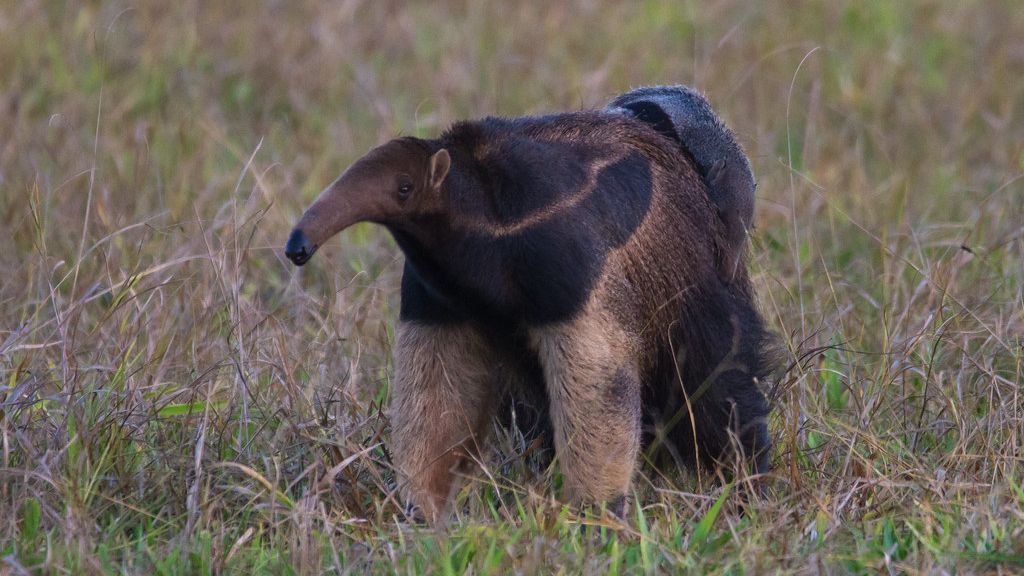
The giant anteater, known scientifically as Myrmecophaga tridactyla, is an insectivorous mammal native to Central and South America, and it’s the largest of the four living species of anteaters, which are classified with sloths in the order Pilosa. It’s a striking animal in the flesh, though it tends to get underestimated.
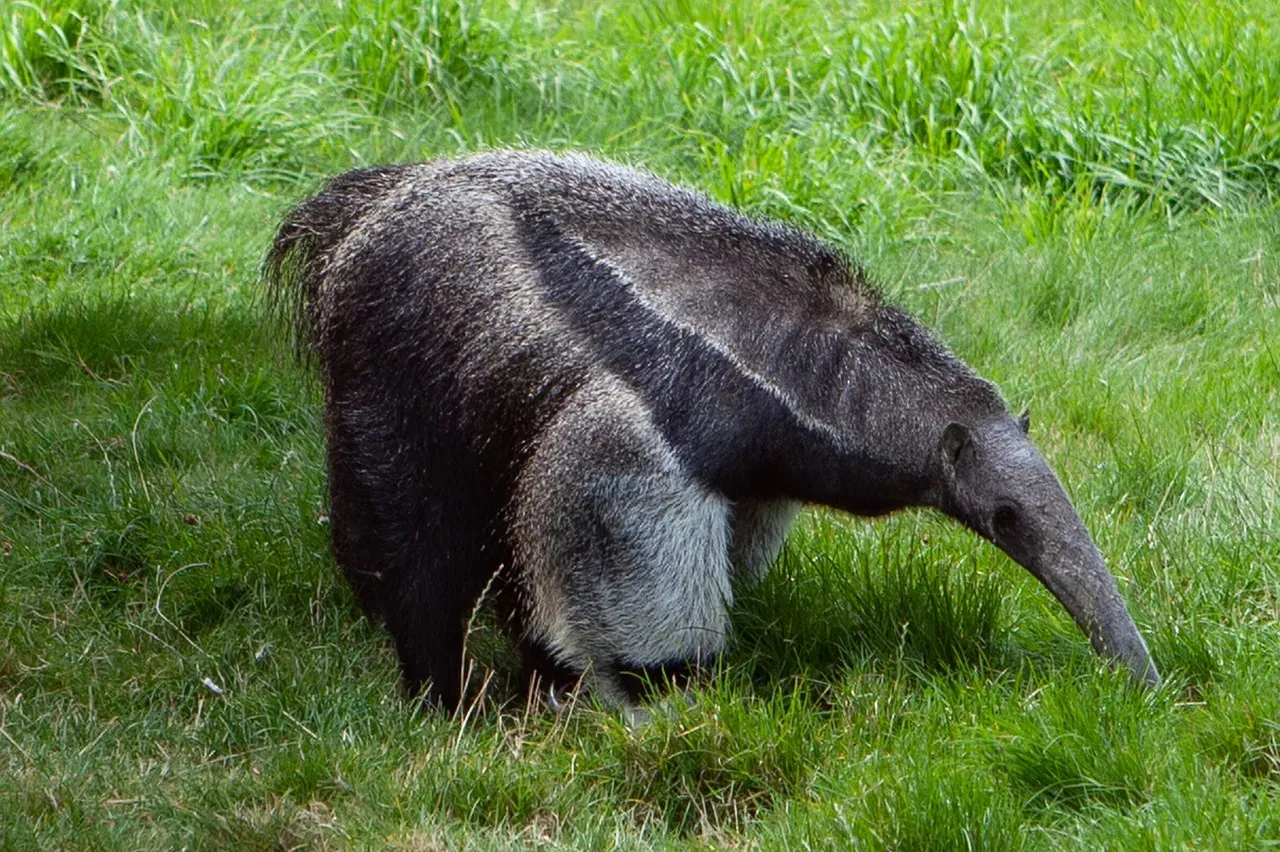
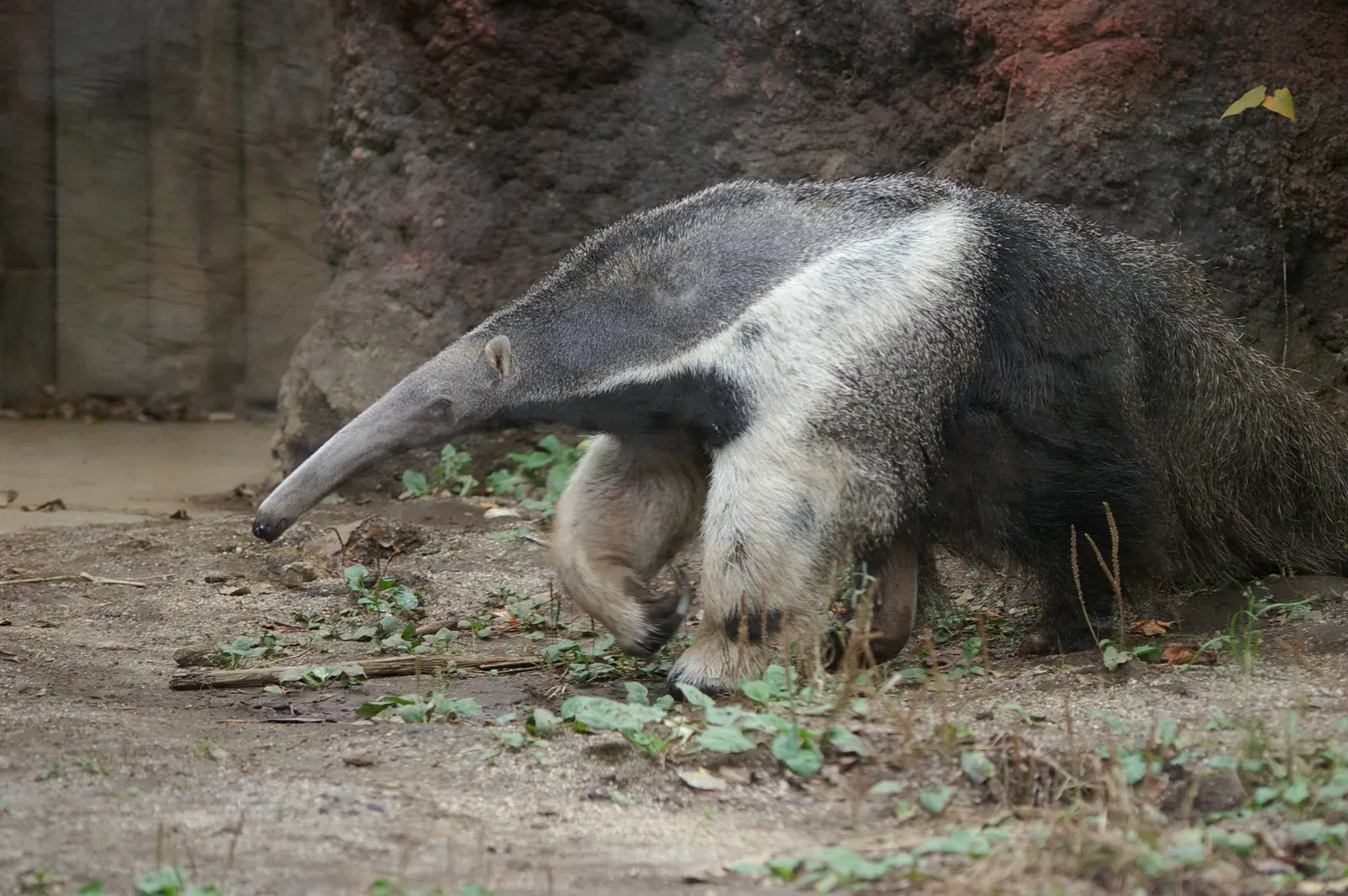
Giant anteaters are the largest of the four anteater species, reaching lengths of six to eight feet. The giant anteater is about the size of a golden retriever, but thick, bushy hair makes it look even bigger. That distinctive bushy tail, the bold black stripe running across the shoulders, and that impossibly elongated snout make it instantly recognizable.
Anteaters are the four extant mammal species in the suborder Vermilingua, meaning “worm tongue,” commonly known for eating ants and termites. The name is fitting, to say the least. Everything about their design traces back to this one dietary choice.
The Tongue: Nature’s Most Improbable Tool
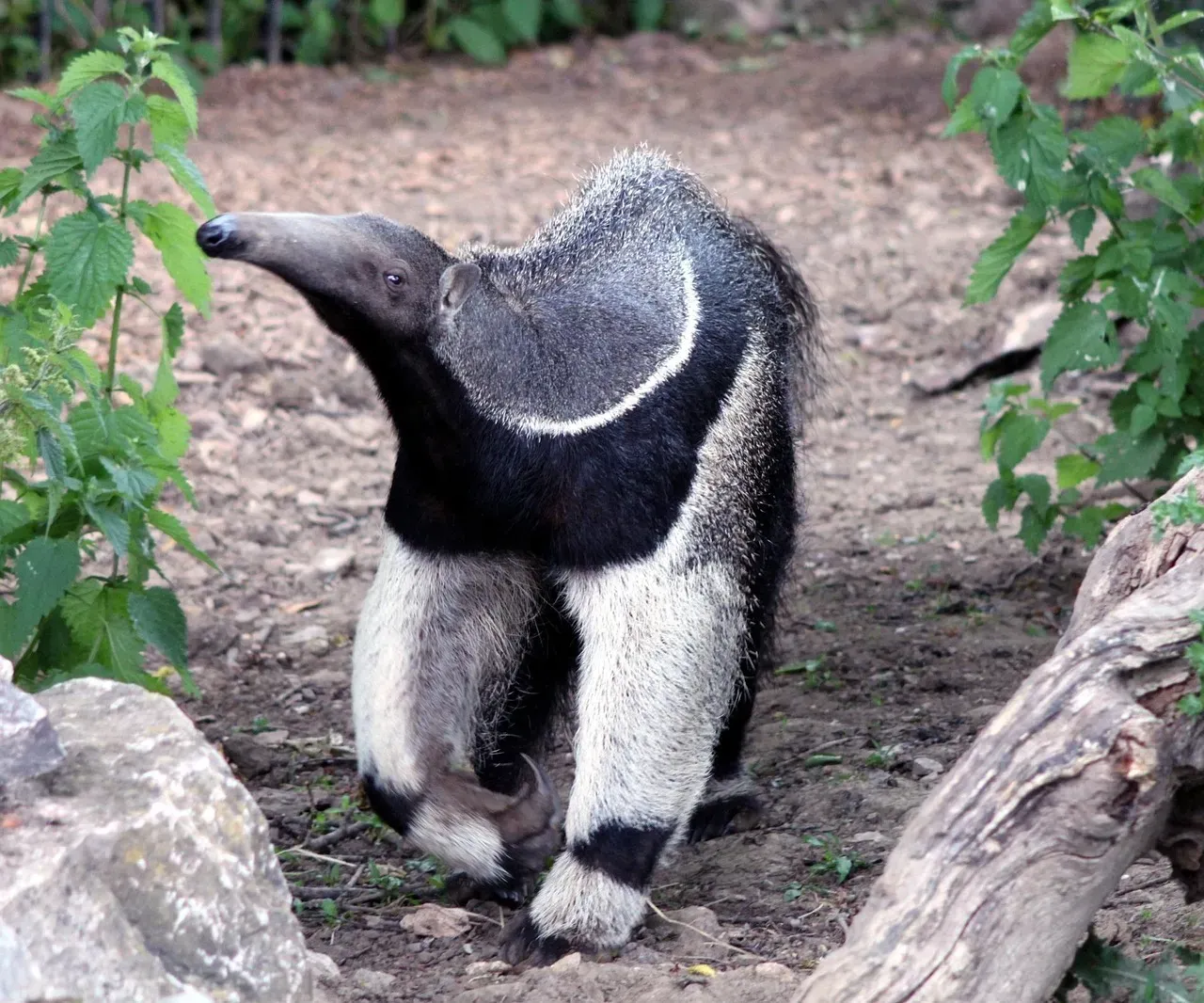
Giant anteaters are native to Central and South America, where they feed on tiny termites and ants using their two-foot-long tongue, which can flick in and out up to 150 times per minute. That speed is difficult to picture. Nearly three flicks per second, every second, for as long as the animal is feeding.
The anteater’s narrow tongue is about two feet long and shaped like a strand of spaghetti. It has tiny, backward-pointing spines covered in sticky saliva that aid in feeding. The combination of speed, texture, and adhesion creates an almost mechanical efficiency that no other mammal quite matches.
The tongue is attached to the sternum, which gives it the ability to stick out so far. It has a length of around 60 centimeters and is more triangular in the back but becomes more rounded towards the front and ends in a rounded tip. The tongue has backward-curving papillae and is extremely moist due to the large salivary glands. It’s a surprisingly complex structure for something that looks, at a glance, like a long worm.
The Sticky Science of Catching Insects
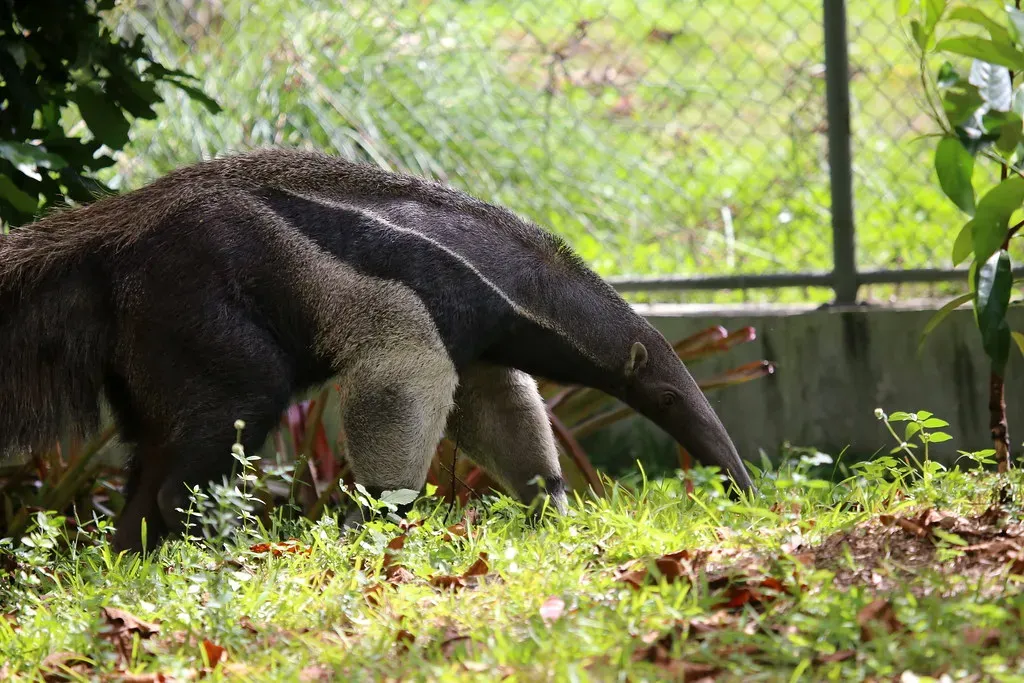
The saliva is sticky, meaning that the anteaters do not need to scoop or lift an insect. This saliva is made up of molecules called sialoglycoconjugates, which consist of sialic acids and glycoproteins. That chemistry is what turns the tongue from a simple probe into an effective trap.
The tongue is coated in sticky saliva, which allows anteaters to slurp up ants and termites. Research has found that giant anteaters can identify a particular species of ant or termite by smell before they rip apart a nest. That’s a level of selectivity most people wouldn’t associate with an animal just looking to eat.
After finding a nest, the animal tears it open with its claws and inserts its long, sticky tongue to collect its prey, which includes eggs, larvae, and adult insects. It’s not just the adults they’re after. Larvae and eggs are also fair game, which helps explain how the numbers add up so quickly.
How 30,000 Insects Get Eaten in a Single Day
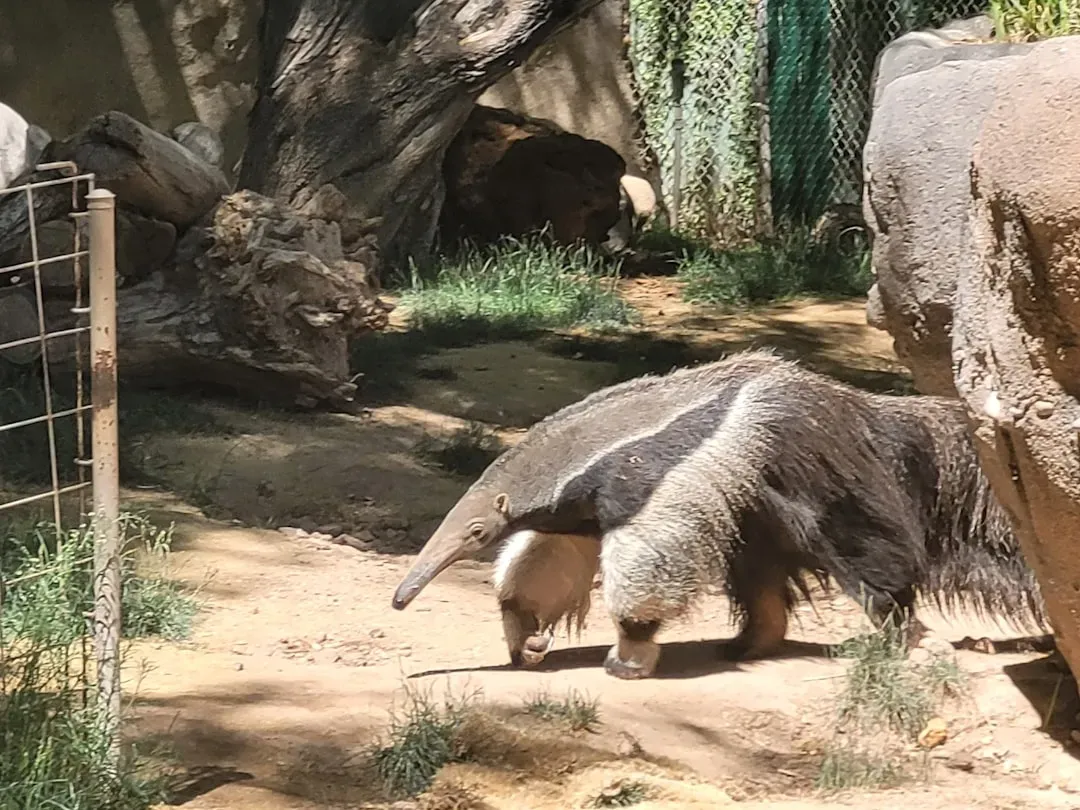
On average, a giant anteater can consume up to 30,000 ants and termites in a single day. That number sounds extraordinary, but the math behind it makes sense once you understand the strategy. It’s less about one long feast and more about many brief, efficient raids.
An anteater attacks up to 200 nests in one day, for as long as a minute each, and consumes a total of around 35,000 insects. They only consume about 140 insects from each mound during a single feeding. Spread across 200 visits, those small numbers accumulate into something remarkable.
There are two reasons they move on so quickly: this prevents the total destruction of the mound and therefore wiping out a food source, and they are not immune to ant bites so they feed for just a minute or so before moving on. It’s a restrained feeding strategy that keeps future meals available and limits injury. There’s a kind of unsentimental practicality to it.
The Claws, the Snout, and a Stomach Like No Other
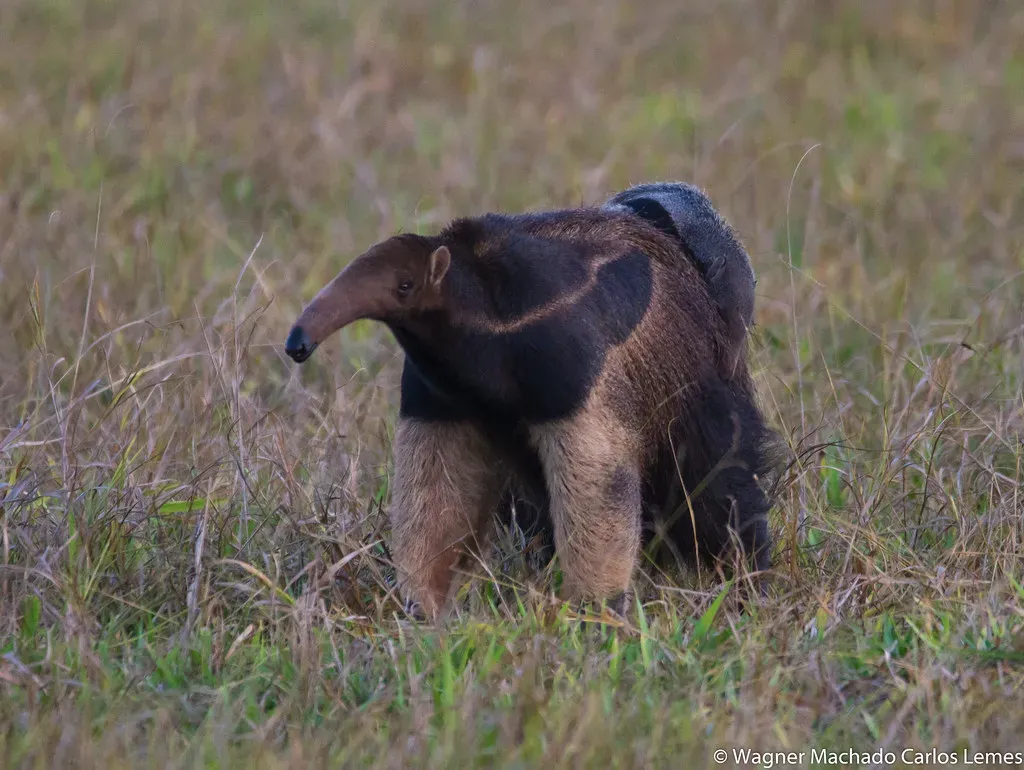
Giant anteaters protect their sharp front claws by tucking them into their palms and walking on their front knuckles. Anteaters feed almost exclusively on ants and termites, whose nests they rip open with their powerful forelimbs and claws, and then ingest with their sticky tongue. The claws are the key that unlocks every meal.
The giant anteater has no teeth and is capable of very limited jaw movement. It relies on the rotation of the two halves of its lower jaw, held together by a ligament connecting the rami, to open and close its mouth. It’s a jaw built entirely for one purpose: letting the tongue out and pulling it back.
The giant anteater’s stomach, similar to a bird’s gizzard, has hardened folds to crush food, assisted by some sand and soil. The giant anteater cannot produce stomach acid of its own but digests using the formic acid of its prey. Even the digestion is outsourced to the ants themselves. It’s a genuinely unusual arrangement.
Senses, Solitude, and Daily Life in the Wild
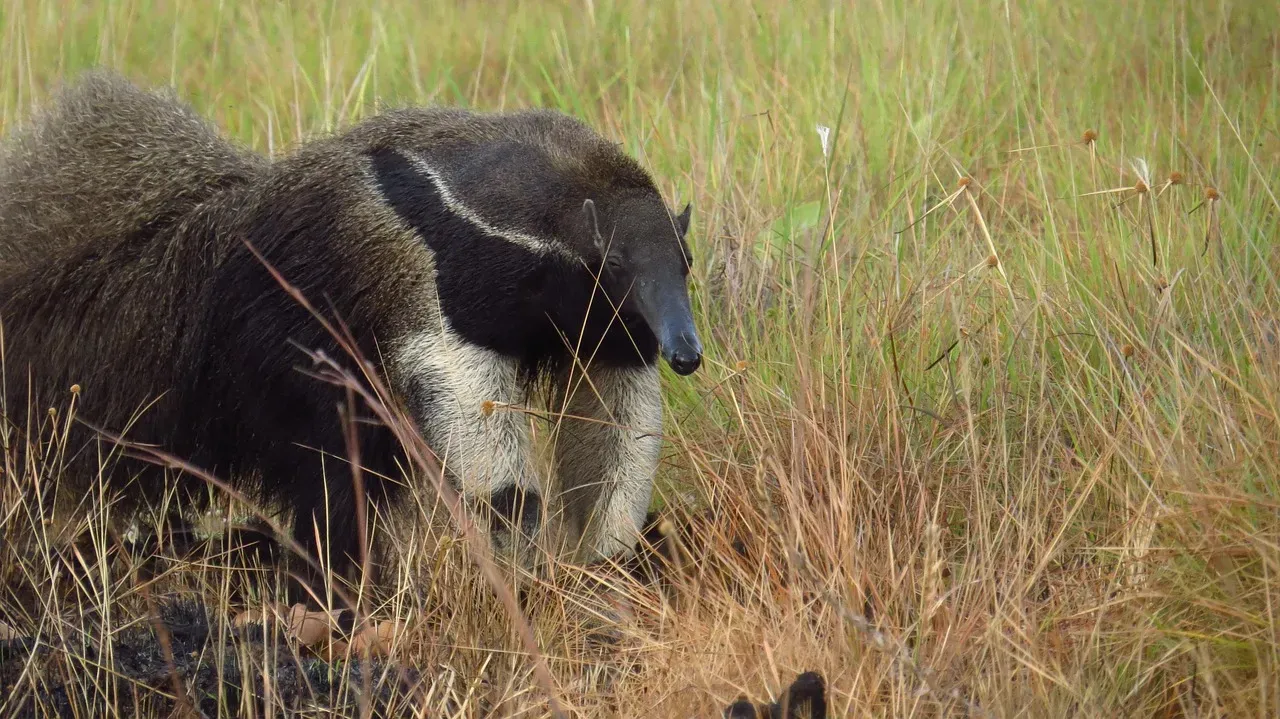
The giant anteater’s sense of smell is about 40 times more sensitive than a human’s sense of smell, which is good for sniffing out insects; and at 91 degrees Fahrenheit, they have one of the lower body temperatures found in mammals, which probably has to do with their low-calorie diet of insects. A low body temperature, a razor-sharp nose, and the patience to walk a wide territory. That’s the daily toolkit.
Giant anteaters are typically solitary, except during the mating season or when a mother is caring for her young. They do not make permanent nests or resting spots and likely wander throughout their ranges. Their ranges are about one square mile for adult males and about one and a half square miles for adult females. They move constantly, covering their territory methodically.
Giant anteater lifestyles appear to depend on the human population density around them. The more populated the area, the more likely the anteaters will be nocturnal; in less populated areas, anteaters are diurnal. It’s one of those quiet adaptations that reveals just how much pressure humans place on wild animals, often without realizing it.
A Vulnerable Species Worth Knowing
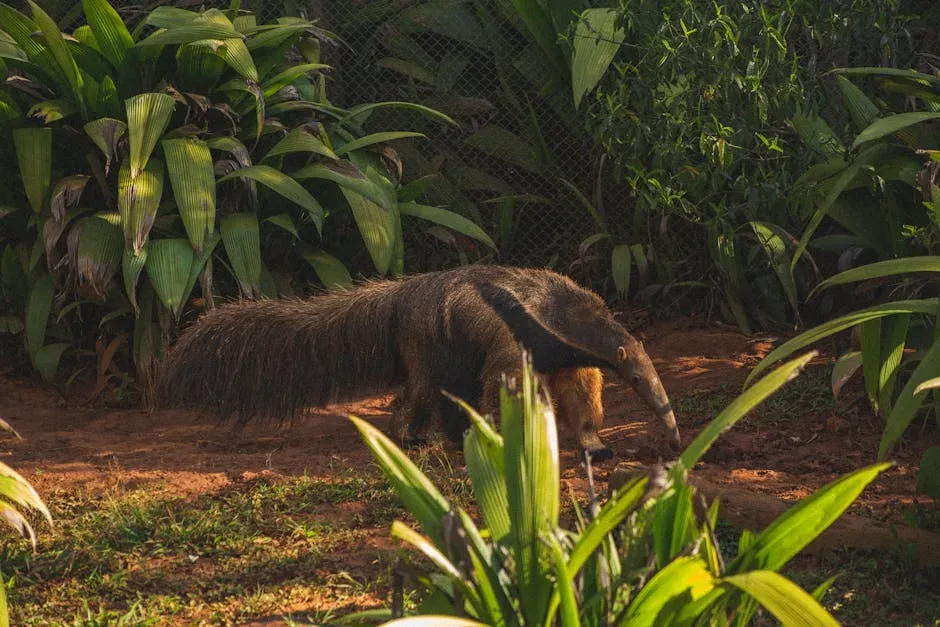
The giant anteater is listed as vulnerable by the International Union for Conservation of Nature. It has been extirpated from many parts of its former range. Threats to its survival include habitat destruction, fire, and poaching for fur and bushmeat, although some anteaters inhabit protected areas. The pressures are multiple and persistent.
One of the major threats giant anteaters face is the loss of their grassland habitats due to fires set by sugar cane growers who traditionally burn their fields prior to harvest. Not only do these fires affect the habitat, but also the animals – giant anteaters may suffer significant burns. Giant anteaters are also vulnerable due to habitat loss, especially from fires in grassland regions, hunting for food, and are often hit by vehicles while crossing roads.
On average, a giant anteater can consume up to 30,000 ants and termites in a single day. This helps regulate their populations, reducing their overgrazing and potential detriment to vegetation. Losing giant anteaters wouldn’t just be a loss for them. It would quietly unravel something in the ecosystems that have come to depend on them.
Conclusion: Quiet Giants, Extraordinary Design
The giant anteater doesn’t roar, doesn’t hunt in packs, and doesn’t appear on many people’s lists of favorite animals. It ambles through savannas and forests, flicking its tongue into mounds, consuming its quota, and moving on. There’s no drama in it. Just an animal perfectly matched to its world.
What the anteater offers, for anyone willing to look closely, is a reminder that biological elegance doesn’t always look impressive at first glance. A two-foot tongue, a toothless jaw, a gizzard-like stomach, and a nose forty times sharper than ours: each feature is quietly extraordinary. Together, they form one of nature’s most finely tuned feeding machines.
The real wonder isn’t just that it catches 30,000 insects a day. It’s that every detail of its body, right down to the chemistry of its saliva, exists for exactly that purpose. That kind of precision, shaped across millions of years, is worth paying attention to.
Worried about unexpected vet bills?
Pet insurance can cover thousands in unexpected vet costs. Get a free quote from Lemonade in under 2 minutes.
Get My Free Quote →Sponsored · Opens Lemonade.com
