

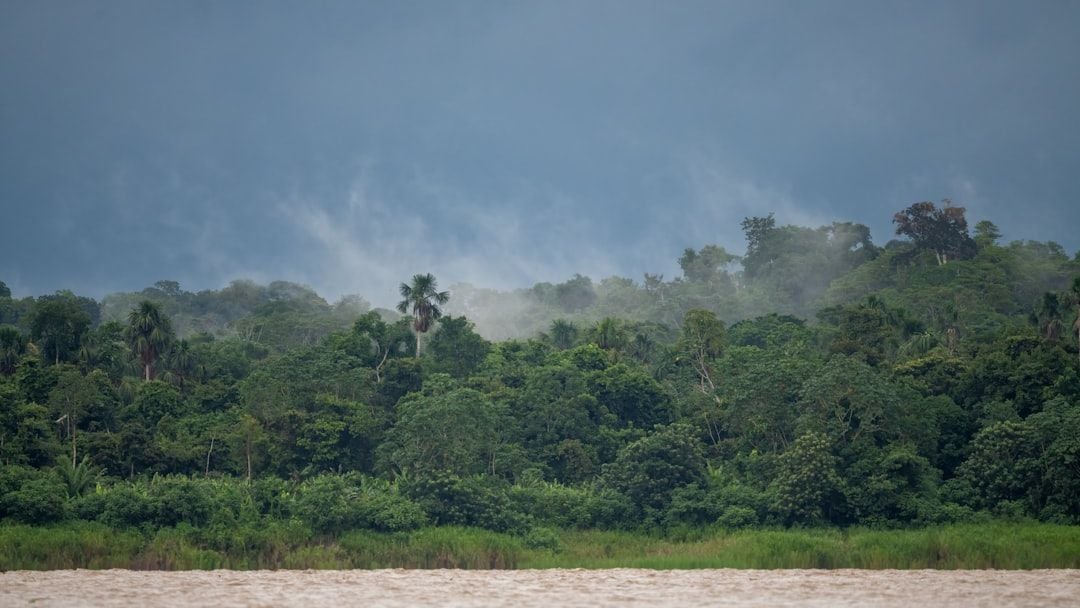
The Amazon Dark Earth Discovery That Could Be the Most Significant Climate Science Breakthrough Since the Discovery of the Carbon Cycle – Image for illustrative purposes only (Image credits: Unsplash)
The Xingu Indigenous Park in Brazil contains patches of unusually dark soil that store roughly nine million tons more carbon than earlier calculations suggested. This finding comes from joint research by scientists in the United States and Brazil, and it adds a notable layer to estimates of the Amazon’s overall carbon capacity. The soil, known as terra preta, stands out against the surrounding reddish, nutrient-poor ground yet has supported denser vegetation for generations. Its ability to retain carbon over long periods without ongoing human input continues to draw attention from climate researchers.
Carbon Storage That Exceeds Earlier Projections
Standard models of the Amazon basin had placed total carbon in vegetation and soils at about 123 billion tons. The new measurements in the Xingu area alone revise that figure upward by a meaningful margin. The extra carbon sits in scattered patches that cover roughly 3.4 percent of the park. Because these patches occur within an otherwise sandy landscape, their concentrated storage capacity stands out sharply against surrounding conditions.
Researchers note that the soil maintains its carbon load steadily, even as surrounding areas lose organic matter more quickly. This stability matters because the Amazon functions as one of the planet’s largest natural carbon sinks. Any upward adjustment in stored amounts therefore influences how scientists project future atmospheric carbon levels under different land-use scenarios.
Longstanding Questions About How the Soil Formed
One line of evidence points to ancient human activity. Indigenous groups are thought to have mixed charcoal, food scraps, and bone fragments into the ground over centuries, gradually building fertile patches. A 2023 study linked to MIT researchers supported this view by showing chemical signatures consistent with deliberate enrichment.
Other analyses reach a different conclusion. Work published in Nature Communications in 2021 examined calcium and phosphorus levels and found patterns more typical of river deposits than of human additions alone. The authors suggested that alluvial processes supplied much of the base material, after which people may have expanded or maintained the patches. No single explanation has yet accounted for every measured characteristic, leaving the precise balance between natural and human contributions unresolved.
Clear Benefits for Tree Growth and Soil Health
Where dark earth occurs, trees grow up to six times taller than those in adjacent areas. The difference appears consistently in field observations and points to sustained nutrient availability rather than temporary effects. This growth advantage holds even in zones that receive no modern fertilizer or irrigation.
The same properties that support larger trees also improve water retention and resistance to erosion. Local communities have long recognized these traits and continue to use the soil for agriculture. The combination of higher biomass and stable carbon storage creates a self-reinforcing system that operates without external inputs.
Implications and Remaining Uncertainties
Replicating the soil’s performance at larger scales could inform both restoration projects and agricultural practices. Current high-technology carbon-capture methods require substantial energy and infrastructure, while dark earth achieves long-term storage through natural processes. Whether the same results can be produced outside the specific conditions of the Amazon remains an open question.
Deforestation continues to reduce the total area of intact forest, with 13.2 percent of the biome already lost as of recent tallies. Any strategy that draws on dark-earth properties must therefore account for ongoing habitat change. Further fieldwork is needed to determine how widely the soil occurs, how quickly it forms under different conditions, and whether its carbon-retention traits persist when transferred to new locations.
The discovery adds one more dimension to efforts that seek workable approaches to carbon management. It also underscores how much remains unknown about the Amazon’s soils even after decades of study. Continued measurement and careful comparison of sites will help clarify whether this resource offers a practical model or remains a localized phenomenon.

As a little kid, I fell in love with nature, wildlife, and animals. Living in the USA, South Africa, Italy, China and Germany gave me the opportunity to discover the world's Wildlife. My favorite animals are Mountain Gorillas, Siberian Tigers, and Great White Sharks.
I'm a certified PADI Open Water Diver, went to Everest Base Camp and Trekked Gorillas in Uganda. I hold a Master of Science in Economics and Finance.
Please send any feedback to feedback@animalsaroundtheglobe.com
- 11 Weather Records That Still Haven’t Been Broken - July 23, 2026
- 12 Most Adorable Dog Breeds That Melt Hearts - July 23, 2026
- 10 Laws That Changed Animal Rights Forever - July 23, 2026