

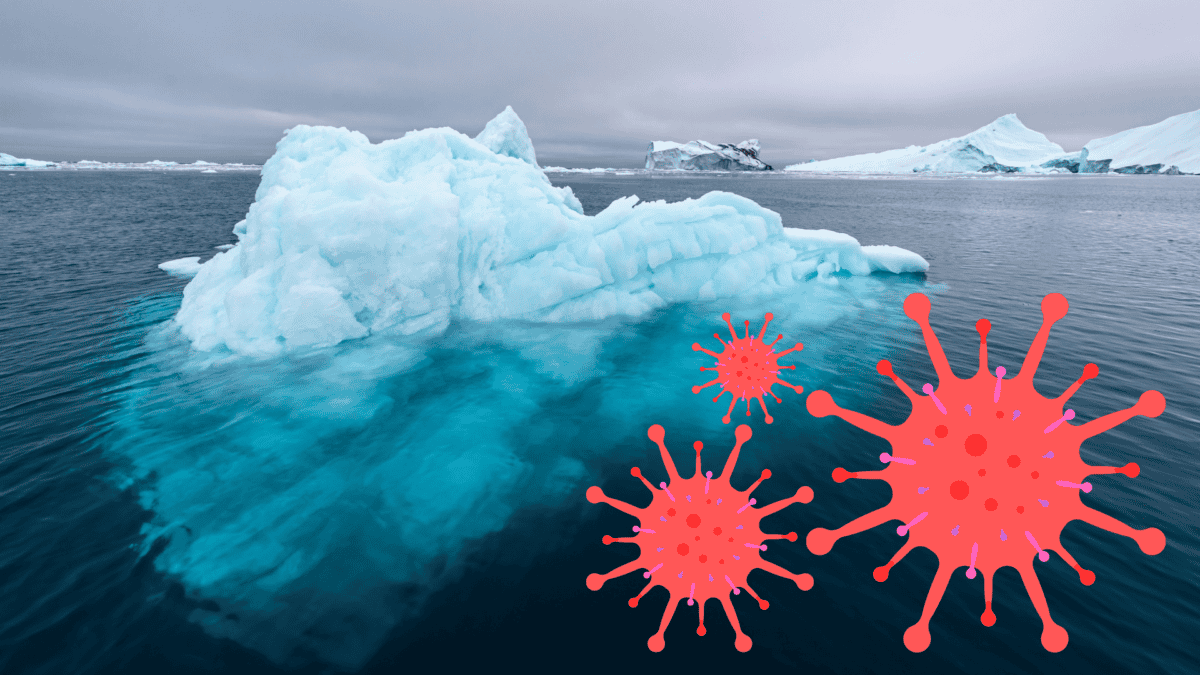
As humans alter the planet’s climate, scientists turn to Earth’s past to understand future changes. Glaciers, vast ice structures, act as natural archives, preserving records of past climates and ecosystems, including ancient viruses. This unique preservation helps scientists trace how viruses have adapted to shifting climates over millennia.
Reading History in Viral Genes
🔥 Would you like to save this?
We'll email this post to you, so you can come back to it later!
Our team of microbiologists and paleoclimatologists investigates ancient microorganisms preserved in glacier ice. Collaborating with experts like Lonnie Thompson and Virginia Rich from The Ohio State University, we study ice cores from the Guliya Glacier on the Tibetan Plateau. Our goal is to understand how viruses interacted with their environments through time.
Decoding Ancient Viral Genomes

🔥 Would you like to save this?
We'll email this post to you, so you can come back to it later!
We utilized metagenomes, collections of all genomes in environmental samples, to reconstruct viral genomes from nine distinct time intervals in the Guliya ice core. These intervals span three major cold-to-warm cycles, providing insight into how viral communities changed with climatic shifts. This approach allowed us to observe the impact of climate on viral evolution.
Expanding Knowledge of Glacier-Preserved Viruses

🔥 Would you like to save this?
We'll email this post to you, so you can come back to it later!
Our research revealed genomes of approximately 1,705 virus species, significantly expanding the known ancient viral diversity in glaciers. This increase is more than fiftyfold compared to previous knowledge. However, only about a quarter of these species matched those in global datasets, suggesting a limited overlap with known glacial viruses.
Local vs. Global Viral Communities
🔥 Would you like to save this?
We'll email this post to you, so you can come back to it later!
Many of the viral species found were unique to the Tibetan Plateau, indicating that some glaciers’ viruses may be regionally specific. This discovery highlights a gap in global virus databases and emphasizes the need for more comprehensive data on glacial viruses to understand their distribution and evolution.
The Influence of Climate on Viral Diversity

🔥 Would you like to save this?
We'll email this post to you, so you can come back to it later!
We observed that viral communities varied between cold and warm periods. Around 11,500 years ago, during the transition from the Last Glacial Stage to the Holocene, the glacier saw a distinct shift in viral communities. This change suggests that climatic conditions significantly influenced viral diversity and composition on the glacier.
Virus-Host Interactions

🔥 Would you like to save this?
We'll email this post to you, so you can come back to it later!
Our study further explored how viruses interacted with their hosts. We used computer models to compare viral genomes with microbial genomes found in glacier environments. Our findings showed that viruses frequently infected Flavobacterium, a common bacterium in these icy habitats, indicating a specific viral-host relationship.
Gene Stealing for Survival

🔥 Would you like to save this?
We'll email this post to you, so you can come back to it later!
Viruses on the Guliya Glacier appear to “steal” genes from their hosts to adapt their metabolisms. We identified 50 auxiliary metabolic genes within the viral genomes, related to the synthesis and breakdown of essential compounds. These genes likely help viruses and their hosts cope with the harsh glacier environment.
Impact on Host Fitness

🔥 Would you like to save this?
We'll email this post to you, so you can come back to it later!
The presence of these auxiliary genes suggests that viruses not only infect cells but also influence their fitness. By altering the metabolism of their hosts, viruses might affect their survival in extreme conditions, showcasing a complex interaction between viruses and their glacier environments.
Implications for Climate Science
🔥 Would you like to save this?
We'll email this post to you, so you can come back to it later!
Our findings offer new perspectives on how viruses have responded to climatic changes over thousands of years. Understanding these ancient viral adaptations provides valuable insights for future research in virology and climate science. This knowledge helps predict how viruses might react to ongoing global climate change.
Conclusion

🔥 Would you like to save this?
We'll email this post to you, so you can come back to it later!
Glacier ice serves as a crucial record of Earth’s climate history and the life it has supported. By studying ancient viral genomes preserved in glaciers, scientists gain insights into the past interactions between viruses and their environments. As glaciers continue to disappear, preserving this knowledge becomes increasingly vital for understanding our planet’s climatic and microbial history.

For any feedback please message Feedback@animalsaroundtheglobe.com
- Just How Big are Moose - November 5, 2026
- Discover The World Of Gibbons - November 1, 2026
- Meet The 20 Most Popular Animals Of Utah - October 31, 2026