

When “Finding Nemo” splashed onto cinema screens in 2003, audiences worldwide fell in love with Dory, the friendly but forgetful blue tang fish who helped Marlin search for his son. Her catchphrase “Just keep swimming” and her chronic short-term memory loss became iconic elements of animated film history. But as “Finding Dory” later thrust the blue tang into an even brighter spotlight, many viewers began to wonder: do these vibrant ocean dwellers actually suffer from memory problems in real life? The portrayal raised fascinating questions about fish cognition and memory that scientists have been exploring for years. This article dives deep into the science behind blue tangs, examining their true cognitive abilities and separating Hollywood fiction from scientific fact.
The Real Identity of “Dory” Fish

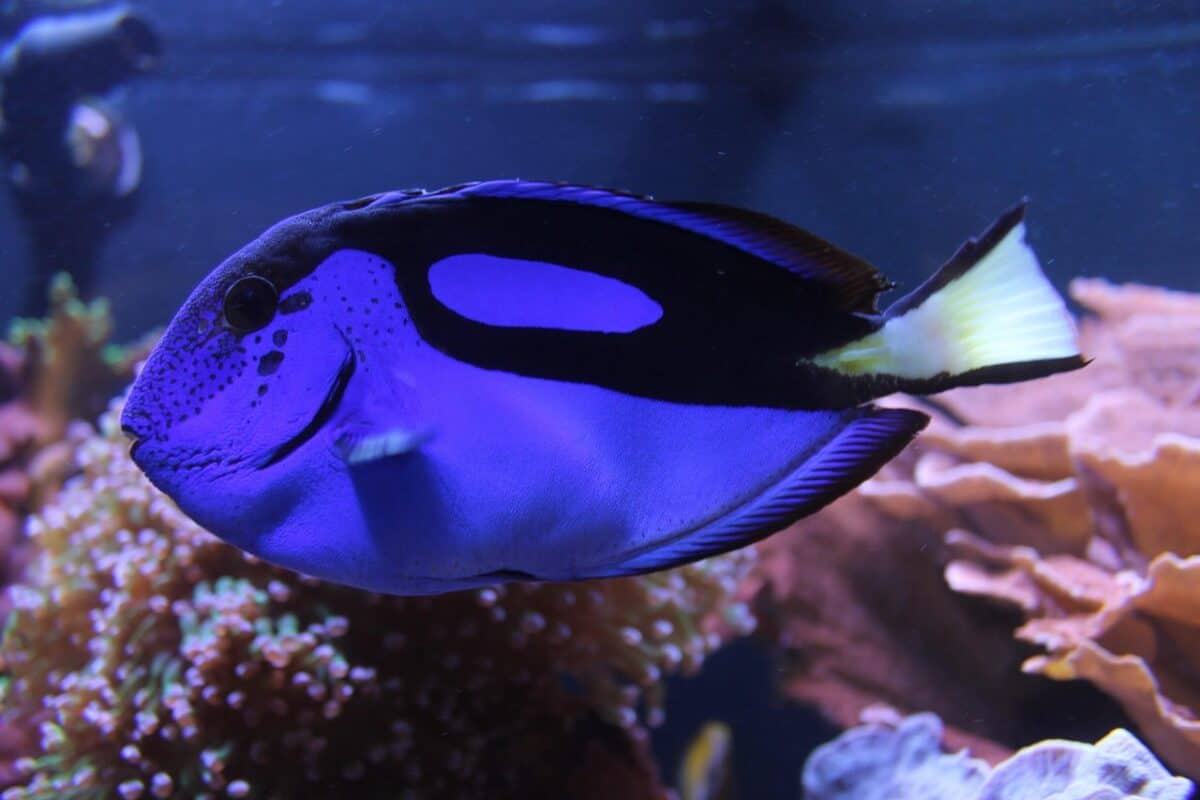
The character Dory is a blue tang (Paracanthurus hepatus), also commonly known as the palette surgeonfish, royal blue tang, or hippo tang. These striking fish are native to the Indo-Pacific region, inhabiting coral reefs from East Africa to Japan and Australia. Unlike their animated counterpart, real blue tangs don’t speak whale or have expressive, human-like eyes. They typically grow to about 12 inches (30 cm) in length and can live 8-20 years in the wild.
Blue tangs are immediately recognizable by their vibrant cobalt blue coloration, oval-shaped bodies, and distinctive black markings. They possess a sharp spine near their tail that they can extend when threatened, earning them the “surgeonfish” classification. This defense mechanism, entirely absent from Dory’s character portrayal, helps protect them from predators in their natural reef environment. Blue tangs are also herbivores, primarily feeding on algae and plant matter rather than the diverse diet shown in the films.
The Memory Myth: Hollywood vs. Reality

Dory’s most defining characteristic—her short-term memory loss—was a creative liberty taken by Pixar rather than a reflection of blue tangs’ actual cognitive abilities. In reality, there is no scientific evidence suggesting that blue tangs suffer from any form of memory impairment. This fictional trait was invented to create a compelling character arc and drive the plot forward, particularly in “Finding Dory” where her memory challenges became central to the storyline.
Dr. Culum Brown, a fish cognition expert from Macquarie University, has stated that the notion of fish having poor memory is “an absolute myth.” Research shows that fish memory can be quite sophisticated, with many species demonstrating the ability to remember complex spatial information, recognize individuals, and learn from experiences. Far from the “three-second memory” often attributed to fish, studies have demonstrated that some fish species can retain information for months or even years.
Fish Cognition: Smarter Than We Thought

The scientific understanding of fish intelligence has evolved dramatically in recent decades. Far from being simple creatures with minimal cognitive abilities, fish have demonstrated impressive learning capabilities and memory retention. Studies have shown that many fish species can recognize individuals, navigate complex environments, use tools, and even engage in collaborative behaviors. The traditional view of fish as primitive or unintelligent animals has been thoroughly debunked by modern research.
Blue tangs specifically belong to the surgeonfish family, which has shown evidence of complex spatial memory. They navigate intricate coral reef environments, remembering feeding locations and potential hiding spots from predators. This spatial awareness requires considerable cognitive ability and reliable memory systems—a far cry from Dory’s perpetual state of confusion. Scientists believe this spatial intelligence evolved as an adaptation to life in the structurally complex coral reef habitat, where remembering safe passages and food sources provides significant survival advantages.
Memory Tests in Fish Species

Scientists have developed various methods to test memory in fish species, providing insight into their cognitive capabilities. Maze tests, conditioning experiments, and recognition studies have all demonstrated that fish possess much better memory than previously believed. For example, research with archerfish has shown they can remember and recognize specific human faces for extended periods. Similarly, studies with cichlids indicate they can remember the outcome of fights with other fish for up to three months.
While blue tangs haven’t been the specific focus of as many cognitive studies as some other species, research on related reef fish suggests they likely possess similar memory capabilities. Paradise fish can remember threats for up to three months, and many reef species demonstrate the ability to create mental maps of their environment that persist over time. These findings contradict the popular misconception about fish memory being extremely limited—a myth that “Finding Nemo” and “Finding Dory” inadvertently reinforced in popular culture.
Social Intelligence of Blue Tangs

In their natural habitat, blue tangs display sophisticated social behaviors that require significant cognitive capabilities. They often form schools with other blue tangs or even mixed groups with different surgeonfish species. This schooling behavior offers protection from predators and can facilitate efficient feeding strategies. Maintaining position within a school, recognizing group members, and coordinating movements all require memory and social intelligence that contradicts Dory’s portrayed memory deficits.
Blue tangs also demonstrate recognition abilities within their social groups. They can identify and remember other individual fish, which helps establish social hierarchies and cooperative relationships. Young blue tangs have been observed learning feeding techniques from older, more experienced individuals—a form of social learning that would be impossible with the severe memory limitations depicted in Pixar’s character. These complex social behaviors highlight the cognitive sophistication that real blue tangs possess.
Spatial Navigation Abilities

One of the most impressive cognitive feats of blue tangs and other reef fish is their ability to navigate complex coral reef environments. Reefs are intricate three-dimensional landscapes with countless hiding spots, feeding grounds, and potential dangers. Blue tangs must create and maintain detailed mental maps of these environments to survive—remembering safe passages, territorial boundaries, and optimal feeding locations. This spatial memory directly contradicts the disoriented wandering that characterizes Dory’s behavior.
Research has shown that many reef fish, including species related to blue tangs, can remember specific locations for months or even years. Some species have demonstrated the ability to navigate home ranges spanning hundreds of meters of reef habitat. During daily migrations between feeding and sheltering areas, blue tangs follow consistent paths that suggest they maintain detailed spatial memories. These navigation skills would be impossible with the kind of profound memory impairment that defines Dory’s character.
Learning and Adaptation in Blue Tangs
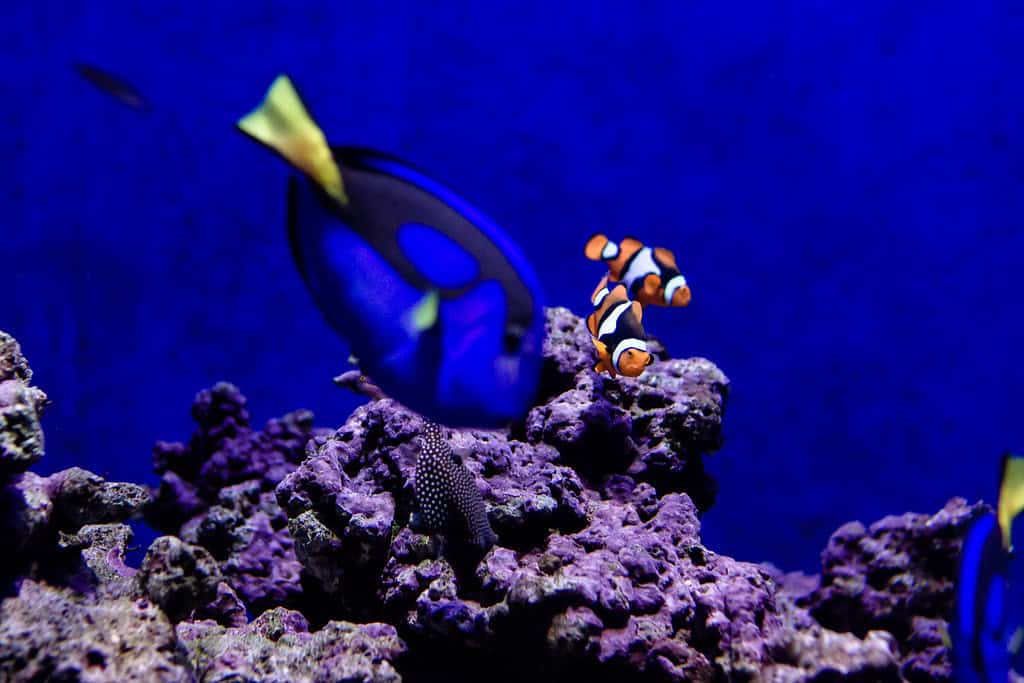
Blue tangs show remarkable learning capabilities throughout their lives, adapting to changing environmental conditions and novel situations. Young blue tangs quickly learn to identify potential predators and develop appropriate avoidance behaviors. They can also adapt their feeding strategies based on food availability and competition, demonstrating behavioral flexibility that requires intact memory systems. This adaptive learning allows them to thrive in the dynamic coral reef ecosystem.
Captive blue tangs further demonstrate these learning capabilities, often recognizing their caretakers and adjusting their behavior accordingly. Many aquarium keepers report that their blue tangs learn feeding schedules and can even be trained to respond to specific signals. Some blue tangs in public aquariums have been successfully target-trained for medical examinations and tank transfers, showing an ability to learn and remember human-introduced patterns. These learning capabilities directly contradict the perpetual confusion and forgetfulness that characterizes Dory.
The “Finding Nemo” Effect on Blue Tangs
The popularity of “Finding Nemo” and “Finding Dory” had significant real-world impacts on blue tang populations. Following the release of both films, demand for blue tangs as aquarium pets surged dramatically—a phenomenon scientists call the “Nemo effect.” Unlike clownfish, which can be bred in captivity, blue tangs have proven extremely difficult to breed in controlled environments. Until recent breakthroughs in 2016, virtually all blue tangs in the aquarium trade were captured from wild reef populations.
This increased demand led to concerning conservation implications. Wild-caught blue tangs are often collected using destructive methods including cyanide fishing, which can damage coral reefs and kill many non-target species. The surge in collection pressure has contributed to local population declines in some regions. Conservation organizations have worked to educate potential fish owners about these issues, encouraging responsible choices and highlighting the specialized care blue tangs require—including large tank sizes and specific water parameters that many casual aquarists cannot provide.
Conservation Status and Threats

While blue tangs are not currently listed as endangered, they face several significant threats in their natural habitat. Climate change poses perhaps the most serious long-term challenge, as rising ocean temperatures cause coral bleaching events that destroy the reef habitats blue tangs depend upon. Ocean acidification further threatens the structural integrity of coral reefs, potentially eliminating crucial feeding grounds and shelter for these fish.
Local threats include overfishing for the aquarium trade, particularly in areas with limited regulation. Destructive fishing practices like cyanide fishing not only remove blue tangs from their natural environment but also damage the surrounding ecosystem. Coastal development, pollution, and sedimentation present additional challenges by degrading water quality and reef health. Conservation efforts focus on establishing marine protected areas, promoting sustainable fishing practices, and developing reliable captive breeding programs to reduce pressure on wild populations.
Caring for Blue Tangs in Captivity
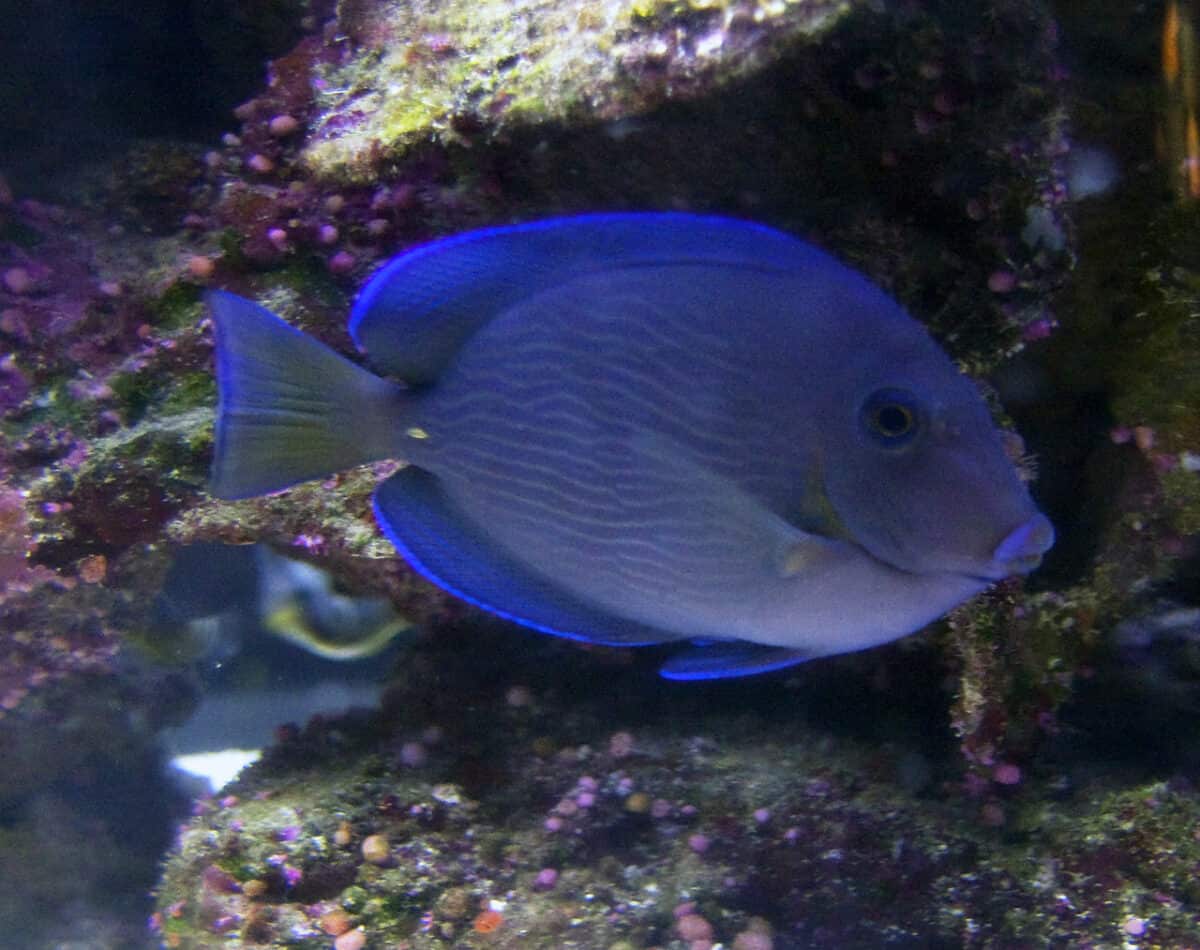
Keeping blue tangs in home aquariums presents significant challenges that potential owners should carefully consider. These fish require spacious environments—experts recommend a minimum tank size of 180 gallons for a single specimen, with larger tanks needed for multiple fish. Blue tangs are active swimmers that need considerable space to thrive. They also require stable, high-quality water conditions that can be difficult for inexperienced aquarists to maintain consistently.
Blue tangs have specific dietary needs centered around algae and plant matter. In captivity, they should be fed a varied diet including marine-based seaweed, specialized herbivore preparations, and occasional protein supplements. They’re also susceptible to various diseases, particularly marine ich (Cryptocaryon irritans), which can be difficult to treat. Potential owners should consider these care requirements carefully and ideally choose captive-bred specimens when available. Many marine biologists and responsible aquarium organizations recommend considering alternative species that are less demanding and have established captive breeding programs.
The Science Behind Fish Memory
The biological basis for memory in fish involves brain structures that, while different from mammals, serve similar functions. Fish possess a telencephalon (a primitive forebrain) that includes structures analogous to the hippocampus—a region crucial for memory formation in mammals. Recent research has identified that these structures allow fish to form both short-term and long-term memories through similar cellular and molecular mechanisms to those seen in more complex vertebrates.
Scientists studying fish cognition have documented impressive memory capabilities across numerous species. Goldfish, often incorrectly cited as having three-second memories, can actually remember complex tasks for months. Certain cichlid species can remember individuals and social hierarchies for extended periods. Even more impressive, some migratory fish species can remember spawning grounds over distances of thousands of miles, returning to specific streams years after leaving them. These findings have revolutionized our understanding of fish cognition, showing that the memory limitations portrayed in characters like Dory represent Hollywood fiction rather than biological reality.
Conclusion: Separating Fact from Fiction

The endearing character of Dory has brought awareness to the beauty of blue tangs and coral reef ecosystems, but her defining memory problems are pure fiction. Real blue tangs demonstrate sophisticated cognitive abilities, including impressive memory capabilities that allow them to navigate complex environments, maintain social relationships, and adapt to changing conditions. The scientific evidence clearly shows that these fish, like many other marine species, are far more intelligent than they’ve historically been given credit for.
Understanding the true nature of blue tangs is important not just for scientific accuracy but also for conservation. The popularity of finding Dory prompted many impulse purchases of these challenging fish, leading to both animal welfare concerns and increased pressure on wild populations. By appreciating the real cognitive abilities of blue tangs and other fish species, we can develop a more accurate and respectful view of marine life.
While Hollywood’s portrayal gave us a lovable character with memory issues, the reality of blue tangs is perhaps even more fascinating. These remarkable fish navigate the intricate world of coral reefs with intelligence and precision that would make their animated counterpart envious. So while we may love Dory for her forgetful charm, we can appreciate real blue tangs for the intelligent, adaptable creatures they truly are—no memory problems included.
As we continue to study and learn about marine cognition, the gap between fiction and reality becomes clearer, giving us a deeper appreciation for the complexity and wonder of life beneath the waves. Just as Dory taught us to “just keep swimming,” perhaps the real lesson is to just keep learning about the remarkable capabilities of the animals with whom we share our planet.

- Could Wolves Be the Answer to America’s Ecosystem Crisis? - July 20, 2026
- 10 Animals That Cheat Death in the Most Unexpected Ways - July 19, 2026
- The Shrimp That Punches Like a Bullet - July 19, 2026