
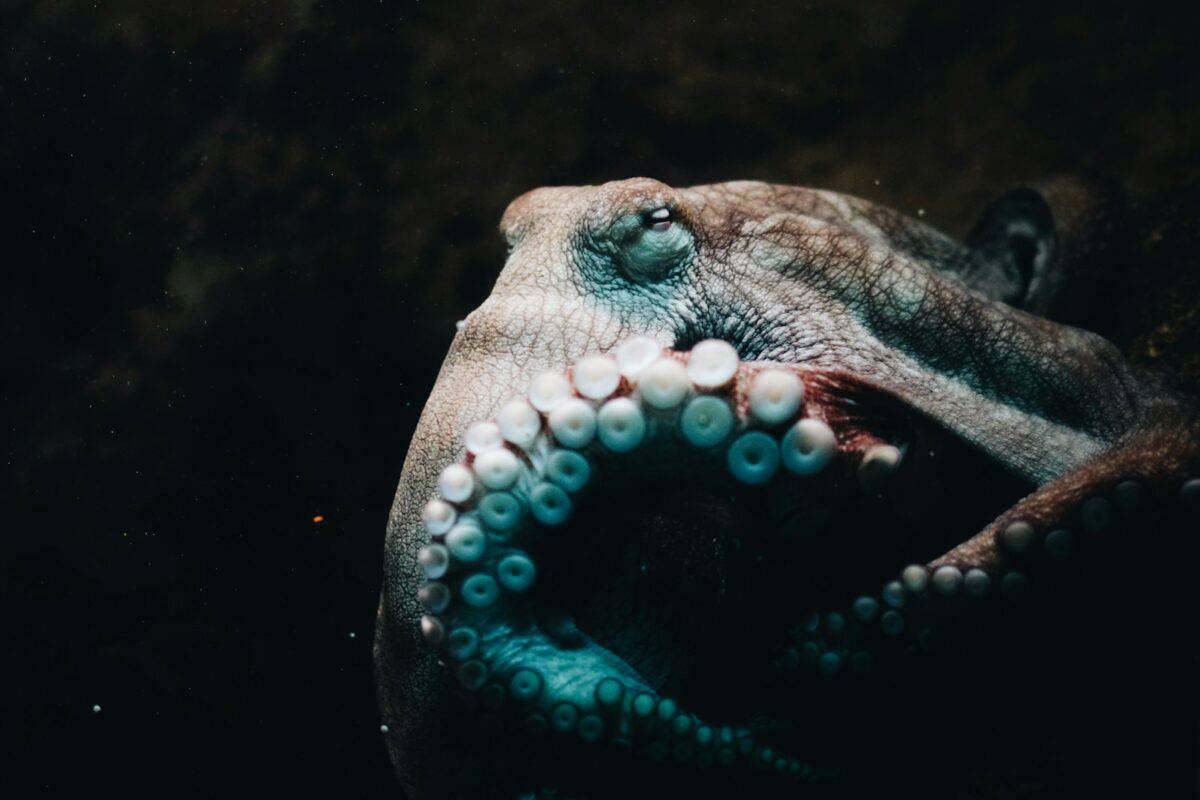
In the shadowy depths of the ocean, one of Earth’s most enigmatic minds is at work. The octopus—with its eight arms, three hearts, and distributed nervous system—has long fascinated scientists and casual observers alike. But recent research has begun to suggest something even more profound: these cephalopods may possess levels of consciousness far beyond what we’ve previously recognized. As we explore the complex behaviors, problem-solving abilities, and neural architecture of octopuses, we’re forced to reconsider not only what consciousness means but also how it might manifest in beings evolutionarily distant from ourselves. The question is no longer whether octopuses are intelligent, but whether they experience the world with a subjective awareness that rivals—or perhaps even surpasses—our own in certain ways.
The Evolutionary Puzzle of Cephalopod Intelligence

The octopus presents an evolutionary conundrum. Our last common ancestor with these eight-armed marvels lived approximately 750 million years ago—a primitive organism with little resemblance to either humans or octopuses. This means that whatever intelligence and consciousness these creatures possess evolved entirely independently from our own. This phenomenon, known as convergent evolution, has produced a mind that thinks and processes the world in fundamentally different ways than vertebrate brains do. With roughly 500 million neurons (compared to a human’s 86 billion), octopuses have developed remarkable cognitive abilities through an entirely separate evolutionary pathway. This independent evolution of intelligence raises profound questions about the nature of consciousness itself: if consciousness can evolve along different paths, what does that tell us about its fundamental properties and the conditions that give rise to it?
A Distributed Mind Unlike Any Other
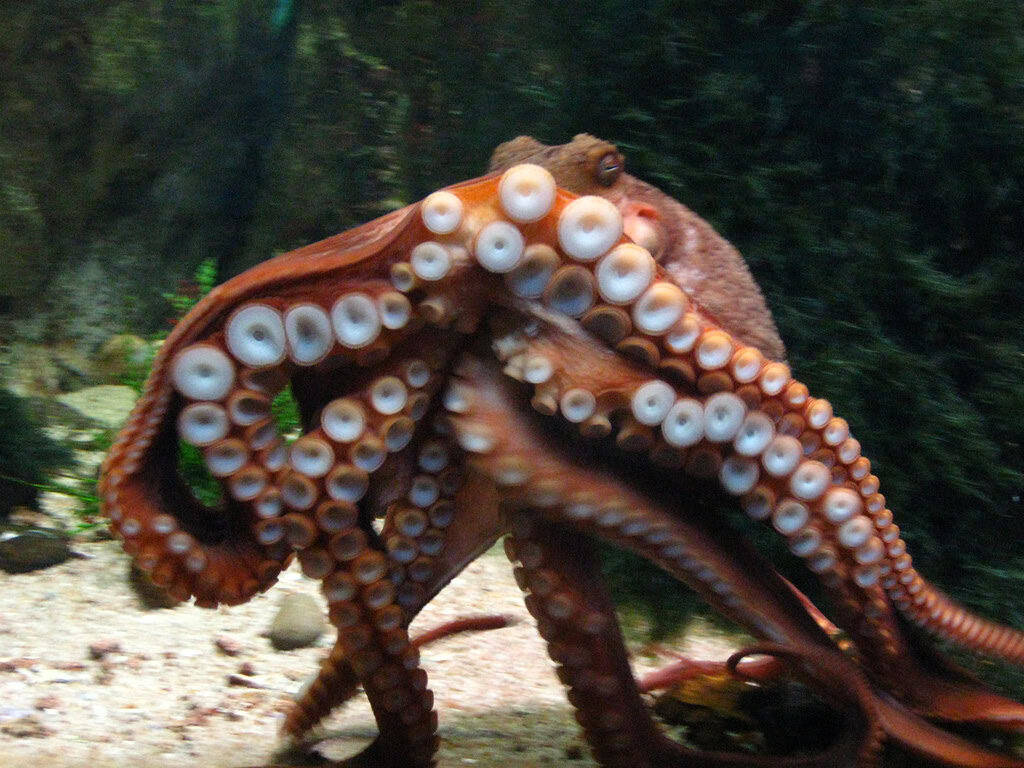
Unlike humans, whose cognitive processing is centralized in the brain, octopuses possess a distributed nervous system that challenges our understanding of what a mind can be. Approximately two-thirds of an octopus’s neurons are located not in its central brain but distributed throughout its eight arms. Each arm can operate semi-autonomously, solving problems and reacting to environmental stimuli even when separated from central control. This decentralized neural architecture allows octopuses to perform multiple complex tasks simultaneously—each arm can explore, taste, and manipulate objects while the central brain attends to other matters. Some researchers have suggested this represents a form of “multiple consciousness” or distributed awareness fundamentally different from our own singular experience. The octopus effectively has nine brains working in coordination: a central brain and eight semi-independent arm brains, creating a form of consciousness that may be more expansive and multi-faceted than our own single-perspective awareness.
Problem-Solving Abilities That Defy Expectations

Octopuses regularly demonstrate problem-solving skills that challenge our assumptions about non-human intelligence. They can navigate mazes, unscrew jar lids, use tools, and even escape from seemingly secure aquarium tanks—behaviors that require not just intelligence but potentially a form of consciousness that includes planning, foresight, and self-awareness. In one famous example at the National Aquarium of New Zealand, an octopus named Inky escaped his enclosure, traveled across the floor, and squeezed through a narrow drainage pipe leading to the ocean. Other octopuses have been observed using coconut shells as portable shelters, collecting them and carrying them for future use—a behavior that suggests not just tool use but an awareness of future needs. Perhaps most remarkably, they can solve novel problems without prior experience or learning through trial and error, suggesting a capacity for abstract thought and mental simulation that was once considered unique to humans and a few mammalian species.
The Mirror Test and Self-Recognition

While traditional tests for self-awareness, like the mirror test (recognizing oneself in a mirror), have yielded inconclusive results with octopuses, this may reflect the limitations of the test rather than the limitations of octopus consciousness. Designed for vision-dominant mammals, the mirror test may be inappropriate for creatures like octopuses that navigate their world primarily through touch and chemosensory information. Some researchers have observed behaviors suggesting octopuses may recognize themselves in other ways—they’ll inspect unusual marks on their bodies or demonstrate what appears to be curiosity about their own reflection, though not in the same way as mirror-test-passing mammals. Recent innovative research has begun developing species-appropriate tests for self-recognition in octopuses, focusing on their tactile and chemical sensory strengths rather than visual recognition. These adapted tests suggest octopuses may indeed possess some form of self-awareness, just expressed in ways aligned with their unique sensory experience of the world.
Emotional Intelligence in the Deep

Evidence increasingly suggests that octopuses experience complex emotional states that may indicate a deeper form of consciousness than previously acknowledged. They demonstrate what appears to be curiosity, frustration, playfulness, and even what some researchers interpret as a sense of humor. Aquarium staff and researchers have documented octopuses who develop preferences for certain individuals, spraying water at some keepers while remaining calm around others—suggesting not just recognition but emotional discrimination. They’ve been observed engaging in what appears to be play behavior—manipulating objects with no apparent purpose other than entertainment—a behavior associated with higher consciousness in mammals. In laboratory settings, octopuses have shown signs of emotional distress when subjected to uncomfortable situations, and some researchers have reported what they interpret as depression-like states in captive specimens. These emotional responses suggest a subjective experience of the world that includes not just sensory awareness but affective states—a key component of what many philosophers consider consciousness.
The Cambridge Declaration on Consciousness
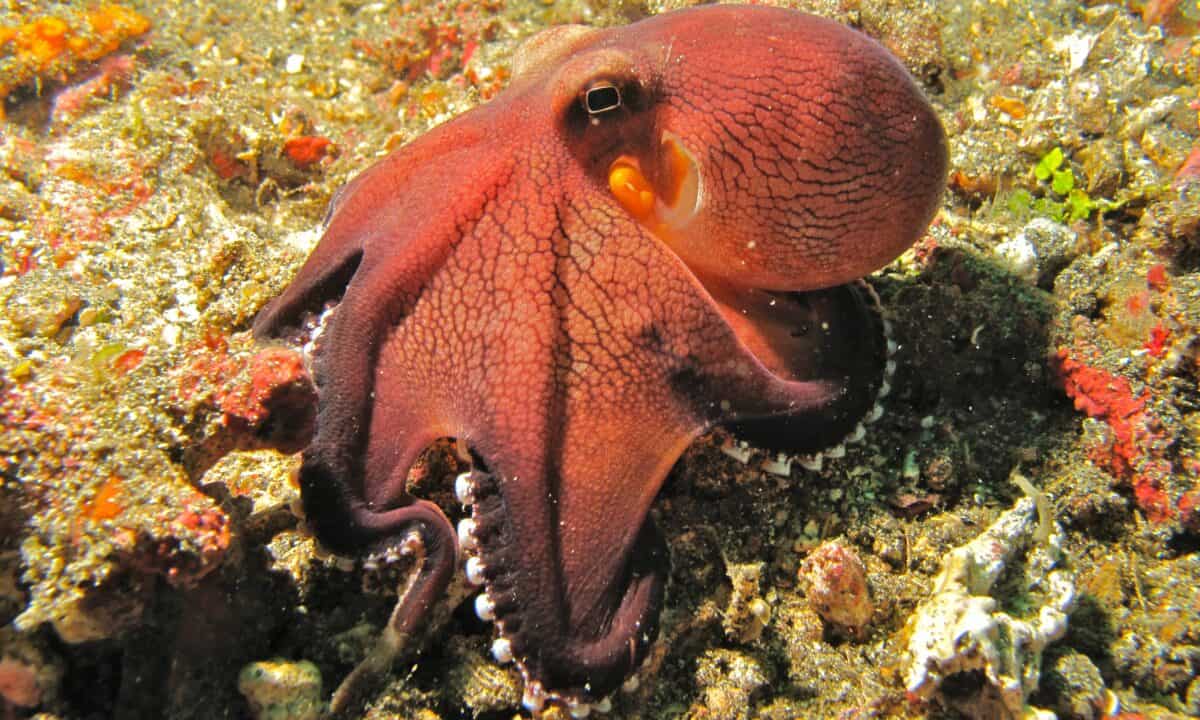
In 2012, a group of prominent neuroscientists signed the Cambridge Declaration on Consciousness, officially acknowledging that many non-human animals, including octopuses, possess consciousness and awareness to a degree that rivals humans. This declaration represented a significant shift in scientific thinking, recognizing that consciousness isn’t exclusive to humans or even mammals but exists across diverse evolutionary lineages. The declaration specifically mentioned octopuses as the only invertebrates with strong evidence for consciousness, citing their complex nervous systems and sophisticated behaviors. This scientific recognition has profound ethical implications, suggesting that creatures like octopuses deserve moral consideration based on their capacity for subjective experience. The declaration states that “the absence of a neocortex does not appear to preclude an organism from experiencing affective states,” acknowledging that consciousness can emerge from neural architectures very different from our own—a conclusion with particular relevance to the alien-like neural organization of the octopus.
Social Intelligence in a Supposedly Solitary Species

While traditionally described as solitary creatures, recent research has revealed surprising social capabilities in some octopus species that suggest more complex consciousness than previously thought. The discovery of octopus communities, temporarily named “Octlantis” and “Octopolis” off the coast of Australia, has shown that under certain conditions, octopuses will live in proximity, communicate, and establish what appear to be social hierarchies. These observations challenge the long-held assumption that complex social cognition—often considered a hallmark of advanced consciousness—is absent in octopuses. Some species display sophisticated communication through changing skin patterns, postures, and movements that go beyond simple threat displays or camouflage. The Larger Pacific Striped Octopus even exhibits social mating behaviors previously unknown in octopuses, with mating pairs sharing dens and food. These emerging findings suggest that octopus consciousness might include social awareness and theory of mind—the ability to understand that others have different mental states—previously considered rare outside of highly social mammals.
The Alien Intelligence Hypothesis

Philosopher Peter Godfrey-Smith has described octopuses as “the closest thing to an alien intelligence we might ever encounter,” highlighting how their form of consciousness may be fundamentally different from our own. Having evolved along an entirely separate path from vertebrates, octopus intelligence represents a different solution to the problems of survival and adaptation. Their consciousness may not only be different in degree from ours but different in kind—operating on principles that we struggle to comprehend from our mammalian perspective. This “alien intelligence” hypothesis suggests that studying octopus consciousness may provide insights into the diverse forms that awareness might take throughout the universe. If consciousness can evolve independently along such different paths on Earth, it raises fascinating questions about the potential forms of consciousness that might exist on other planets. Understanding octopus consciousness may thus be valuable not just for appreciating Earth’s biodiversity but for developing frameworks to recognize and understand consciousness if we ever encounter it beyond our planet.
Rapid Learning and Memory Capabilities

Octopuses demonstrate learning and memory capabilities that suggest a sophisticated form of consciousness. They can quickly learn to navigate complex mazes, remember solutions to problems for months, and even learn by observing other octopuses—a form of social learning once thought limited to more social species. Laboratory experiments have shown that octopuses can remember which of several containers contains food and which contains a punishing stimulus, retaining this information for weeks. They can also generalize from their experiences, applying learned solutions to new but similar problems—a form of abstract thinking that suggests conceptual awareness. Perhaps most remarkably, octopuses appear capable of episodic memory—remembering specific events from their past, including the what, where, and when aspects of experiences. This type of memory, long considered a cornerstone of human consciousness, allows for mental time travel and a sense of self that extends through time. The presence of these sophisticated memory systems suggests octopuses may possess not just moment-to-moment awareness but a consciousness that integrates past experiences into a continuous sense of self.
The Short But Intense Conscious Life
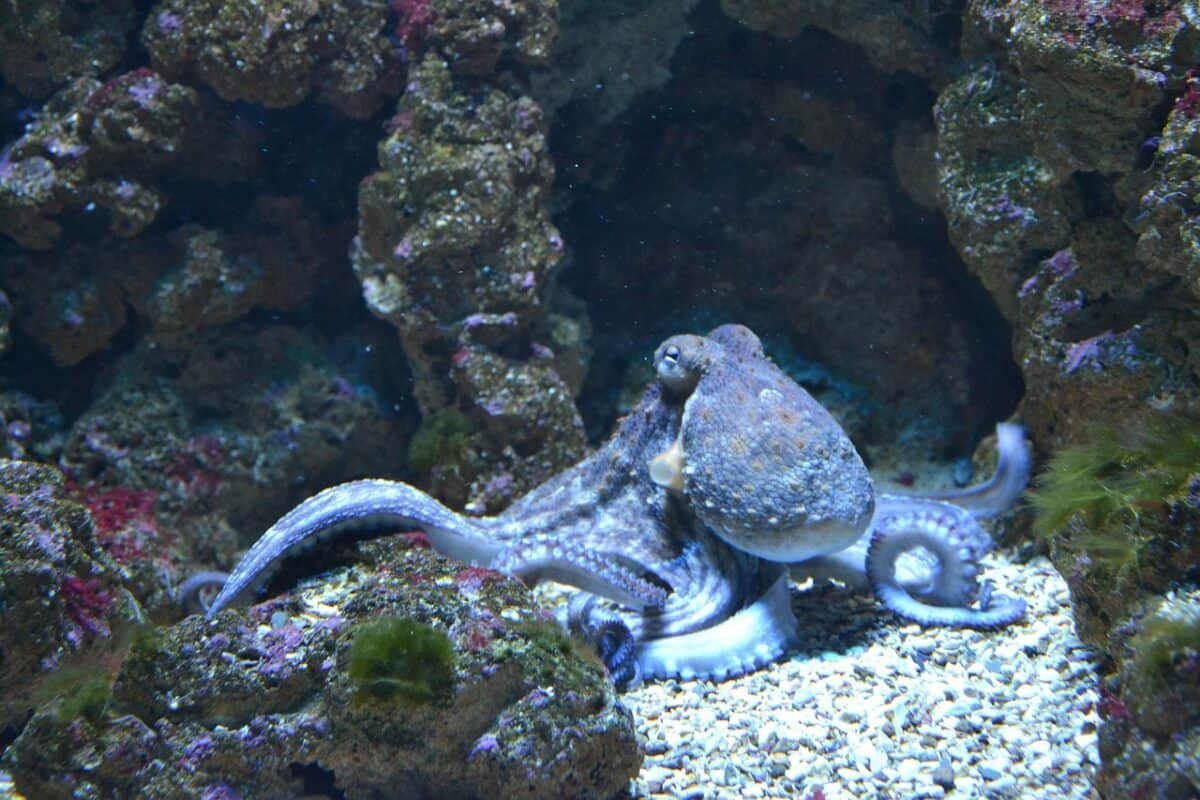
The consciousness of octopuses, however sophisticated, exists within a tragically brief lifespan. Most octopus species live only 1-2 years, with death following shortly after reproduction. This short life cycle raises fascinating questions about the nature and development of their consciousness. Within this compressed timeframe, octopuses must develop from eggs to complex, problem-solving adults with no parental guidance or social learning from older generations. Their consciousness emerges rapidly and without cultural transmission, suggesting their cognitive abilities are largely innate rather than learned. This evolutionary strategy—investing in a short but intensely conscious existence rather than a longer life—presents a different model of consciousness than the slow-developing awareness of long-lived mammals. Some researchers have suggested that the intensity of octopus consciousness may compensate for its brevity—they may experience a richness and density of conscious experience that makes their short lives subjectively fuller than we might imagine. This compressed consciousness timeline has led some philosophers to wonder whether octopuses experience time differently than humans, perhaps with a subjective experience that makes their brief lives feel longer from the inside.
Ethical Implications of Octopus Consciousness

The growing evidence for advanced consciousness in octopuses has profound ethical implications for how humans interact with these creatures. Currently, octopuses receive minimal protection in most countries, with millions caught for food annually and others used in scientific research with few welfare guidelines. If octopuses indeed possess consciousness comparable to mammals in complexity (albeit different in nature), ethical considerations suggest they deserve similar protections. Some countries have begun to respond to this ethical challenge—the United Kingdom has included octopuses in animal welfare legislation, and the European Union has guidelines limiting their use in research. The question of consciousness in octopuses also challenges our anthropocentric view of ethics, forcing us to consider how to recognize and respect consciousness that manifests in ways radically different from our own. As we develop a better understanding of octopus consciousness, we face the challenge of creating ethical frameworks that acknowledge the moral significance of non-human, non-mammalian awareness. This may require expanding our moral circle to include beings whose consciousness, while alien to our own, deserves recognition and protection.
The Future of Octopus Consciousness Research

Research into octopus consciousness stands at an exciting frontier, with new technologies and approaches promising deeper insights in the coming years. Advanced imaging techniques are beginning to map the functional connectivity of octopus brains during problem-solving tasks, potentially revealing the neural correlates of their conscious experience. Genetic studies are exploring the molecular basis of their neural development and function, with particular interest in how their RNA editing capabilities—far more extensive than in mammals—might contribute to neural flexibility and consciousness. Innovative behavioral experiments designed specifically for octopus sensory and cognitive abilities are moving beyond tests developed for mammals, creating species-appropriate ways to assess self-awareness and subjective experience. Some researchers are developing “octopus-centric” approaches that attempt to understand consciousness from the perspective of the octopus rather than through human frameworks. As this research progresses, we may develop a more nuanced understanding not just of octopus consciousness but of consciousness itself—recognizing it as a diverse phenomenon that can manifest in multiple forms across different evolutionary lineages, rather than a single state that exists on a simple less-to-more continuum.
Conclusion: Redefining Consciousness Through Cephalopod Minds

The emerging picture of octopus consciousness challenges us to expand our understanding of what it means to be aware and to recognize consciousness in its varied forms across the tree of life. The octopus—with its distributed neural architecture, problem-solving abilities, emotional complexity, and alien evolutionary history—offers a profound case study in how consciousness can evolve along entirely separate pathways and manifest in forms radically different from our mammalian experience. As we continue to explore the depths of octopus cognition, we may need to reframe consciousness not as a single phenomenon that some species possess more of than others, but as a diverse array of subjective experiences adapted to different evolutionary niches and embodied in different biological forms. Perhaps the most important lesson from octopus consciousness is humility—a recognition that our human-centered view of mind and awareness captures only one manifestation of consciousness in a universe that may contain many others, some so different from our own that we struggle to recognize them even when they’re right in front of us, wrapped in eight arms and hidden beneath the waves.

- This River Delta Is a Magnet for Endangered Birds - July 17, 2026
- New Fossils in Baja California Reveal a Never-Before-Seen Grouper - July 17, 2026
- The Most Venomous Animal on Land—And How It Kills - July 17, 2026