


Worried about unexpected vet bills?
Pet insurance can cover thousands in unexpected vet costs. Get a free quote from Lemonade in under 2 minutes.
Get My Free Quote →Sponsored · Opens Lemonade.com
As dusk settles across America during warm summer evenings, a magical transformation takes place in backyards, meadows, forests, and waterways. The darkness becomes alive with twinkling, flashing, and glowing creatures that have captivated humans for generations. From the nostalgic flicker of fireflies in eastern meadows to the mysterious blue glow of bioluminescent bays, these living light shows represent some of nature’s most enchanting phenomena. This natural illumination isn’t just beautiful—it’s a complex biological process that serves crucial purposes for these creatures’ survival. Join us on a journey across America to discover the fascinating organisms that turn summer nights into natural light festivals, exploring their biology, behavior, and the best places to witness their spectacular displays.
The Science of Bioluminescence
Bioluminescence, the production and emission of light by living organisms, is a remarkable biological phenomenon that occurs through a chemical reaction. Most terrestrial bioluminescent creatures produce light when an enzyme called luciferase interacts with a compound called luciferin in the presence of oxygen, resulting in the release of energy in the form of light. Unlike incandescent bulbs that produce heat along with light, bioluminescence is incredibly efficient, with nearly 100% of the energy converted to light rather than heat—making it “cold light.” This efficiency explains why a firefly’s tail doesn’t burn it during illumination. The color of bioluminescent light varies among species, ranging from blue-green to yellow, depending on the specific chemical composition and the environment in which the reaction occurs. This natural light production has evolved independently in numerous organisms across different taxonomic groups, representing a fascinating example of convergent evolution—where similar traits develop in unrelated species facing similar environmental challenges.
Fireflies: America’s Beloved Light Show
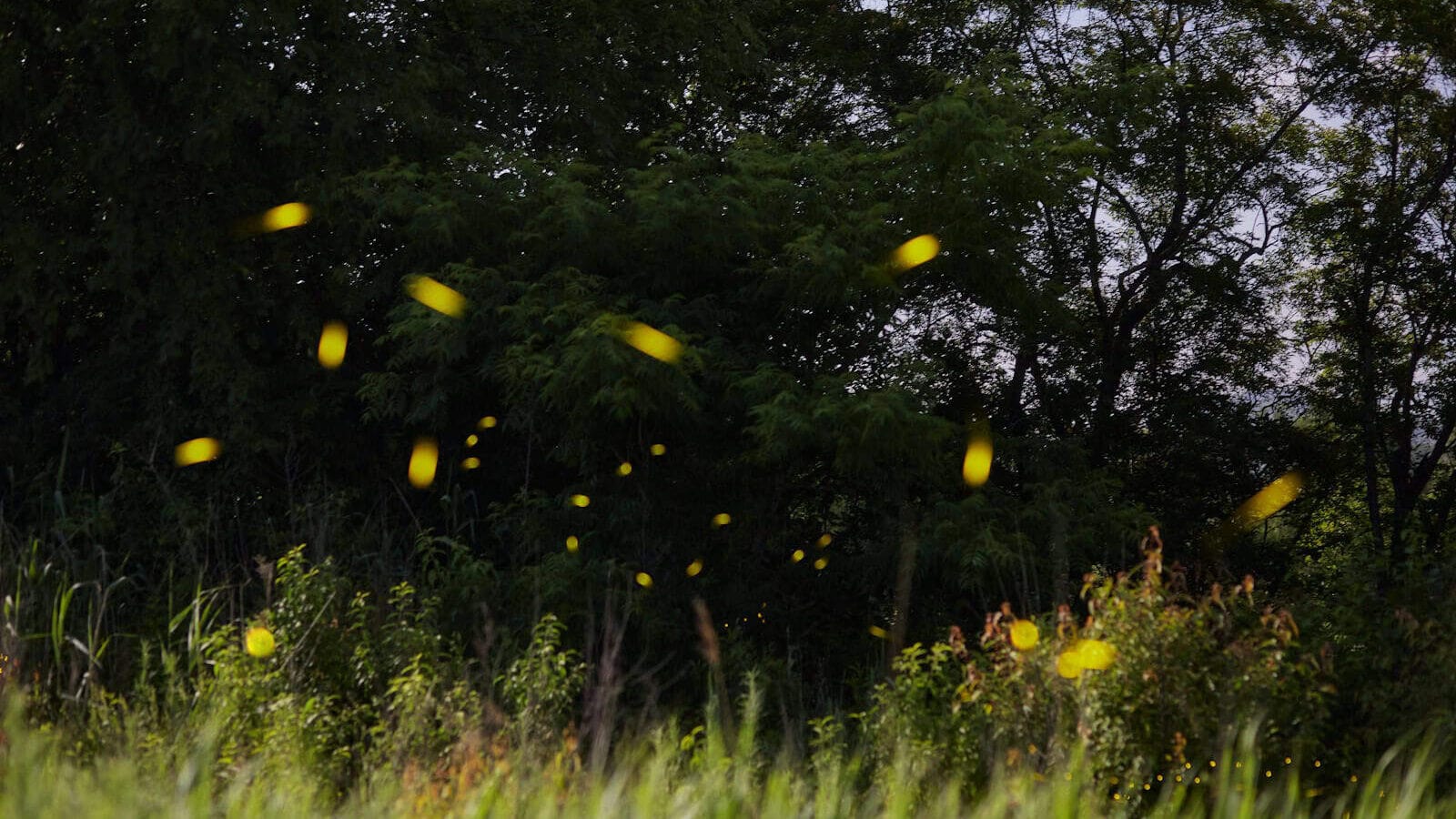
Perhaps the most iconic of America’s luminous creatures, fireflies (or lightning bugs) belong to the beetle family Lampyridae and are found primarily in the eastern and central United States. Despite their name, these insects are neither flies nor bugs, but beetles with specialized light-producing organs in their abdomens. The United States is home to over 150 species of fireflies, each with distinctive flash patterns that serve as a unique “signature” for mate recognition. Males typically fly through the air flashing their lights, while females often perch on vegetation, responding with their own flashes when they spot a desirable mate. The synchronous fireflies (Photinus carolinus) of the Great Smoky Mountains National Park represent one of nature’s most mesmerizing displays, where thousands of fireflies flash in unison, creating waves of light through the forest. This spectacular phenomenon draws thousands of visitors each year during their peak mating season in late May to mid-June. Unfortunately, firefly populations have been declining due to habitat loss, light pollution, and pesticide use, making conservation efforts increasingly important for preserving these enchanting summer residents.
Glowworms: Fireflies’ Lesser-Known Cousins
While fireflies get most of the attention, glowworms create equally fascinating light displays across America. The term “glowworm” can refer to several different luminescent insects, including the larvae of certain firefly species and the females of some firefly species that retain larval characteristics into adulthood (a phenomenon called neoteny). In the United States, the most common glowworms belong to the genus Phengodes, known as railroad worms. These remarkable creatures produce an eerie glow with their bodies emitting a greenish-yellow light while their heads shine red—resembling the lights of a miniature train moving through the underbrush. Unlike their airborne firefly relatives, glowworms typically remain on the ground, creating magical displays in the leaf litter of forests throughout the southern and eastern states. The females of railroad worms never develop wings and spend their adult lives looking remarkably similar to their larval form, while males have large, feathery antennae and do not produce light as adults. Glowworms are often predatory, using their glow to attract prey or to warn potential predators of their unpalatable taste—a phenomenon known as aposematic signaling.
Click Beetles: The Surprise Illuminators
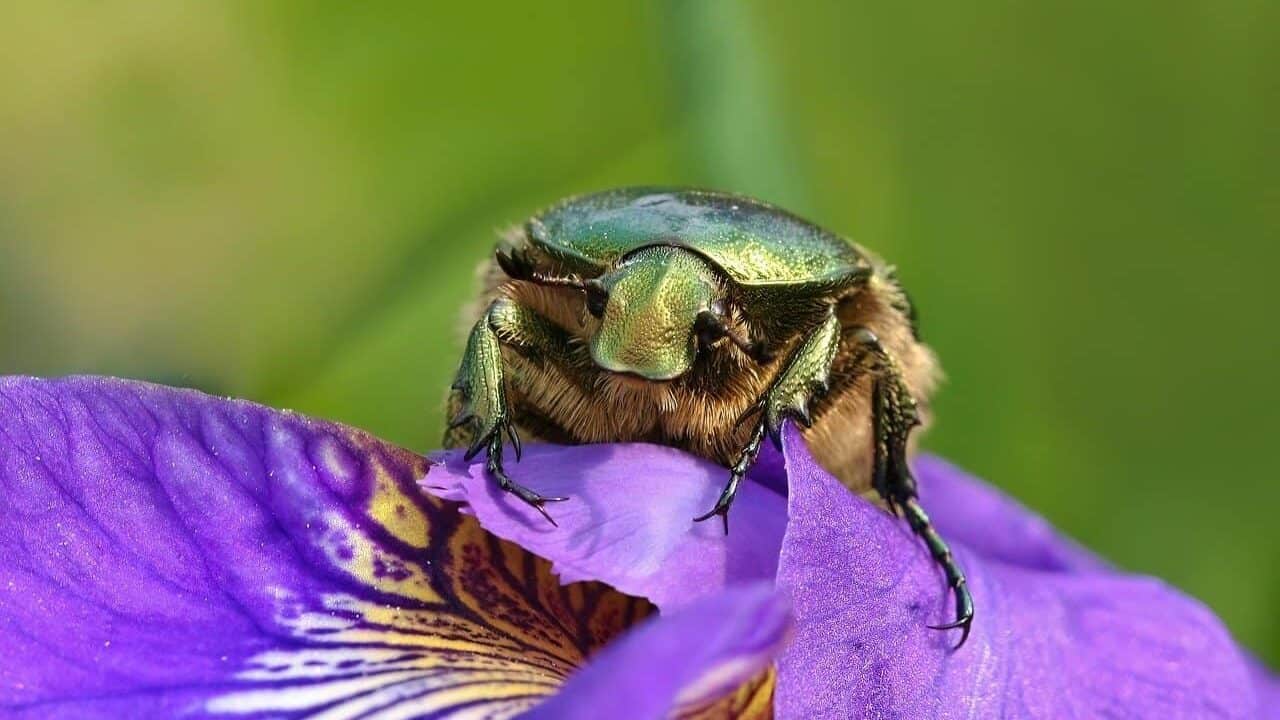
Among the lesser-known luminous insects in America are certain species of click beetles, particularly those belonging to the genus Pyrophorus, commonly known as fire beetles or headlight beetles. These fascinating insects have two glowing green spots on their thorax that resemble headlights, plus an additional light organ on their abdomen that’s visible during flight. Native to the southern United States, particularly Florida, Texas, and parts of Arizona, click beetles earned their name from their unique defense mechanism—when threatened, they can snap their bodies at the middle joint, producing an audible “click” and launching themselves several inches into the air to escape predators. Unlike fireflies that use their light primarily for mating, click beetles employ their bioluminescence for multiple purposes, including attracting prey, deterring predators, and finding mates. The light produced by click beetles is typically a constant glow rather than the flashing pattern seen in fireflies, making them appear like tiny moving lanterns across the forest floor. While not as commonly observed as fireflies, patient nighttime explorers in southern woodlands might be rewarded with the sight of these glowing beetles, particularly during warm, humid summer nights.
Bioluminescent Plankton: Coastal Light Shows

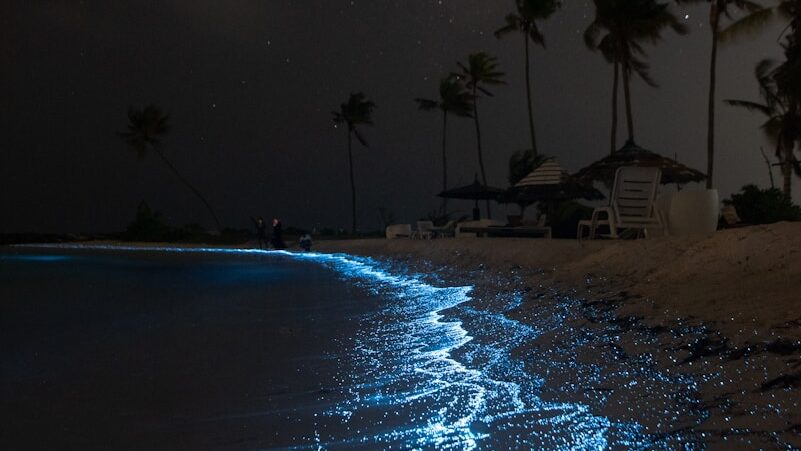
Along America’s coastlines, particularly in warmer regions, summer nights can be illuminated by one of nature’s most magical displays—bioluminescent plankton. These microscopic marine organisms, primarily dinoflagellates like Noctiluca scintillans, create a mesmerizing blue glow when disturbed by movement in the water. The phenomenon transforms coastal waters into a living light show, with each paddle stroke, swimming motion, or breaking wave creating swirls and splashes of ethereal blue illumination. On the east coast, Mosquito Bay in Puerto Rico (a U.S. territory) is renowned as one of the brightest bioluminescent bays in the world, while Florida’s Indian River Lagoon and Manasquan River in New Jersey offer remarkable displays during summer months. On the west coast, Tomales Bay in California becomes aglow with bioluminescence, particularly during the late summer and early fall. Unlike the light produced by fireflies, the bioluminescence in marine plankton is believed to serve as a “burglar alarm”—when a predator disturbs the water, the resulting glow attracts larger predators that might then threaten the original attacker. For humans, experiencing this phenomenon through night kayaking or swimming creates unforgettable memories of swimming through what appears to be liquid starlight.
Crystal Jellies: Floating Lights of Coastal Waters

The crystal jelly (Aequorea victoria), found along the western coast of North America from southern California to Alaska, represents one of the ocean’s most elegant bioluminescent creatures. These transparent, disc-shaped jellyfish measure up to 10 inches in diameter and produce a soft blue-green light around the rim of their bell when disturbed. What makes crystal jellies particularly significant is that scientists isolated the green fluorescent protein (GFP) from this species—a discovery that revolutionized biomedical research and earned the Nobel Prize in Chemistry in 2008. GFP allows researchers to track biological processes in living cells by making them visibly glow under certain light conditions. In their natural habitat, crystal jellies typically live in deeper waters during the day but may rise toward the surface at night, creating opportunities for coastal observers to witness their gentle glow. Unlike the stinging jellies that cause concern for swimmers, crystal jellies have relatively mild stings that rarely affect humans. During summer months, particularly after storms that push deeper waters toward the shore, beachgoers along the Pacific coast might be treated to the sight of these living lanterns washing ashore or pulsing through shallow waters, their bioluminescent rim creating rings of light in the darkness.
Comb Jellies: Rainbow Light Displays
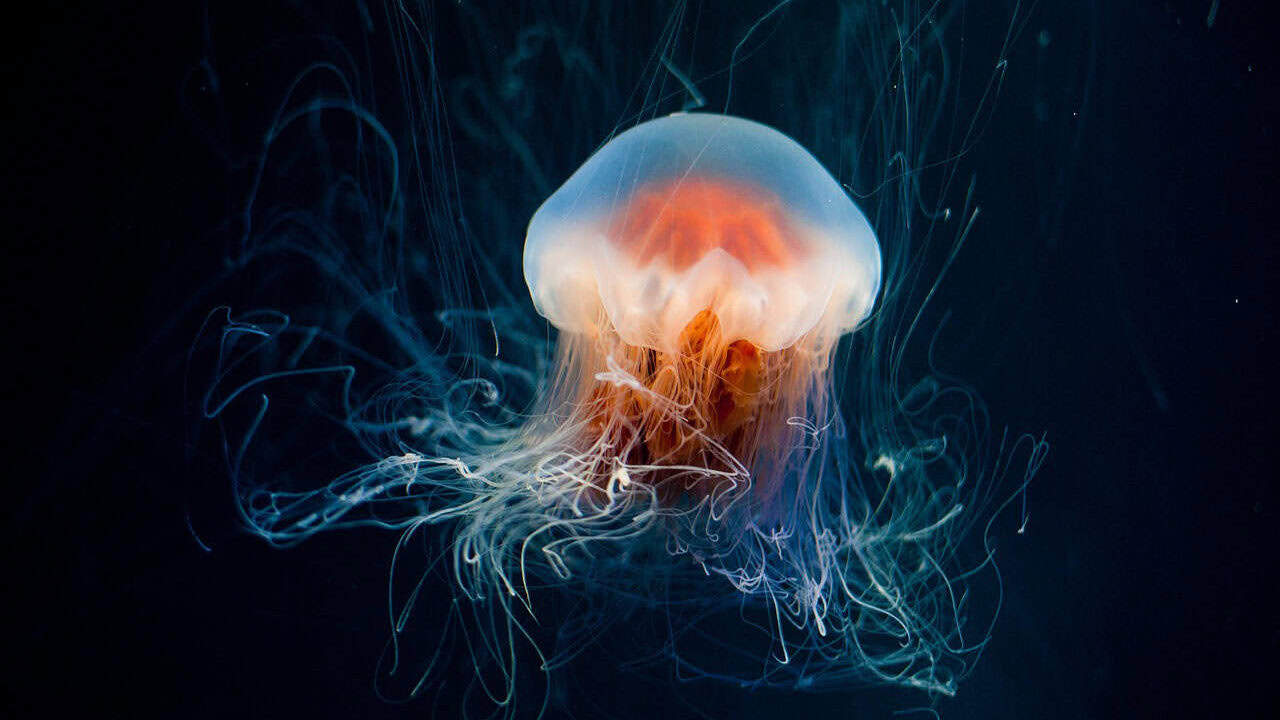
Comb jellies, or ctenophores, create some of the most spectacular light displays in American coastal waters through a combination of bioluminescence and light diffraction. Unlike true jellyfish, these transparent, gelatinous animals propel themselves through the water using rows of cilia (tiny hair-like structures) that beat rhythmically. These cilia, arranged in eight rows along their bodies, diffract light like tiny prisms, creating rainbow-like patterns even in daylight. At night, many species also produce bioluminescence, generating an ethereal blue glow when disturbed. The combination of diffracted light and bioluminescence makes comb jellies appear like underwater disco balls, pulsing with color and light as they move through the water. Along the Atlantic coast, particularly in areas like the Chesapeake Bay and Gulf of Mexico, summer brings blooms of various comb jelly species, including the sea walnut (Mnemiopsis leidyi) and the sea gooseberry (Pleurobrachia pileus). While some species have become invasive in certain ecosystems, their beauty remains undeniable. Night kayakers and boaters in coastal inlets and bays during summer months might be treated to the magical sight of these living light displays drifting through dark waters, their bodies flashing with blues, greens, and rainbow iridescence with each gentle movement.
Luminous Fungi: Mysterious Forest Lights
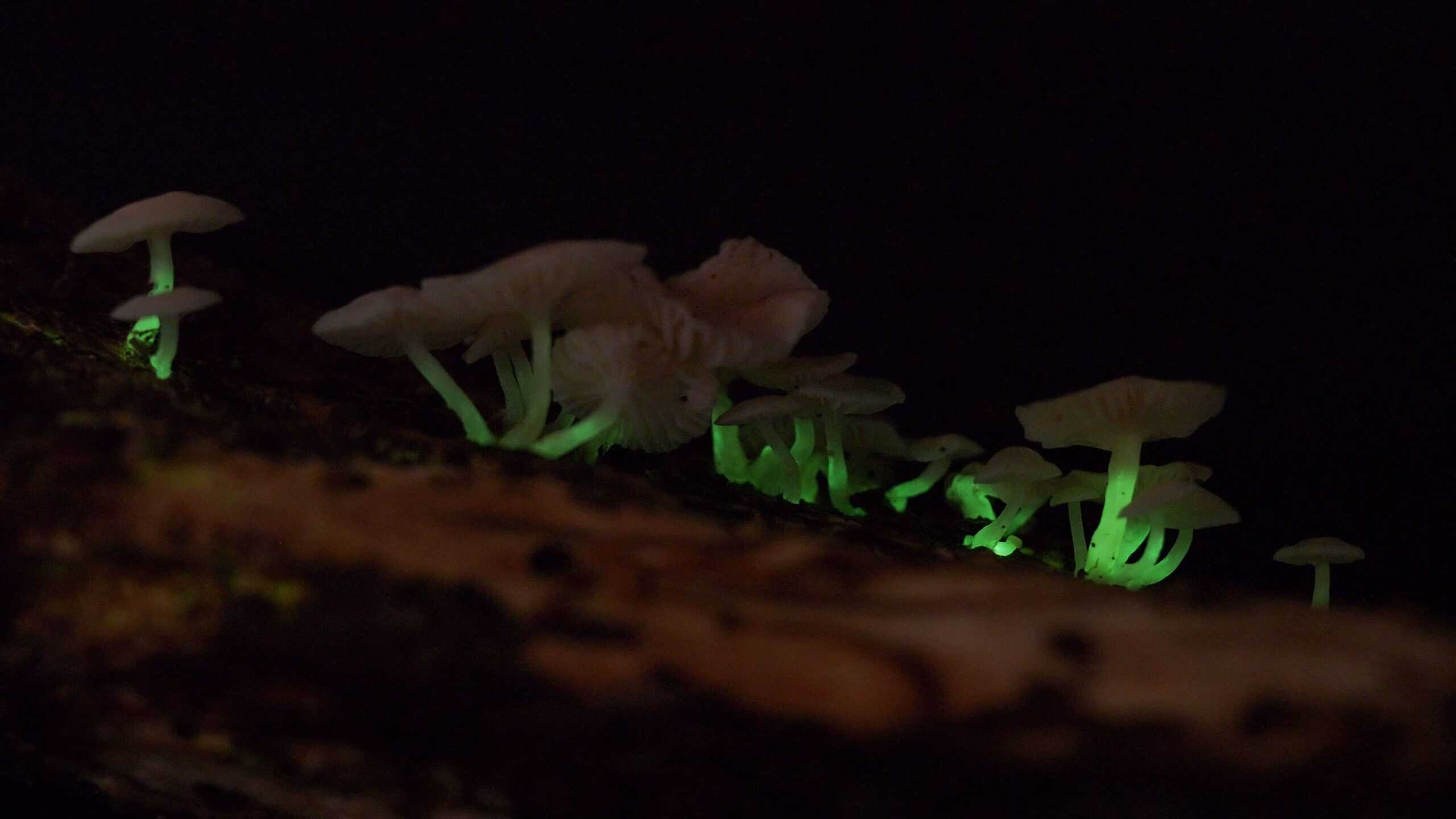
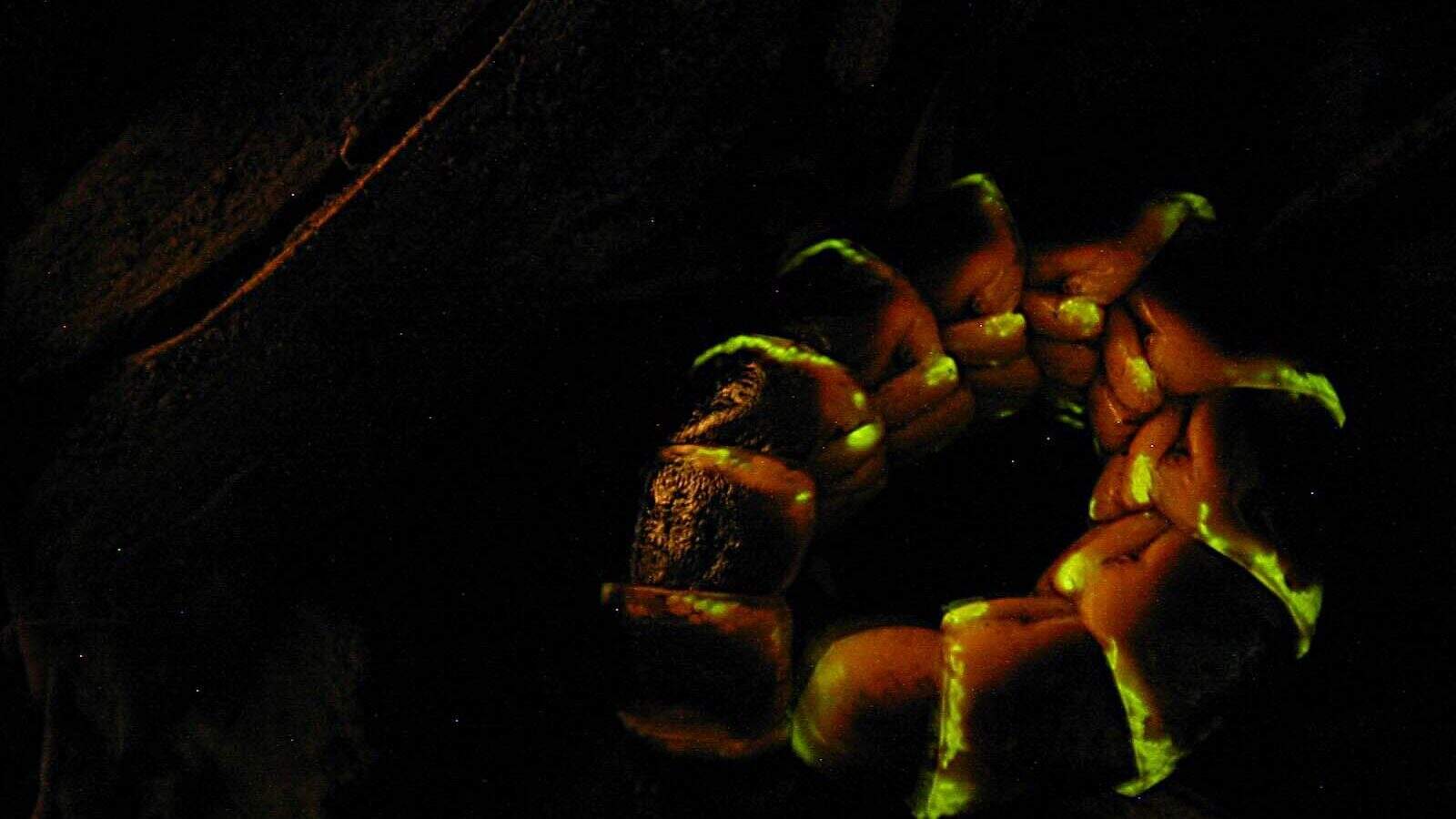
The forests of North America harbor their own mysterious light shows in the form of bioluminescent fungi. While less commonly observed than fireflies, these glowing mushrooms create an otherworldly atmosphere in dense, moist woodlands. The eastern jack-o’-lantern mushroom (Omphalotus illudens), found primarily in eastern and midwestern states, produces an eerie green glow from its gills that becomes visible only in complete darkness. This phenomenon, known as “foxfire,” has been reported in folklore for centuries. The western jack-o’-lantern mushroom (Omphalotus olivascens) creates similar displays in Pacific coastal forests. Another luminous species, the bitter oyster (Panellus stipticus), forms clusters on decaying wood and emits a faint greenish light. Unlike animal bioluminescence that often serves communication purposes, fungal bioluminescence likely evolved to attract insects that help disperse spores or to deter fungi-eating animals. The honey mushroom (Armillaria mellea) and its relatives produce not only glowing fruiting bodies but also rhizomorphs—root-like structures that can illuminate forest floors with a network of glowing filaments, creating what appears to be natural fiber-optic systems running through the soil and decaying wood. These fungi reach peak luminescence during warm, humid summer nights, particularly after rainfall, when the moisture activates their metabolic processes and intensifies their glow.
Luminous Millipedes: Glowing Forest Dwellers
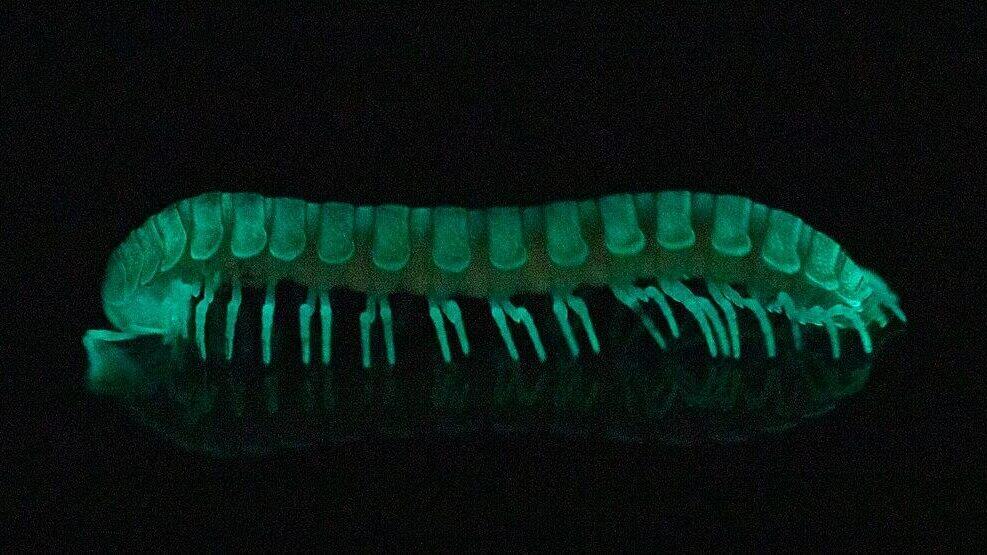
Among the more unusual bioluminescent creatures illuminating America’s summer nights are certain species of millipedes, particularly those belonging to the genus Motyxia, found exclusively in the southern Sierra Nevada mountains of California. These segmented arthropods, measuring about an inch long, produce a cyan-blue glow across their entire bodies when disturbed, creating the appearance of tiny glowing trains moving through the forest undergrowth. Unlike many bioluminescent organisms that use their light for attraction or communication, these millipedes employ their glow as a warning signal to predators. Their bodies contain hydrogen cyanide, a toxic compound that makes them unpalatable, and their bioluminescence serves as a form of aposematic signaling—essentially advertising their toxicity to potential predators. Researchers have demonstrated that the glow effectively deters predators, with non-luminous millipedes suffering higher predation rates than their glowing counterparts. These fascinating creatures remain hidden during daylight hours, burrowing into leaf litter and soil, but emerge at night to feed on decaying plant matter, when their blue glow becomes visible. For nature enthusiasts visiting the Sierra Nevada forests during summer months, nighttime hikes in suitable habitat offer opportunities to witness these unusual glowing invertebrates as they conduct their nocturnal activities.
Glowing Scorpions: Desert Night Lights
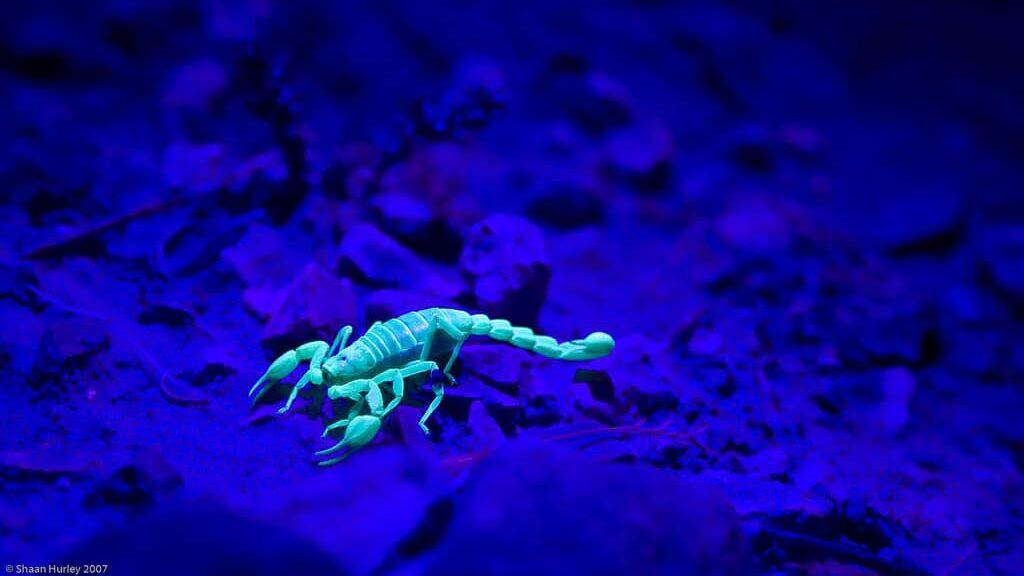
The arid landscapes of the American Southwest harbor a surprising nocturnal light show in the form of fluorescent scorpions. While not technically bioluminescent (they don’t produce their own light), all scorpion species in the United States glow a brilliant cyan-blue when exposed to ultraviolet light, making them appear to shine in the darkness when viewed with a blacklight. This fluorescence comes from compounds in their exoskeleton that absorb UV light and re-emit it at a longer, visible wavelength. The desert hairy scorpion (Hadrurus arizonensis), the largest species in North America at up to 7 inches long, creates particularly spectacular displays across Arizona, New Mexico, California, and Nevada. The bark scorpion (Centruroides sculpturatus), known for its painful sting, also fluoresces brilliantly throughout the Southwest. Scientists remain uncertain about the evolutionary purpose of this fluorescence—theories include UV protection, prey attraction, and helping scorpions detect UV light to avoid exposure. For researchers and nature enthusiasts, this property makes scorpions remarkably easy to locate during nighttime surveys, as they stand out dramatically against the dark landscape when illuminated with a UV flashlight. During warm summer nights, when scorpions are most active, desert hikers equipped with UV lights can witness these arachnids glowing like blue-green jewels across the landscape—a surreal and beautiful aspect of desert ecology that remains hidden to those without the proper equipment.
The Environmental Importance of Bioluminescent Creatures
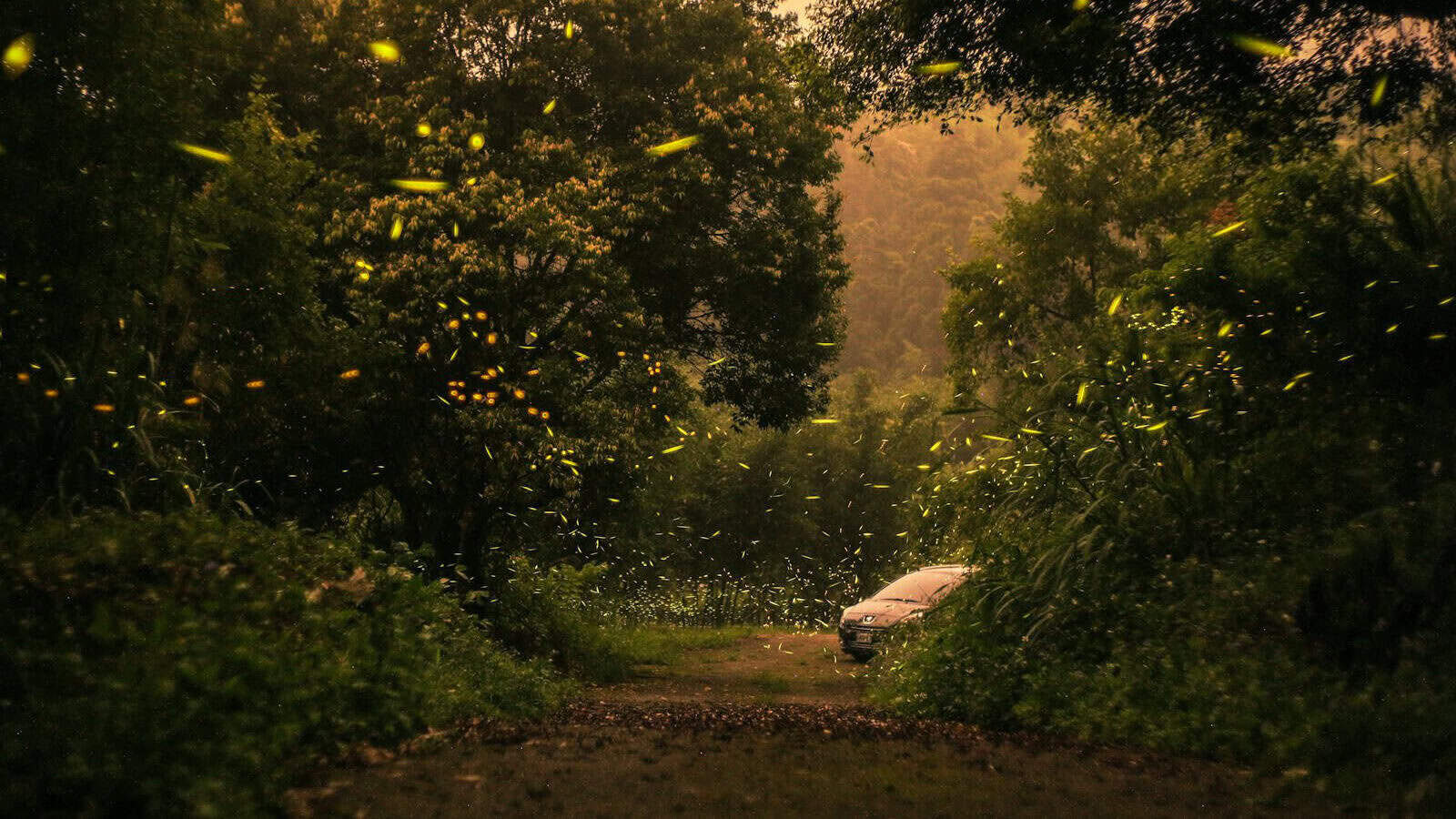
Beyond their aesthetic appeal, the creatures that illuminate America’s summer nights play crucial ecological roles in their respective environments. Fireflies and other luminous insects serve as important indicators of ecosystem health, with their presence often signaling unpolluted habitats with minimal light pollution and pesticide use. Many bioluminescent organisms occupy specific ecological niches, contributing to biodiversity and the complex web of interactions within their ecosystems. Marine bioluminescent plankton form the base of many ocean food webs, supporting countless other species while also contributing to carbon sequestration and oxygen production. The decline of bioluminescent species can signal broader environmental issues—firefly populations, for example, have been diminishing due to habitat destruction, light pollution that interferes with their mating signals, and pesticide use. Luminous fungi play essential roles in forest ecosystems as decomposers, breaking down dead plant material and recycling nutrients. Even the predatory relationships involving bioluminescent creatures help maintain population balances within ecosystems. By appreciating and protecting these light-producing organisms, we not only preserve one of nature’s most spectacular displays but also support the health and functioning of the ecosystems on which all life depends, highlighting the interconnectedness of all living things and our responsibility to protect these natural wonders for future generations.
Threats to America’s Living Light Shows
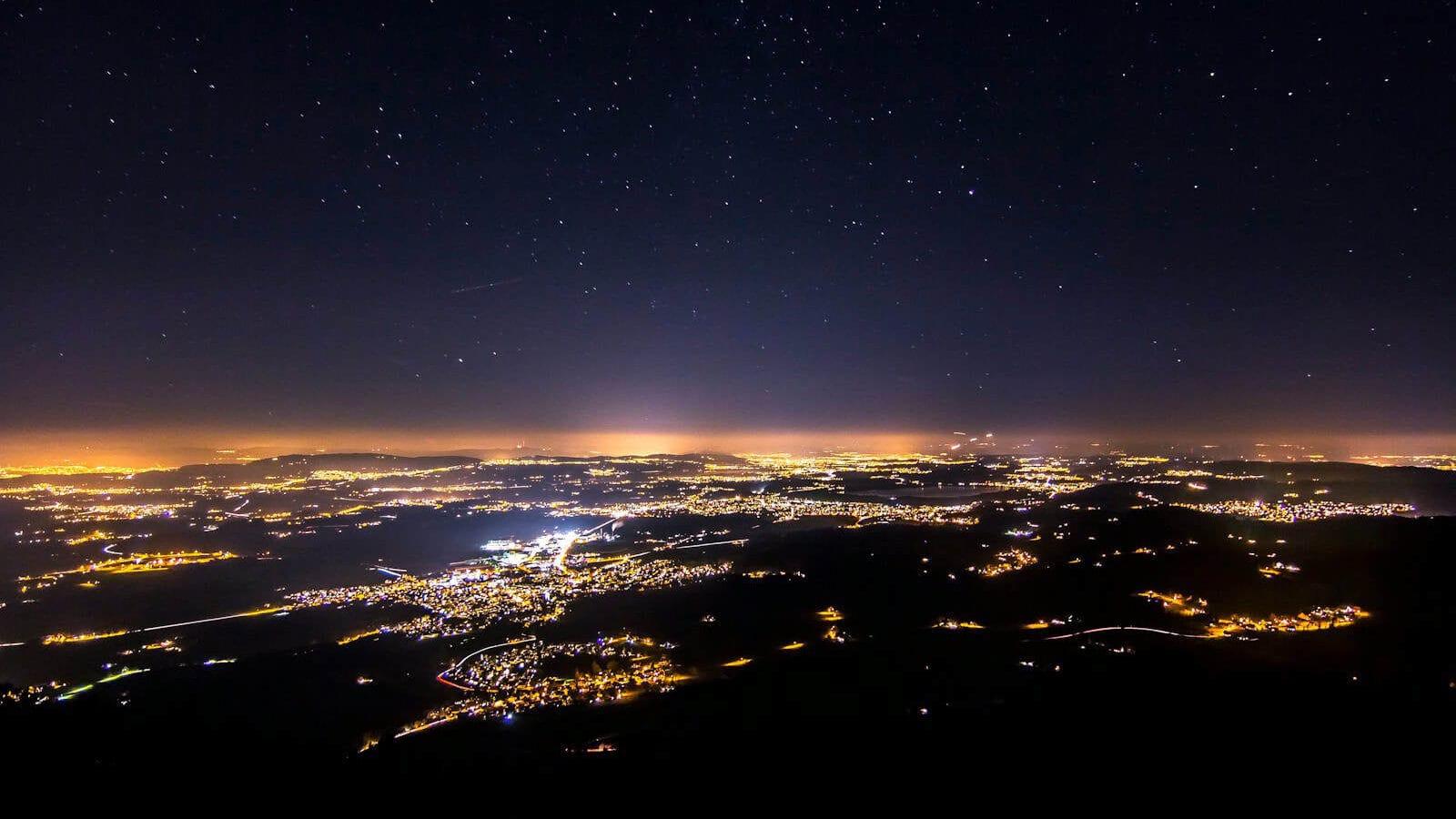
Despite their magical appeal, many of America’s bioluminescent creatures face significant threats in the modern world. Light pollution represents perhaps the most direct challenge, as artificial lighting disrupts the natural darkness needed for bioluminescent signals to be visible and effective. For fireflies, whose mating depends on the visibility of their flashing patterns, light pollution can severely impact reproduction rates and population viability. Habitat loss presents another critical threat, particularly for specialized species like the synchronous fireflies of the Great Smoky Mountains, which require specific forest conditions to thrive. Agricultural intensification and urbanization continue to reduce suitable habitat for terrestrial luminous creatures, while coastal development and water pollution threaten marine bioluminescent organisms. Climate change adds another layer of pressure, altering temperature patterns, precipitation cycles, and ecosystem dynamics that have supported bioluminescent species for millennia. For marine bioluminescent plankton, ocean acidification—a direct consequence of increasing atmospheric carbon dioxide—poses a significant threat to their calcium-based structures. Pesticide use in agriculture and residential areas directly impacts terrestrial bioluminescent insects through direct poisoning and by reducing their prey availability. Invasive species can also disrupt the ecological niches of native bioluminescent organisms, outcompeting them for resources or directly predating upon them. Conservation efforts focused on reducing light pollution, preserving critical habitats, and mitigating climate change impacts are essential for ensuring that these living light shows continue to illuminate America’s summer nights for generations to come.
For those eager to experience America’s bioluminescent wonders, responsible viewing practices ensure these delicate displays remain available for future generations. When seeking fireflies and other terrestrial luminous creatures, avoid using flashlights or camera flashes that can disrupt their natural behaviors and mating signals
Worried about unexpected vet bills?
Pet insurance can cover thousands in unexpected vet costs. Get a free quote from Lemonade in under 2 minutes.
Get My Free Quote →Sponsored · Opens Lemonade.com

- 21 Reasons You Should Never Underestimate a Wild Predator - June 4, 2026
- Bald Eagles and Other Birds That Represent American Pride - June 4, 2026
- Raccoons Wash Their Food Before Every Meal - June 4, 2026
Leave a comment
You must be logged in to post a comment.