

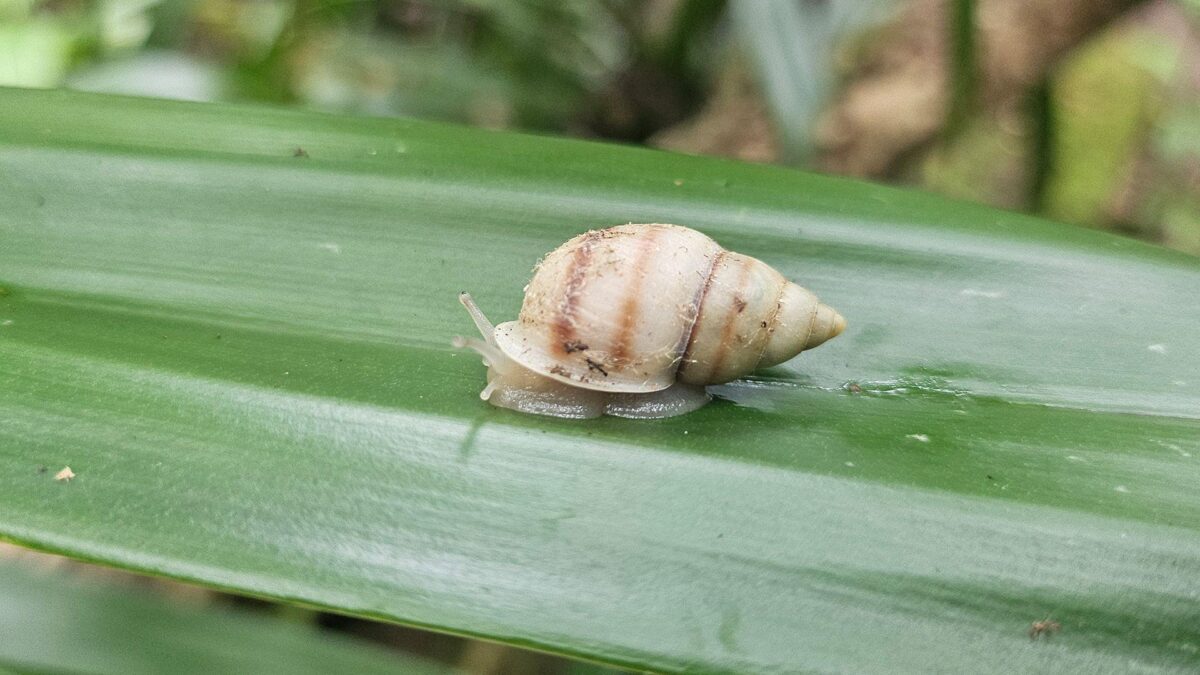
A Predator’s Arrival Spells Disaster (Image Credits: Pixabay)
Delicate Partula tree snails, once decimated across the Society Islands, now show signs of recovery through painstaking global conservation work.[1][2]
A Predator’s Arrival Spells Disaster
In the 1970s, authorities introduced the rosy wolf snail, Euglandina rosea, to curb the spread of the giant African land snail. This carnivorous predator, native to the southeastern United States, hunted native Partula species three times faster than expected, following scent trails to devour them whole.[3][2] Populations plummeted in the 1980s, leading to the extinction of more than 60 Partula species and subspecies across islands like Moorea and Tahiti.
These aspirin-sized mollusks, revered in Polynesian culture for their colorful shells symbolizing island identities, vanished from the wild. Scientists likened them to Darwin’s finches for their evolutionary diversity shaped by isolation.[1] The ecological fallout rippled through forests, where Partulas help recycle nutrients by feeding on fungi and decaying plants.
Zoos Unite in a Race Against Oblivion
Conservationists launched a captive breeding program in 1991 after rescuing the last nine individuals of Partula tohiveana from Moorea. The Zoological Society of London coordinated efforts among 15 zoos worldwide, including London Zoo, Saint Louis Zoo, and Edinburgh Zoo.[1][4]
Teams reared generations in specialized facilities, marking snails with UV-fluorescent paint for post-release tracking. This international alliance turned tiny labs into lifelines, shipping bred snails over 15,000 kilometers back to predator-proof reserves.[2]
Releases Build Momentum Over Decades
Reintroductions began in earnest nearly a decade ago, with over 30,000 Partula snails returned to Moorea, Tahiti, Huahine, and other islands. These efforts included 11 species and subspecies once listed as extinct in the wild.[1][5] The largest release occurred recently, when nearly 7,000 snails – bred across multiple zoos – reached four islands.
Among them, over 4,100 Partula nodosa from Saint Louis Zoo marked a record for that species. Paul Pearce-Kelly, ZSL senior curator of invertebrates, noted the snails’ profound value: “Though little these snails have great cultural, scientific and conservation value.”[5]
- London Zoo and Whipsnade Zoo contributed key stocks.
- Edinburgh Zoo sent over 2,000 individuals.
- Detroit Zoo and Marwell Wildlife bolstered genetic diversity.
- Riga Zoo and Zoo Schwerin joined European efforts.
Wild-Born Discoveries Signal True Recovery
Monitoring teams found unmarked juvenile Partula varia on Huahine – the first wild-born in over 30 years – proving reintroduced populations bred successfully. On Moorea, Partula tohiveana expanded beyond release sites, leading to its downlisting from extinct-in-the-wild to critically endangered on the IUCN Red List.[2][5]
These milestones cap 40 years of dedication. “This progress is decades in the making,” Pearce-Kelly said, highlighting the program’s role in ecosystem restoration.[2]
A Model for Fragile Ecosystems
The Partula effort stands as a blueprint for island conservation, demonstrating how zoos can reverse human-caused losses. Forests benefit as snails curb disease and aid nutrient cycling, while cultural heritage revives with returning shell motifs.
Challenges persist with ongoing threats from invasives, but evidence of thriving populations offers optimism. Timothy Pearce of the Carnegie Museum called it “a critical model for mitigating human impact on fragile island biodiversity.”[1]
Key Takeaways
- Over 30,000 snails reintroduced, including 11 extinct-in-the-wild taxa.
- Wild-born juveniles confirm breeding success after decades.
- Global zoo collaboration pioneered predator-proof reserves.
This slow victory underscores persistence in conservation: small actions compound into ecosystem renewal. What do you think about these tiny heroes’ comeback? Tell us in the comments.

- Urban Coyotes Show Remarkable Adaptability, Learning to Thrive in City Environments - July 22, 2026
- Beavers Are Nature’s Engineers, Creating Vital Habitats for Other Wildlife Species - July 21, 2026
- The Recovery of the California Condor Offers Hope for Other Critically Endangered Birds - July 21, 2026