

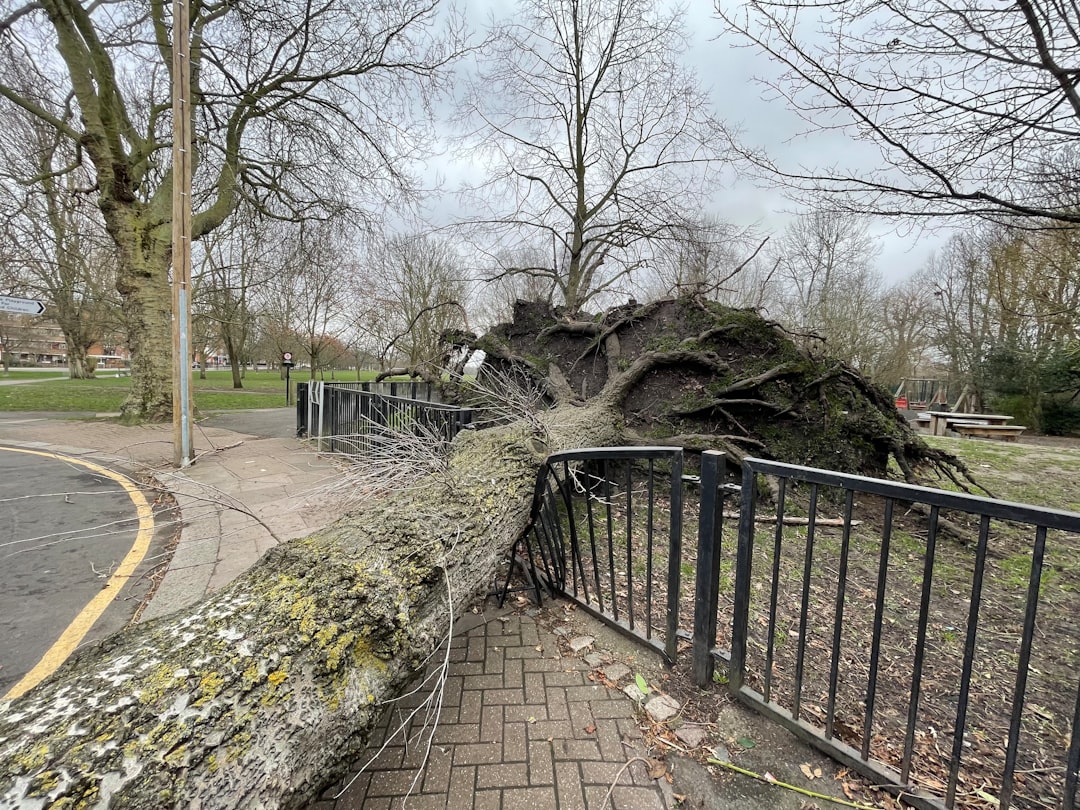
A Fallen Oak Awakens Vigilance (Image Credits: Unsplash)
Washington D.C. area – Powerful storms battered the region earlier this week, toppling large trees and scattering debris across neighborhoods. Homeowners like Eric Larsen in Derwood, Maryland, watched crews remove a massive white oak from their property after it succumbed to fierce winds. Tree specialists now urge residents to examine their yards closely, as these events often expose subtle vulnerabilities that heighten dangers in future gales.[1]
A Fallen Oak Awakens Vigilance
The collapse of mature trees during Monday’s onslaught served as a stark reminder of nature’s force. Larsen noted how the incident prompted him to scrutinize every tree on his land. “When you have a tree fall down in your property, you start taking a closer look at everything else that’s going on around here,” he observed.[1]
Experts agree that such moments demand immediate action. Candace Derry, a tree specialist with Shifflett Tree Service, recommended beginning with a deliberate yard patrol. Obvious wreckage grabs attention first, yet subtler cues at ground level often signal deeper issues.[1]
Key Warning Signs Exposed by Winds
Broken limbs dangle as immediate hazards after storms, but professionals stress looking beyond the obvious. Cracked branches hanging straight down warrant prompt removal to avert further peril. Derry advised homeowners to scan for these during post-storm walks.[1]
Underground shifts reveal themselves through visible surface changes. Here are critical indicators residents should note:
- Soil pushed up around the trunk
- Uneven or suddenly altered ground near the base
- Minor uprooting of earth, hinting at root instability
- Standing water pooling at the roots, which erodes stability over time through poor drainage
These features compromise anchorage, rendering trees prone to toppling in subsequent winds.[1]
Structural Flaws That Doom Even Sturdy Species
Leaning trunks stand out as chronic risks, often stemming from uneven growth patterns. Trees stretch toward sunlight, concentrating weight on one side and fostering instability. Heavy branches clustered asymmetrically, particularly those looming over homes, amplify stress and elevate collapse odds.[1]
Internal decay evades casual glances yet proves devastating. Cavities within trunks, marked by absent bark and softened wood, betray rot. “The bark in the middle is gone. It’s decaying. It’s soft wood in there, definitely something to take a look at,” Derry explained.[1] Oaks, pines, and poplars appear robust yet falter under duress. Proactive probing uncovers these threats before they unleash havoc.
Timing and Expertise for Prevention
Winter and early spring offer optimal windows for interventions, as dormant trees endure pruning with minimal strain. Derry emphasized addressing concerns swiftly to brace for seasonal turbulence. Homeowners spot anomalies but lack tools for thorough assessment.
Certified arborists deliver precise evaluations, confirming safety or prescribing remedies. Delaying inspections invites escalated damage when gales return. Regional forecasts predict variable weather, underscoring the urgency of vigilance now.
Key Takeaways
- Storms unveil both overt breaks and covert weaknesses like root shifts and trunk rot.
- Inspect bases and leans closely; consult pros for doubts.
- Act in dormant seasons to safeguard properties effectively.
Recent tempests in the D.C. area transformed backyards into inspection zones, blending destruction with revelation. Homeowners who heed these cues fortify their landscapes against tomorrow’s threats. Proactive steps preserve not just trees, but homes and peace of mind. What signs have you noticed in your yard? Tell us in the comments.

- Urban Coyotes Show Remarkable Adaptability, Learning to Thrive in City Environments - July 22, 2026
- Beavers Are Nature’s Engineers, Creating Vital Habitats for Other Wildlife Species - July 21, 2026
- The Recovery of the California Condor Offers Hope for Other Critically Endangered Birds - July 21, 2026