
There is a place on this planet so deep, so crushing, and so completely alien that fewer human beings have visited it than have walked on the surface of the Moon. Honestly, let that sink in for a moment. The ocean trenches that scar the floor of our seas hold mysteries that have baffled scientists for generations, and yet every time we manage to send something down there, it comes back with findings that rewrite the rulebook entirely.
What we are discovering in these dark, pressurized chasms is nothing short of extraordinary. Strange creatures thrive where they have absolutely no right to exist. Ancient geological forces have left their fingerprints across miles of invisible seafloor. The deeper we look, the more we realize we have barely scratched the surface of something truly immense. Let’s dive in.
The Abyss Has a Name, and It Goes Deeper Than You Think
Here’s the thing most people don’t know: the ocean is not just “deep.” Parts of it are almost incomprehensibly deep. The deepest known point on Earth, called Challenger Deep, sits at approximately 10,984 meters, or 36,037 feet, below sea level. To put that in perspective that actually means something, if Mount Everest were placed inside the Mariana Trench upside down, the trench would still surpass it in height.
The regions that exceed roughly 3.5 miles, or 20,000 feet, are known as the hadal zone, named after Hades, the Greek god of the underworld. Fitting, wouldn’t you say? The hadal zone covers just one to two percent of the ocean floor, yet it accounts for the deepest 45 percent of the ocean’s vertical depth, and it is a realm of extreme conditions where immense pressure, total darkness, limited food sources, and near-freezing temperatures create an environment commonly considered inhabitable by only a few specialized organisms.
The Mariana Trench itself was created by a dramatic geological process called subduction, where one massive slab of Earth’s crust, the Pacific Plate, slid under a smaller one, the Mariana Plate. That ancient collision literally tore a wound into the planet’s skin. These underwater chasms hold geological secrets, host unique ecosystems, and are often the birthplace of seismic activity like earthquakes and tsunamis.
Life Down There Should Be Impossible. It Isn’t.
I know it sounds crazy, but some of the most vibrant living communities on Earth exist in complete darkness, under pressure that would crush a submarine like a soda can. Chinese ocean explorers have discovered the deepest known life on Earth, thriving at extreme depths of approximately 3.5 to 6 miles below the surface, found in the Kuril-Kamchatka Trench and the western Aleutian Trench.
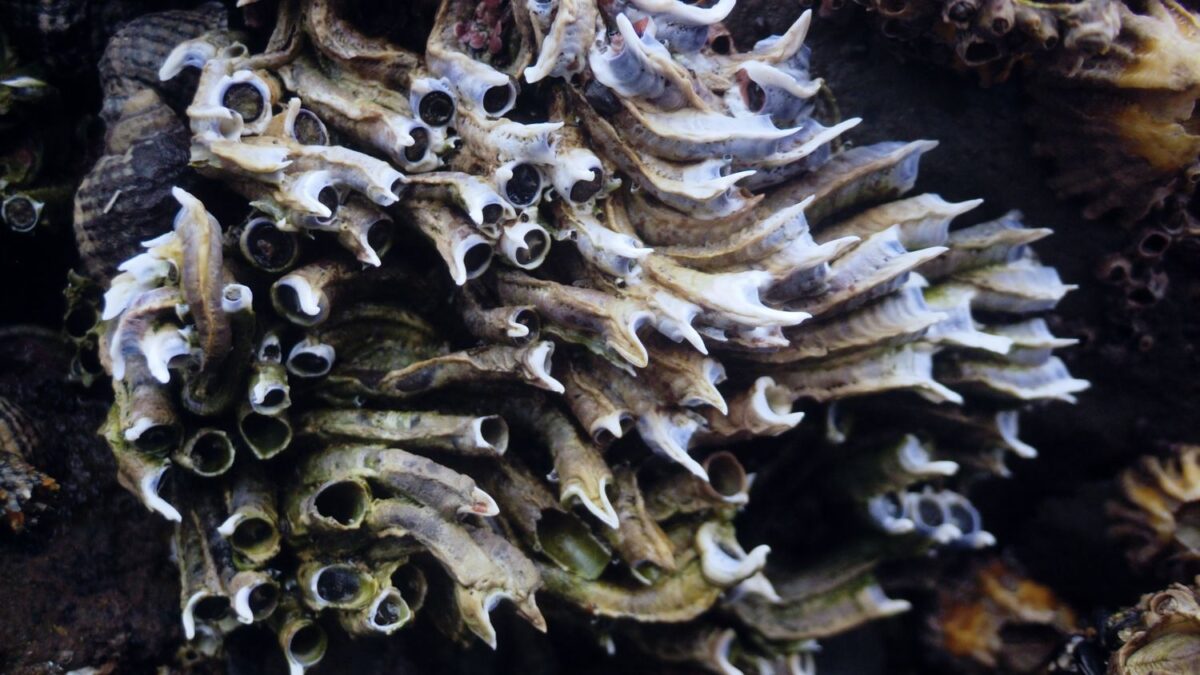
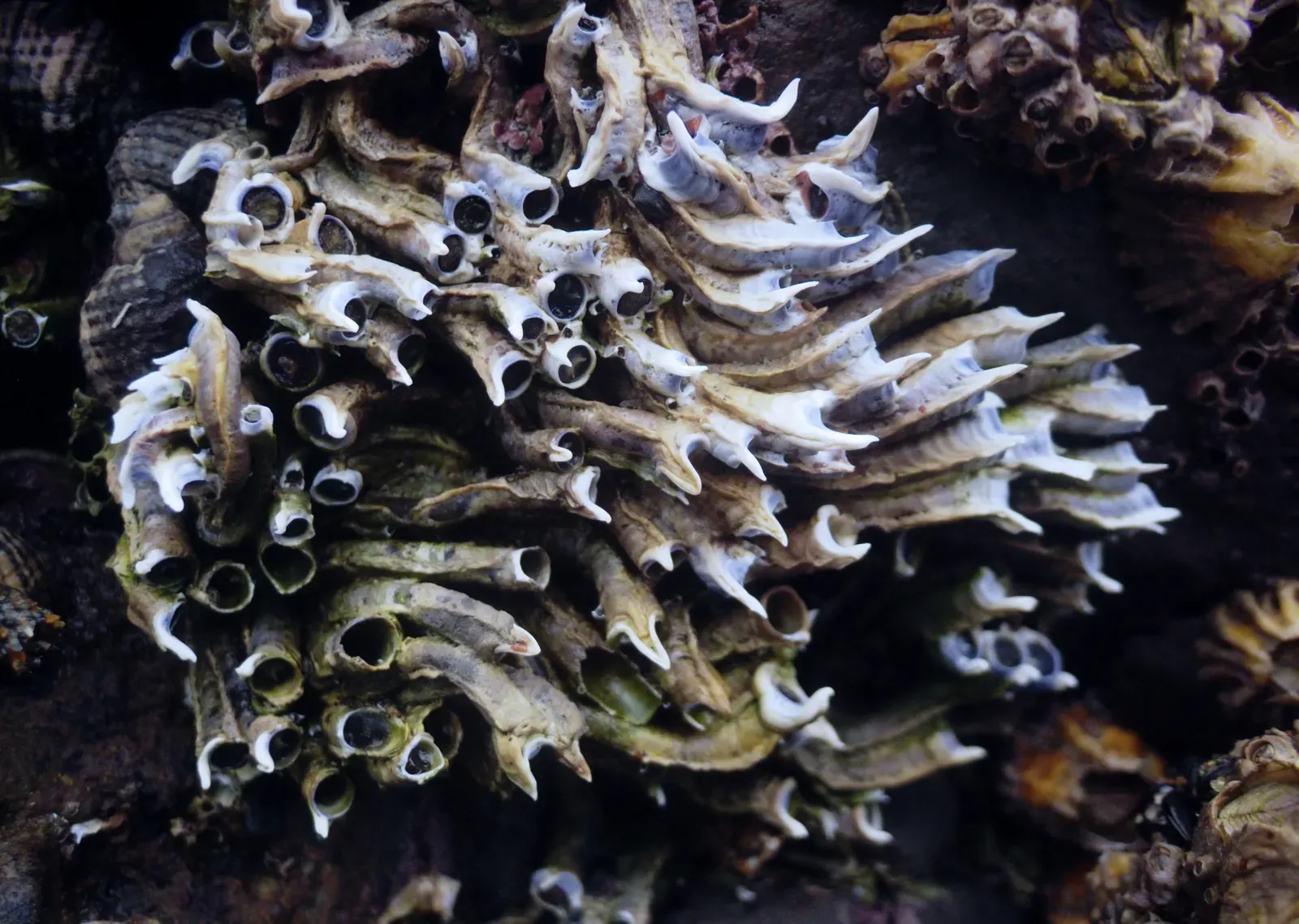
In 2024, the Chinese submersible Fendouzhe conducted 23 dives into these deep trenches, uncovering thousands of tubeworms and mollusks teeming across the sea floor. These weren’t tiny specks of life, either. Video collected by Fendouzhe showed the ocean floor teeming with 12-inch-long tubeworms, alongside clusters of mollusks and clams, while other life forms recorded include sea lilies, sea cucumbers, crustaceans, and various types of worms, forming communities that stretch for approximately 1,500 miles.
Dominated by tube worms and clams, these communities are able to survive at depths through a process known as chemosynthesis, meaning that life is nourished by fluids rich in hydrogen sulfide and methane seeping from the seafloor, which they then turn into energy. No sunlight. No photosynthesis. Just raw chemical energy from the Earth itself. This discovery proved to scientists that life does not need sunlight to exist and that energy can emanate from the Earth itself, a realization that changed not only how scientists think about life on this planet but about life elsewhere in the vast universe.
A Microscopic World That Rewrites Evolution

Let’s be real: when people think about deep-sea discoveries, they picture big, toothy monsters gliding through the darkness. The truly staggering finds, however, are microscopic. Scientists uncovered an extraordinary diversity of hadal microorganisms, with over 7,564 newly identified species-level genomes, and nearly 90 percent of them had never been documented in public databases.
Think about what that means. Entire families of life, entirely unknown to science, quietly existing at the bottom of the world this whole time. Genetic analysis of the microbes provided fascinating clues as to how they survive in such extreme conditions, with some microbes having smaller, more efficient genomes that help them specialize and thrive under extreme pressure.
Shared adaptation mechanisms across microbes and macrofauna suggest convergent evolutionary strategies in hadal environments, with enhanced antioxidation mechanisms and intracellular accumulation of compatible solutes observed across biological domains, reinforcing the concept of universal physiological responses to ultra-high-pressure conditions. In plain terms, completely different organisms, from microscopic bacteria to crustaceans, independently evolved the same survival tricks to deal with the same crushing conditions. Evolution, it turns out, has a favorite playbook.
Strange Creatures and Record-Breaking Residents
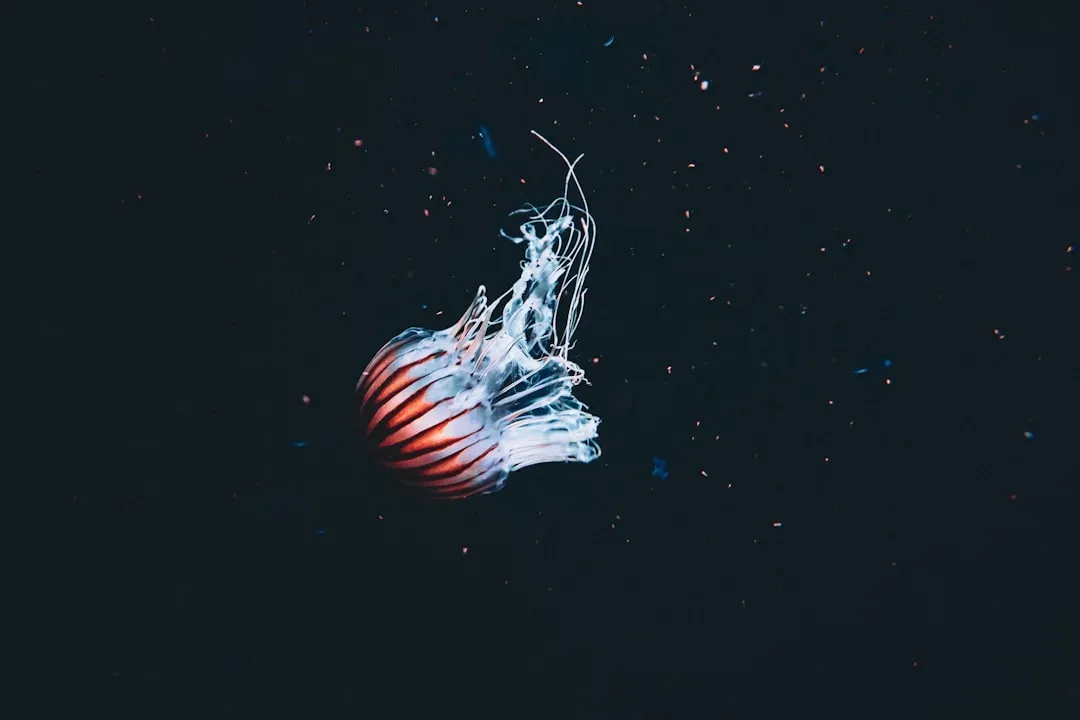
The animal life found in these trenches reads like a catalog of fever dreams. The snailfish is the most dominant family of fish spotted within the hadal zone, and these creatures, recorded at nearly 27,000 feet deep, possess a skeleton made of cartilage, likely to help sustain such high pressure, and a translucent exterior that reveals all their inner organs.
An unidentified species of snailfish, which likely belongs to the genus Pseudoliparis, was spotted by marine biologists controlling a remotely operated vehicle in the Izu-Ogasawara Trench near Japan at a depth of 27,349 feet, which is more than 500 feet deeper than any fish had been seen before. Still, the discoveries keep getting stranger. Scientists made a surprising discovery when a glowing sea slug was found in the midnight zone of the ocean where no sunlight reaches, and around the same size as a baseball, the sea slug had first been spotted around 25 years ago but until then had evaded scientists.
Scientists captured 18 of them to study their anatomy, finding the sea slug was so distantly related to known species that it belonged to a new family, and some of its adaptations include a forked tail which glows and then detaches when threatened, as well as a floppy hood that it uses to move by shooting jets of water out of it. Honestly, that sounds like something out of science fiction. Along with sea cucumbers, tiny flea-like crustaceans known as amphipods are among the most abundant animals in the hadal zone, scavenging on debris floating down from upper ocean zones, with one unusually large species, Alicella gigantea, reaching up to 13 inches in length.
The Dark Side: Pollution, Peril, and What Comes Next
For all the wonder, there is a deeply uncomfortable truth buried at the bottom of these trenches. In 2019, American explorer Victor Vescovo descended into the Mariana Trench in an attempt to break the record for the deepest dive ever made, spending four hours at the bottom where he found various sea creatures floating in the dark waters, but also found sweet wrappers and a grocery-store plastic bag right at the bottom.
Researchers also discovered a newfound species in the Mariana Trench named Eurythenes plasticus, literally named for the microplastic fibers detected in its gut. A species named after the plastic found inside it. That image is difficult to shake. In 2019, scientists also announced that they had found radioactive carbon-14 in the flesh of crustaceans in the trench, and the carbon levels detected were high enough for experts to believe that it originated from a nuclear bomb detonation.
Meanwhile, the pressure to exploit these regions is growing rapidly. Nations continue to wrangle over the highly contentious issue of deep-sea mining, with China and the United States having expressed more than a cursory interest in mining the deep seabed for minerals, while ocean scientists have unanimously warned that mining the under-explored seafloor could decimate fragile ecosystems that we know all too little about. The Global Hadal Exploration Program, co-led by UNESCO and the Chinese Academy of Sciences, aims to address this by creating a network of deep-sea scientists from multiple countries.
Conclusion
The deepest ocean trenches are not empty voids. They are living archives, geological time capsules, and evolutionary laboratories all compressed into miles of cold, dark water. Every descent adds another chapter to a story we are only just beginning to read.
What strikes me most is the sheer audacity of life itself. In conditions that would kill a human being in seconds, entire communities thrive, adapt, and evolve across thousands of miles of seafloor. It is humbling in the most profound way possible.
We have better maps of Mars than we do of our own ocean floor. The question isn’t whether there are more extraordinary secrets waiting down there. The question is whether we’ll choose to protect what we find before we destroy it. What do you think we owe these hidden worlds that have existed long before humanity took its first breath?
