
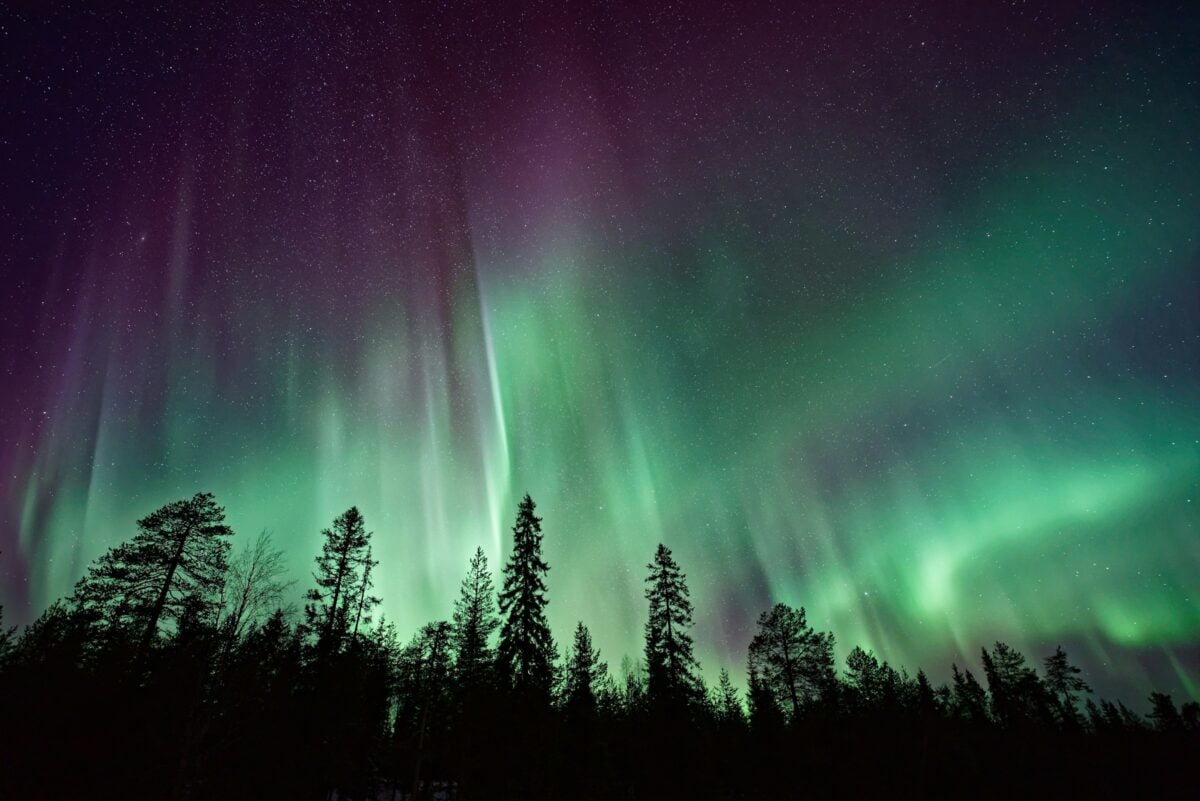
Most of us picture the aurora as something impossibly distant, a light show painted on the far edge of the sky. In reality, the green curtains you see on a good night in Alaska, Norway or northern Canada hang at a height a jet could almost reach in a few minutes of vertical flight. It’s closer than it looks.
That raises a fair question. What’s actually glowing up there, and why is it so often green? The answer involves the Sun, Earth’s magnetic field, and one very ordinary atom that most of us breathe in as part of a molecule every day.
Where the Green Light Actually Lives
🔥 Would you like to save this?
We'll email this post to you, so you can come back to it later!
The brightest green part of an aurora typically forms at altitudes of roughly one hundred kilometers, give or take a few tens of kilometers. That’s well above where airliners cruise, and it’s also above the height where weather happens. It sits in the upper atmosphere, in a region that’s very thin compared with the air at ground level.
Because the glow sits at a fairly consistent height, scientists have long been able to measure aurora by photographing it from two locations and using geometry to work out its altitude. That approach goes back to the early twentieth century. It’s a neat reminder that a lot of what we know about the sky started with careful observation rather than fancy instruments.
The Role of Oxygen Atoms
🔥 Would you like to save this?
We'll email this post to you, so you can come back to it later!
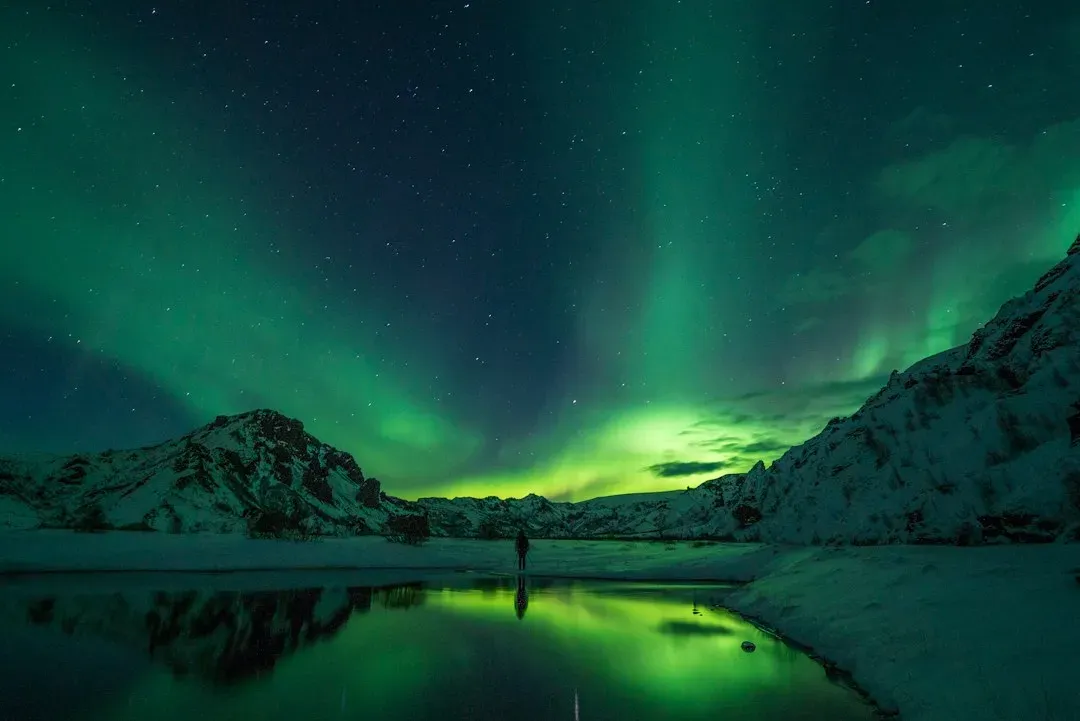
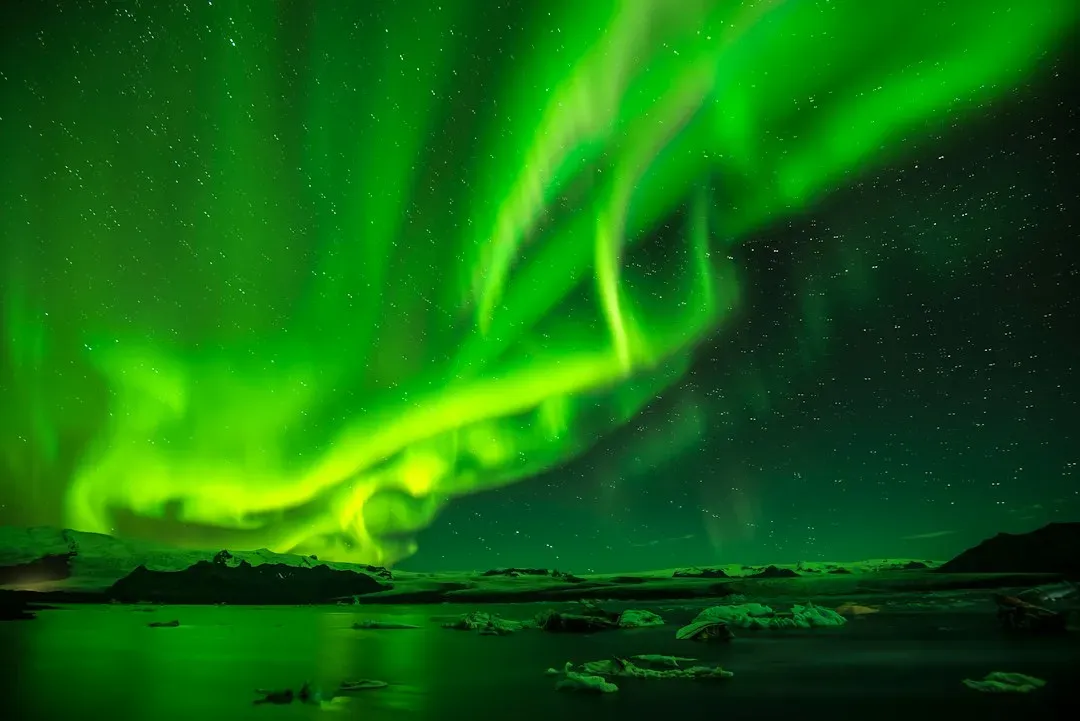
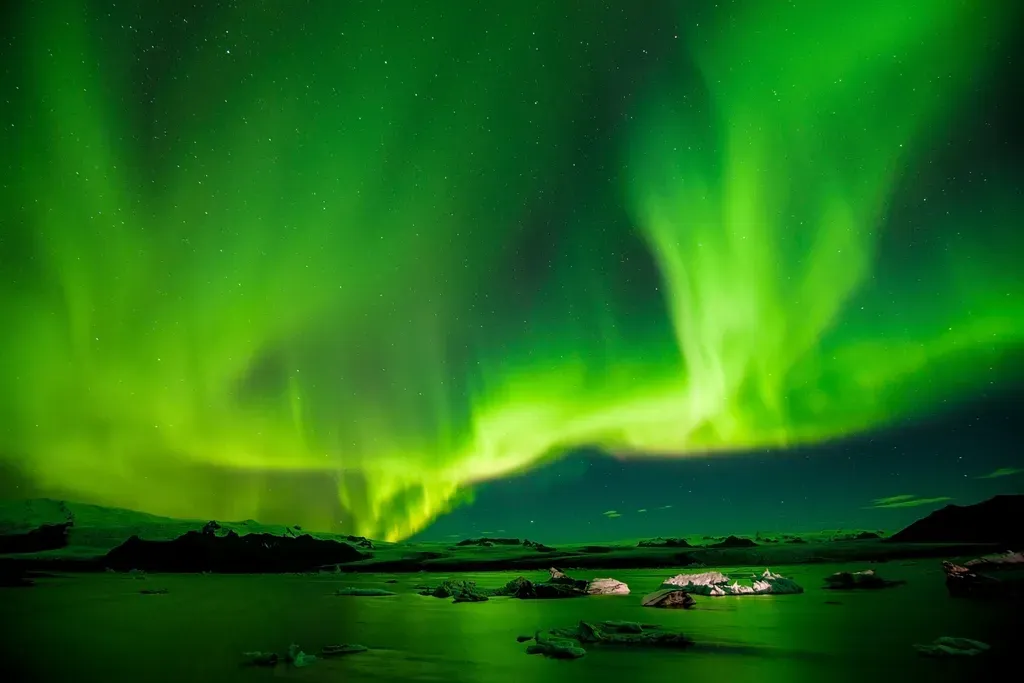
The green color comes from atomic oxygen. When an oxygen atom absorbs energy, its electrons jump into an excited state, and when they settle back down, the atom releases light. For this particular transition, the light has a wavelength around five hundred fifty seven nanometers, which our eyes read as green.
Interestingly, this is a so called forbidden transition, meaning the excited state lasts for a relatively long time, close to a second, before it emits. In thicker air, the atom would usually collide with something else and lose its energy before glowing. Up at around one hundred kilometers, the air is thin enough that many atoms get to finish the job and shine.
What Kicks the Atoms Into Action
🔥 Would you like to save this?
We'll email this post to you, so you can come back to it later!
The energy starts at the Sun, which constantly sends out a stream of charged particles called the solar wind. Earth’s magnetic field deflects most of it, yet some of that energy gets funneled along field lines toward the polar regions. There, energetic electrons rain down into the upper atmosphere.
When those electrons hit oxygen atoms and molecules, they transfer energy and set off the glow. Stronger solar activity, such as coronal mass ejections, can make the show brighter and push it farther from the poles. That’s why auroras sometimes appear at much lower latitudes during major geomagnetic storms.

Orthopedic Extra Large Dog Bed, Waterproof Washable XL Pet Bed 44"
Check Price on AmazonAs an Amazon Associate, we earn from qualifying purchases.
10/7/2026 1:32 pm GMTi

Glass Hummingbird Feeder for Outdoors Hanging
Check Price on AmazonAs an Amazon Associate, we earn from qualifying purchases.
10/7/2026 1:21 pm GMTi

Air Purifiers for Home Pets Large Room Up to 3000 Ft²,HEPA Air Cleaner with Washable Double-Side Filter, PM2.5 Air Quality Monitor,15dB Sleep Mode for Bedroom Odor Dust Pollen,White
Check Price on AmazonAs an Amazon Associate, we earn from qualifying purchases.
10/8/2026 8:23 am GMTi

Smart Bird Feeder with Camera Solar Powered, 2K HD Live Video, 10,000+ Bird Species AI Identification
Check Price on AmazonAs an Amazon Associate, we earn from qualifying purchases.
10/7/2026 1:22 pm GMTi

Glass Hummingbird Feeder for Outdoors Hanging, 16 oz Leak-Proof Nectar Feeder with Bee Guards & Ant Moat
Check Price on AmazonAs an Amazon Associate, we earn from qualifying purchases.
10/7/2026 1:22 pm GMTi
Why Not Every Aurora Is Green

🔥 Would you like to save this?
We'll email this post to you, so you can come back to it later!
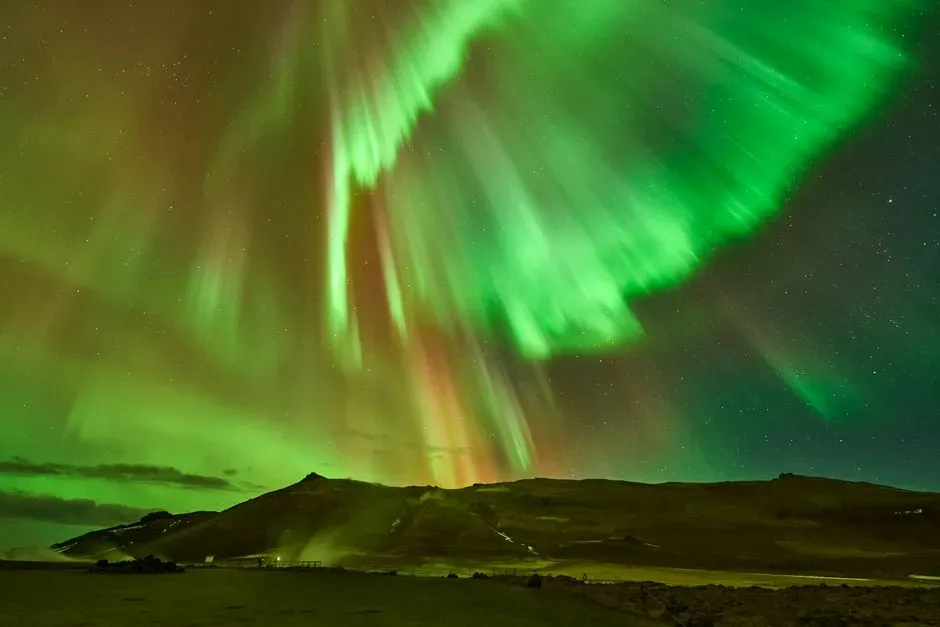
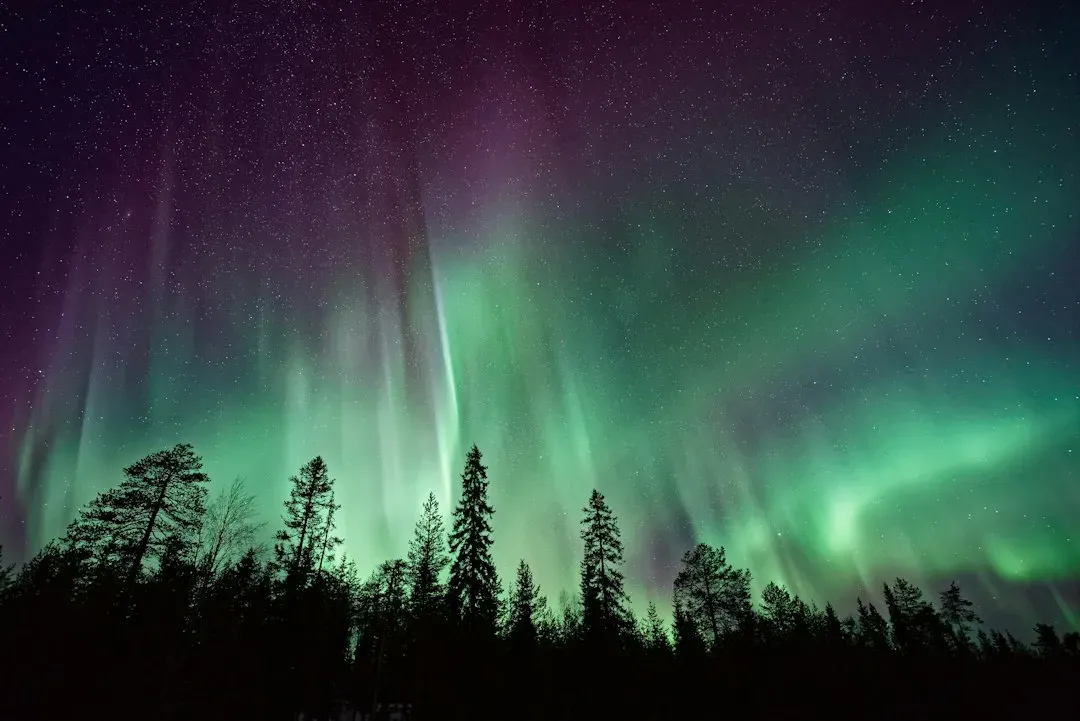
Green is the most common color, but it isn’t the only one. At higher altitudes, often above about two hundred kilometers, oxygen can produce a deep red glow. That emission is even more delicate, with an excited state that lasts for a long time, so it only shows up where the air is extremely thin.
Nitrogen adds its own touches. It can create blue or purplish-pink fringes, often along the lower edges of the curtains. So when you see a display with a green body, a red crown and a pink hem, you’re looking at different gases at different heights, each responding to the same incoming particles.
Why Our Eyes Favor the Green
🔥 Would you like to save this?
We'll email this post to you, so you can come back to it later!
There’s a human factor too. Our eyes are more sensitive to green light than to red or blue, especially in dim conditions. A faint red aurora can slip past unnoticed, while a green one of similar energy stands out more easily.
Cameras tell a different story. Long exposures on modern phones and digital cameras often reveal colors your eyes miss, so photos can look more vivid than the real thing. That’s not cheating, exactly, but it does explain why first time viewers sometimes describe the aurora as paler than they expected.

Halloween Cat Costume Cloak Witch Hat Pet Accessories
Check Price on AmazonAs an Amazon Associate, we earn from qualifying purchases.
10/9/2026 2:44 pm GMTi

Dog Stairs for Bed 18" H, 4-Step Dog Steps for High Bed
Check Price on AmazonAs an Amazon Associate, we earn from qualifying purchases.
10/9/2026 2:42 pm GMTi

Portable Dog Water Bottle Foldable Dog Travel Water Bottle
Check Price on AmazonAs an Amazon Associate, we earn from qualifying purchases.
10/7/2026 1:29 pm GMTi

Halloween Dog Collar with Bow, Orange Cute Ghost Collar,
Check Price on AmazonAs an Amazon Associate, we earn from qualifying purchases.
10/9/2026 2:43 pm GMTi

2 Pcs Halloween Pet Hat Bandana Set, Witch Pumpkin Costumes for Dogs
Check Price on AmazonAs an Amazon Associate, we earn from qualifying purchases.
10/9/2026 2:45 pm GMTi
Seeing It for Yourself
🔥 Would you like to save this?
We'll email this post to you, so you can come back to it later!
If you want to catch the green glow, aim for a dark site far from city lights, ideally on a clear night near the equinoxes, when geomagnetic activity tends to be a bit higher. Space weather forecasts from agencies such as NOAA’s Space Weather Prediction Center can give you a sense of how active things might be. Patience matters, because displays can flare up and fade within minutes.
Solar activity also follows an roughly eleven year cycle, and the last few years have been near the busy end of it. That has made strong displays more common at lower latitudes than in quieter years. Still, forecasts are never guarantees, so treat them as odds rather than promises.

PetSafe Oasys Pet Fountain, 1/2 Gallon (64 oz), Small Dogs & Cats
Check Price on AmazonAs an Amazon Associate, we earn from qualifying purchases.
10/8/2026 8:14 am GMTi

Earth Rated XL Dog & Puppy Pee Pads, Discreet Top, Max Absorbency
Check Price on AmazonAs an Amazon Associate, we earn from qualifying purchases.
10/7/2026 1:28 pm GMTi

Professional 7 in 1 Dog Paw Cleaner for Dogs & Cats - Includes 1 Portable Paw Washer, 1 Bath Brush
Check Price on AmazonAs an Amazon Associate, we earn from qualifying purchases.
10/7/2026 1:26 pm GMTi

Hand Blown Glass Hummingbird Feeders for Outdoors Hanging, 24oz Wild Bird Nectar Feeder
Check Price on AmazonAs an Amazon Associate, we earn from qualifying purchases.
10/7/2026 1:23 pm GMTi
Final Thoughts
🔥 Would you like to save this?
We'll email this post to you, so you can come back to it later!
I find it oddly comforting that something so dramatic traces back to a simple atom doing what atoms do. No magic, no mystery gas, just oxygen releasing a little stored energy in the right place at the right height. To me, that makes the aurora better, not duller.
Knowing the science doesn’t shrink the wonder. If anything, it makes standing under a green sky feel more personal, because you’re watching Earth’s own atmosphere answer the Sun, one hundred kilometers overhead.

- Earth Science Says the Green Glow of the Northern Lights Comes From Oxygen Atoms Roughly 100 Kilometers Above the Ground - November 7, 2026
- 9 U.S. States Where Hikers Are Most Likely to Encounter Rattlesnakes - November 7, 2026
- 10 Animals That Mate for Life and What Science Says About Their Bonds - November 7, 2026