

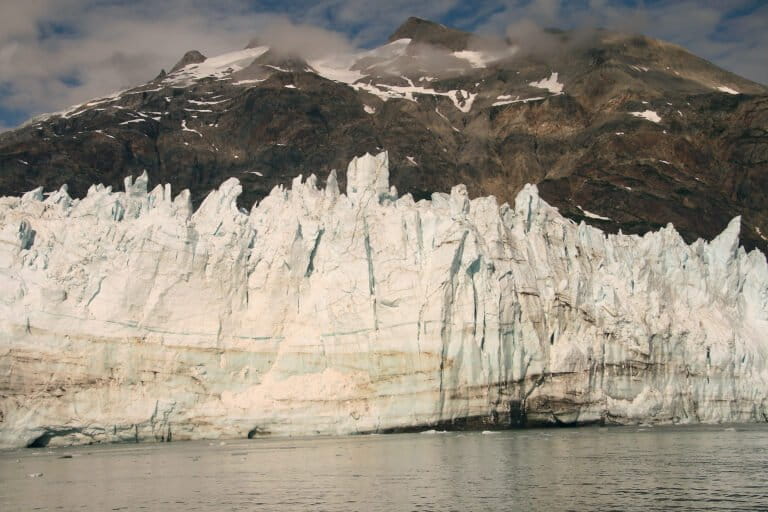

The Critical Importance of Glaciers Beyond the Scenery (Image Credits: Imgs.mongabay.com)
Climate change has intensified the rapid retreat of glaciers across the planet, threatening ecosystems and human livelihoods dependent on their meltwater.
The Critical Importance of Glaciers Beyond the Scenery
Glaciers have long served as vital reservoirs of freshwater, sustaining diverse regions far beyond their icy origins. These massive ice formations, which span about a tenth of Earth’s land surface, release meltwater that nourishes rivers and aquifers essential for drinking water, farming, and hydropower. Communities in Asia, South America, and Europe rely on this steady supply, especially during dry seasons when rainfall alone falls short.
Recent assessments highlighted that nearly half the world’s population depends on glacial and snowpack melt for these needs. As temperatures rise, however, this lifeline weakens, leading to irregular water flows that disrupt agriculture and urban supplies. Scientists noted that without intervention, these changes could exacerbate food insecurity and water scarcity in vulnerable areas. The stakes extend to industries like manufacturing, which draw from glacier-fed sources for cooling and processing.
Effective Strategies Emerging in Glacier Protection
Conservation efforts have gained momentum through innovative preservation techniques that aim to safeguard existing ice for future study and potential recovery. One notable approach involved the creation of ice vaults in remote, cold locations to store core samples from endangered glaciers. Researchers transported slices of ice from places like Mont Blanc to Antarctica, where sub-zero conditions preserve them indefinitely against further melting.
These vaults not only protect physical samples but also enable long-term analysis of historical climate data trapped within the ice. International collaborations, such as those led by polar research institutes, have organized events and research expeditions to raise awareness and develop monitoring tools. For instance, programs focused on reducing local pollution near glaciers have shown promise in slowing surface melt rates. Additionally, reforestation in upstream watersheds helps regulate water flow and shields ice from direct solar exposure.
Key methods include:
- Establishing protected zones to limit human access and industrial activities around glacier sites.
- Deploying sensors and satellites for real-time tracking of ice mass and melt patterns.
- Promoting sustainable water management in downstream communities to reduce over-extraction.
- Investing in artificial shading experiments using geotextiles to reflect sunlight and cool ice surfaces.
- Supporting global education campaigns to foster public commitment to emission reductions.
Persistent Barriers to Full-Scale Glacier Rescue
Despite these advances, fundamental limitations persist due to the scale and speed of global warming. Glaciers respond slowly to environmental shifts, and even aggressive local protections cannot counteract the broader atmospheric heating driven by greenhouse gases. Experts emphasized that while short-term melt might temporarily boost water availability, long-term decline remains inevitable without curbing emissions worldwide.
Challenges also arise from geopolitical hurdles, as many glaciers straddle international borders, complicating unified action. Funding shortages hinder widespread implementation of high-tech monitoring, and unpredictable weather events like heatwaves accelerate losses faster than conservation can adapt. A UN report warned that unsustainable human activities, including deforestation and urbanization in mountain regions, compound the problem. Ultimately, these barriers underscore that glacier preservation demands systemic changes beyond isolated efforts.
Global Momentum and Paths Forward
International bodies have stepped up with declarations like the International Year of Glacier Preservation, which spurred dialogues between scientists and communities. Organizations such as the UN Environment Programme advocated for enhanced support in mountain areas, integrating glacier health into broader climate strategies. Collaborative projects in Antarctica and the Alps demonstrated how shared research can inform policy, though scaling these remains a work in progress.
Progress includes better integration of glacier data into water resource planning, helping nations prepare for scarcity. Yet, experts cautioned that true stabilization requires peaking global emissions soon. Regional initiatives, from Peru’s Andean protections to Himalayan monitoring networks, offer models for replication. As these efforts evolve, they highlight the need for adaptive agriculture and resilient infrastructure to bridge the gap.
Key Takeaways
- Glaciers support water for nearly half the world’s population, but rapid melting endangers this supply.
- Innovative storage like Antarctic vaults preserves ice samples for science, yet cannot halt overall retreat.
- Reducing emissions remains the core solution, as local strategies alone fall short against climate drivers.
In the race against glacier loss, targeted protections provide hope, but the ultimate safeguard lies in collective action to limit warming. What steps do you believe are most urgent for protecting these vital ice reserves? Share your thoughts in the comments.

- Urban Coyotes Show Remarkable Adaptability, Learning to Thrive in City Environments - July 22, 2026
- Beavers Are Nature’s Engineers, Creating Vital Habitats for Other Wildlife Species - July 21, 2026
- The Recovery of the California Condor Offers Hope for Other Critically Endangered Birds - July 21, 2026